How long does it take to manufacture activewear and receive your products?
An inaccurate production timeline can cause missed launch dates, unexpected shipping costs, and inventory arriving after the selling season. Understanding each stage helps you set realistic deadlines and manage your budget.
A straightforward activewear project using available fabrics and air shipping may require approximately 8–12 weeks from development to delivery. Complex orders involving custom fabric development, multiple sample revisions, and ocean freight may require 14–24 weeks or longer.
These are indicative planning ranges, not guaranteed delivery times. Actual lead times depend on product complexity, material availability, approval speed, production capacity, and destination.
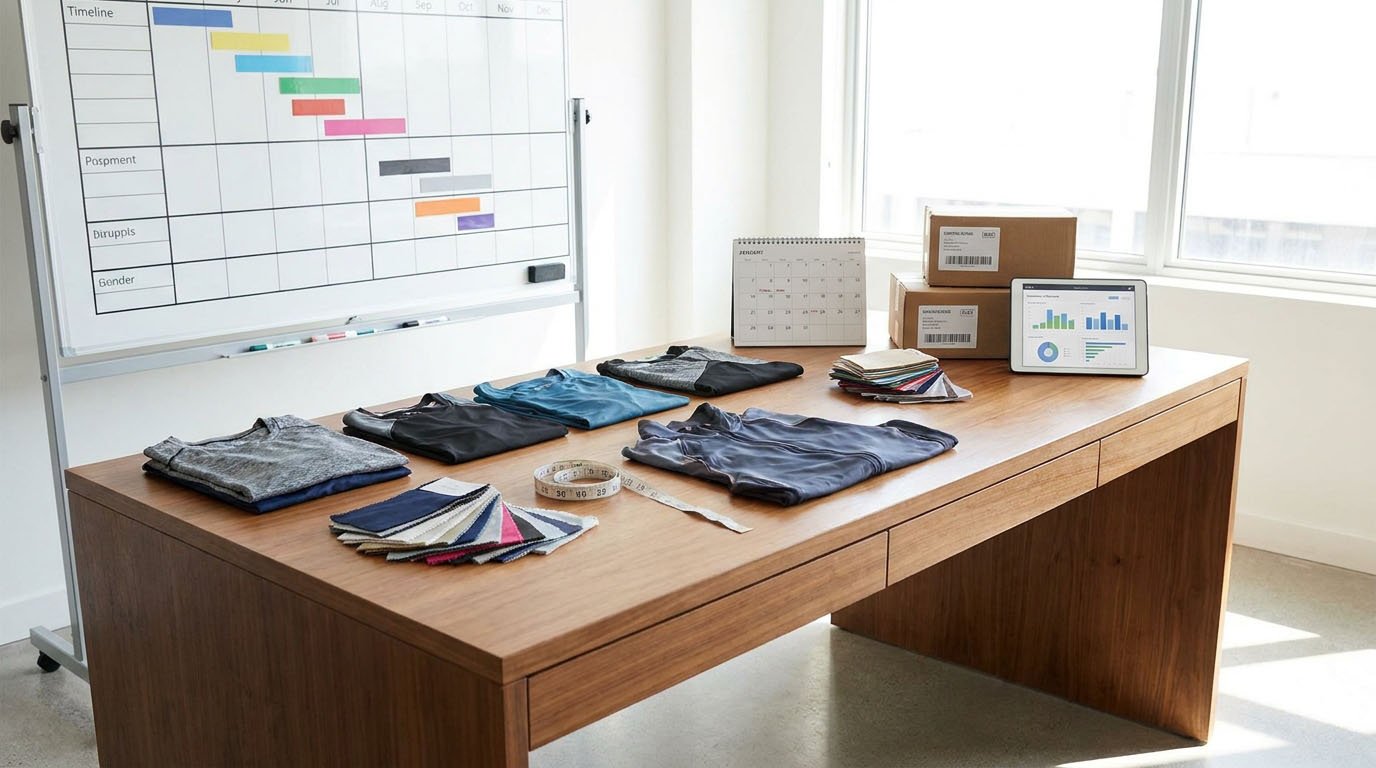
This guide explains the time required for sampling, fabric preparation, bulk manufacturing, and shipping, along with practical ways to avoid delays.
Activewear Production Lead Time at a Glance
Activewear manufacturing involves product development, material preparation, bulk production, and transportation. Some activities can overlap, while others cannot begin until an earlier milestone is approved.
| Production Stage | Indicative Time | Main Factors |
|---|---|---|
| Sampling and approval | 7–10 days for an initial sample; 2–5+ weeks including revisions | Fit changes, specifications, approval speed |
| Stock fabric preparation | Several days to approximately 2 weeks | Availability, inspection, trims |
| Custom fabric preparation | Approximately 3–6+ weeks | Knitting, dyeing, lab dips, testing |
| Bulk manufacturing | Approximately 25–35 days for suitable standard orders | Quantity, construction, factory capacity |
| Shipping and delivery | Around 1–2 weeks by air or 4–7 weeks by ocean | Destination, logistics, customs |
These are broad planning estimates. The total project timeline is not always the sum of every stage because some sourcing and development activities can overlap. Confirm which activities are included in your manufacturer's quotation.
The key distinction is between bulk production lead time and total project lead time. Bulk production generally starts after the agreed pre-production requirements are met. Total project time also includes development, approval delays, and transportation.
1. Sampling Lead Time: How Long Does Development Take?
Sampling turns your design into a physical garment that can be evaluated before bulk manufacturing.
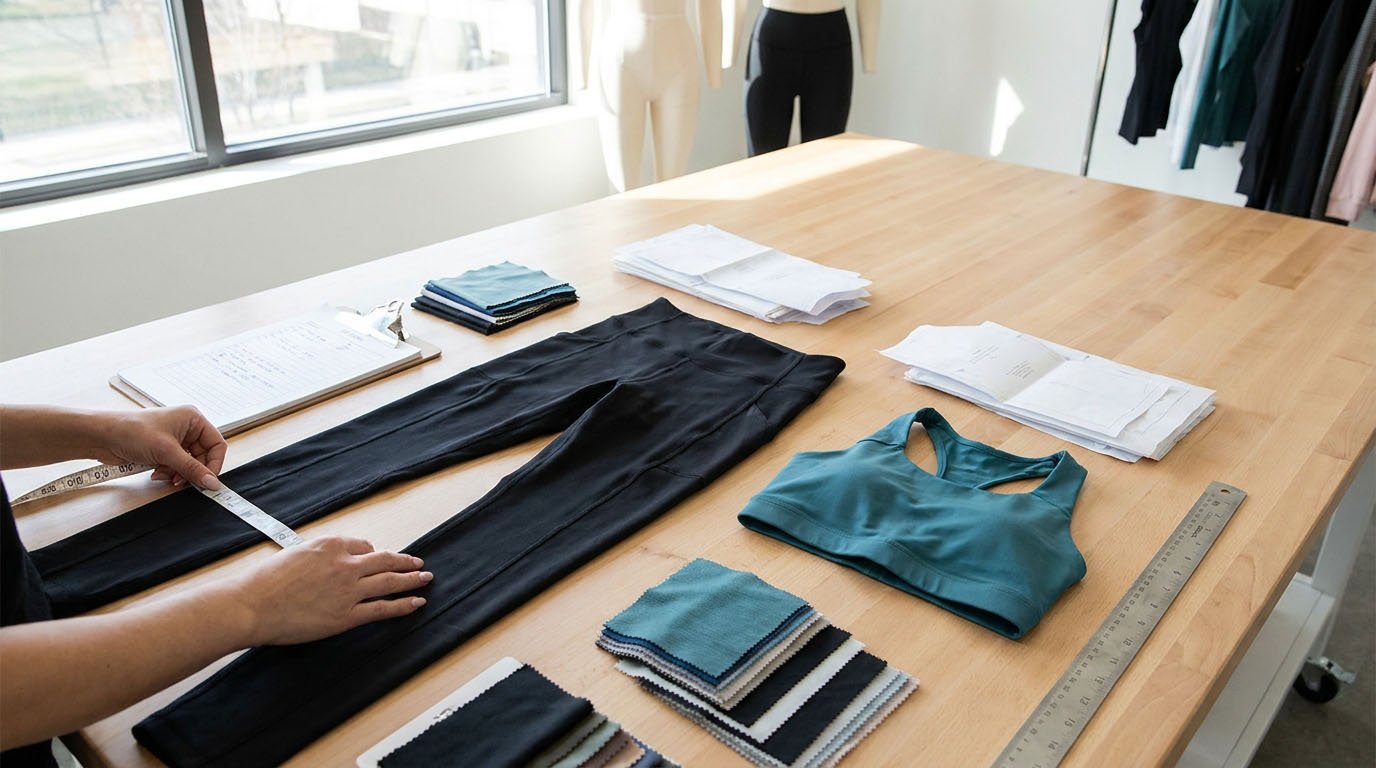
Wearzio's standard reference for an initial sample is approximately 7–10 days. However, sample completion is not the same as final approval. Fit testing, revisions, sample shipping, and additional reviews can extend the process.
What Causes Sampling Delays?
Common causes include:
- Incomplete measurements or construction specifications.
- Fit adjustments to leggings waistbands, gussets, or sports bra support.
- Fabric substitutions that change stretch and recovery.
- Delayed buyer feedback or repeated revision requests.
To avoid unnecessary delays, prepare a clear Activewear Tech Pack with measurements, materials, construction details, and branding requirements. Consolidate feedback into one documented revision request whenever possible.
For the detailed development workflow, see our Activewear Sampling Process Explained.
Planning tip: Allow time for sample approval, not just sample production.
2. Fabric Preparation: Stock Materials vs. Custom Fabrics
Fabric availability is one of the biggest variables in activewear production lead time.
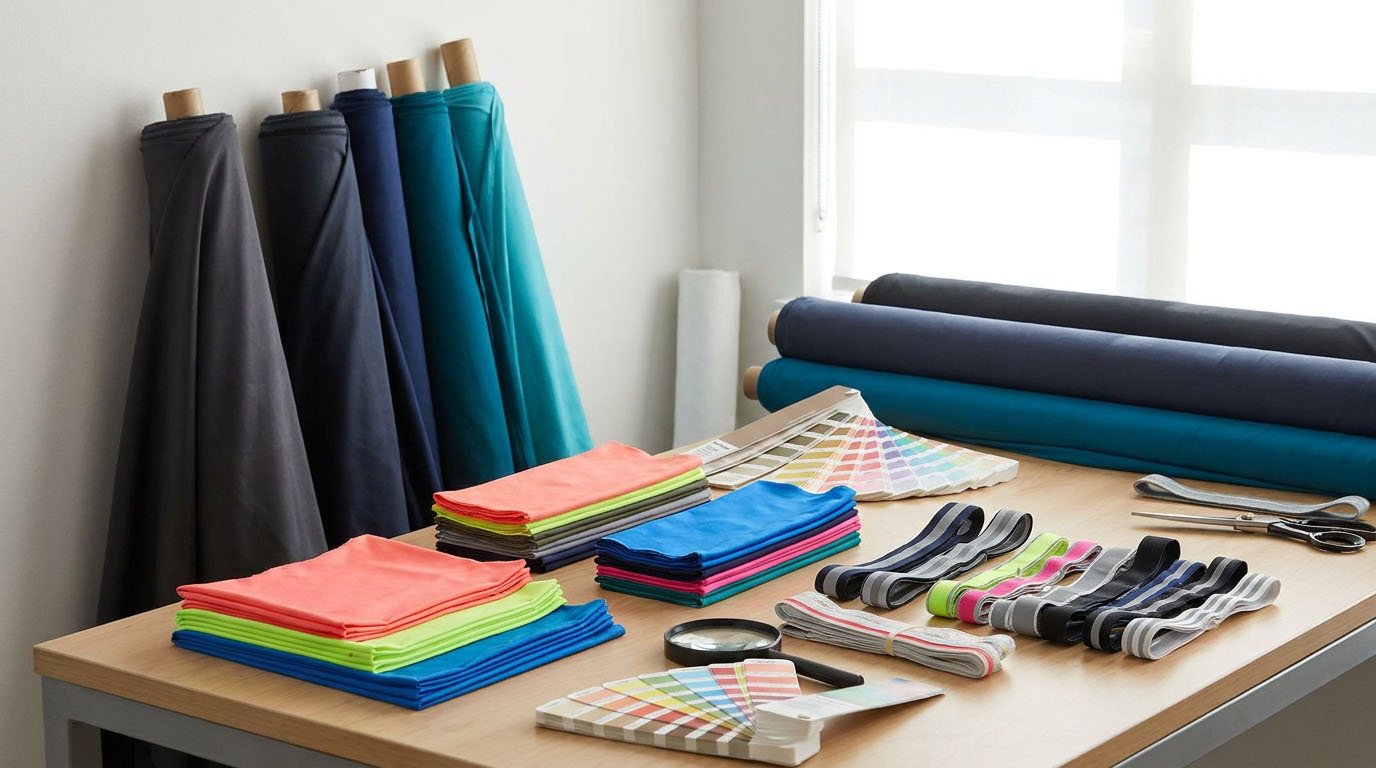
Available fabrics may shorten preparation, while custom knitting, dyeing, and finishing can introduce additional steps and supplier dependencies.
Stock Fabric: A Faster Route
Stock fabrics can reduce lead time because new knitting or dyeing may not be necessary. However, confirm that sufficient material is available in the required color, quantity, and specification.
A fabric available for sampling does not automatically mean enough matching material is ready for bulk production.
Custom Fabric: Additional Development
Custom fabrics may require yarn and knitting arrangements, color lab-dip approval, dyeing, finishing, and material inspection. Custom elastic waistbands and branded trims may have separate supplier schedules.
Some sourcing activities can overlap with sample development, but bulk material commitments should follow an agreed approval process.
For a deeper explanation of material minimums and their effect on schedules, see How MOQ Affects Activewear Lead Time.
3. Bulk Production Lead Time: When Does Manufacturing Start?
Approving a purchase order does not necessarily mean cutting and sewing begin immediately.
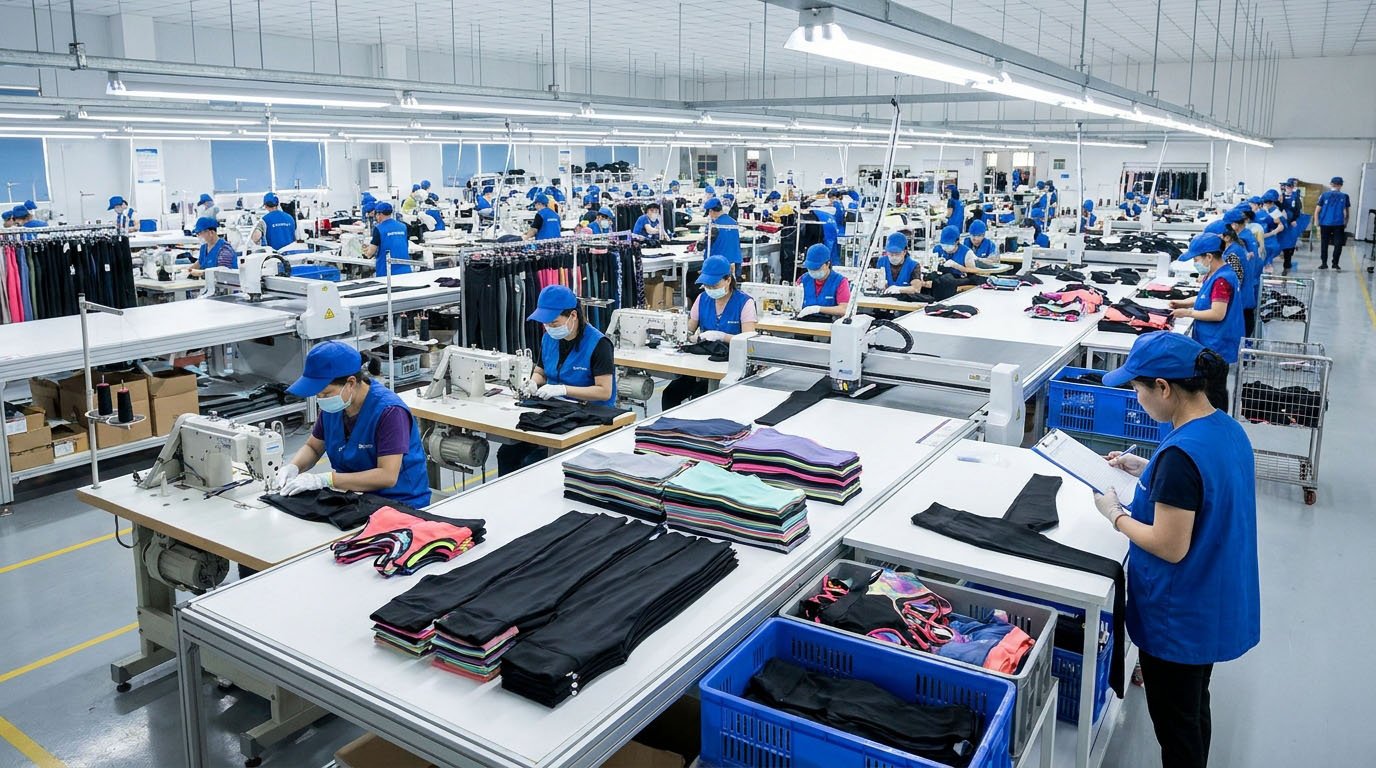
For suitable standard orders, Wearzio references approximately 25–35 days for bulk production. The confirmed schedule depends on product specifications, order quantity, materials, and production capacity.
Five Conditions for Starting Bulk Production
Before confirming the production start date, make sure:
- Sample approval: The required production sample and specifications are approved.
- Material readiness: Required fabrics, trims, and components are available according to the production plan.
- Order confirmation: Quantities, sizes, colors, and branding requirements are finalized.
- Commercial approval: The purchase order, deposit, and agreed terms are confirmed.
- Factory scheduling: An appropriate production slot is allocated.
If a critical requirement remains unresolved, the planned cutting date may change.
Bulk manufacturing typically includes cutting, sewing, logo application where required, inline inspections, finishing, and packing. Complex construction or larger quantities may extend the schedule.
Confirm whether final inspection and packing are already included in the quoted bulk lead time to avoid counting them twice.
4. Shipping Lead Time: Air Freight vs. Ocean Freight
Once garments pass the agreed final checks and are ready for dispatch, transportation becomes the next major scheduling dependency.
| Shipping Method | Indicative Time | Common Use |
|---|---|---|
| Express courier | Several days to around 1 week | Samples and small urgent shipments |
| Air freight | Approximately 5–12 days | Time-sensitive bulk orders |
| Ocean freight | Approximately 4–7 weeks | Larger shipments with flexible schedules |
These are broad estimates rather than guaranteed door-to-door transit times. Customs clearance, port handling, and inland delivery may add time depending on the destination and shipping arrangement.
Before confirming a delivery date, establish whether the quotation covers transportation to your warehouse or only shipment from the factory.
5. Standard vs. Custom Activewear: Two Timeline Examples
The difference between straightforward and complex orders becomes clearer when comparing their major scheduling requirements.
Scenario A: Stock Fabrics and Air Shipping
A brand uses available fabrics, standard trims, and an approved design with limited revisions.
| Stage | Illustrative Allowance |
|---|---|
| Sampling and approval | 2–3 weeks |
| Material confirmation | Overlaps with development where feasible |
| Bulk production, QC, and packing | 4–5 weeks |
| Air shipping and delivery handling | 1–2 weeks |
| Contingency | 1–2 weeks |
| Total planning window | Approximately 8–12 weeks |
This scenario assumes materials are ready when bulk production begins.
Scenario B: Custom Fabrics and Ocean Shipping
A brand develops original leggings and sports bras requiring custom colors, new construction details, and additional approvals.
| Stage | Illustrative Allowance |
|---|---|
| Combined sampling and fabric preparation | 5–9 weeks |
| Bulk production, QC, and packing | 4–6 weeks |
| Ocean shipping and destination handling | 4–7 weeks |
| Contingency | 1–2 weeks |
| Total planning window | Approximately 14–24 weeks or longer |
The first stage represents a combined planning allowance that assumes some activities overlap. It is not the sum of two fully independent schedules.
These scenarios are illustrative, not guaranteed quotes. Your manufacturer should confirm the actual timeline once product specifications, material availability, and delivery requirements are known.
6. How to Calculate Your Launch Timeline Backward
Start with the date your inventory must arrive at the warehouse, then work backward through production, approvals, and shipping.
Example: A 12-Week Planning Calendar
| Week | Planned Milestone |
|---|---|
| Weeks 1–3 | Sample development, review, and approval |
| Weeks 2–3 | Confirm stock fabric and trims in parallel |
| Weeks 4–8 | Bulk production, quality checks, and packing |
| Weeks 9–10 | Air shipping, customs, and warehouse delivery |
| Weeks 11–12 | Contingency before the required warehouse date |
This schedule assumes a relatively simple project using available materials. Custom fabric development, additional sample revisions, or ocean freight would require a longer timeline.
Your production calendar should identify the target warehouse date, approval deadlines, material readiness, bulk start date, factory completion, shipment milestones, and contingency.
When requesting a quotation, share your target delivery date and destination so the manufacturer can assess whether the schedule is feasible. Our Activewear Manufacturer Quote Guide explains what information to prepare.
7. What Causes Activewear Production Delays?
Delays often originate from approvals, materials, or scheduling dependencies rather than sewing alone.
| Delay Cause | Recommended Action |
|---|---|
| Incomplete specifications | Finalize measurements and construction details before approval |
| Late sample feedback | Set review deadlines and consolidate comments |
| Custom fabric delays | Confirm material schedules and color approval dates |
| Missing trims or packaging | Track components separately from main fabric |
| Factory capacity changes | Confirm production milestones in writing |
| Inspection failures or rework | Use appropriate inline checks and final inspection |
| Freight disruptions | Plan logistics early and allow contingency |
The safest way to shorten lead time is to remove avoidable waiting periods without skipping necessary quality checks.
Prioritize three actions: finalize specifications early, confirm long-lead materials, and agree on production and delivery milestones. When comparing suppliers, evaluate delivery reliability alongside price and manufacturing capability using our Guide to Comparing Activewear Manufacturers Beyond Unit Price.
Frequently Asked Questions
How long does activewear production take from start to delivery?
A straightforward project using available fabrics and air shipping may require approximately 8–12 weeks. Complex custom orders shipped by sea may require 14–24 weeks or longer. These are planning estimates, not guaranteed lead times.
How long does bulk activewear production take after sample approval?
Wearzio references approximately 25–35 days for suitable standard orders. The actual schedule depends on material readiness, order specifications, payment terms, and factory capacity.
Does stock fabric always shorten production time?
No. Stock fabric can eliminate new knitting or dyeing stages, but sampling, material inspection, production scheduling, and shipping still affect the overall timeline.
Can sampling and fabric preparation happen simultaneously?
Some activities can overlap, including material sourcing and selected preparations. However, bulk commitments should follow the agreed approval process to reduce the risk of rework or unused inventory.
Are repeat orders faster than first orders?
They can be. Approved patterns, materials, and branding may reduce development work, but material availability and factory capacity must still be confirmed.
Conclusion: Plan Your Activewear Production Timeline Before Launch
Activewear production lead time covers more than cutting and sewing. It includes sample approval, material readiness, bulk manufacturing, quality control, and transportation.
To reduce uncertainty, confirm each stage's starting conditions, identify activities that can overlap, and plan backward from your required warehouse delivery date.
At Wearzio, we support activewear brands through sampling, fabric sourcing, private label, and OEM/ODM manufacturing. Share your product requirements, estimated quantities, fabric preferences, and target delivery date so our team can help assess manufacturing feasibility and develop a project-specific production schedule.