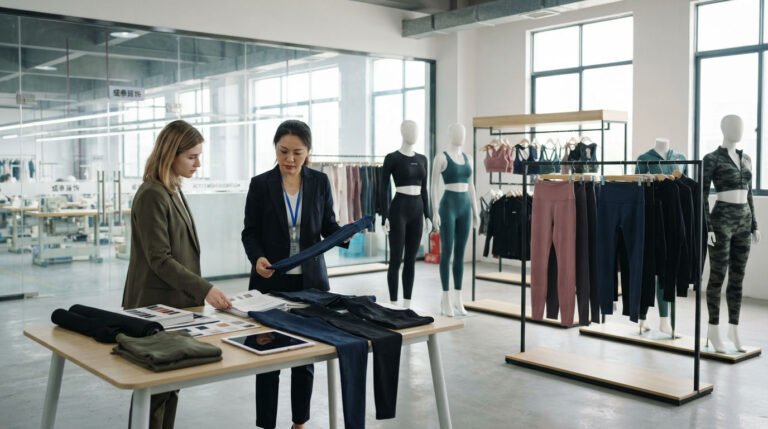
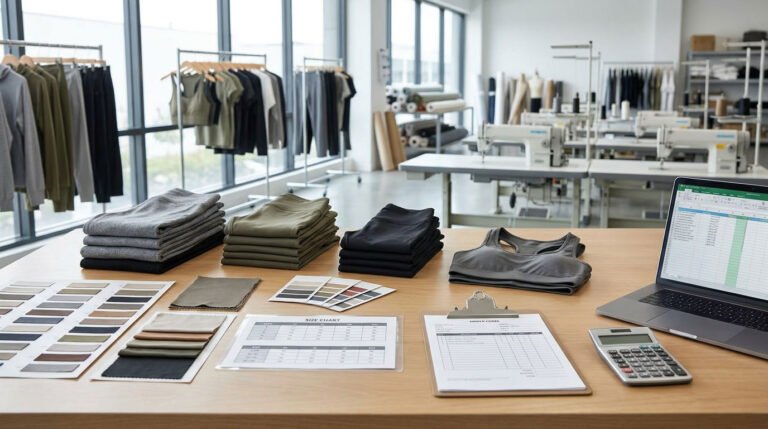
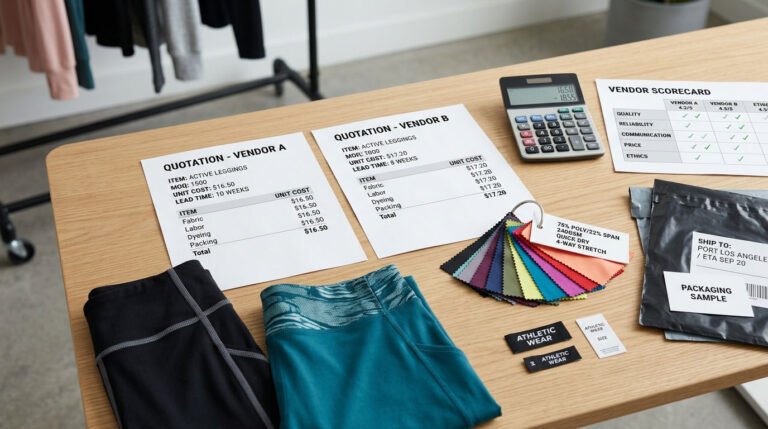
How much does it cost to manufacture activewear? For early budgeting, a broad planning range is approximately $8–$25+ per piece, although basic garments may cost less and technically complex products can cost considerably more. Your actual factory price depends on fabric, garment construction, customization, order quantity, and production requirements.
However, the factory price is only part of your investment. Sampling, testing, packaging, freight, and import charges can increase the amount you need before your products are ready to sell.
This guide breaks down activewear manufacturing costs, explains what drives quotations, and shows how to calculate a realistic production budget for your brand.
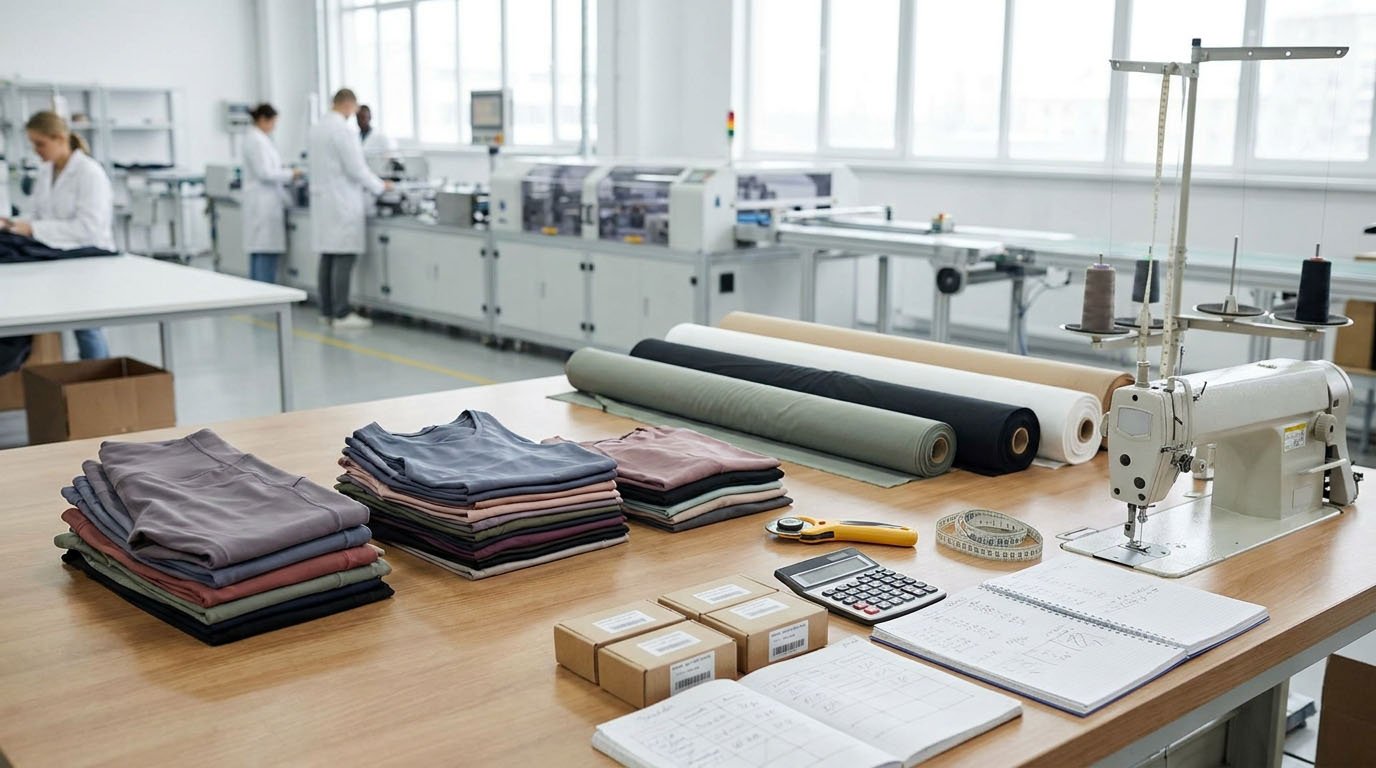
Quick Answer: How Much Does Activewear Cost to Manufacture?
Different activewear products require different materials, construction methods, and production time.
The following figures are illustrative factory-cost planning ranges, not verified market averages or actual Wearzio quotations. They are intended to show how product complexity can affect an initial budget.
| Activewear Product | Illustrative Cost per Piece | Main Cost Drivers |
|---|---|---|
| Gym T-Shirt | $5–$10 | Fabric, printing, basic stitching |
| Running Shorts | $7–$15 | Waistband, pockets, lining |
| Yoga Leggings | $9–$19 | Stretch fabric, seams, waistband |
| Sports Bra | $9–$20 | Support structure, elastic, lining |
| Training Jacket | $16–$35+ | Zippers, panels, fabric, construction |
These examples assume ordinary production conditions and exclude separate development, freight, duties, and other buyer-side charges. Actual costs vary by specifications, country, quantity, and delivery terms.
Three factors usually have the greatest influence:
- Fabric: Composition, weight, construction, performance, and sourcing availability.
- Construction: Pattern complexity, sewing operations, and specialized equipment.
- Order quantity: Production setup, fabric purchasing, and the number of styles or colors.
For brands planning a first collection, the best starting point is understanding how those costs are calculated.
Step 1: Understand the Main Activewear Manufacturing Cost Components
A factory quotation reflects several production costs rather than one fixed charge.
The main components include fabric, trims, cutting, sewing, finishing, quality control, and factory overhead.
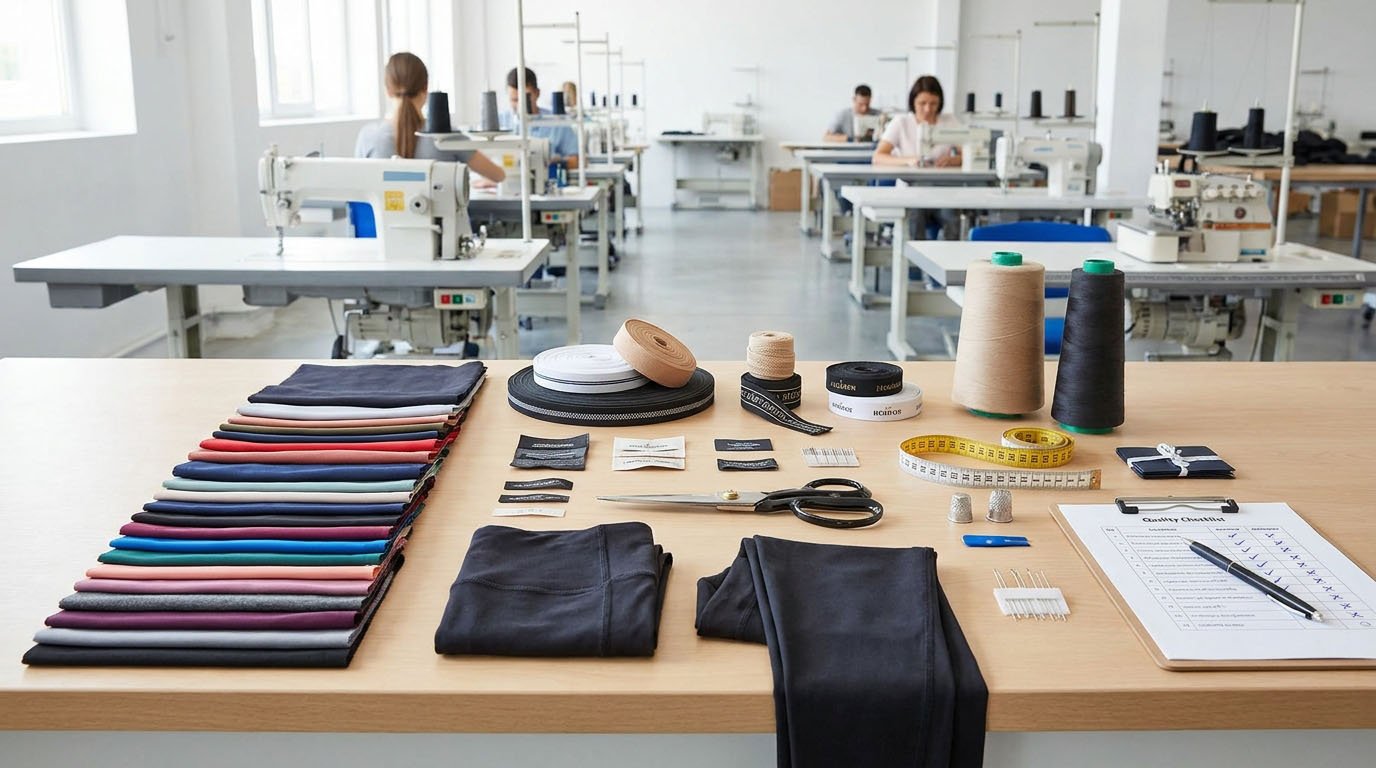
Fabric and Material Costs
Fabric is frequently one of the largest expenses in activewear manufacturing.
Its cost depends on:
- Fiber composition, such as polyester, nylon, and elastane.
- Fabric weight, measured in GSM.
- Knit construction and finishing requirements.
- Stretch, recovery, opacity, and other performance specifications.
- Fabric consumption and cutting waste.
For example, leggings requiring a structured, high-recovery interlock fabric may have different material costs from lightweight polyester training shorts.
Pattern layout also matters. A garment with additional panels or complex cutting requirements can consume more material even when the finished product is the same size.
Cutting and Sewing Labor
Manufacturing labor depends on the number and complexity of operations.
A simple training T-shirt generally requires fewer sewing operations than leggings with contoured panels, pockets, and a reinforced waistband.
Additional operations may include flatlock stitching, coverstitching, binding, or bonded construction.
The appropriate construction should be selected for garment performance and comfort—not simply because it is more expensive.
Trims, Finishing, and Factory Overhead
Other cost components include:
- Waistband elastic, zippers, and drawcords.
- Brand labels and care labels.
- Logo application and decoration.
- Thread, finishing, and inspection.
- Equipment, supervision, production setup, and factory overhead.
Example: How a $10 Leggings Manufacturing Price Could Be Built
| Cost Component | Illustrative Amount |
|---|---|
| Fabric and cutting allowance | $4.80 |
| Elastic, labels, and trims | $0.70 |
| Cutting and sewing | $2.40 |
| Finishing and internal QC | $0.70 |
| Factory overhead and margin | $1.40 |
| Total Factory Price | $10.00 |
This is a hypothetical cost allocation, not Wearzio's internal costing formula. It excludes separate development, shipping, duties, and packaging not included in the quotation.
The practical takeaway is that a factory cannot accurately price an original garment without understanding its materials, construction, and order requirements.
Step 2: How Fabric and Construction Affect Activewear Pricing
Two leggings may look nearly identical in product photographs but have different manufacturing costs.
The difference often comes from fabric specifications and sewing construction rather than appearance alone.
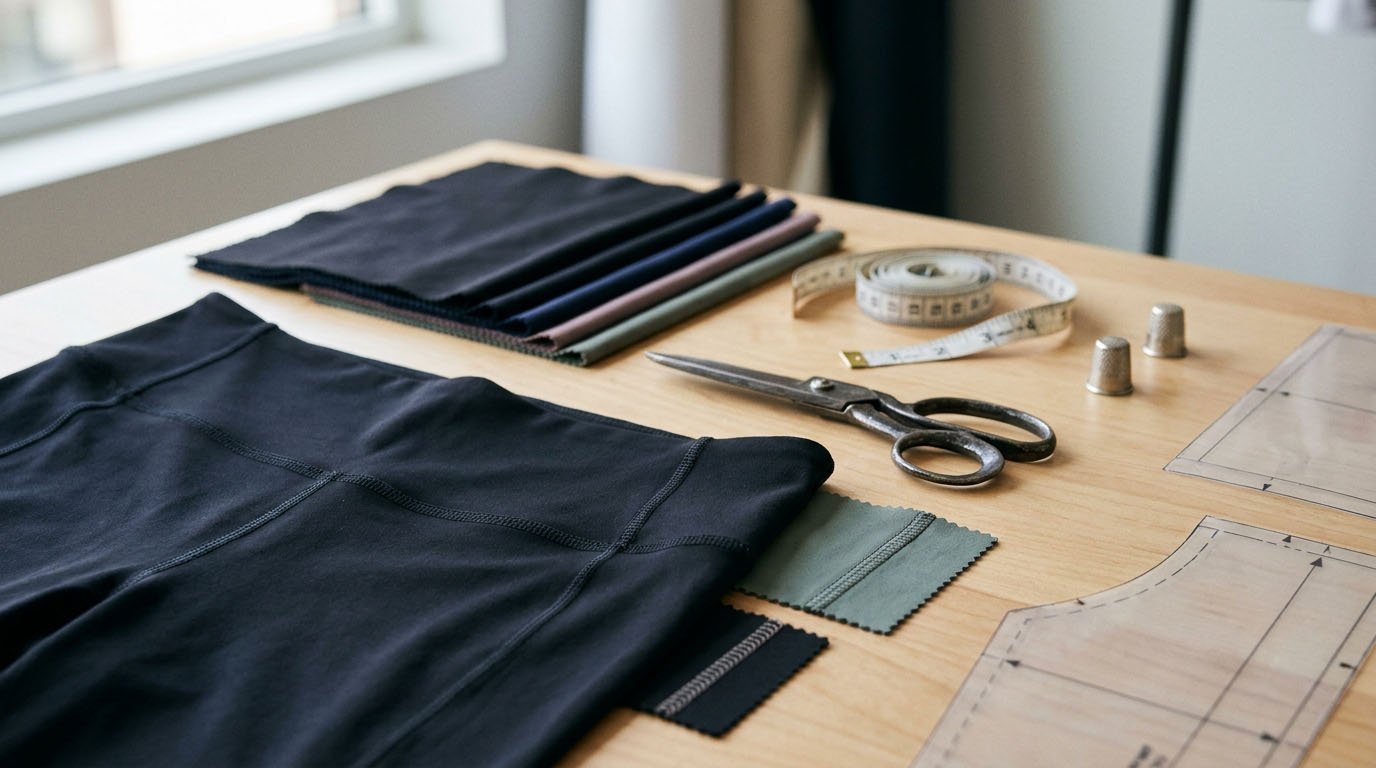
Polyester vs. Nylon-Spandex Fabrics
Polyester blends are widely used in training shirts, shorts, and performance apparel.
Nylon-spandex blends are common in leggings and sports bras where softness, stretch, and recovery are important.
| Fabric Factor | Potential Cost Effect |
|---|---|
| Polyester blend | Often economical for standard performance garments |
| Nylon-spandex blend | Pricing depends on knit structure, yarn quality, and finish |
| Higher fabric GSM | May increase material consumption and shipping weight |
| Custom-dyed fabric | May introduce dye-lot minimums and setup charges |
| Specialized performance finish | May require additional processing or verification |
Nylon is not automatically more expensive in every specification. Compare actual fabric quotations and performance requirements rather than judging cost solely by fiber name.
If your fabric requirements are still being developed, Wearzio's Fabric Sourcing service can help identify suitable options for your intended product.
Why Stitching and Garment Construction Matter
Activewear must accommodate movement without compromising fit or seam durability.
Common construction methods include:
- Overlock stitching: Suitable for many stretch seams and standard garment assembly.
- Flatlock stitching: Can reduce seam bulk and improve comfort in appropriate designs.
- Coverstitching: Frequently used for flexible hems and finishing.
- Bonded construction: Used for selected applications requiring specialized edge or seam finishes.
More complex construction can increase machine setup, sewing time, and quality-control requirements.
However, a premium technique does not automatically improve every garment.
For example, changing a basic leggings pattern to include side pockets, curved panels, and a bonded waistband may require additional cutting and assembly operations.
Brands should confirm whether these features deliver enough customer value to justify their additional cost.
Wearzio's Cut & Sew service supports the development and production of garments with defined patterns and construction requirements.
Step 3: How MOQ and Customization Change Manufacturing Costs
Minimum Order Quantity (MOQ) influences activewear pricing because manufacturers must distribute setup and preparation costs across the production quantity.
In many cases, larger orders can achieve better unit economics. However, the reduction is not necessarily proportional to the increase in quantity.
Why Smaller Orders Often Cost More per Piece
Production may require pattern preparation, cutting markers, machine adjustments, material procurement, and line setup.
Some of these activities cost a similar amount regardless of whether the factory produces 100 or 500 garments.
With fewer units, each piece must absorb more of those preparation costs.
Fabric procurement can also influence pricing.
For example, a factory may source an available black nylon-spandex fabric without ordering a new dye lot. A custom color may require a larger fabric purchase or a surcharge.
Why Color and Style Distribution Matter
Consider two hypothetical 600-piece orders:
Order A:
- One leggings design.
- Two colors.
- Four sizes.
- Shared fabric and construction.
Order B:
- Two different styles.
- Four colors.
- Five sizes.
- Different fabric and construction requirements.
Although both orders contain 600 pieces, Order B may require more pattern preparation, fabric sourcing, cutting setups, and production changeovers.
Therefore, the total number of garments does not tell the complete pricing story.
How Customization Adds Cost
Typical customization requirements include:
- Heat-transfer or embroidered logos.
- Custom color matching.
- Specialized elastic waistbands.
- Printed fabric or additional garment panels.
- Custom labels, hangtags, and packaging.
Each feature should be assessed according to its material, processing, and setup requirements.
Cost-saving principle: Consolidating suitable fabrics, reducing unnecessary color variations, and using existing patterns can sometimes lower production costs without sacrificing essential product performance.
For a detailed explanation of minimum order requirements, see our Low-MOQ Activewear Manufacturer Guide.
Step 4: Calculate Hidden Costs and Landed Cost
The manufacturing quotation does not necessarily represent the total cost of receiving your inventory.
Depending on the agreed quotation, brands may also need to pay for development, independent inspections, international logistics, and import-related charges.
Sampling and Product Development
Original activewear products may require pattern development, prototypes, fit revisions, and pre-production samples.
These costs depend on the product and scope of work.
A single replacement sample fee is not equivalent to the complete cost of developing a new style.
Before budgeting, ask which development services are included in the supplier's offer and which are billed separately.
Testing and Quality Control
Activewear testing should reflect the product's intended use and the requirements of its target market.
Relevant evaluations may include:
- Stretch and recovery.
- Dimensional stability after washing.
- Colorfastness.
- Pilling resistance.
- Seam strength.
- Opacity under stretch.
Internal factory inspections and independent laboratory testing are different services, and their costs should be confirmed separately.
Not every product requires the same testing package.
Packaging, Freight, and Import Charges
Additional expenses may include individual packaging, shipping cartons, freight, cargo insurance, customs duties, clearance, and local delivery.
Import charges depend on garment classification, fiber composition, origin, destination, and applicable trade rules.
The agreed Incoterm also matters. An EXW quotation and an FOB quotation place different responsibilities on the buyer and seller.
Factory Cost vs. Landed Cost vs. Total Project Cost
These three figures answer different financial questions.
Factory cost: The amount charged by the manufacturer under the agreed quotation scope.
Landed cost: The cost of bringing the goods to the specified destination, including applicable freight, import duties, and other relevant inbound expenses.
Total project cost: The broader expenditure associated with the production project, including separately billed development, testing, inspections, and other project expenses.
A simplified planning formula is:
Estimated Landed Cost per Piece = (Manufacturing Cost + Applicable Packaging + Freight + Duties + Clearance + Other Inbound Costs) ÷ Delivered Quantity
For project budgeting, add any separate development and testing costs without counting expenses already included in the manufacturing quotation.
Recoverable taxes and company-specific accounting treatments should be evaluated separately.
If you are comparing quotations from multiple manufacturers, our guide to Comparing Activewear Manufacturers Beyond Unit Price explains how to evaluate equivalent quotations and supplier value.
Step 5: Example Budget for Manufacturing 300 Custom Leggings
Consider a startup brand preparing an initial order of 300 custom leggings.
Assume the design uses an available nylon-spandex fabric, a standard waistband construction, two colors, and basic branding.
For this illustration, assume the manufacturer accepts the proposed quantity and color distribution.
The factory manufacturing price is $10 per piece.
Example Production Budget
| Cost Item | Estimated Amount |
|---|---|
| Manufacturing: 300 × $10 | $3,000 |
| Sampling and development | $300 |
| Testing | $200 |
| Independent quality inspection | $150 |
| Packaging not included in factory price | $150 |
| Freight to destination warehouse | $450 |
| Estimated duties and clearance | $450 |
| Total Project Cost | $4,700 |
All amounts are hypothetical for calculation purposes. They are not actual Wearzio quotations, freight rates, or customs estimates.
Calculate the Cost per Garment
1. Factory manufacturing cost
$3,000 ÷ 300 = $10.00 per piece
2. Estimated landed inventory cost
($3,000 + $150 packaging + $450 freight + $450 duties and clearance) ÷ 300
= $13.50 per piece
3. Fully allocated project cost
$4,700 ÷ 300 = $15.67 per piece
The difference comes from expenses outside the basic manufacturing quotation.
The total project cost includes $650 in development, testing, and independent inspection costs, distributed across the first 300 pieces.
Those expenses may not recur in the same amount for later orders.
This distinction is important because a repeat order may have different economics from the first production run.
Should You Add a Contingency Budget?
A separate contingency reserve can help cover unexpected revisions, logistics changes, or other justified project risks.
The appropriate reserve depends on your project and risk exposure. It should not be treated as a compulsory factory charge.
The $4,700 example above excludes contingency and broader brand operating expenses such as marketing, ecommerce, and customer fulfillment.
For those additional costs, see our Guide to Starting an Activewear Brand in the USA, which covers the wider launch budget.
Step 6: How to Reduce Activewear Manufacturing Costs Without Sacrificing Quality
Lowering production costs does not necessarily mean selecting cheaper materials or removing performance features.
The most effective approach is to identify which specifications create genuine customer value and which introduce unnecessary cost.
1. Prioritize Essential Product Features
Define the features your product needs before adding optional details.
For leggings, stretch recovery, opacity, waistband stability, and fit may be more important than decorative panels or complicated trims.
Keep the features that support your brand's positioning and product performance.
2. Consider Available Performance Fabrics
Existing fabric options may reduce sourcing complexity and avoid small custom-dye orders.
This can be particularly useful for first collections.
However, fabric substitutions should still be checked for fit, recovery, appearance, and washing performance.
3. Control Styles and Colorways
Launching fewer styles and colors can simplify material purchasing and production.
A focused collection may also reduce the number of patterns, samples, and production configurations needed.
Do not increase order quantities solely to obtain a lower unit price if the additional inventory creates greater financial exposure.
4. Finalize Specifications Before Bulk Production
Changes after sampling approval can create additional material, labor, and scheduling costs.
Confirm the approved fabric, garment measurements, construction, color references, branding, and packaging before authorizing bulk production.
5. Review the Complete Manufacturing Quote
Ask the factory to explain the main cost drivers and identify practical alternatives.
For example, changing a nonessential trim or using an available fabric may save money without affecting the garment's intended function.
For a more complete breakdown of what to include in your inquiry, read What Information Should You Send an Activewear Manufacturer for a Quote?.
The goal is not simply to find the cheapest production method. It is to manufacture a product that meets your requirements at a sustainable cost.
Frequently Asked Questions About Activewear Manufacturing Costs
How Much Does It Cost to Manufacture One Piece of Activewear?
A broad early-stage planning figure is approximately $8–$25+ per piece, but there is no universal industry price. Basic T-shirts may cost less, while highly customized leggings, sports bras, and jackets may cost more.
Your actual price depends on design specifications, production quantity, manufacturing location, and quotation scope.
How Much Does It Cost to Manufacture Custom Leggings?
Custom leggings costs depend on fabric, GSM, waistband construction, seam details, pockets, branding, and order quantity.
For budgeting, the illustrative product table above uses $9–$19 per piece. This is not a guaranteed quotation or verified market-average range.
A factory needs your specifications and quantity to provide reliable pricing.
Is Private Label Activewear Cheaper Than Fully Custom Manufacturing?
Private label production often requires less original development because existing garments or patterns are used.
Fully custom production can involve additional pattern development, sampling, material sourcing, and production setup.
However, the actual cost difference depends on the product and the level of customization.
Does Ordering More Activewear Always Reduce the Unit Price?
Not always.
Larger quantities can improve material purchasing and production efficiency, but the savings depend on fabric requirements, cutting efficiency, factory capacity, and order structure.
A larger order also increases your total inventory investment.
What Costs Are Usually Excluded From Activewear Factory Quotes?
Depending on the quotation terms, separately billed expenses may include sample development, testing, third-party inspections, special packaging, international freight, insurance, duties, and customs clearance.
Request written confirmation of what the price includes before placing an order.
Conclusion: Plan Your Activewear Manufacturing Budget With Confidence
The cost to manufacture activewear depends on more than the garment's appearance.
Fabric specifications, construction methods, MOQ, customization, and production efficiency all influence factory pricing. Development, logistics, and import-related expenses determine how much you may ultimately need to invest.
Before placing an order, establish your product requirements, understand the quotation scope, and calculate the full project budget.
At Wearzio, we support activewear brands with OEM/ODM manufacturing, fabric sourcing, private labeling, and custom garment development.
Whether you are planning leggings, sports bras, training shorts, or a complete activewear collection, our team can review your specifications and discuss practical manufacturing options.
Contact Wearzio to Request an Activewear Manufacturing Quote
Share your product designs, target quantity, fabric requirements, and customization details to start developing a project-specific cost estimate.