Launching a custom activewear collection with a small initial order can be challenging. You want your own logo, distinctive fit, and performance fabrics, but your manufacturer may require more pieces than your launch budget allows.
The solution is not to eliminate customization. It is to identify which specifications drive minimum order quantities (MOQs) and adjust the ones that contribute the least to your brand identity.
By using available technical fabrics, simplifying secondary design details, and negotiating specific production alternatives, brands can sometimes reduce their required quantities without losing their most important product features.
This guide explains six practical ways to negotiate a lower activewear MOQ while protecting the customization that matters.
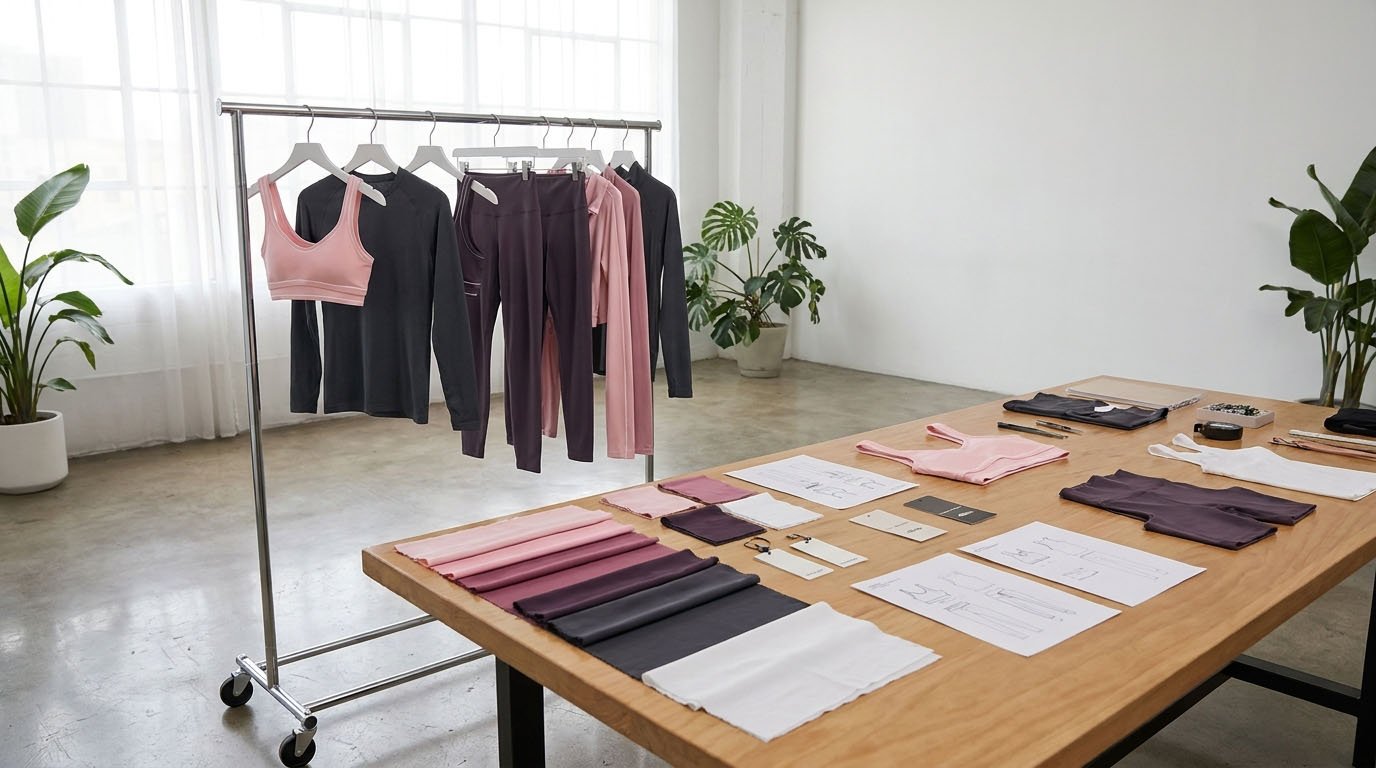
Quick Answer: How Can You Reduce Activewear MOQ?
To reduce activewear MOQ, keep essential features such as fit, logo placement, and performance requirements while remaining flexible on fabric sourcing, colors, decorative trims, and packaging.
The goal is to make your design compatible with smaller, more efficient production runs.
Activewear MOQ Reduction: Quick Comparison
| Strategy | Customization Preserved | What Changes | Potential MOQ Benefit |
|---|---|---|---|
| Use available performance fabrics | Fit, logo, construction | Fabric or color selection | Avoids new fabric production minimums |
| Reduce colorways | Original design, branding | Fewer launch colors | Concentrates quantity per color |
| Share materials across styles | Individual silhouettes | Standardized fabric and trims | May reduce material purchasing barriers |
| Simplify decorative details | Core design identity | Piping, panels, special hardware | Removes separate component minimums |
| Use existing patterns | Logo, selected design details | Original pattern development | Reduces development complexity |
| Simplify packaging | Garment branding | Premium packaging components | Reduces additional purchasing minimums |
These strategies do not guarantee a specific MOQ. Your manufacturer must confirm minimums for each material, style, color, and production process.
For an explanation of how manufacturing minimums are calculated, see our Low-MOQ Activewear Manufacturer Guide.
Step 1: Identify Which Customization Requirements Drive Your MOQ
Before negotiating, determine what is preventing your manufacturer from accepting a smaller order.
An activewear MOQ is rarely controlled by sewing quantity alone. Fabric sourcing, dyeing, production setup, and specialized trims may each have separate minimum requirements.
Understand the Different MOQ Layers
| MOQ Layer | Main Constraint | Possible Negotiation |
|---|---|---|
| Fabric | Mill production or dye-lot minimum | Choose available fabric |
| Color | Separate dyeing or color inventory | Reduce colorways |
| Style | Pattern, cutting, and sewing setup | Simplify construction |
| Branding | Logo production or application setup | Consider alternative methods |
| Trims | Minimum supplier purchase quantity | Use standard components |
For example, a factory may be willing to sew a small batch of leggings, but the requested custom-dyed nylon/spandex fabric could require a substantially larger material order.
In this situation, negotiating only the garment quantity does not solve the underlying constraint.
What to ask your manufacturer:
"Which requirement is setting the minimum order quantity: fabric, color, cutting, sewing, or accessories?"
Request the minimum for each relevant component in writing. Once the limiting factor is clear, you can evaluate alternatives without changing the entire product.
Step 2: Protect the Customization That Defines Your Brand
Reducing MOQ should not mean sacrificing the features customers associate with your brand.
The first decision is to separate essential customization from details that can be adjusted.
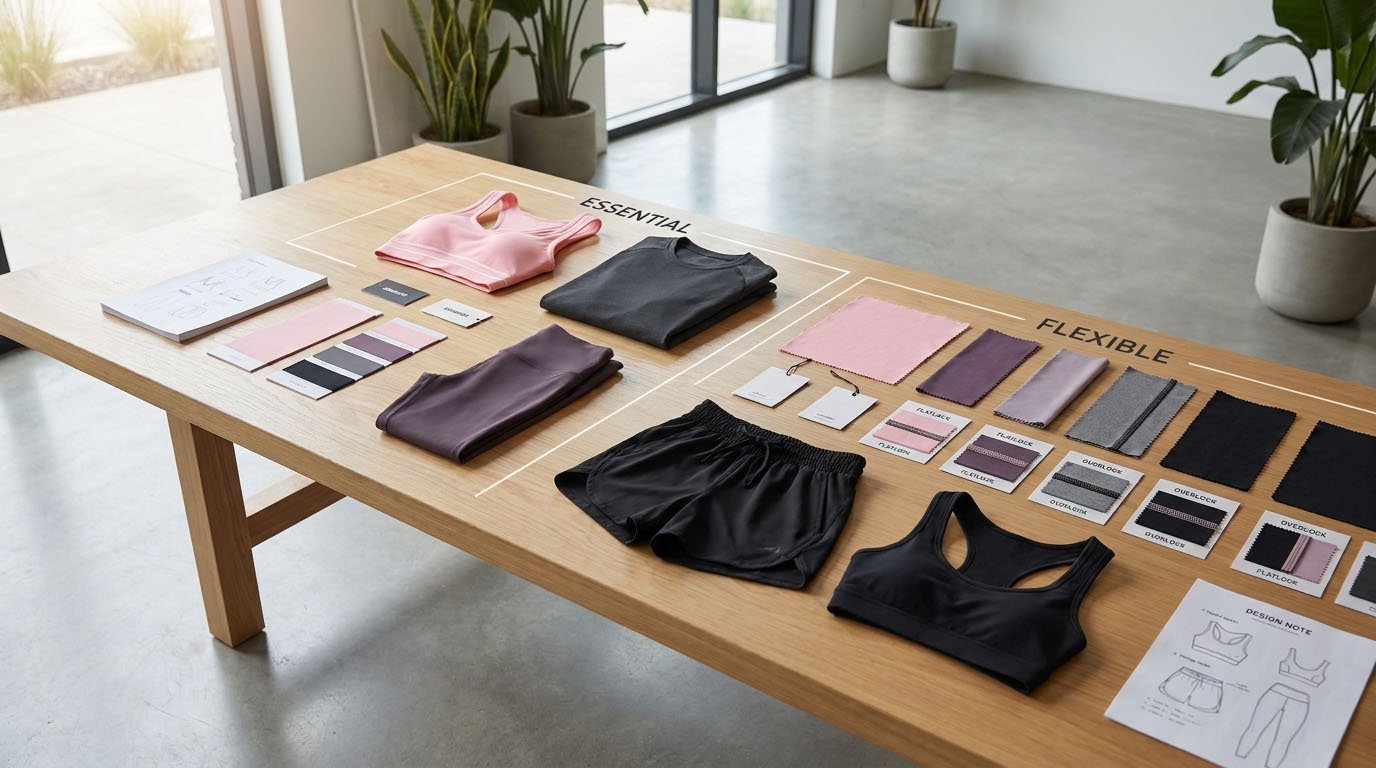
Build a Customization Decision Matrix
| Customization Element | Recommended Priority | Reason |
|---|---|---|
| Proprietary fit | Protect when essential | Differentiates the product |
| Fabric performance | Protect | Affects comfort and function |
| Logo placement | Usually keep | Supports brand recognition |
| Functional seams | Keep when necessary | Affects movement or support |
| Decorative color blocking | Flexible | May require additional fabric colors |
| Custom zipper pulls | Flexible | Can create separate trim minimums |
| Premium packaging | Flexible | Usually secondary to garment performance |
The correct priorities depend on the product.
For example:
- Yoga leggings: Protect waistband fit, four-way stretch, stretch recovery, and opacity under movement.
- Sports bras: Protect support, elastic performance, strap comfort, and construction.
- Training shorts: Protect mobility, waistband comfort, and relevant pocket or liner functions.
A leggings brand may be able to remove decorative side panels while preserving its distinctive waistband construction and fit.
However, replacing a technical fabric purely to reach a lower MOQ could change stretch, compression, or opacity.
The rule: Simplify appearance where appropriate, but verify that fit and functional performance remain acceptable.
Step 3: Use Available Fabrics and Simplify Secondary Design Details
Custom fabric development can introduce material minimums that are difficult to justify for a small launch.
One possible solution is to use a manufacturer's available fabric that meets your technical requirements.
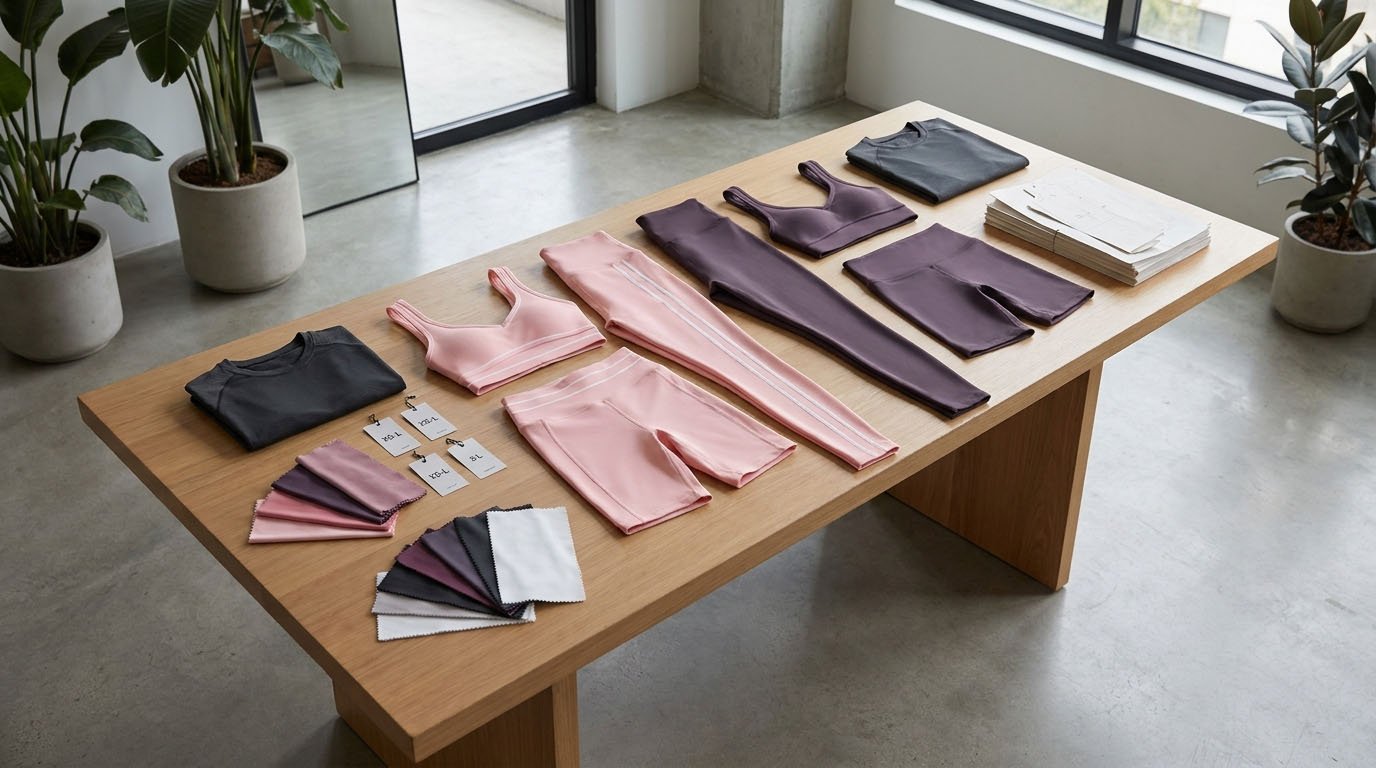
Stock Fabric vs Custom Fabric
| Fabric Option | MOQ Pressure | Customization Flexibility |
|---|---|---|
| Custom-developed knit and dye | Often higher | Greater control over specifications |
| Existing fabric with custom dyeing | Depends on dye-lot requirements | Greater color control |
| Existing fabric in available colors | Often lower | Limited to available materials and shades |
Available fabrics can eliminate the need to commission a new fabric production or dyeing batch, although garment production minimums still apply.
You can explore suitable material alternatives through Wearzio's Fabric Sourcing service.
Verify Fabric Performance Before Substitution
Do not assume that two fabrics with the same composition and GSM will perform identically.
Before approving a replacement, evaluate the properties relevant to your design:
- Stretch and recovery
- Opacity under movement
- Hand feel and compression
- Colorfastness and wash performance
- Fit after repeated use
For example, substituting one nylon/elastane fabric for another may affect how tightly leggings fit around the waist and hips.
Request physical swatches and, when necessary, a revised sample before approval.
Simplify Nonessential Construction Details
Other possible adjustments include replacing custom decorative piping with standard trim, reducing unnecessary color-block panels, or choosing an available elastic instead of ordering a specially branded waistband.
Each change should be reviewed against the approved sample and technical specifications.
The objective is not to make the garment generic. It is to remove customization that creates extra purchasing or production requirements without delivering proportional value.
Step 4: Consolidate Colors, Styles, and Materials
A small total order becomes more difficult when distributed across too many product variations.
A collection with three styles, four colors, and five sizes contains 60 individual SKUs.
By comparison, one style in two colors and five sizes contains only 10 SKUs.
Fewer variations can simplify inventory planning and concentrate quantities within each production configuration.
Coordinate Fabrics Across Related Products
Consider an activewear capsule containing leggings, biker shorts, and a sports bra.
If the designs can use the same approved fabric and compatible colors, the manufacturer may be able to combine material purchasing requirements.
However, sharing one fabric does not automatically mean different styles can share the same garment MOQ. Each style may still require separate cutting, sewing setup, and minimum production quantities.
Ask the manufacturer whether the proposed combination reduces fabric purchasing requirements, garment manufacturing minimums, or both.
For initial launches, prioritize a manageable product range and add additional colors after reviewing actual customer demand.
Step 5: Compare Three Production Options Before Accepting a High MOQ
When a factory's initial MOQ exceeds your budget, ask for alternative manufacturing configurations instead of requesting a lower quantity under unchanged specifications.
This is where MOQ negotiations become more productive.
Three Customization Routes
| Production Route | What You Keep | What You Adjust | Best Use |
|---|---|---|---|
| A: Fully Custom | Original fit, selected materials, detailed branding | Minimal changes | Brands requiring full design control |
| B: Optimized Custom | Original fit, key construction, logo | Available fabrics, colors, standard trims | Brands protecting proprietary designs |
| C: Modified Existing Design | Branding, selected colors and details | Base pattern and some construction | Brands comfortable using proven styles |
Route A: Keep the Full Custom Design
This approach preserves the original specifications but may retain higher material and production minimums.
Use it when distinctive materials or construction are central to your product positioning.
Route B: Retain Your Fit and Optimize Materials
Keep your proprietary pattern and essential construction while allowing the manufacturer to recommend compatible materials and standard accessories.
This may remove some fabric or trim purchasing barriers without eliminating your design identity.
Route C: Customize an Existing Manufacturer Design
Start with a manufacturer-developed silhouette and apply approved branding or design modifications.
This may reduce original development requirements, but customization flexibility and design ownership can differ.
For a deeper comparison of these manufacturing approaches, read Private Label vs OEM vs ODM Activewear.
Wearzio also provides Private Label services for branding, labels, and packaging when an existing product is suitable for your requirements.
Negotiation tip: Ask the manufacturer to quote all feasible routes against the same target order quantity. Compare the actual customization retained, not just the advertised MOQ.
Step 6: Negotiate MOQ, Unit Price, and Development Costs Together
A lower MOQ may increase the unit price because development, cutting, and production setup costs are distributed across fewer garments.
However, a smaller order can still reduce your total initial investment and inventory exposure.
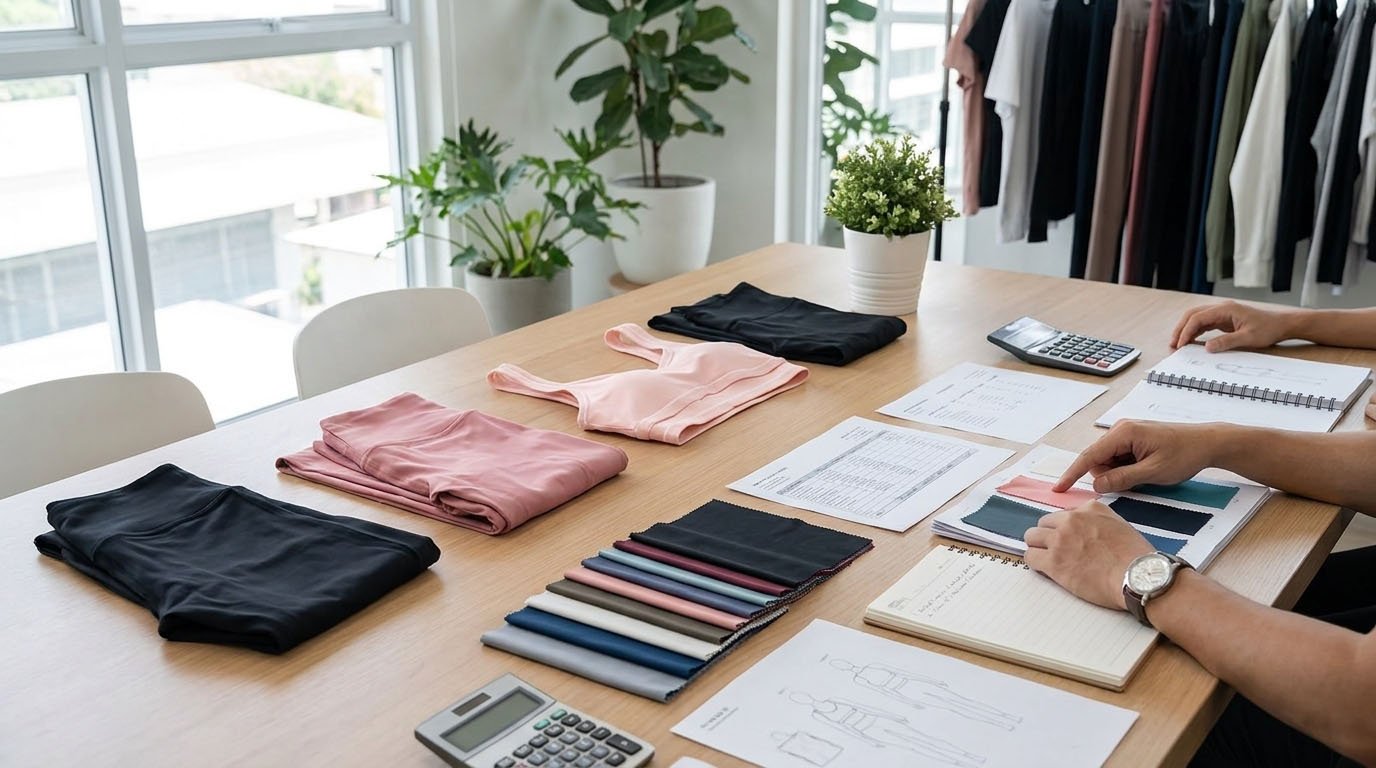
Compare the Complete Production Proposal
| Evaluation Item | What to Confirm |
|---|---|
| Minimum quantity | Per style, color, fabric, or order |
| Unit price | Price at each proposed quantity |
| Development charges | Pattern, sampling, and revisions |
| Material requirements | Stock fabric or custom purchasing minimum |
| Branding costs | Logo application, labels, and trims |
| Lead time | Sampling, material sourcing, and bulk production |
| Reorder conditions | Material availability and future minimums |
For example, ordering fewer leggings at a higher unit price might be preferable to purchasing significantly more inventory before demand has been validated.
But the decision depends on total costs, expected sales, and your available budget.
Send a Focused MOQ Negotiation Brief
Rather than asking, "What is your lowest MOQ?", explain exactly where your brand can be flexible.
Example: Custom Leggings MOQ Negotiation Request
We are developing a high-waisted yoga legging for our first collection.
Essential requirements: Our original fit, four-way stretch, good recovery, opacity under movement, and custom logo placement.
Flexible requirements: Fabric supplier, available colors, decorative trims, and packaging.
Target quantity: 150 pieces in black, across sizes XS–XL.
Could you compare the MOQ, unit price, sampling costs, and lead time for:
- Our original specifications.
- Our original fit using suitable available fabric.
- A comparable existing silhouette with our branding.
Please identify which specifications would need to change to make each option feasible.
The 150-piece quantity is an illustrative buyer request, not a confirmed Wearzio MOQ.
This approach gives the factory enough information to recommend practical alternatives without assuming that every customization requirement must be removed.
For the full documentation and quotation checklist, see What Information Should You Send an Activewear Manufacturer for a Quote?.
FAQ: Reducing Activewear MOQ Without Losing Customization
Can I Keep My Custom Logo With a Low MOQ?
Often, yes. Logo application on existing or customized garments may be possible at smaller quantities than developing completely new fabrics or components.
The actual minimum depends on the logo method, artwork, placement, and supplier setup requirements.
Can I Combine Sizes to Meet a Manufacturer's MOQ?
Manufacturers may allow a range of sizes within a style and color, subject to their production requirements.
However, size allocation does not necessarily allow you to combine different colors or styles into one minimum.
Confirm the quantity rules before finalizing your size breakdown.
Can I Reduce MOQ and Still Use My Own Leggings Pattern?
Potentially. Retaining your original pattern while using approved available materials can remove certain sourcing restrictions.
However, the manufacturer must still confirm cutting, sewing, and material feasibility. Changes to fabric may also require fit reapproval.
Will Reducing MOQ Increase My Unit Cost?
It often can. Smaller production runs distribute setup and development expenses across fewer garments.
Compare total initial spending alongside unit price, sampling charges, and inventory risk.
Does Using Stock Fabric Reduce Activewear Quality?
Not necessarily.
Available technical fabrics can meet demanding performance requirements, but their suitability must be verified.
Assess stretch recovery, opacity, wash performance, and the other properties relevant to your product rather than assuming equivalence based on fabric composition alone.
Conclusion: Reduce MOQ by Negotiating the Right Specifications
Reducing activewear MOQ does not have to mean giving up your brand identity.
The most effective approach is to protect essential product features while remaining flexible on the specifications that create unnecessary production barriers.
Start by identifying the material or process controlling the minimum. Then explore compatible fabrics, fewer color variations, simplified accessories, and alternative development routes.
Most importantly, compare written quotations that clearly state what customization is preserved and what changes.
Discuss Your Custom Activewear MOQ With Wearzio
At Wearzio, we support activewear brands with fabric sourcing, private labeling, and OEM/ODM manufacturing.
Whether you are developing original leggings, sports bras, training shorts, or a small activewear capsule collection, our team can review your requirements and discuss suitable production options.
Share your product references, essential customization details, preferred quantities, and target timeline.