A great activewear design can still produce a disappointing first sample if the manufacturer receives incomplete technical instructions. Unclear measurements, vague fabric requirements, and missing construction details often lead to unnecessary revisions.
An activewear tech pack should clearly define the garment's design, fit, materials, construction, and branding so the manufacturer can develop samples without making critical assumptions.
You do not need a complicated document. You need accurate specifications, clear responsibilities, and a record of what still requires confirmation.
This guide explains what to include in your activewear tech pack and how to determine whether it is ready for sampling.
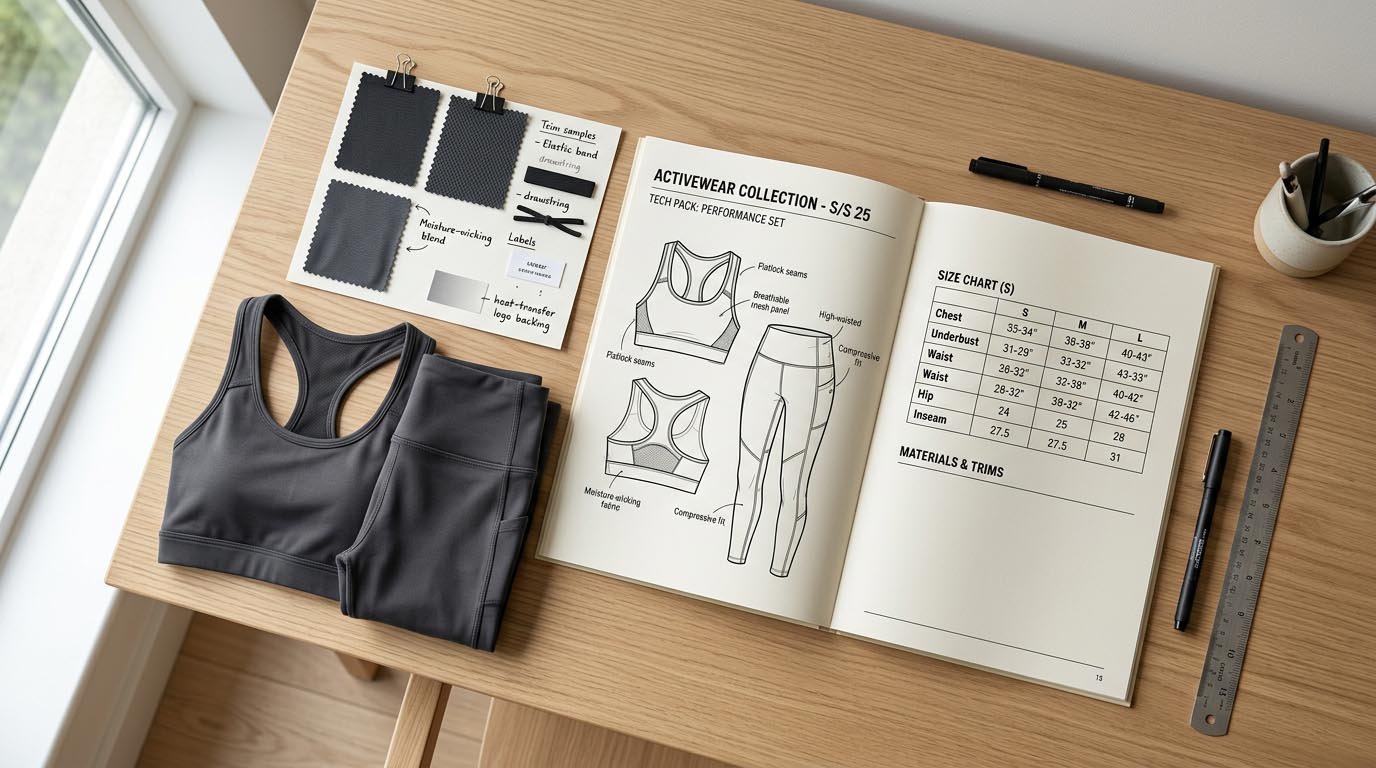
Quick Answer: What Should an Activewear Tech Pack Include?
An activewear tech pack is a technical specification document that communicates how a garment should be developed and manufactured.
For leggings, sports bras, workout tops, and other performance apparel, it should cover six essential areas.
| Tech Pack Component | Information Required |
|---|---|
| Technical Flat Sketches | Front, back, and relevant interior views with design callouts |
| Measurements & POM | Base-size measurements, measuring methods, fit requirements, and tolerances |
| Fabric Specifications & BOM | Composition, construction, GSM, stretch, recovery, and components |
| Construction Details | Seams, stitching, hems, waistbands, and functional features |
| Branding & Packaging | Logo artwork, placement, labels, colorways, and packaging |
| Revision & Approval Records | Document version, pending decisions, and approved specifications |
Important: A complete graded size chart is not always necessary before the first sample. Many brands begin with base-size measurements and finalize grading after fit approval.
The key is knowing which details must be confirmed before sampling and which can be developed with your manufacturer.
Step 1: Define Your Design With Technical Flat Sketches
Technical flat sketches show how a garment is constructed rather than how it looks on a model.
Reference photos help communicate design inspiration, but they cannot reliably define seam positions, panel shapes, or internal construction.
What Should Your Technical Sketch Show?
Include:
- Front and back garment views.
- Visible seams, panels, and stitching lines.
- Waistband, neckline, and hem construction.
- Pockets, gussets, straps, and functional details.
- Logo placement and critical dimensions.
- Interior views where necessary.
For leggings, the sketch should show whether the waistband uses folded fabric or separate panels, whether a gusset is required, and where the seams are positioned.
These details influence pattern development and sewing operations.
Can You Submit Hand-Drawn Sketches?
Yes. Clear hand-drawn sketches with measurements and construction notes can support an initial technical review.
Professional CAD flats are helpful, but complete specifications matter more than presentation quality.
A PDF is practical for sharing the tech pack, with editable artwork supplied separately when needed.
Step 2: Prepare Measurements, POM, and Fit Specifications
Measurements are among the most important parts of an activewear tech pack.
Descriptions such as "high-waisted," "slim fit," or "light compression" communicate design intent but do not establish measurable garment dimensions.
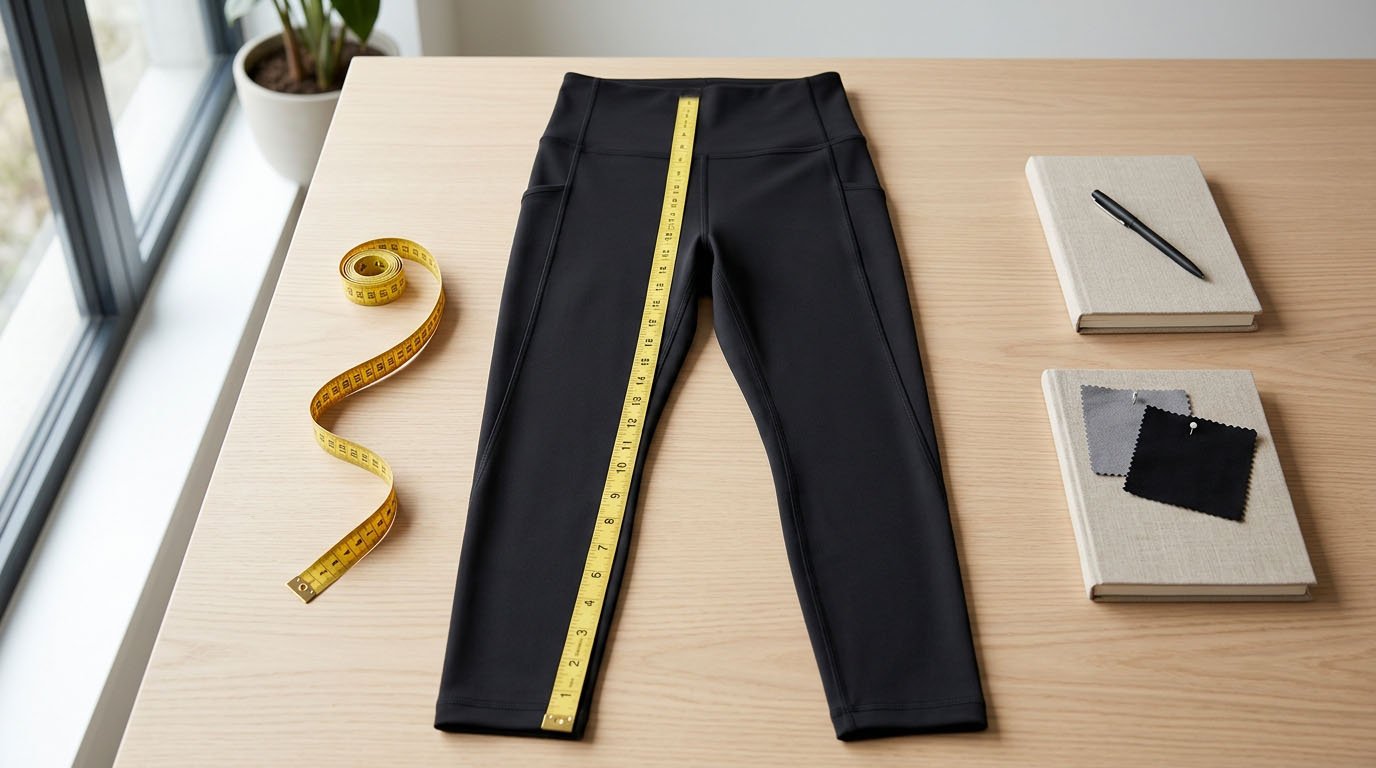
Define Your Points of Measurement (POM)
Each POM should identify where and how a garment is measured.
| Leggings POM | Measurement Method |
|---|---|
| Waist Width | Measure across the relaxed waistband |
| Hip Width | Measure horizontally at the defined point below the waistband |
| Front Rise | Measure from the specified crotch point to the front waist edge |
| Back Rise | Measure from the specified crotch point to the back waist edge |
| Inseam Length | Measure along the inside leg to the hem |
| Leg Opening | Measure across the relaxed opening |
Include target measurements, the base size, and agreed tolerances.
Also state whether measurements are taken flat, relaxed, or extended under a defined method.
For stretch activewear, relaxed dimensions may not fully communicate the desired fit. Waistband extension, compression expectations, and recovery may require additional specifications.
Do You Need a Complete Graded Size Chart?
For initial development, a confirmed base-size chart may be sufficient.
A typical process is:
- Define the base-size measurements and fit requirements.
- Develop the initial pattern and sample.
- Evaluate fit and movement.
- Adjust measurements and construction.
- Confirm grading rules for additional sizes.
Before bulk production, the brand and manufacturer should agree on complete size specifications and tolerances.
Avoid applying one universal measurement tolerance to every garment. Acceptable variation depends on the measurement point, fabric behavior, construction, and approved quality requirements.
Step 3: Specify Performance Fabrics and Your Bill of Materials
Fabric composition alone does not determine activewear performance.
Two fabrics containing identical nylon and elastane percentages can differ in stretch, recovery, opacity, compression, and surface texture.
Your tech pack should communicate the required performance characteristics.
Essential Activewear Fabric Specifications
| Specification | What to Document |
|---|---|
| Fiber Composition | Nylon, polyester, elastane, or other fibers |
| Fabric Construction | Interlock, single jersey, rib knit, or another structure |
| Fabric Weight | Target GSM and agreed tolerance |
| Stretch | Required elongation and measurement method |
| Recovery | Expected recovery under defined conditions |
| Hand Feel | Brushed, smooth, matte, or soft-touch |
| Functional Performance | Moisture management, opacity, compression, or other targets |
| Color | Approved reference, swatch, or color target |
Compression leggings may require particular attention to recovery and opacity when stretched. Sports bras may prioritize support and material behavior during repeated movement.
Do not assume that a particular GSM or fiber blend automatically guarantees performance.
If your material is not finalized, describe the intended properties and ask your manufacturer to recommend suitable fabrics.
Wearzio's fabric sourcing services can support material selection based on your product requirements.
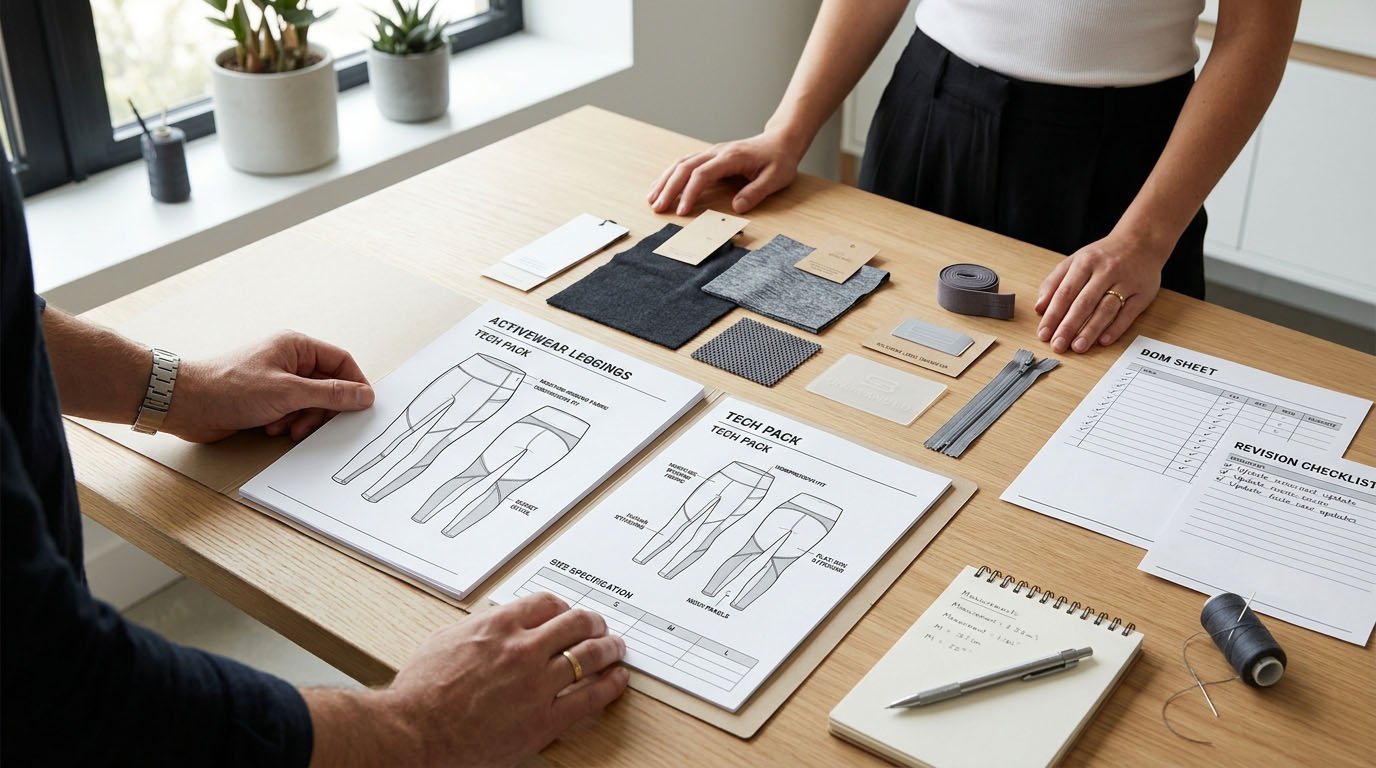
Include a Bill of Materials (BOM)
A BOM identifies the materials and components needed to manufacture your garment.
Here is a simplified leggings example.
| Component | Required Specification |
|---|---|
| Main Body Fabric | Composition, structure, GSM, color |
| Gusset Lining | Material and construction, if applicable |
| Waistband Elastic | Width, type, and stretch behavior, if used |
| Logo Transfer | Artwork, dimensions, and application |
| Care Label | Content, material, and placement |
A production BOM may also include material codes, supplier references, and consumption quantities.
For early development, mark unresolved components as Pending Manufacturer Confirmation rather than leaving them undefined.
This separates approved specifications from proposed options.
Step 4: Document Seams, Construction, and Trims
Activewear construction requires attention to stretching, body movement, and repeated wear.
Your tech pack should explain how critical garment sections are assembled and what functional results are expected.
Which Construction Details Matter Most?
| Construction Area | What to Specify |
|---|---|
| Main Seams | Required seam appearance, structure, and elasticity |
| Hems | Fold width, finishing method, and stretch |
| Waistband | Height, panels, elastic, and attachment |
| Gusset | Shape, lining, and seam arrangement |
| Sports Bra Support | Underband, padding, lining, and straps |
| Stress Points | Reinforcement and performance requirements |
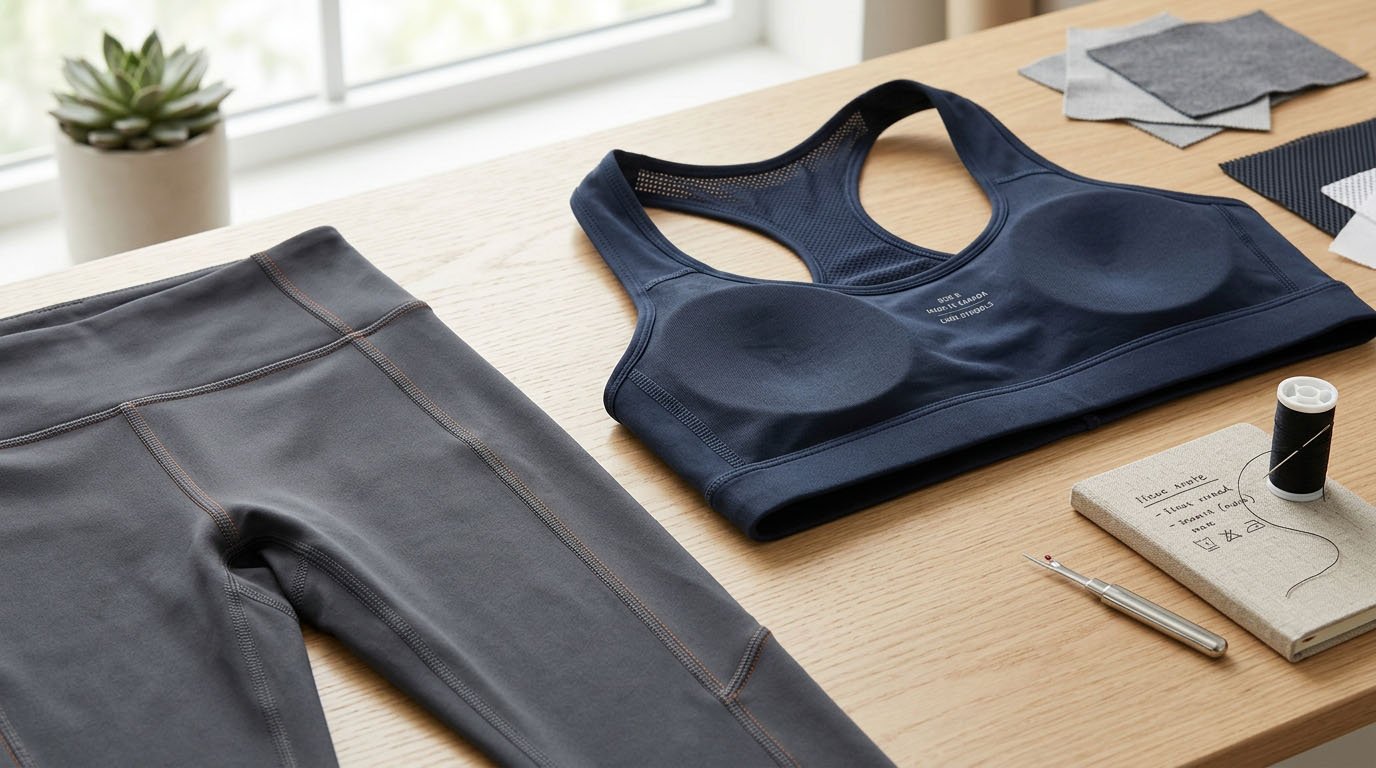
Common Activewear Seam Options
Flatseam or flatlock construction: Often considered where a low-profile seam and wearer comfort are important.
Coverstitch: Commonly used for stretch hems and selected finishing operations.
Overlock: Provides flexible seam joining and edge finishing, depending on the stitch type.
Bonded seams: May be suitable for selected technical designs when fabrics and bonding materials are compatible.
The appropriate method depends on garment design, material properties, and performance requirements.
Rather than specifying a stitch only by name, provide construction references or an approved physical sample when possible.
For brands without finalized sewing specifications, Wearzio's cut and sew services can assist with construction development.
What If You Do Not Know the Exact Stitch Type?
You can describe the required outcome instead:
- Does the seam need high elasticity?
- Will it contact sensitive skin?
- Should it have a flat appearance?
- Is the area exposed to repeated tension?
- Is a particular visual finish required?
Your manufacturer can recommend a suitable construction method for approval.
Step 5: Confirm Branding, Labels, Colorways, and Packaging
Branding requirements should be included in the tech pack rather than scattered across separate emails.
A logo mockup alone does not provide enough information for accurate application.
Specify Your Branding Requirements
For each logo, document:
- Approved vector artwork.
- Finished dimensions.
- Placement measured from defined garment reference points.
- Application method, such as heat transfer, screen printing, or embroidery.
- Color and appearance requirements.
For example, a leggings logo placed on the left hip should have its position defined relative to the waistband or side seam.
Use approved placement measurements rather than assumed factory defaults.
Labels and Packaging
Include relevant requirements for:
- Brand and size labels.
- Fiber-content and care labels.
- Label placement and attachment.
- Hangtags and barcodes.
- Folding and individual packaging.
- Colorways and approved color references.
Labeling requirements depend on the destination market and should be reviewed before commercial production.
Final retail packaging may not be necessary for an early fit sample unless it affects the requested sample.
Wearzio's private label services support customized branding, labels, and packaging.
Step 6: Check Tech Pack Readiness Before Sampling
Before submitting your tech pack, confirm that the manufacturer can identify the required specifications and unresolved decisions.
Pre-Sampling Tech Pack Checklist
- [ ] Technical sketches show the key garment features.
- [ ] Base-size POMs are provided or scheduled for joint development.
- [ ] Fit and performance requirements are clear.
- [ ] Fabric specifications or sourcing targets are documented.
- [ ] Critical seams and construction details are identified.
- [ ] Logo artwork and sample-stage branding details are available.
- [ ] BOM components are marked confirmed or pending.
- [ ] The latest document revision is clearly identified.
- [ ] Outstanding technical decisions have assigned responsibilities.
A tech pack is ready for sampling when essential requirements are defined and unresolved details are assigned for confirmation—not when every bulk-production specification is already finalized.
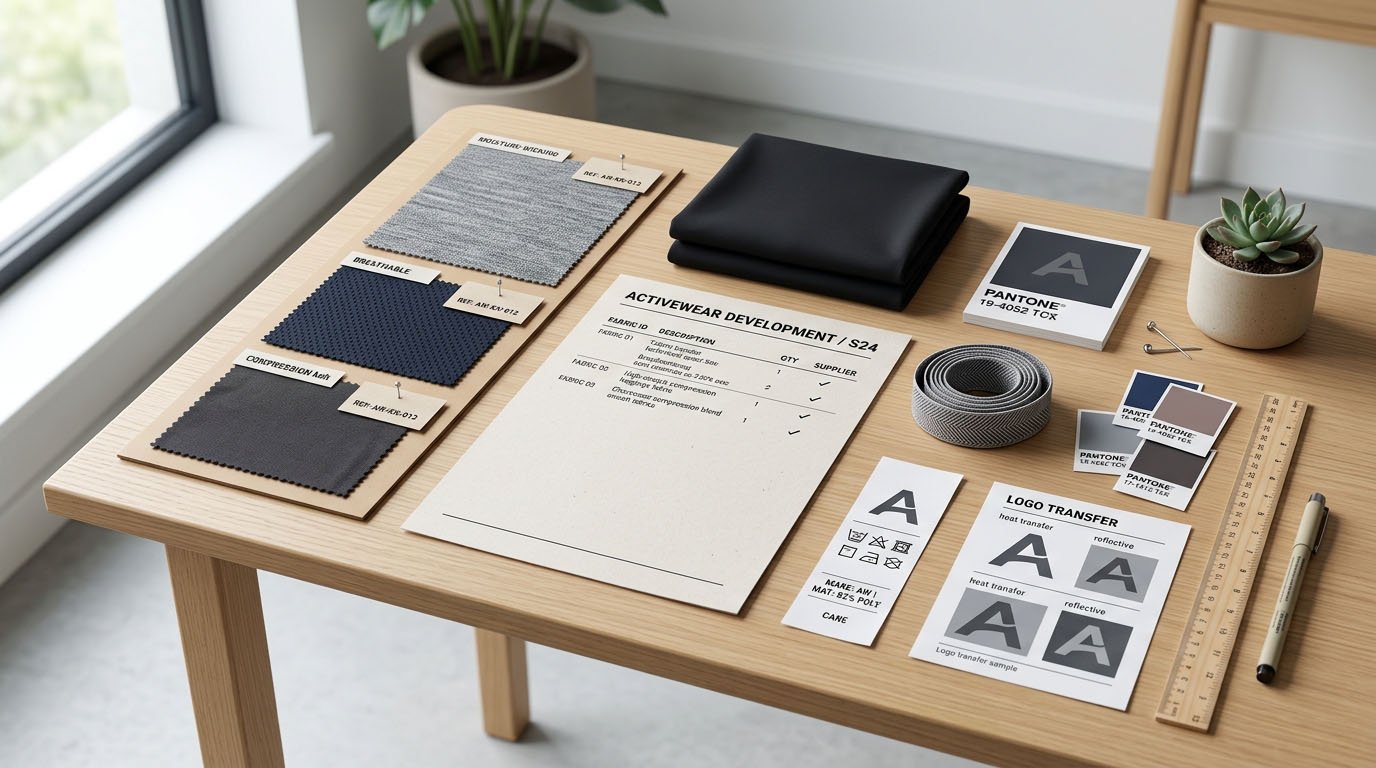
What Must Be Confirmed Before Sampling?
| Confirm Before Sampling | May Be Finalized During Development |
|---|---|
| Garment design and critical features | Full size grading |
| Base-size targets or agreed development brief | Noncritical trim details |
| Fabric selection or material-development direction | Final bulk sourcing arrangements |
| Essential construction requirements | Certain decorative finishes |
| Requirements affecting the sample | Final retail packaging where unnecessary |
Exact requirements depend on whether you are developing an initial prototype, fit sample, or pre-production sample.
Track Tech Pack Revisions
Every updated document should include a version identifier.
Example:
- Style: Women's High-Waisted Leggings
- Style Code: LG-001
- Revision: V1.2
- Date: [Revision Date]
- Status: Pending Sample Review
Record important changes, such as revised waistband measurements, updated fabric references, or confirmed logo placement.
Ensure the manufacturer receives the latest version and can identify superseded files.
Once your specifications are ready, the next stage involves physical sample development and evaluation.
See our Activewear Sampling Process Guide: From Tech Pack to Bulk Production for the complete workflow.
Common Tech Pack Mistakes That Delay Sampling
The following errors frequently cause unnecessary clarification or sample revisions.
| Common Mistake | Better Approach |
|---|---|
| Reference images without instructions | Provide technical sketches and callouts |
| Vague fabric descriptions | Specify construction and performance targets |
| Missing measurement methods | Define POM locations and conditions |
| Unclear construction requirements | Explain the required function and finish |
| Conflicting document versions | Maintain one current revision |
| Undefined development responsibilities | Identify pending decisions and approvers |
A complete tech pack cannot guarantee first-sample approval. Physical fitting and performance evaluation are still necessary.
However, better documentation helps ensure that revisions address the actual product rather than missing instructions.
FAQ: Activewear Tech Packs Before Sampling
1. Do I Need a Complete Tech Pack Before Contacting a Manufacturer?
No. You can begin feasibility and pricing discussions with sketches, reference samples, estimated quantities, and customization requirements.
More detailed specifications are normally needed before pattern development and sample cutting.
2. Can an Activewear Manufacturer Help Create My Tech Pack?
Some OEM/ODM manufacturers provide technical development support, including measurements, patterns, material sourcing, and construction specifications.
Confirm the development scope, costs, deliverables, and approval responsibilities before starting.
3. What Is the Difference Between a Tech Pack and a Sample?
A tech pack documents the intended garment specifications. A sample is the physical product made from those instructions.
Sample feedback should be reflected in updated technical specifications before further development or bulk production.
4. Do I Need a Tech Pack for Private Label Activewear?
It depends on the customization level.
Ready-made garments with simple logo or label customization may require only branding and order specifications.
Original cut-and-sew designs generally need more comprehensive technical documentation.
5. Does a Complete Tech Pack Guarantee First-Sample Approval?
No. An accurate tech pack reduces misunderstandings, but physical samples still require fit, construction, and material evaluation.
Sampling helps validate and refine specifications before production approval.
Conclusion: Prepare Your Activewear Tech Pack for Sampling
An effective activewear tech pack translates your design into clear, measurable manufacturing instructions.
Focus on technical sketches, fit measurements, fabric specifications, construction requirements, branding details, and an organized BOM.
You do not need to resolve every technical question independently. What matters is documenting your requirements, identifying pending decisions, and agreeing on the specifications needed for development.
At Wearzio, we support activewear brands through fabric sourcing, technical development, sampling, and manufacturing.
Whether you have a completed tech pack or need assistance refining your specifications, our team can help review your requirements and plan the next development stage.