Choosing between an activewear manufacturer, supplier, and wholesaler can be confusing when launching or expanding a fitness apparel brand. These terms are often used interchangeably, but they describe different business roles and levels of production control.
An activewear manufacturer produces garments according to specifications. A wholesaler primarily sells existing inventory in bulk. A supplier is a broader term that may describe either business—or a trading company, sourcing agent, or distributor.
Your best choice depends on whether you need ready-made leggings, private-label sports bras, or fully customized performance apparel.
At Wearzio, we support both custom activewear manufacturing and ready-stock wholesale. This guide compares production control, customization, MOQ, costs, and sourcing risks to help you choose the right approach.
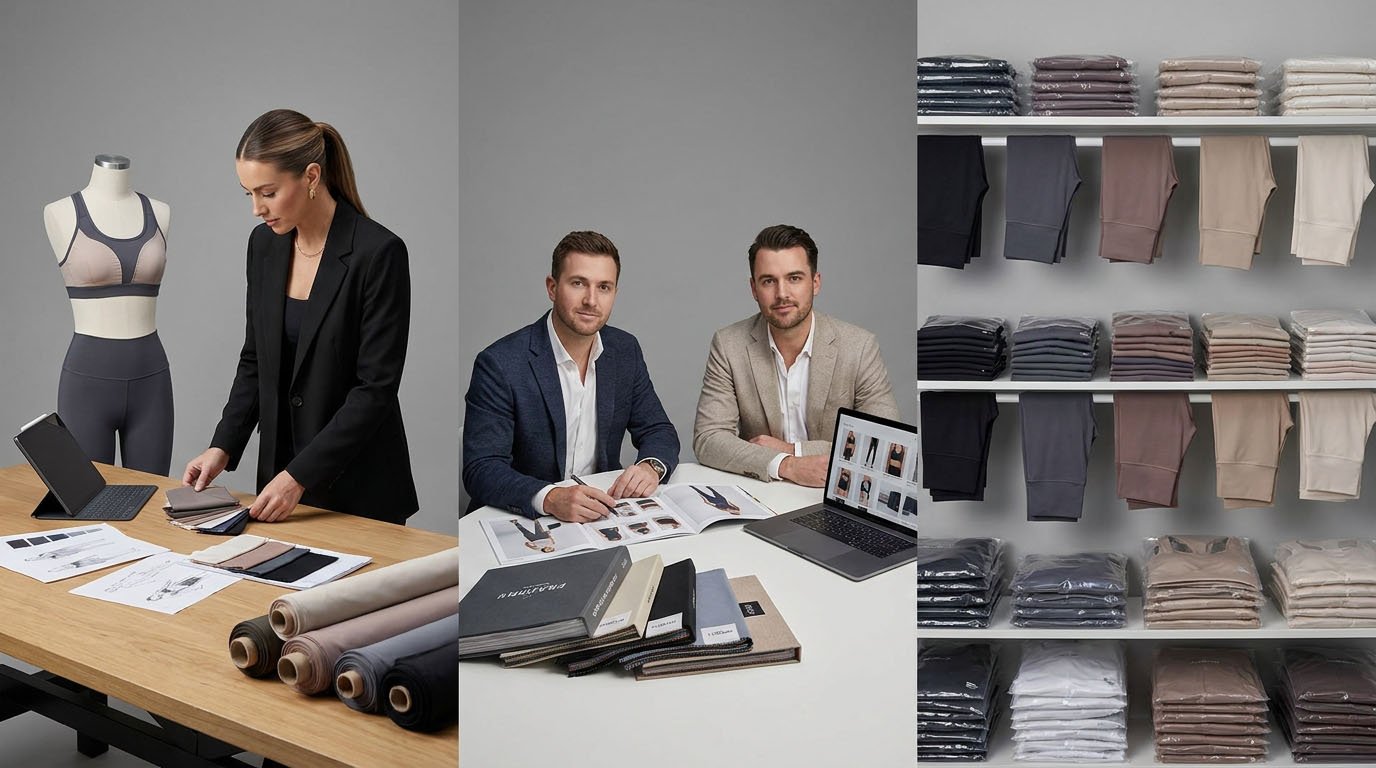
Quick Answer: Activewear Manufacturer vs Supplier vs Wholesaler
The main difference is what each business provides and how much control it has over production.
| Factor | Manufacturer | Wholesaler | Supplier |
|---|---|---|---|
| Primary role | Produces garments | Sells existing products in bulk | General product provider |
| Production control | Directly manages production | Usually limited or indirect | Depends on business type |
| Product availability | Custom production; sometimes stock | Typically ready stock | Varies |
| Customization | High | Usually limited | Depends on capabilities |
| MOQ | Based on production requirements | Often more flexible | Depends on sourcing model |
| Lead time | Includes manufacturing | Mainly picking and shipping | Varies |
| Best for | Custom activewear brands | Retailers and market testing | Depends on services |
Important: Manufacturers and wholesalers can both be suppliers. These are not three mutually exclusive categories.
The more useful question is whether your supplier manufactures garments, sells stocked products, coordinates third-party production, or combines these services.
Key 1. What Does Each Activewear Sourcing Partner Actually Do?
Understanding each partner's responsibilities helps prevent confusion about product quality, pricing, and delivery.
Activewear Manufacturer: Direct Garment Production
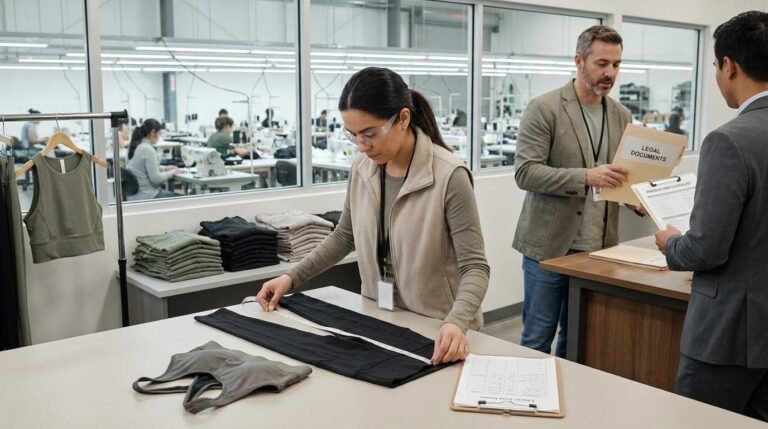
An activewear manufacturer produces clothing using approved designs, fabrics, patterns, and construction requirements.
Depending on its capabilities, a manufacturer may manage:
- Fabric sourcing and inspection
- Pattern development and grading
- Cutting, sewing, and finishing
- Logo application and labeling
- Quality control and packaging
Some specialized processes may be outsourced, but the manufacturer should remain accountable for agreed production requirements.
For example, developing high-waisted yoga leggings may involve custom waistband dimensions, squat-resistant fabrics, reinforced seams, and specific stretch recovery requirements.
Best for: Brands needing customized fit, fabric, construction, or performance.
Activewear Wholesaler: Ready-Made Inventory
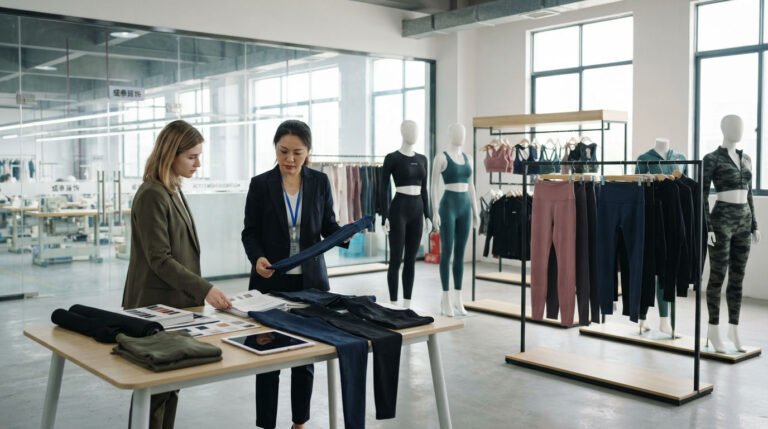
A wholesaler primarily purchases or holds finished garments and resells them in bulk.
Typical products include yoga leggings, sports bras, training shorts, gym T-shirts, and athleisure sets.
Because the garments already exist, buyers can select available styles, colors, and sizes without waiting for a complete manufacturing cycle.
Some wholesalers offer logo printing, relabeling, or custom packaging. However, significant changes to fabric, pattern, or fit usually require manufacturing.
Best for: Retailers, startups testing demand, and businesses requiring faster replenishment.
For additional sourcing options, explore our guide to the best wholesale activewear suppliers.
Activewear Supplier: A Broad Commercial Term
A supplier is any business providing products or materials to another business.
It may be:
- A direct garment manufacturer
- A wholesale distributor
- A trading company or sourcing agent
- A fabric or accessories supplier
A supplier does not necessarily own a factory or hold inventory.
For example, a trading company might accept an order for sports bras while arranging production through an independent factory.
This can be a practical arrangement if the supplier provides reliable coordination and quality oversight.
Key takeaway: Evaluate a supplier's actual capabilities rather than relying on its business title.
Key 2. How Do Production Control and Customization Differ?
Customization is a major distinction between ready-stock wholesale and made-to-order manufacturing.
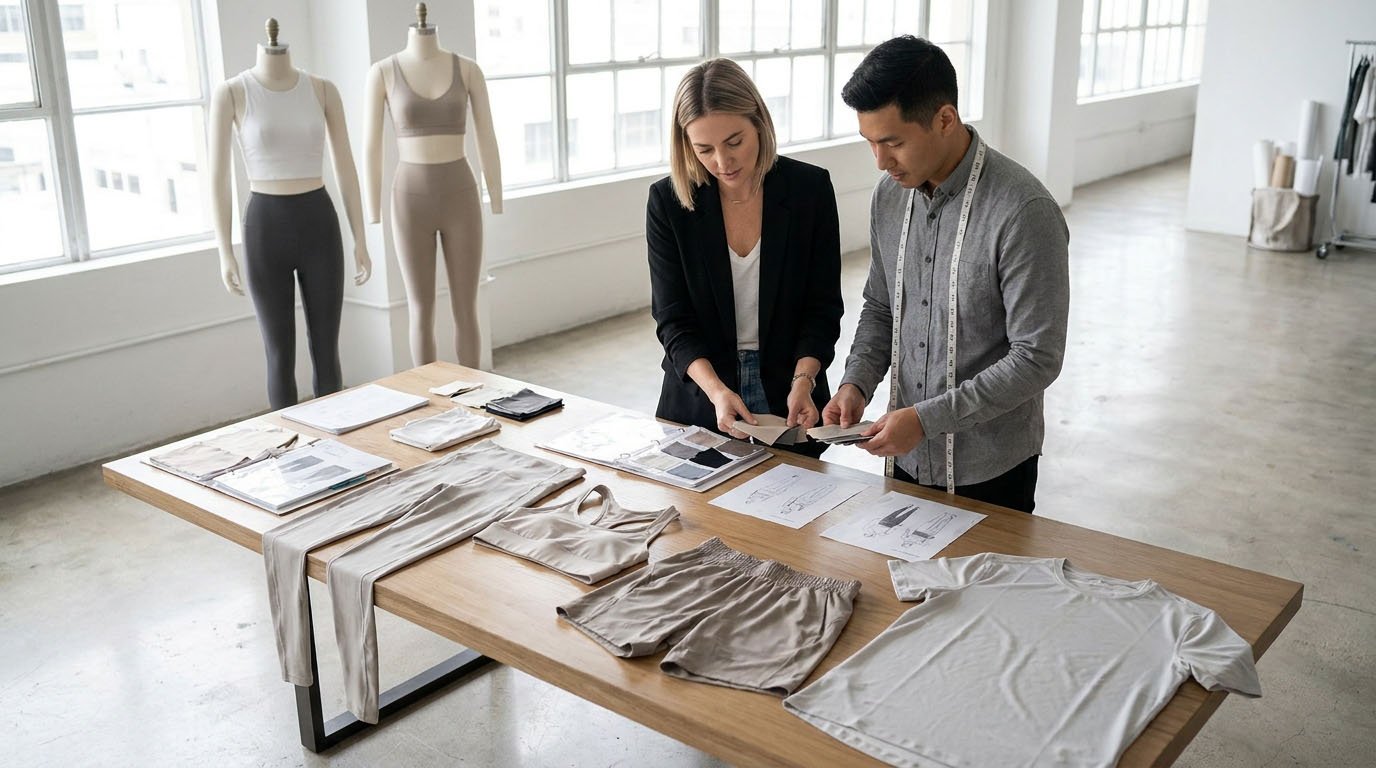
Manufacturing Offers Greater Technical Control
Manufacturers can generally support more extensive product-development requirements.
| Product | Custom Manufacturing Options |
|---|---|
| Yoga leggings | Waistband, inseam, gusset construction |
| Sports bras | Support structure, straps, underband |
| Training shorts | Pocket design, lining, seam placement |
| Performance T-shirts | Fabric, fit, stitching, ventilation |
Such changes may affect sampling, fabric requirements, production schedules, and MOQ.
Technical activewear also requires attention to stretch recovery, opacity, colorfastness, and seam durability.
An approved sample and clear specifications help establish quality expectations before bulk production.
Wholesale Offers Limited Modification
Wholesale products use existing patterns and fabrics. Customization typically focuses on logos, labels, hangtags, and packaging.
If your brand needs a different waistband structure or specialized performance fabric, a custom production arrangement may be necessary.
Where Do OEM, ODM, and Private Label Fit?
These terms describe development or branding arrangements rather than separate types of suppliers.
- OEM: Production based on buyer-provided specifications.
- ODM: Using a manufacturer's existing design with agreed modifications.
- Private Label: Selling existing or supplier-developed products under your brand.
A manufacturer may offer all three, while a wholesaler may support limited private labeling.
For a deeper explanation, see our Private Label vs OEM vs ODM Activewear Guide.
Key 3. How Do MOQ, Lead Times, and Total Costs Compare?
The lowest unit price does not always produce the lowest overall sourcing cost.
Buyers should compare minimum orders, development expenses, delivery schedules, and inventory exposure.
MOQ: Production vs Ready Stock
Manufacturing MOQs often reflect material purchasing, cutting efficiency, and production setup. Wholesale MOQs depend more on available inventory and supplier policies.
| Consideration | Manufacturer | Wholesaler |
|---|---|---|
| MOQ basis | Style, color, or configuration | Stock units, packs, or order value |
| Size flexibility | Agreed size breakdown | Available stock |
| New colors | May require material minimums | Limited to existing colors |
| Reorders | May need another production run | Subject to stock availability |
For reference, Wearzio currently publishes an ODM MOQ starting at 50 pieces per style and an OEM MOQ starting at 300 pieces per color.
These are Wearzio's reference quantities, not universal industry standards. Actual minimums depend on the product and customization.
Always confirm whether MOQ applies per style, color, or configuration.
Lead Time: Ready Stock vs Custom Production
Wholesale generally offers faster dispatch because garments have already been produced.
Custom manufacturing may involve specification approval, sampling, material preparation, production, and final inspection.
Wearzio publishes reference timelines of approximately 7–10 days for sampling and 25–35 days for production, depending on requirements.
Shipping time is additional, and actual delivery dates should be confirmed for each order.
Compare Total Landed Cost
Unit price alone does not capture your complete investment.
Total Landed Inventory Cost = Product Cost + Development and Sampling + Freight + Applicable Duties and Taxes + Inspection + Packaging and Other Direct Import Costs
Landed Cost per Sellable Unit = Total Landed Inventory Cost ÷ Sellable Units
Inventory risk should be evaluated separately because unsold products tie up working capital.
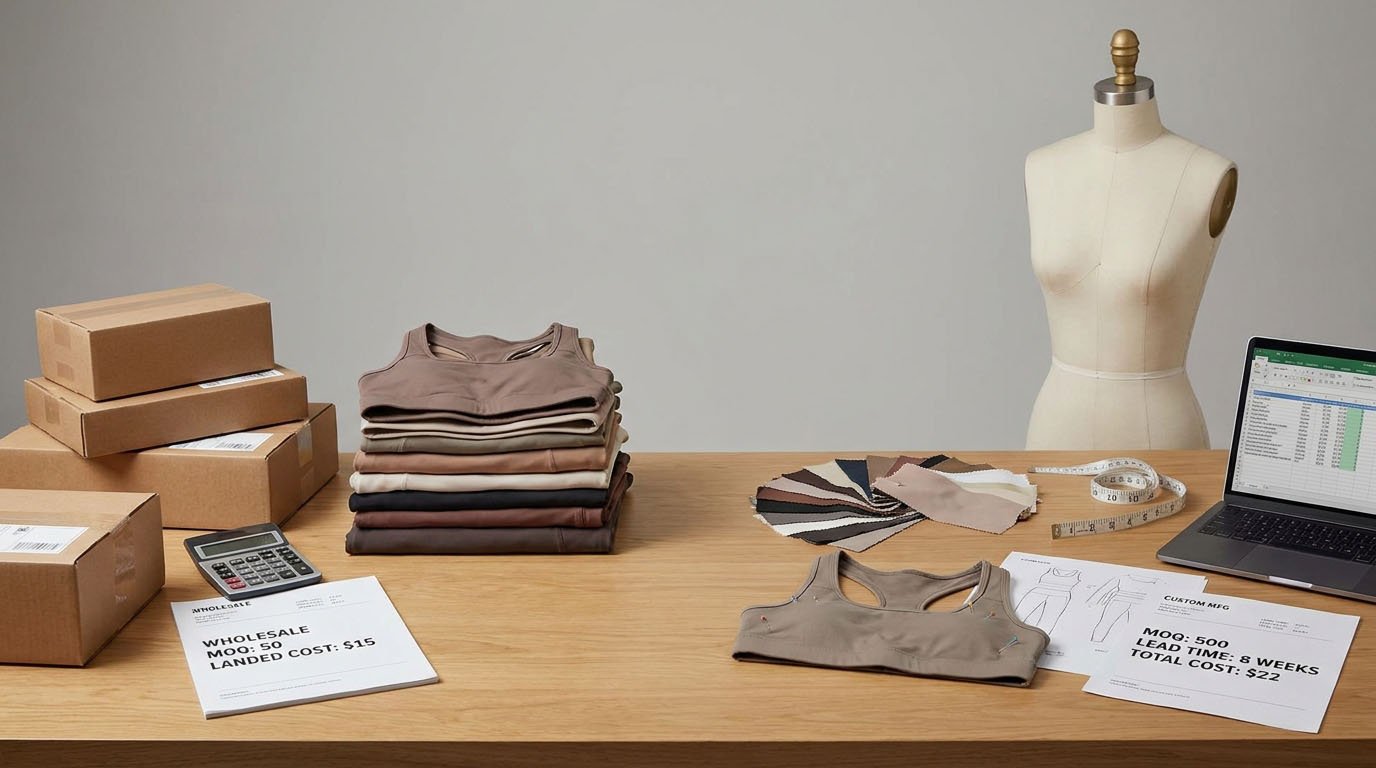
Which Option Is More Cost-Effective?
Consider two examples:
Startup Brand A: Wants to test basic gym leggings without developing new patterns.
Ready-stock wholesale may reduce initial financial exposure despite a higher unit price.
Growing Brand B: Has repeat demand for leggings with a proprietary waistband and specific fabric performance.
Custom manufacturing may offer stronger long-term value through differentiation and repeat-order consistency.
Neither sourcing model is automatically cheaper. Compare total costs, order commitments, and product requirements.
Key 4. Manufacturer vs Wholesaler: Which Is Better for Startups?
Startups do not always need to begin with wholesale. The right decision depends on product differentiation, budget, and demand validation.
When Wholesale Makes Sense
Wholesale is suitable when:
- You are testing demand for basic activewear.
- Existing styles meet your quality expectations.
- You want to limit inventory commitments.
- Speed matters more than exclusive product design.
For example, a fitness instructor launching branded workout tops may prefer existing garments rather than developing custom patterns.
When Manufacturing Makes Sense
Custom manufacturing is more appropriate when:
- Your product requires unique construction or fit.
- Standard wholesale styles cannot meet your needs.
- You have validated demand or committed orders.
- Your budget supports sampling and production.
A brand developing specialized high-support sports bras, for example, may need custom engineering from the beginning.
Quick Sourcing Decision Table
| Business Requirement | Recommended Model |
|---|---|
| Test existing activewear styles | Ready-stock wholesale |
| Add branding to existing products | Private label |
| Modify an established design | ODM manufacturing |
| Develop unique garment construction | OEM manufacturing |
| Sell basics while developing signature products | Hybrid sourcing |
For the broader launch process, read our How to Start an Activewear Line Guide.
Key 5. Can One Company Offer Manufacturing and Wholesale?
Yes. Some activewear companies provide both ready-stock wholesale and custom manufacturing.
This is commonly described as a hybrid sourcing model.
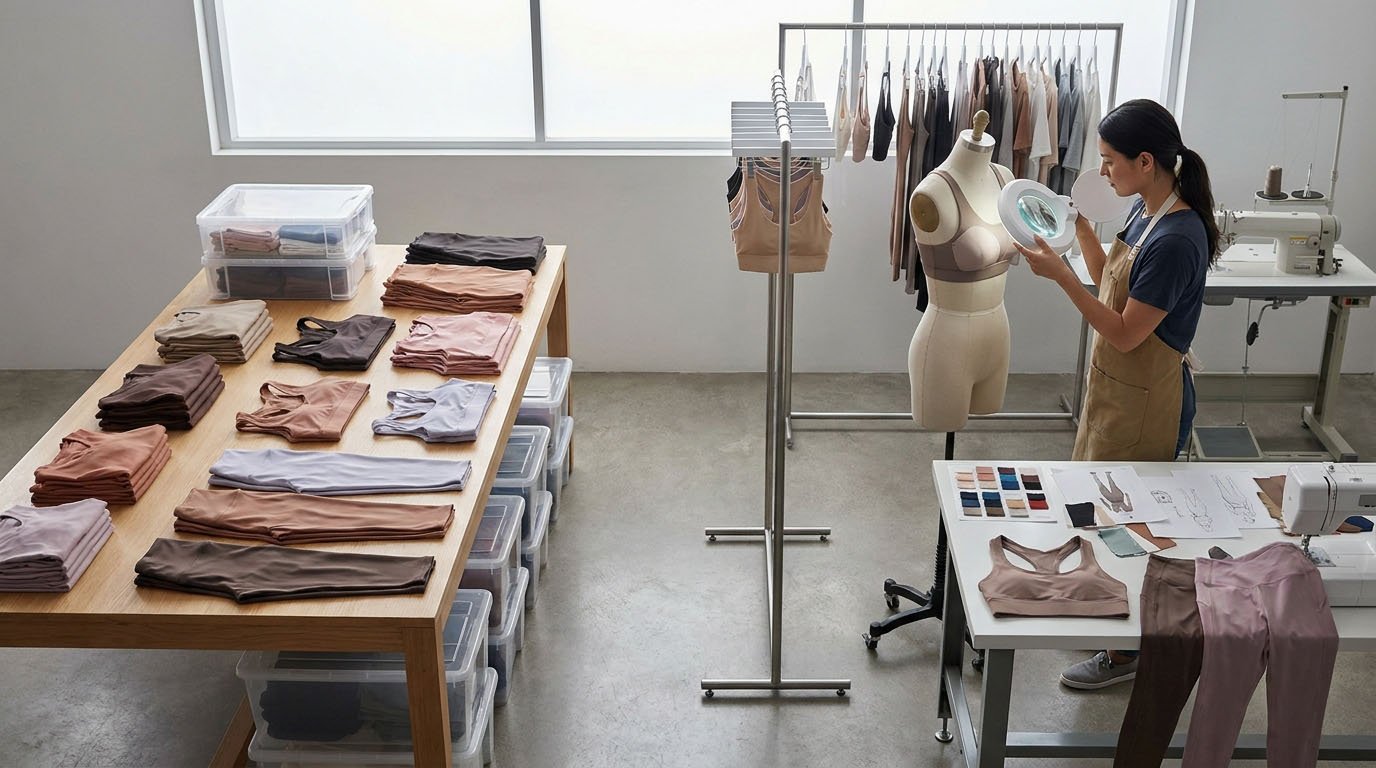
How Hybrid Sourcing Works
A growing yoga clothing brand might use:
- Ready-stock wholesale: Standard leggings and training T-shirts for regular sales.
- Private label: Existing products with branded logos, labels, and packaging.
- Custom OEM/ODM: Signature leggings or sports bras with unique construction.
This balances inventory flexibility with product differentiation.
However, ready-stock availability, branding minimums, and custom production schedules may differ.
How Wearzio Supports Hybrid Sourcing
Wearzio combines ready-stock wholesale, private-label branding, and OEM/ODM activewear manufacturing.
Our product capabilities cover yoga leggings, sports bras, workout tops, shorts, and other athleisure garments.
Brands can use existing styles for faster sourcing or develop custom products when fit, fabric, and construction are essential.
Our Private Label service explains options for adding your brand identity to suitable products.
The main advantage of hybrid sourcing is flexibility, rather than identical pricing or MOQ across every product.
Key 6. How to Choose the Right Activewear Sourcing Partner
Choosing the right partner requires matching its capabilities to your actual product and commercial requirements.
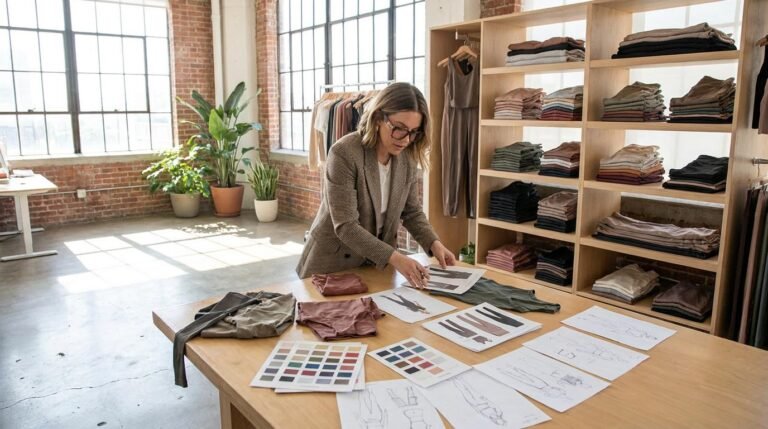
Step 1. Define Your Customization Needs
Ask three questions:
- Do I need a new garment pattern?
- Can existing products meet my fit and quality requirements?
- Is branding enough, or do I need technical modifications?
If existing styles work, wholesale or private label may be sufficient. Unique construction or performance requirements point toward manufacturing.
Step 2. Evaluate Budget and MOQ
Calculate how much capital you can commit after allowing for marketing, shipping, testing, and unforeseen expenses.
A low MOQ provides little value if the product is unsuitable. Similarly, lower unit prices may not justify excessive inventory.
Compare quotations using consistent specifications and quantities.
Step 3. Verify Supplier Capabilities
Before selecting a partner, confirm what it actually controls.
| Question | Why It Matters |
|---|---|
| Do you operate production or outsource it? | Clarifies manufacturing responsibility |
| Can you explain your sampling and QC process? | Helps evaluate consistency |
| Who handles changes and defects? | Establishes accountability |
| Is this ready stock or made-to-order? | Clarifies MOQ and lead time |
A trading company is not automatically unreliable, and factory ownership alone does not guarantee quality.
For deeper factory evaluation, see our How to Choose a Reliable Activewear Manufacturer Guide.
Step 4. Confirm Terms Before Ordering
Obtain written confirmation of:
- Product specifications and approved samples
- MOQ by style, color, and size
- Pricing and additional charges
- Production and delivery arrangements
- Inspection standards and defect resolution
- Reorder conditions
These requirements apply whether you work with a manufacturer, wholesaler, or intermediary.
Frequently Asked Questions
Is an activewear supplier the same as a manufacturer?
Not always. A manufacturer produces garments, while supplier is a broader term that may describe a factory, wholesaler, distributor, or trading company.
Is buying directly from a manufacturer always cheaper?
No. Manufacturing may offer competitive unit pricing at suitable volumes, but sampling, development, MOQ, and inventory commitments can increase total expenditure.
Can I put my own brand on wholesale activewear?
Often, yes. Some suppliers offer private-label services such as logo application, labels, hangtags, and packaging. Available options and minimums vary.
Can an activewear manufacturer also sell wholesale products?
Yes. Some manufacturers offer both existing inventory and made-to-order production, allowing brands to use different sourcing arrangements.
Should startups choose wholesale or custom manufacturing?
Wholesale is often suitable for testing existing products with limited inventory exposure. Custom manufacturing makes sense when unique fit, construction, or performance is essential and the budget supports development.
Conclusion: Choose the Sourcing Model That Fits Your Brand
Understanding the difference between an activewear manufacturer, supplier, and wholesaler helps you choose the right business partner.
Manufacturers support custom garment production. Wholesalers provide access to existing inventory. Suppliers may perform either role or coordinate sourcing through other businesses.
For brands needing both standard basics and differentiated products, hybrid sourcing can provide additional flexibility.
The best sourcing partner is the one whose production capabilities, MOQ, costs, and responsibilities match your business goals.
Explore Activewear Sourcing With Wearzio
Whether you need ready-stock yoga wear, private-label fitness apparel, or custom OEM/ODM production, Wearzio can help evaluate the available options.
Share your target products, quantities, customization needs, and delivery expectations through our Contact page. Our team can review your requirements and discuss a suitable sourcing approach.