.png)
Choosing a reliable activewear manufacturer is one of the most important decisions for a clothing brand. A factory may offer competitive prices, attractive samples, and fast delivery promises—but can it consistently manufacture garments that meet your requirements?
The best activewear manufacturer for your brand is one that combines product-specific expertise, reliable quality control, suitable MOQ and pricing, realistic production capacity, and transparent communication. The lowest quotation is not always the best choice.
This guide explains eight practical steps to compare manufacturers, evaluate their suitability, and select a partner that can support your brand from initial samples through repeat production.
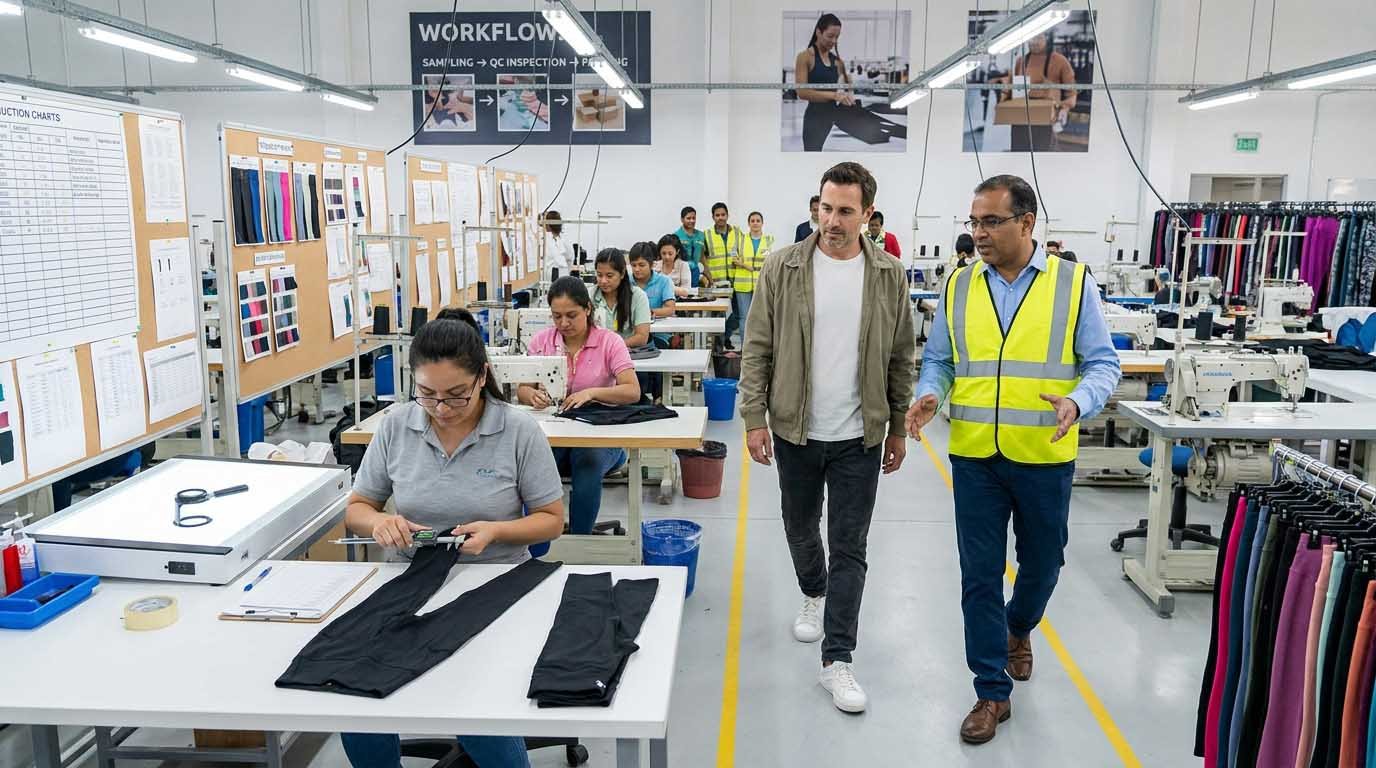
Quick Answer: How Do You Choose a Reliable Activewear Manufacturer?
Evaluate shortlisted manufacturers using six criteria:
| Evaluation Factor | What to Verify |
|---|---|
| Technical expertise | Experience with your products, stretch fabrics, and construction |
| Production capability | Suitable machinery, skilled operators, realistic capacity |
| Quality management | Sampling, testing, inspection, and bulk consistency |
| Commercial suitability | MOQ, complete quotations, achievable lead times |
| Communication | Technical accuracy, responsiveness, problem-solving |
| Long-term reliability | Repeat-order consistency and production stability |
The key question is not simply "Can this factory make my product?" It is "Can this manufacturer deliver my required quality, quantity, cost, and timeline consistently?"
A supplier may perform well in one area but be unsuitable overall. For example, a factory with excellent technical capabilities may have an MOQ beyond your startup budget, while a flexible small-order supplier may lack the capacity needed for rapid expansion.
Step 1: Define Your Brand Requirements and Budget
Before comparing manufacturers, clarify what your brand needs.
Different products require different levels of manufacturing expertise. Compression leggings, sports bras, training shorts, and basic gym T-shirts involve different fabrics, fit requirements, and construction methods.
Your initial product brief should identify:
- Product categories and target customers.
- Fabric and performance expectations.
- Design complexity and customization requirements.
- Estimated order quantities.
- Target unit cost and total production budget.
- Sampling and delivery requirements.
For original designs, prepare a tech pack covering measurements, construction, materials, trims, artwork, and acceptable tolerances.
Match Manufacturing Capabilities to Your Brand Stage
A manufacturer's suitability depends partly on your current business stage.
| Brand Stage | Manufacturing Priorities |
|---|---|
| Startup Brand | Flexible MOQ, sampling support, manageable investment |
| Growing Brand | Stable quality, repeat orders, predictable lead times |
| Established Brand | Production capacity, formal QC systems, supply-chain stability |
For example, a startup launching two leggings styles may benefit more from flexible order quantities and development support than from a factory offering extremely high monthly capacity.
An established brand planning frequent reorders may place greater importance on capacity planning, supply continuity, and consistent quality across batches.
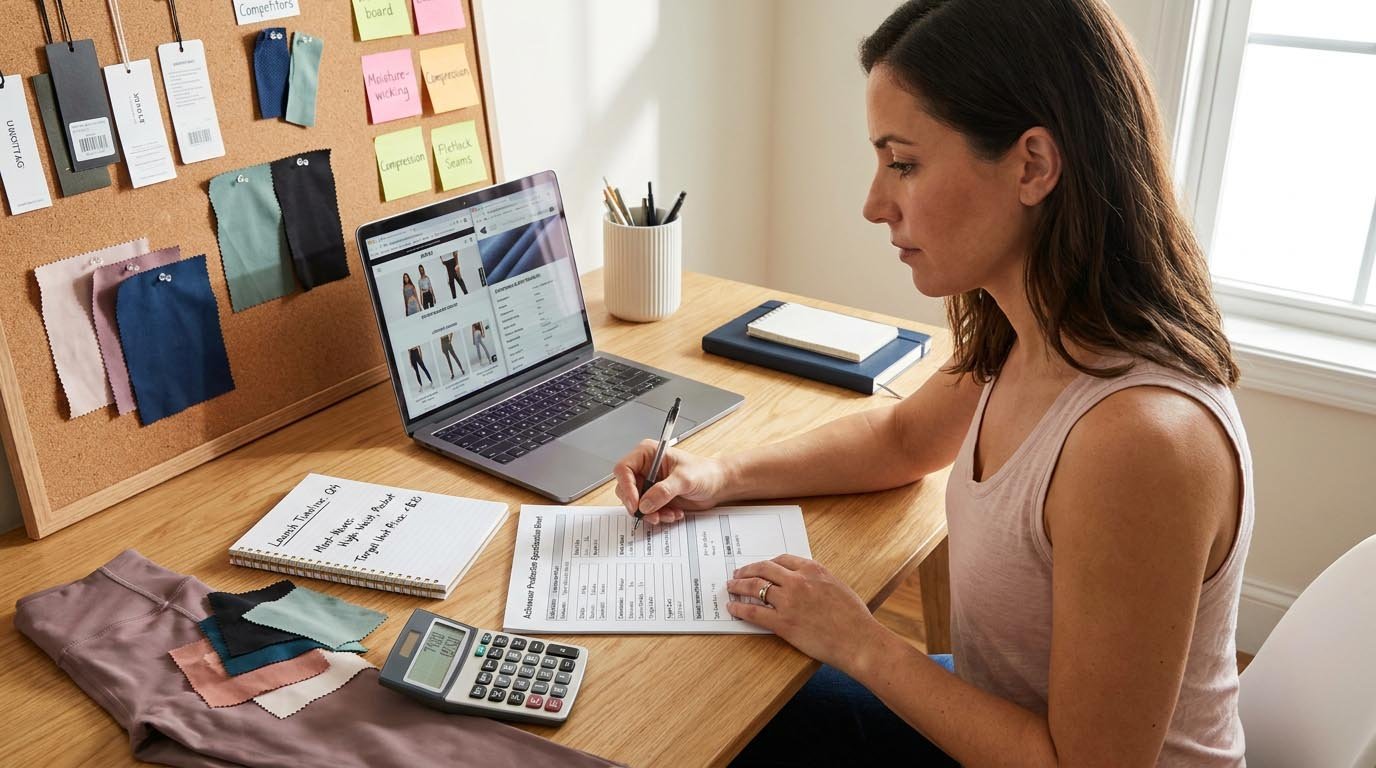
Establish a Realistic Budget
Your budget should reflect fabric quality, manufacturing complexity, customization, sampling, testing, and shipping.
Compare quotations only when manufacturers are pricing equivalent specifications.
If your brand needs existing products with custom labels and packaging, private label manufacturing may offer a simpler development route than fully custom manufacturing.
The objective is to select a factory that matches your product requirements and available resources—not simply the factory with the lowest advertised price.
Step 2: Compare Activewear Specialists vs General Apparel Factories
Not every clothing manufacturer has the same production expertise.
A factory specializing in basic cotton garments may lack experience with compression leggings, supportive sports bras, or technically demanding performance apparel.
However, some general apparel factories operate capable activewear departments. The decision should be based on actual experience rather than marketing labels.
Activewear Specialist vs. General Apparel Factory
| Capability | General Apparel Factory | Activewear Specialist |
|---|---|---|
| Fabric experience | Conventional woven and knit fabrics | Stretch and performance materials |
| Pattern development | General garment fit | Athletic movement, compression, support |
| Sewing expertise | Standard garment construction | Stretch-compatible construction options |
| Quality testing | General garment checks | Product-specific performance testing |
| Core products | Everyday clothing | Leggings, sports bras, performance apparel |
These are typical differences, not absolute limitations.
Evaluate Construction Expertise
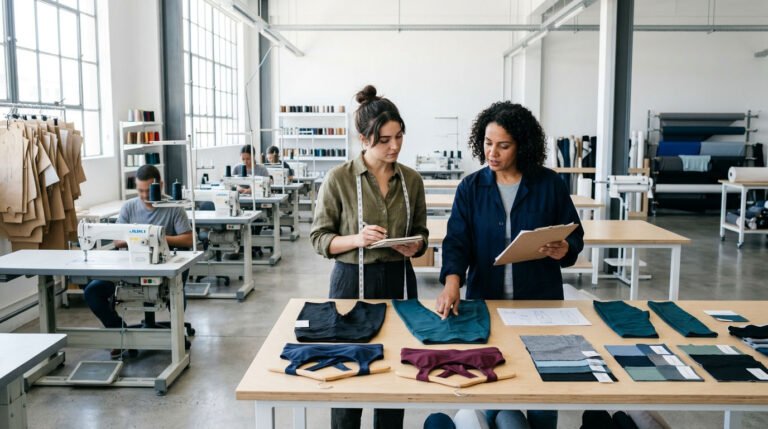
Ask manufacturers to explain how they select production methods for your garments.
Relevant capabilities may include:
- Flatlock seams: Used for selected low-profile seam constructions.
- Coverstitch: Common for stretch-compatible hems.
- Overlock stitching: Widely used in knit garment assembly.
- Stretch fabric cutting: Requires appropriate spreading, tension, and dimensional control.
A competent manufacturer should explain why a particular construction method suits your fabric and design.
For original garments, review the manufacturer's cut-and-sew capabilities and experience with similar products.
Prioritize demonstrated product expertise over claims that a factory can manufacture every type of sportswear.
For brands specifically sourcing from China, our guide to finding a reliable activewear manufacturer in China explains where to find suppliers, how to compare manufacturing regions, and how to build a qualified factory shortlist.
Step 3: Assess Manufacturing Capabilities and Compliance
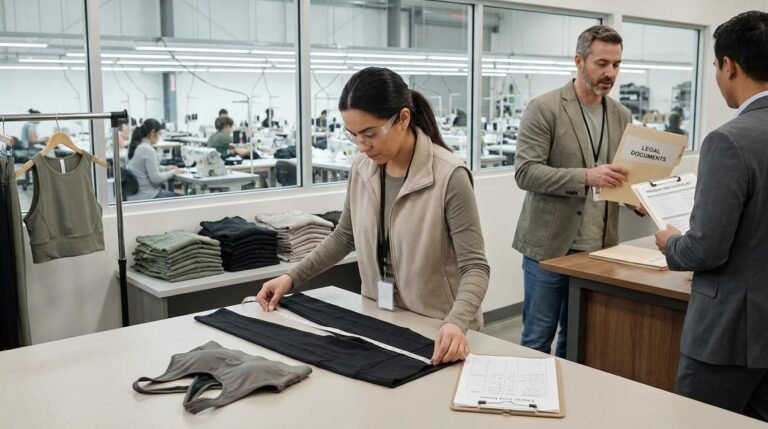
A manufacturer's production claims should be supported by relevant evidence.
The objective is to determine whether the factory has the operational resources and compliance capabilities needed for your specific order.
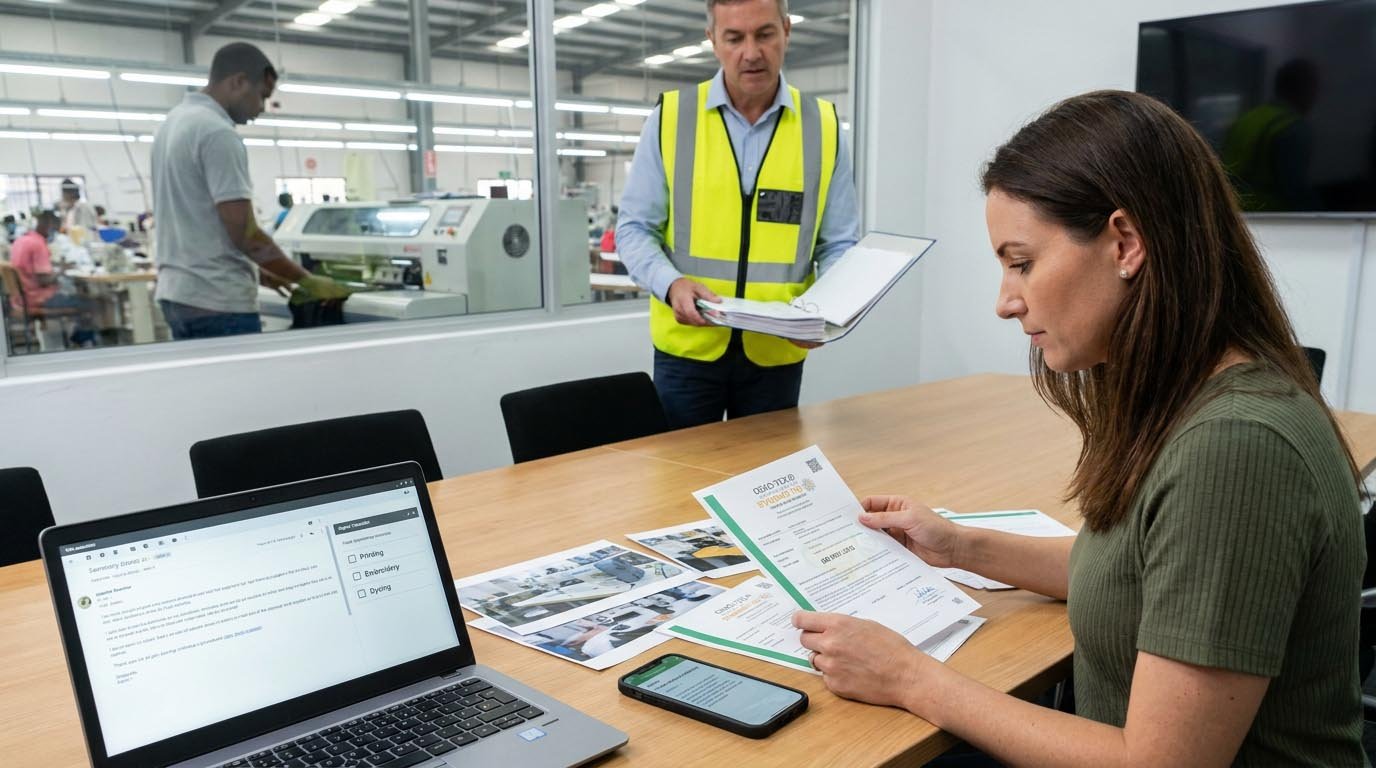
Confirm Production Capabilities
Ask shortlisted manufacturers for:
- Examples of comparable products previously manufactured.
- Information about relevant equipment and production processes.
- Realistic production capacity for your order.
- Details of important outsourced operations.
- Evidence of production management and quality control.
Factory photographs and live walkthroughs can help confirm capabilities, although independent verification may be appropriate for higher-risk orders.
Evaluate Material Supply Reliability
Activewear manufacturers should understand how fabric composition, GSM, stretch recovery, color consistency, and dimensional stability influence production.
Ask how they maintain approved material specifications between samples, bulk production, and repeat orders.
Manufacturers with established fabric sourcing capabilities may be better positioned to coordinate technical materials and supplier consistency.
Review Relevant Certifications
Depending on your product and destination market, relevant credentials may include:
- ISO 9001: Quality management systems.
- OEKO-TEX STANDARD 100: Testing and certification for harmful substances within the certified textile product scope.
- WRAP: Social compliance certification for eligible production facilities.
- amfori BSCI: Social performance assessment, rather than a product certification.
These programs address different requirements and are not interchangeable.
Verify document validity, scope, and the actual facility or products covered.
A certificate alone does not prove that every garment will meet your specifications.
Choose manufacturers that can demonstrate relevant capabilities and provide appropriate supporting evidence, not simply a long list of certificates.
Step 4: Compare Sampling and Quality Management Systems
A manufacturer should have a clear process for developing samples, approving production standards, and maintaining quality during manufacturing.
An attractive sample demonstrates that a design can be produced. It does not guarantee that the factory can reproduce the product consistently at scale.
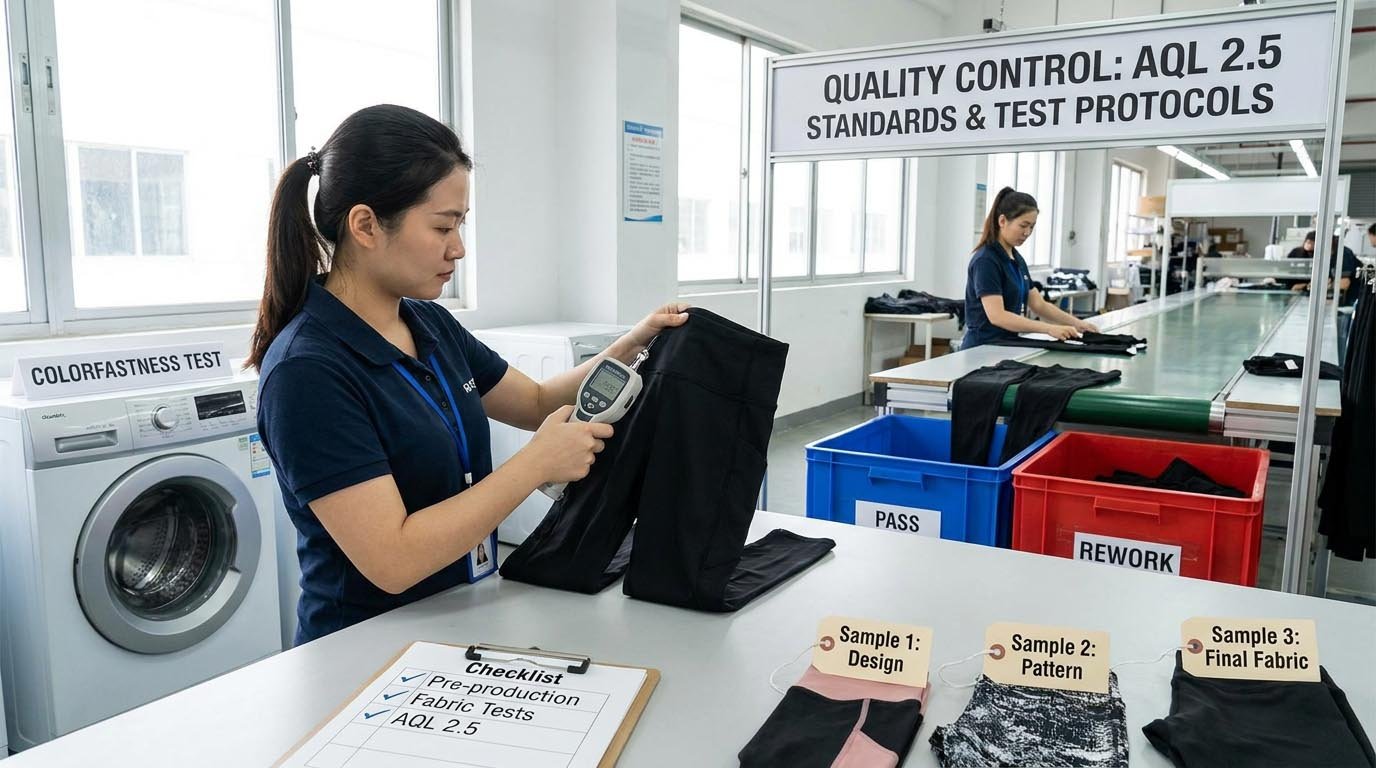
Evaluate the Sampling System
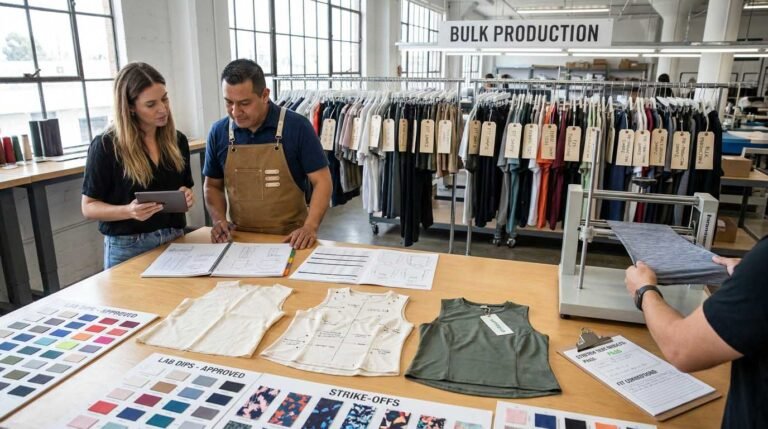
Ask manufacturers how they manage the main sample stages:
- Development Sample: Checks initial design, construction, and feasibility.
- Fit Sample: Confirms fit, measurements, and necessary adjustments.
- Pre-Production Sample: Establishes an approved reference using agreed production materials and construction.
Not every project needs the same number of sampling rounds.
A reliable manufacturer should document revisions and explain why changes are necessary.
For a detailed explanation of sample stages and approvals, see our Activewear Sampling Process Guide.
Compare Product-Specific Quality Testing
| Product | Important Quality Checks |
|---|---|
| Leggings | Stretch recovery, opacity, seam strength, fit |
| Sports bras | Support-related fit, elastic recovery, strap attachment |
| Training tops | Dimensional stability, colorfastness, seam durability |
| Sports shorts | Waistband recovery, measurements, construction |
| Performance apparel | Relevant moisture management, pilling, and fabric testing |
Testing methods and acceptance criteria should reflect the product's intended use.
A manufacturer should be able to explain which tests are appropriate and how results influence material or construction decisions.
Assess the Factory's Quality Management Approach
Rather than focusing only on final inspection, evaluate how each factory prevents and corrects defects throughout production.
A suitable quality system generally includes:
Incoming Material Inspection: Checking approved fabric and trims before production.
In-Process Inspection: Identifying construction and measurement problems while corrective action remains practical.
Final Inspection: Assessing finished products against approved specifications and agreed acceptance criteria.
Where an AQL sampling plan is used, the sampling procedure, inspection level, defect classifications, and acceptance criteria should be agreed in advance.
AQL sampling is an acceptance method—not a guarantee that every unit is defect-free.
When comparing manufacturers, ask for examples of inspection records and how recurring defects were corrected.
The strongest quality management system is not necessarily the one with the most checkpoints. It is the one that can identify problems early, document corrective action, and maintain consistent results.
Step 5: Compare MOQ, Total Costs and Production Lead Times
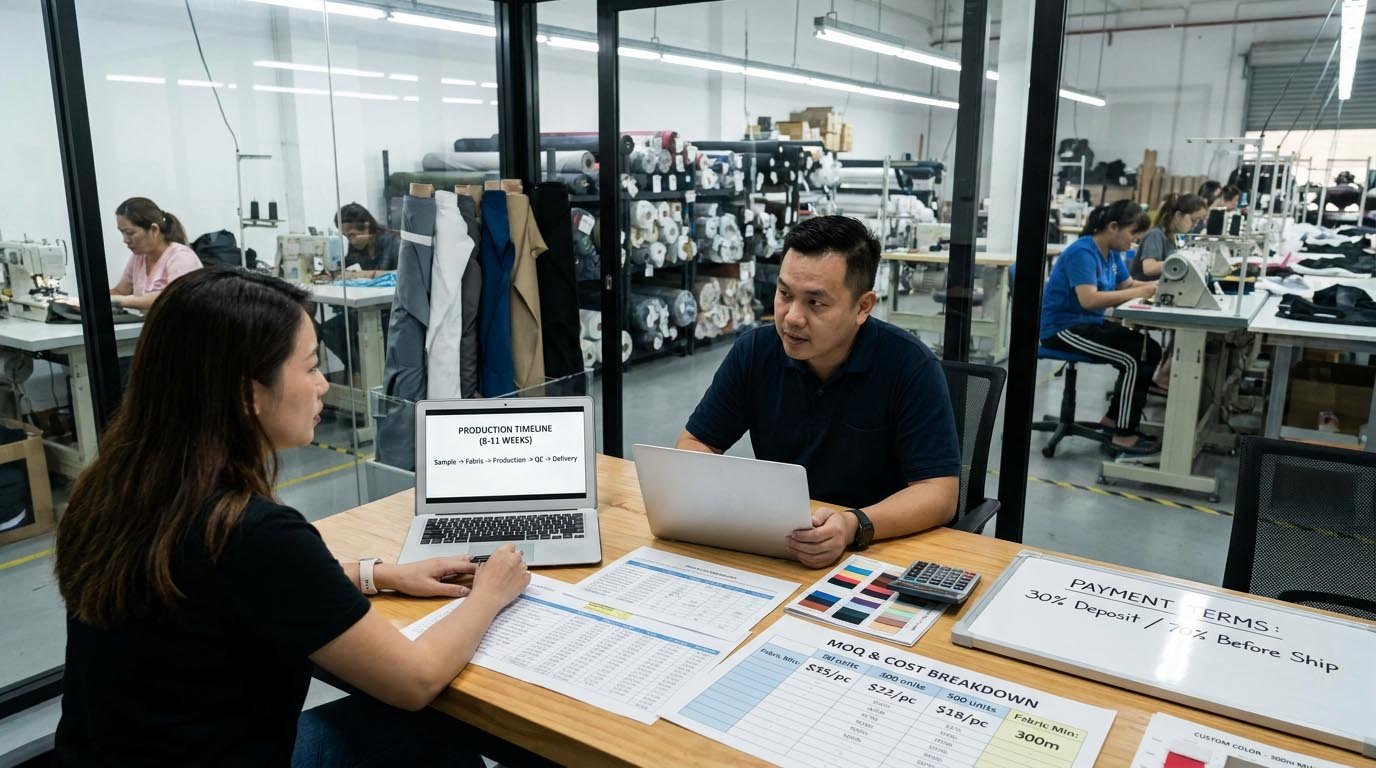
A low unit price is meaningful only when the specifications, included services, and commercial terms are comparable.
Manufacturers may quote differently because of material choices, production setup, order volume, testing, or customization.
Compare MOQ With Your Business Needs
MOQ depends on fabric availability, dyeing requirements, production setup, garment complexity, and customization.
Smaller orders may be possible with existing materials and designs, while custom development can require larger commitments.
Evaluate whether the MOQ allows your brand to manage inventory and cash flow effectively.
Always clarify whether it applies per style, color, fabric, or configuration.
Evaluate the Total Project Cost
| Cost Component | What to Confirm |
|---|---|
| Fabric | Composition, weight, and approved specifications |
| Manufacturing | Cutting, sewing, finishing, and trims |
| Customization | Printing, embroidery, labels, and packaging |
| Sampling | Development and revision charges |
| Testing and QC | Included inspections and external tests |
| Shipping | Incoterms, freight responsibilities, and exclusions |
Compare total costs rather than unit prices alone.
Sampling, testing, logistics, and the financial consequences of defective products can affect the final sourcing decision.
A slightly higher quotation may provide better value when the manufacturer offers more reliable materials, stronger production control, or better commercial flexibility.
Evaluate Production Lead-Time Reliability
Ask each manufacturer to provide a realistic schedule covering:
- Sample approval.
- Material procurement.
- Production scheduling.
- Cutting and sewing.
- Quality inspection.
- Packing and shipment.
Production completion, shipment, and delivery are different milestones.
Confirm which date the manufacturer is committing to and how production delays will be communicated.
Step 6: Evaluate Communication and Commercial Transparency
Good communication is not simply fast replies.
A reliable manufacturing partner should understand technical requirements, identify potential problems, and communicate changes before they become expensive.
What Does Good Manufacturer Communication Look Like?
Look for a factory that:
- Asks relevant technical questions before quoting.
- Explains material and production limitations.
- Records design revisions and approvals.
- Provides realistic milestone updates.
- Reports delays or quality problems promptly.
- Proposes corrective actions with clear responsibilities.
A supplier that always agrees with every request may appear easy to work with, but this does not demonstrate technical competence.
Sometimes the more reliable manufacturer is the one that explains why a requested design, price, or delivery schedule needs adjustment.
Agree on Production Milestones
| Milestone | Required Confirmation |
|---|---|
| Final sample approval | Specifications and approved reference |
| Material procurement | Fabric, trims, and color approval |
| Production start | Schedule and manufacturing instructions |
| In-process review | Progress and corrective actions |
| Final inspection | Inspection results and acceptance |
| Shipment | Packing details and shipping documents |
Written milestone approvals reduce misunderstandings and make responsibilities clearer.
Review How the Factory Handles Problems
Ask each manufacturer:
"What happens if the bulk order fails inspection or a critical material arrives late?"
A useful answer should explain who investigates the issue, how corrective action is approved, and how the production schedule or costs may be affected.
Also clarify payment terms, inspection rights, defect remedies, and ownership of relevant designs or development materials before committing to production.
Transparent communication becomes especially important when the project involves multiple fabric suppliers, customized trims, or repeat orders.
Step 7: Test Manufacturers Through Samples and Trial Orders
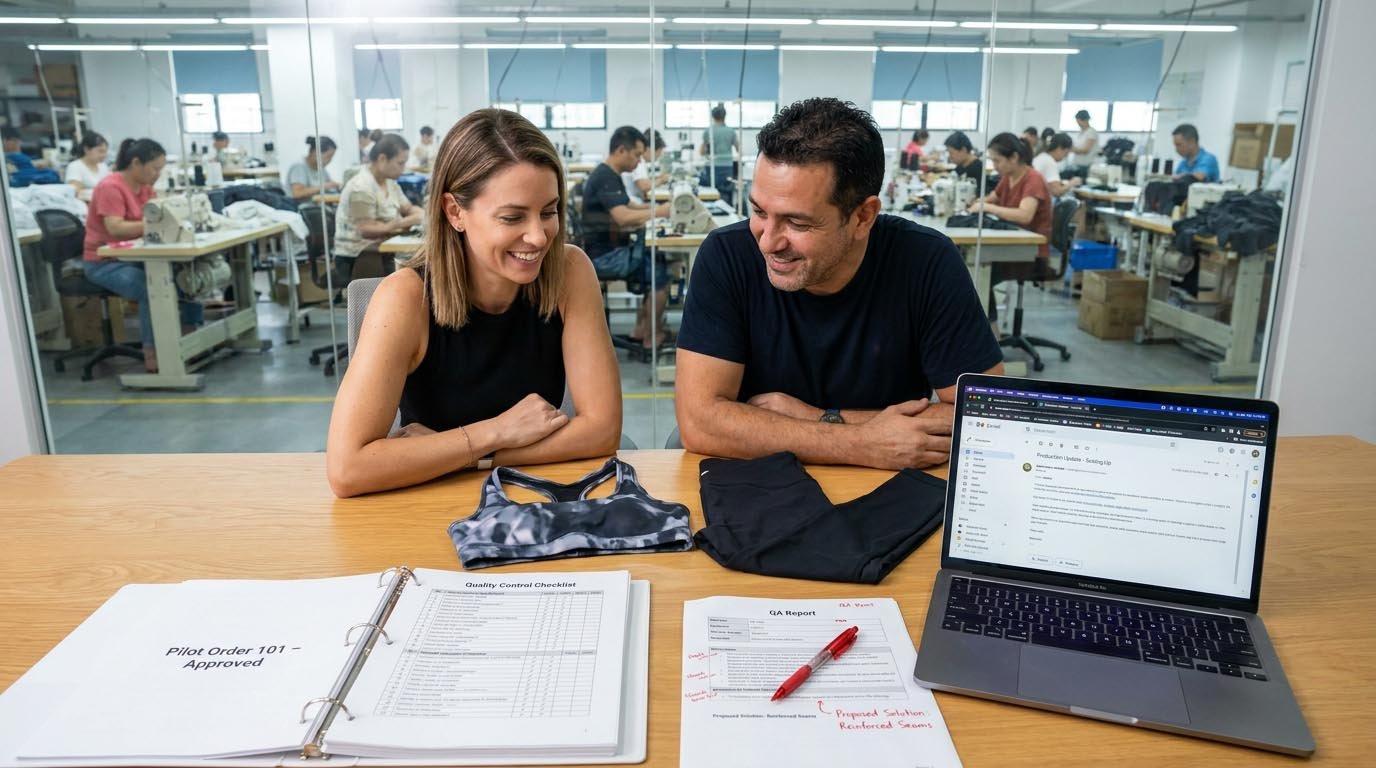
Samples are useful for evaluating product-development ability, but a representative trial order can provide stronger evidence of production reliability.
This is particularly valuable when selecting a new manufacturer for a long-term partnership.
Evaluate How the Manufacturer Responds During Sampling
Do not judge a supplier only by whether the first sample is perfect.
Instead, assess whether the team:
- Understands your technical feedback.
- Corrects fit and construction problems systematically.
- Documents approved changes.
- Explains material or production limitations.
- Delivers revisions within realistic timelines.
Manufacturers that respond effectively to development challenges may be better equipped to manage unexpected production issues.
Consider a Representative Trial Order
For an unfamiliar manufacturer, begin with a commercially viable order of one or two representative styles when appropriate.
Use the order to evaluate performance under normal production conditions.
| Evaluation Area | What to Compare |
|---|---|
| Product quality | Finished garments against approved samples |
| Delivery | Actual completion versus agreed milestones |
| Communication | Accuracy, responsiveness, progress updates |
| Problem-solving | Handling of defects and changes |
| Documentation | Inspection records and order accuracy |
A trial order should reflect the types of products and processes your brand expects to use later.
A factory performing well on simple T-shirts does not automatically prove its ability to manufacture complex compression garments.
Assess Repeat-Order and Scaling Potential
A manufacturer suitable for your first order should also be evaluated for future requirements.
Ask:
- Can the factory source the same approved materials for reorders?
- Can it maintain consistent measurements and construction?
- Can production capacity expand with your sales?
- How does it manage material or equipment changes?
- Are previous production records available for comparison?
The real measure of manufacturing reliability is consistent performance across samples, bulk orders, and repeat production.
Step 8: Choose the Best-Fit Manufacturer With a Weighted Scorecard
After evaluating technical capabilities, quality systems, pricing, communication, and production results, compare shortlisted factories using consistent criteria.
A weighted scorecard can make your decision more systematic.
Activewear Manufacturer Evaluation Scorecard
Rate each manufacturer from 1 (poor) to 5 (excellent), using evidence collected during your evaluation.
| Evaluation Criteria | Weight | Factory A | Factory B |
|---|---|---|---|
| Technical expertise | 20% | /5 | /5 |
| Quality control and testing | 25% | /5 | /5 |
| Production capabilities | 15% | /5 | /5 |
| Pricing and MOQ suitability | 15% | /5 | /5 |
| Communication and transparency | 15% | /5 | /5 |
| Lead-time reliability | 10% | /5 | /5 |
| Weighted Total | 100% | /5 | /5 |
Multiply each category rating by its assigned weight and add the results.
For example, a factory scoring 4/5 in technical expertise receives 0.8 weighted points from that category (4 × 20%).
The maximum total is 5.0.
These weights are illustrative. A startup may assign more weight to MOQ flexibility and sampling support, while an established brand may prioritize production capacity and delivery consistency.
Apply Minimum Acceptance Standards
A high overall score should not compensate for a critical weakness.
Before selecting a manufacturer, confirm that it can:
- Produce your required garment construction.
- Meet essential product and performance specifications.
- Provide applicable compliance evidence.
- Accept reasonable quality inspection and defect-resolution terms.
- Identify who will manufacture your products.
- Support your expected order quantities and timeline.
For detailed on-site verification questions, use a dedicated Activewear Factory Audit Checklist rather than relying solely on this selection scorecard.
Make the Final Manufacturing Decision
Choose the supplier with the strongest combination of technical suitability, verified quality controls, commercial feasibility, and manageable risk.
The cheapest manufacturer is not necessarily the best choice. Neither is the largest factory or the supplier with the most certifications.
The best-fit manufacturer is the one capable of meeting your brand's specific requirements consistently while supporting your current business stage and future growth.
Frequently Asked Questions
What Is a Reasonable MOQ for a Startup Activewear Brand?
MOQ varies by product, fabric availability, customization, and production requirements. Existing designs and stock fabrics may allow smaller orders, while custom materials often require higher commitments. Choose an MOQ that supports your budget and inventory strategy.
How Can I Verify an Activewear Manufacturer Before Paying a Deposit?
Confirm business identity, production capabilities, relevant compliance documents, approved samples, and written commercial terms. For higher-risk orders, consider an independent factory assessment or pre-production verification.
Should I Work With a Factory or a Trading Company?
Direct manufacturers may provide closer production communication, while qualified trading companies can coordinate specialist factories. Compare actual production control, transparency, responsibilities, and quality assurance rather than business type alone.
Should I Visit the Factory Before Ordering?
A factory visit can provide valuable insight into operations and production systems. When travel is impractical, live video walkthroughs, technical documentation, sampling, and independent inspections can provide supporting evidence.
What Happens If Bulk Production Does Not Match the Approved Sample?
Document the differences and compare them with approved specifications and agreed tolerances. Require investigation and appropriate corrective action according to your manufacturing agreement before accepting nonconforming goods or authorizing shipment.
Conclusion: Choose a Manufacturer That Fits Your Brand
A reliable activewear manufacturer offers more than competitive pricing, attractive samples, or modern machinery.
The right partner should demonstrate relevant technical expertise, consistent quality management, transparent communication, realistic commercial terms, and the ability to support repeat production.
Define your requirements, compare manufacturers against consistent criteria, evaluate their actual performance, and choose the supplier that best fits your brand—not simply the lowest quotation.
Looking for a Reliable Activewear Manufacturing Partner?
At Wearzio, we support startup brands, growing activewear labels, and wholesale buyers through OEM/ODM manufacturing, fabric sourcing, custom garment development, and private label services.
With over 10 years of activewear manufacturing experience, we help brands develop leggings, sports bras, training tops, shorts, and other performance apparel.
Contact Wearzio to discuss your activewear collection, technical requirements, and manufacturing plans.