.png)
Starting an activewear brand successfully means choosing a clear niche, planning around real MOQ and budget limits, selecting fabrics based on performance needs, testing samples before bulk production, and launching with a focused product line instead of too many styles.
For most new brands, the biggest mistake is designing first and talking to manufacturers later. That usually leads to products that are too expensive to make, too complicated to scale, or impossible to price competitively. A better approach is to understand manufacturing constraints first, then build your first collection around what you can actually produce and sell profitably.
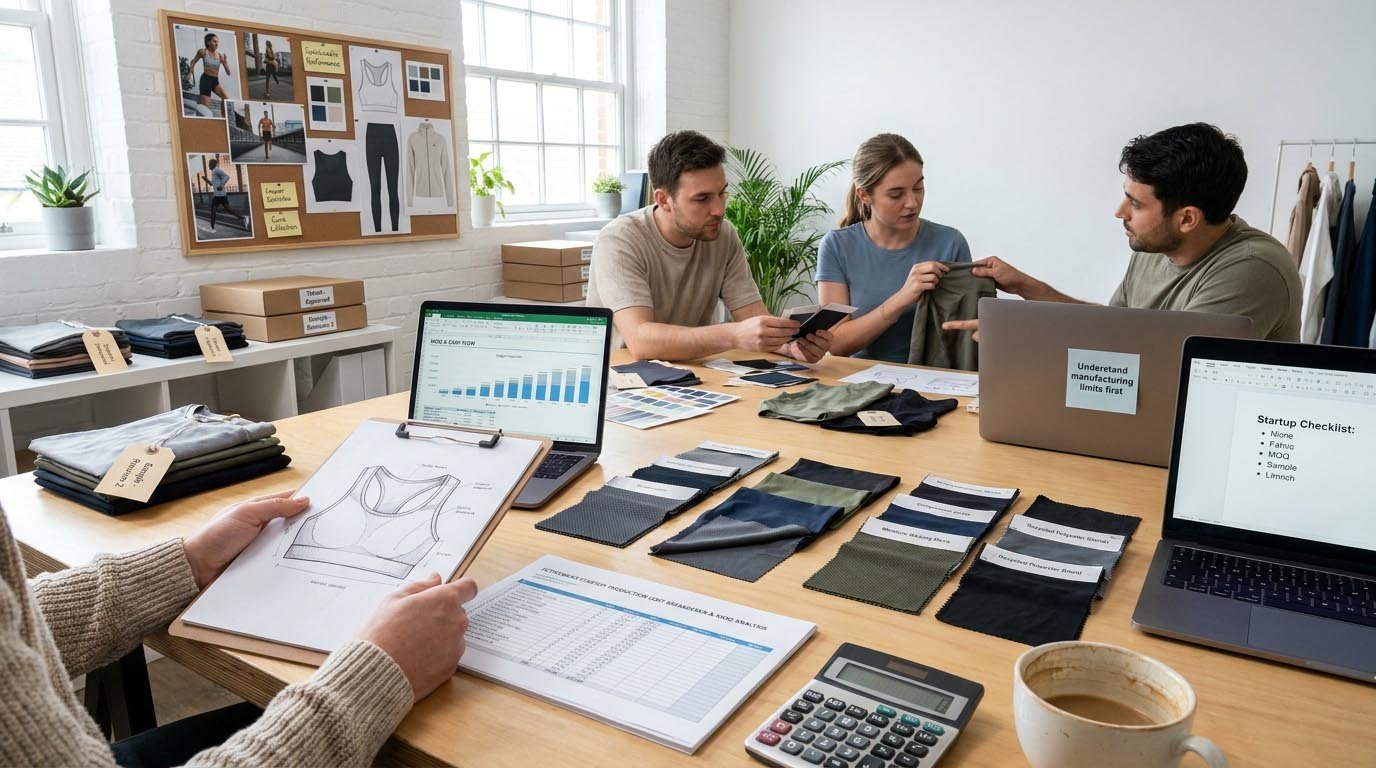
If you're planning your first activewear line, this guide walks through what matters most: startup costs, MOQ, fabric selection, sampling, pricing, manufacturer selection, and how to launch without tying up too much capital in inventory.
Quick Answers: Starting an Activewear Brand
How much does it cost to start an activewear brand?
For custom manufacturing, most new brands need around $8,000-$15,000 for a first production run. If you start with ready-made styles and private labeling, you may be able to begin with $2,000-$4,000.
What is the MOQ for activewear manufacturing?
For custom activewear, MOQ is often 300-500 pieces per style depending on fabric, color, and construction. For stock or ready-made products, some suppliers can offer lower MOQs such as 50-200 pieces.
How many products should I launch with?
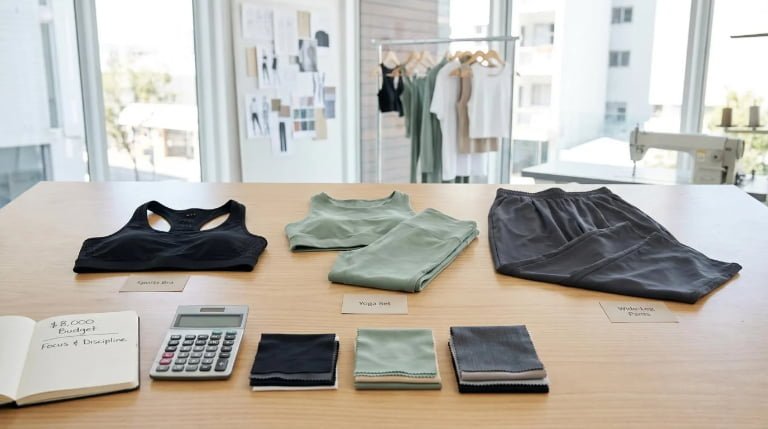
Start with 2-3 hero products only. This gives you enough inventory depth to test demand and avoids spreading your budget too thin across too many SKUs.
What fabrics are best for activewear?
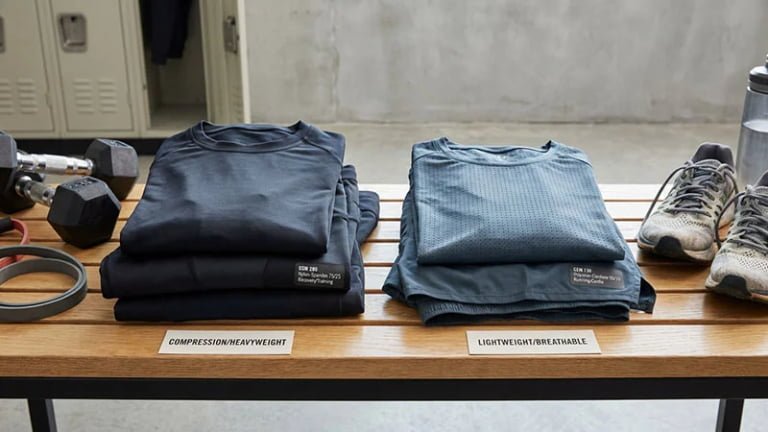
That depends on the use case. Yoga leggings usually need nylon-spandex with 4-way stretch and opacity, while running apparel often uses lightweight polyester-spandex for moisture management and breathability.
How long does activewear production take?
For custom orders, expect about 60-90 days from development to delivery, including sample making, revisions, bulk production, and shipping.
Why Starting With a Clear Niche Matters
The most successful new activewear brands do not try to serve everyone. They focus on one use case, one customer problem, and a small number of products that solve it well.
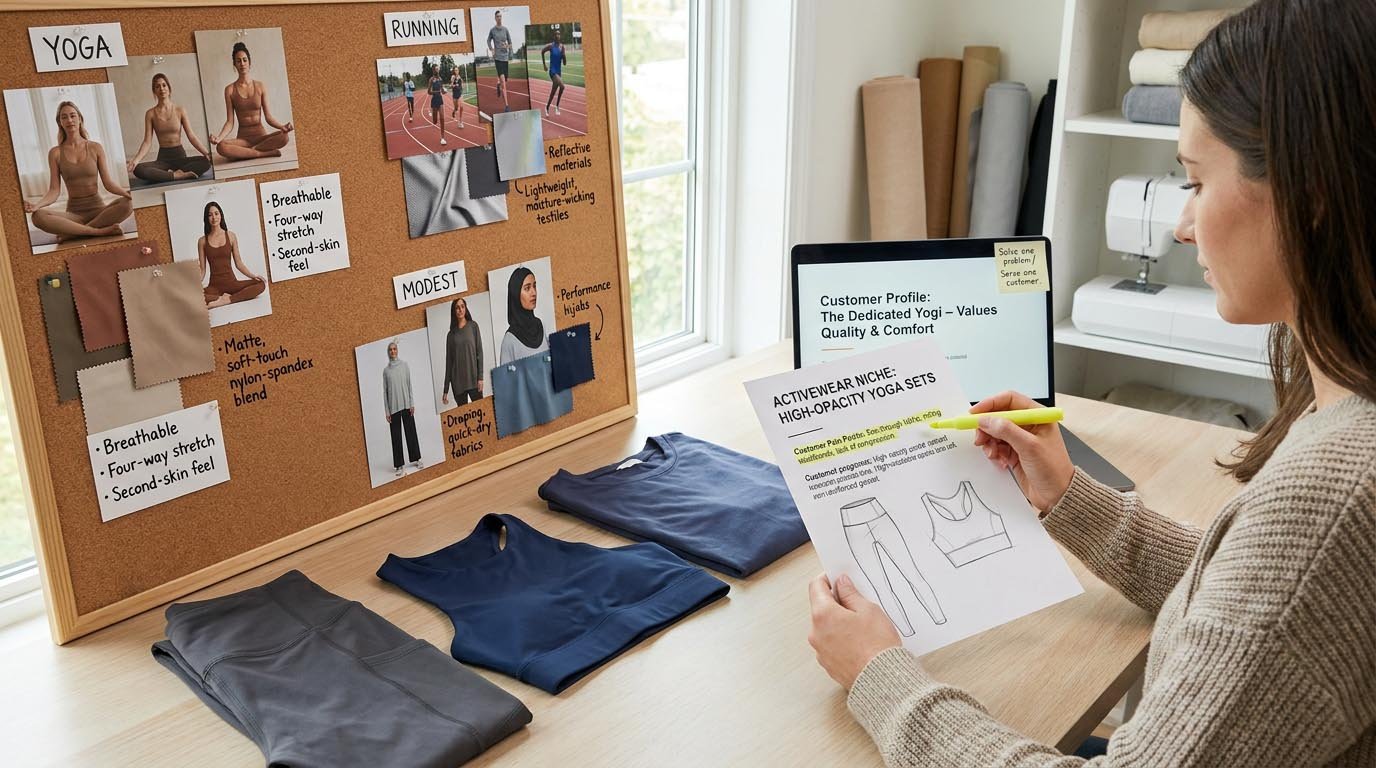
Many founders say they want to build a brand for "women who love fitness" or "premium sportswear customers." That is too broad to guide product development. A better niche is based on a specific activity and a specific problem.
Examples of stronger niche positioning:
- leggings with pockets for runners
- high-opacity sets for hot yoga
- modest activewear for women who want more coverage
- durable training shorts for CrossFit athletes
- supportive activewear for postpartum fitness
A clear niche helps you make better decisions in every part of the process:
- Fabric choice becomes easier because the product has a specific function
- Price point becomes clearer because you understand the customer expectation
- Marketing becomes more focused because you can speak to a real pain point
- Sampling and fit testing become more useful because you know what movement the product must support
If your niche is too broad, your first collection usually becomes a mix of unrelated products that do not stand out in the market.
How to Choose Your First Activewear Products
Most new brands should launch with 2-3 products maximum, usually built around one core use case.
A focused launch is almost always better than a large collection. The reason is simple: MOQ, sampling cost, inventory depth, and marketing all become harder when you launch too many products at once.
A good first collection might look like this:
- Yoga brand: leggings + sports bra + fitted top
- Running brand: shorts + lightweight top
- Gym/training brand: training leggings + sports bra
- Modest activewear brand: long-sleeve top + full-length leggings
What to avoid in your first launch:
- too many categories at once
- too many colors
- too many fabric types
- products for completely different activities
If you launch 6-8 styles too early, you usually run into these problems:
- your MOQ gets split across too many SKUs
- your cost per piece stays high
- your budget disappears into sampling and inventory
- you cannot reorder winners quickly
- your marketing message becomes unclear
For most startups, a tight first collection is the safest path.
How Much Does It Cost to Start an Activewear Brand?
Startup cost depends on whether you choose custom manufacturing or stock/private label production, how many styles you launch, and what level of fabric and construction you require.
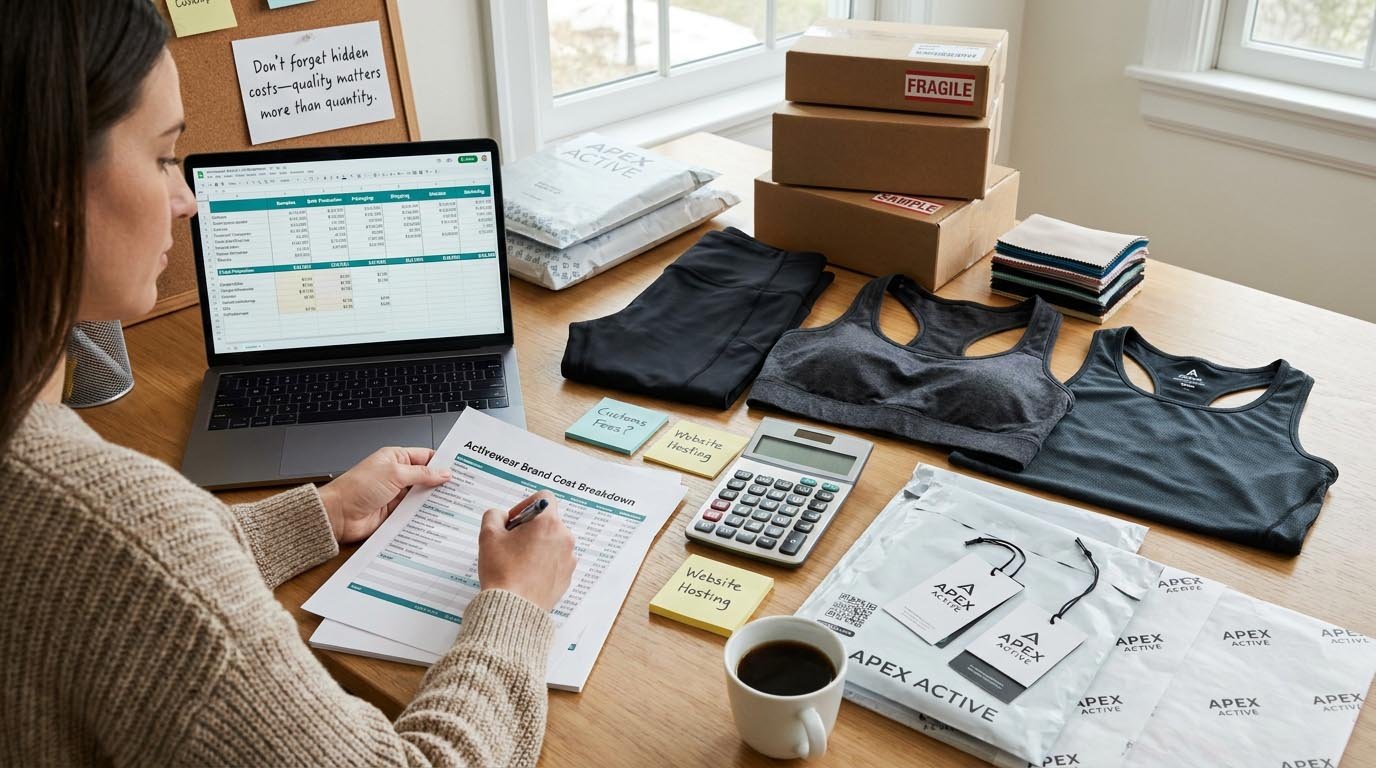
Here is a general range:
| Launch Model | Typical Budget | Best For |
|---|---|---|
| Ready-made stock + private label | $2,000-$4,000 | Testing demand with lower risk |
| Hybrid launch | $5,000-$10,000 | Combining stock items with 1 custom product |
| Full custom first collection | $8,000-$15,000+ | Brands with clear niche and distribution plan |
Your budget usually needs to cover more than just garment production:
- samples
- fabric and trim costs
- labels and packaging
- quality control
- shipping
- duties and customs
- photography
- website setup
- launch marketing
A common mistake is budgeting only for inventory. In reality, product cost is only one part of the total startup requirement.
Example Cost Breakdown for a Custom Activewear Launch
| Cost Item | Estimated Cost |
|---|---|
| Samples and revisions | $500-$1,200 |
| Bulk production | $6,000-$10,000 |
| Packaging and labels | $500-$1,000 |
| Shipping and duties | $1,000-$2,000 |
| Website and launch setup | $500-$1,500 |
| Initial marketing | $1,000-$3,000 |
If your total budget is limited, it is usually smarter to reduce the number of styles instead of lowering quality too far.
What MOQ Should You Expect for Activewear?
MOQ for activewear depends on whether the product is custom, what fabric is used, how many colors you want, and how the factory organizes production.
Typical MOQ ranges:
| Product Type | Typical MOQ |
|---|---|
| Ready-made stock activewear | 50-200 pieces |
| Private label stock styles | 100-200 pieces |
| Custom leggings | 300-500 pieces per style |
| Custom sports bras | 300-500 pieces per style |
| Complex custom sets | 500+ pieces |
MOQ is not just a factory policy. It is usually driven by:
- fabric mill minimums
- dyeing minimums by color
- cutting efficiency
- labor setup costs
- trim sourcing minimums
- printing or special construction requirements
For example, if you want custom-dyed leggings in three colors, the real MOQ may be much higher than you expect because the fabric minimum applies to each color.
This is why new brands should keep the first launch simple:
- one or two fabrics
- limited colors
- a small number of hero styles
That structure gives you a much better chance of staying within budget.
Should You Start With Custom Activewear or Stock Products?
If you are still validating demand, stock products with private labeling are usually the lower-risk option. If you already have a clear niche, audience, and sales plan, custom development may be worth the higher investment.
Stock / Ready-Made Products
Best if you want to:
- test the market quickly
- start with a lower budget
- avoid high custom MOQ
- launch faster
- validate branding and demand before product development
Custom Activewear
Best if you want to:
- create a differentiated fit
- use specific performance fabrics
- develop unique features
- build a stronger long-term brand identity
- target a niche with needs not served by stock products
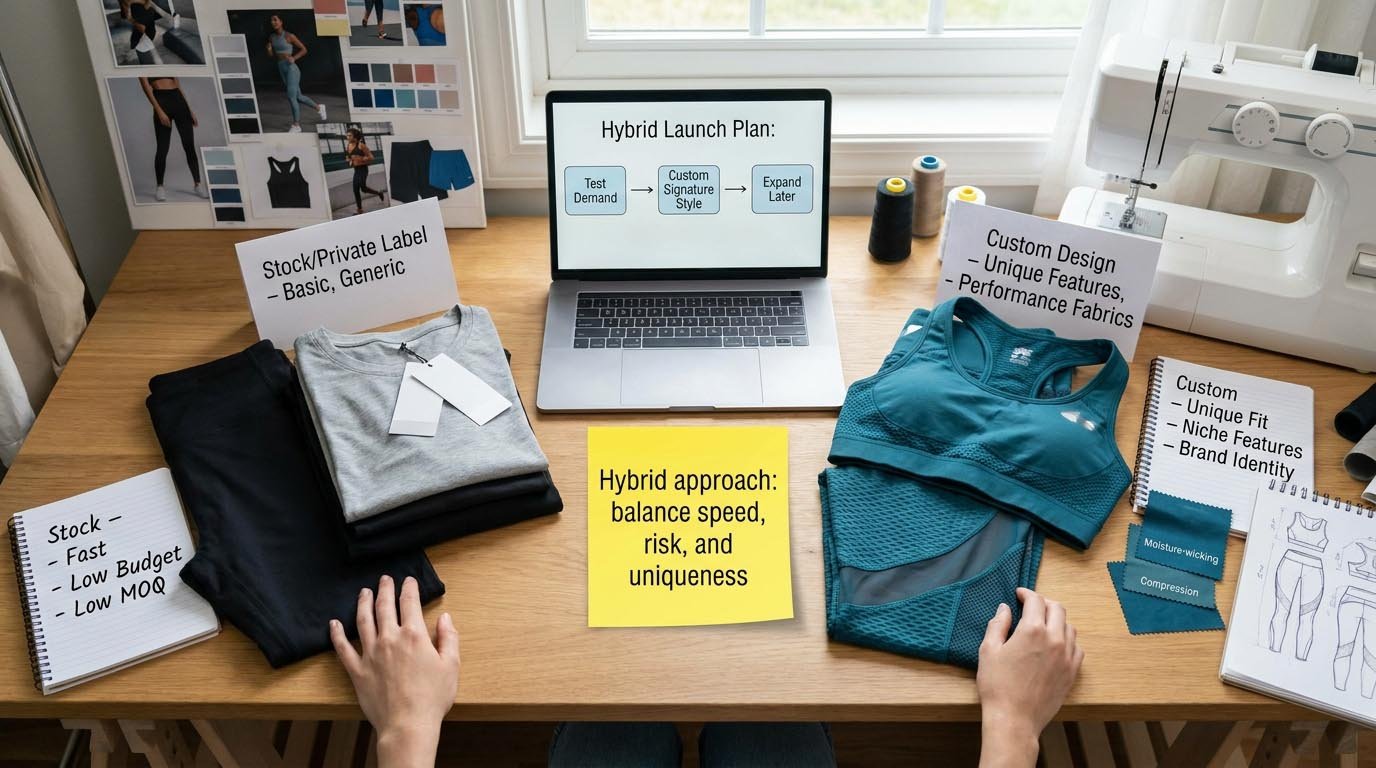
A practical middle ground is a hybrid launch:
- use ready-made products for initial testing
- develop one custom signature style
- gather customer feedback
- expand later based on actual demand
For many new brands, this is the best balance of speed, risk, and product differentiation.
How to Choose the Right Fabrics for Activewear
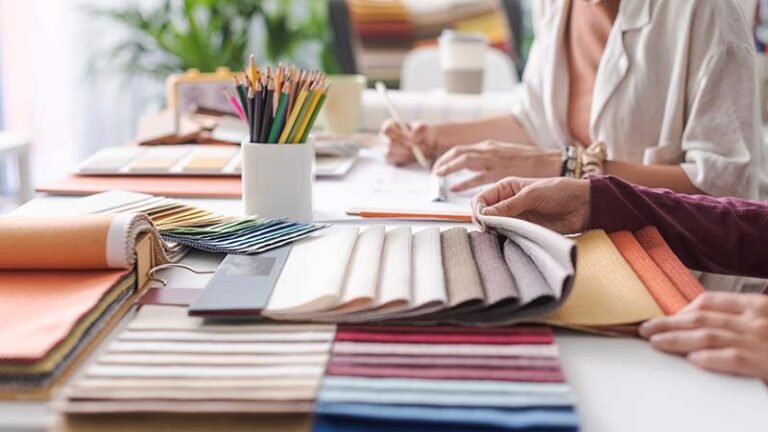
Fabric selection should be based on activity, movement, sweat level, durability needs, and fit expectations—not just softness or price.
Different activities need different fabric performance:
| Activity | Typical Fabric | GSM Range | Key Requirements |
|---|---|---|---|
| Yoga / Pilates | Nylon-spandex | 240-280 GSM | 4-way stretch, softness, opacity |
| Running | Polyester-spandex | 120-160 GSM | Breathability, moisture management, low weight |
| HIIT / CrossFit | Nylon-spandex or performance blends | 250-300 GSM | Durability, stretch recovery, abrasion resistance |
| Cycling | Compression performance knit | 220-260 GSM | Compression, low friction, moisture control |
What to Check in Activewear Fabric
Before approving fabric, test these points:
- Stretch recovery: fabric should return to shape after tension
- Opacity: especially important for leggings and fitted bottoms
- Moisture management: sweat should spread and dry efficiently
- Hand feel after washing: some finishes feel soft only before laundering
- Pilling resistance: low-quality fabric may pill quickly
- Colorfastness: dark shades should not fade too quickly
- Compression behavior: tight fabric is not always true compression
One of the most common mistakes is choosing fabric based on hand feel alone. A fabric can feel luxurious in a showroom and perform poorly during actual exercise or after a few washes.
How to Find the Right Activewear Manufacturer
The right manufacturer is not just the one with the lowest quote. It is the one that matches your product category, MOQ, quality expectations, and communication needs.
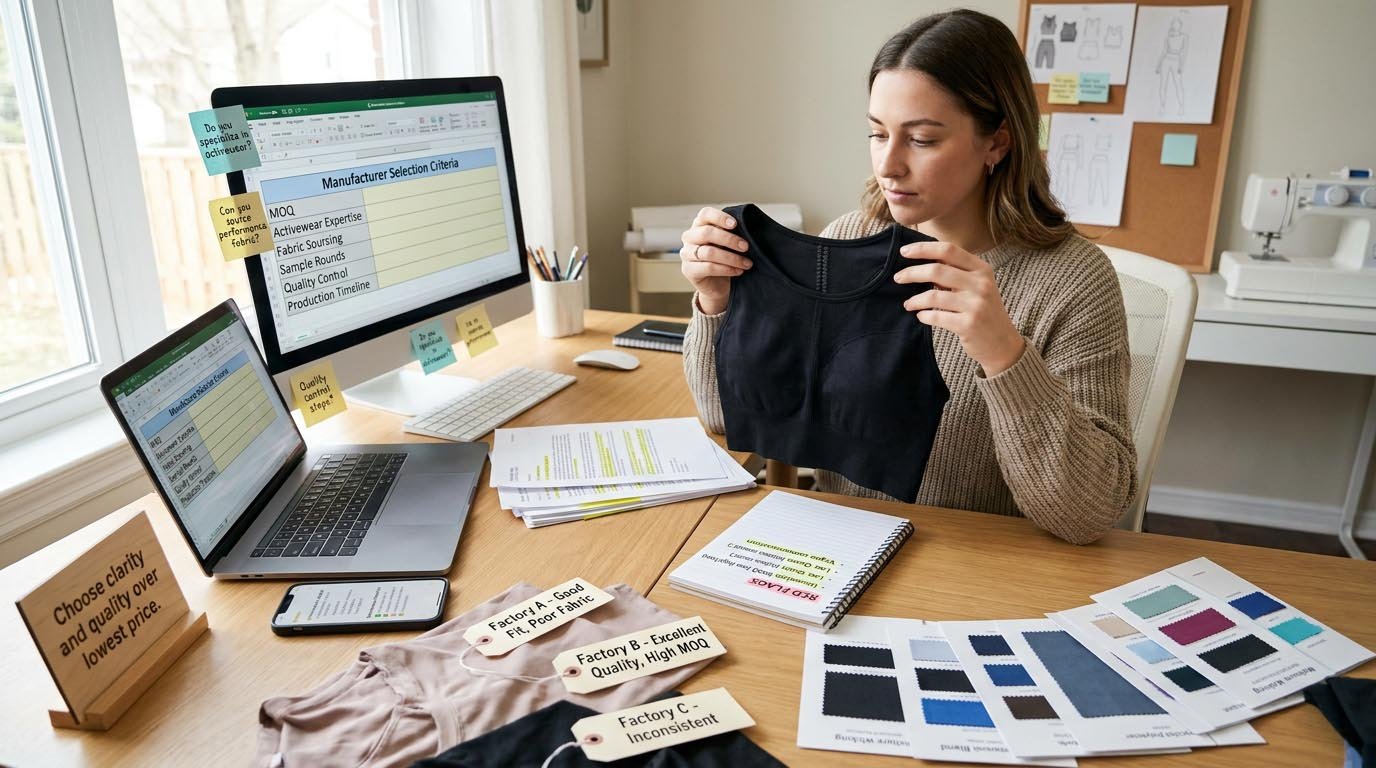
When comparing factories, ask these questions:
- What is your MOQ per style, color, and size range?
- Do you specialize in activewear or general apparel?
- Can you source the fabric needed for my product category?
- How many sample rounds are included?
- What is your bulk production timeline?
- What quality control steps do you use?
- Can you share examples of similar products?
- What happens if bulk production does not match the approved sample?
A good manufacturer should be clear about:
- what is realistic at your budget
- which features raise cost significantly
- how long development and production actually take
- what quality level is possible at your order volume
Red Flags When Choosing a Factory
Be careful if a supplier:
- promises very low MOQ on highly custom products
- gives a quote far below the market with no explanation
- cannot explain fabric sourcing clearly
- avoids sending swatches or sample references
- gives unrealistic production lead times
- communicates slowly before the order even starts
The best manufacturer for a startup is usually one who helps you simplify and launch successfully, not one who agrees to every idea without discussing feasibility.
How to Develop Samples and Test Activewear Properly
Sample approval should never be based on appearance alone. You need to test fit, movement, comfort, fabric behavior, and durability before placing a bulk order.
A normal development process often includes:
-
Proto sample
First version to review construction, basic fit, and fabric direction -
Revised sample
Updated after your feedback on fit and details -
Pre-production sample
Final sample made closer to actual bulk conditions
What to Test in Activewear Samples
- wear the product during the intended activity
- test stretch and recovery after movement
- wash the sample several times
- check waistband stability
- test opacity during squats and bends
- check seam comfort against skin
- review fit in at least 2-3 sizes if possible
For leggings, sports bras, and fitted tops, movement testing matters a lot. Products that seem fine when standing still can fail quickly during actual workouts.
Typical issues that only appear during wear testing:
- waistband rolling down
- see-through fabric under stretch
- chafing at seams
- poor support in bust area
- fabric losing shape after one session
- riding up or twisting during movement
Never skip sample testing to save time. Reproducing failed bulk inventory costs far more than one extra sample round.
How to Price Activewear for a Sustainable Business
Your retail price has to cover landed cost, platform fees, marketing, overhead, returns, and profit—not just production cost.
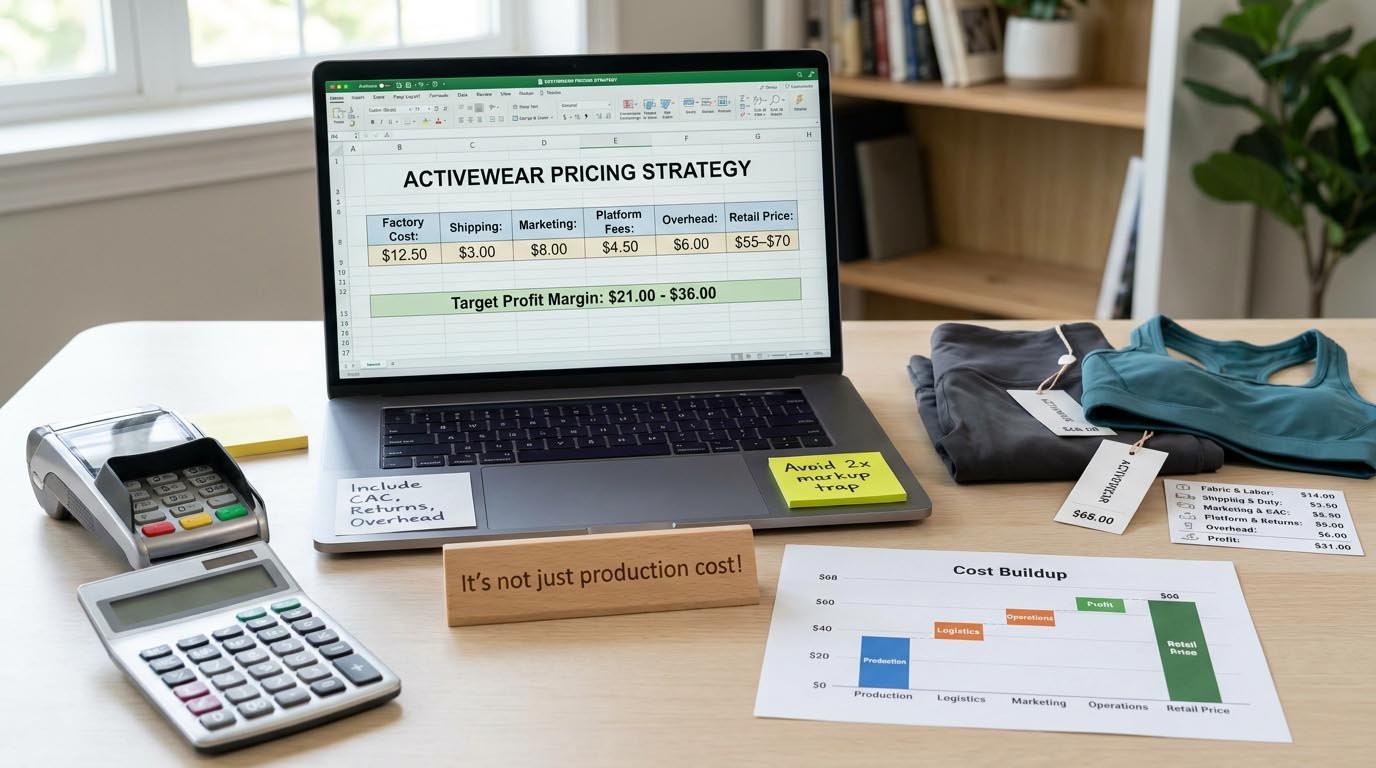
A common startup mistake is using a simple 2x markup. That usually does not work in apparel, especially if you sell online and need paid traffic.
Example: Basic Pricing Logic
If your landed cost is $16 per unit, your business still needs to cover:
- customer acquisition
- content creation
- payment processing or marketplace fees
- shipping support or returns
- business overhead
- future restocks and profit
That often means your retail price needs to be in the $55-$70 range, not $32.
Example Cost Structure
| Cost Layer | Example |
|---|---|
| Factory cost | $12.50 |
| Shipping + duty | $3.50 |
| Landed cost | $16.00 |
| Marketing + CAC | $10-$18 |
| Platform / payment fees | $3-$8 |
| Overhead + returns buffer | $6-$10 |
This is why many new brands struggle when they try to undercut established competitors too early. Bigger brands often have:
- lower cost from higher volume
- better shipping rates
- stronger repeat purchase rates
- cheaper customer acquisition over time
Instead of trying to be the cheapest, build around a use case and quality level that justifies your price.
How to Launch Without Overcommitting Inventory
Your first production run should validate product-market fit, not try to cover every category, color, and customer type at once.
A safer first launch usually includes:
- 2-3 hero products
- limited colors
- one core fabric story
- a clear audience
- realistic inventory depth per SKU
This approach makes it easier to:
- explain the brand clearly
- track which products actually sell
- restock winners
- collect product feedback
- improve fit and fabric choices in the next round
Better First-Launch Strategy
Instead of launching:
- 8 styles
- 4 colors each
- broad sizing with low inventory depth
Try launching:
- 2 hero styles
- 1-2 colors each
- strong size balance based on expected demand
- enough units per SKU to actually test the market
If your budget is tight, focus on inventory quality and product clarity over range.
How to Sell Your First Activewear Collection
Most new activewear brands should not rely on paid ads alone. Start with channels where trust and community already exist.
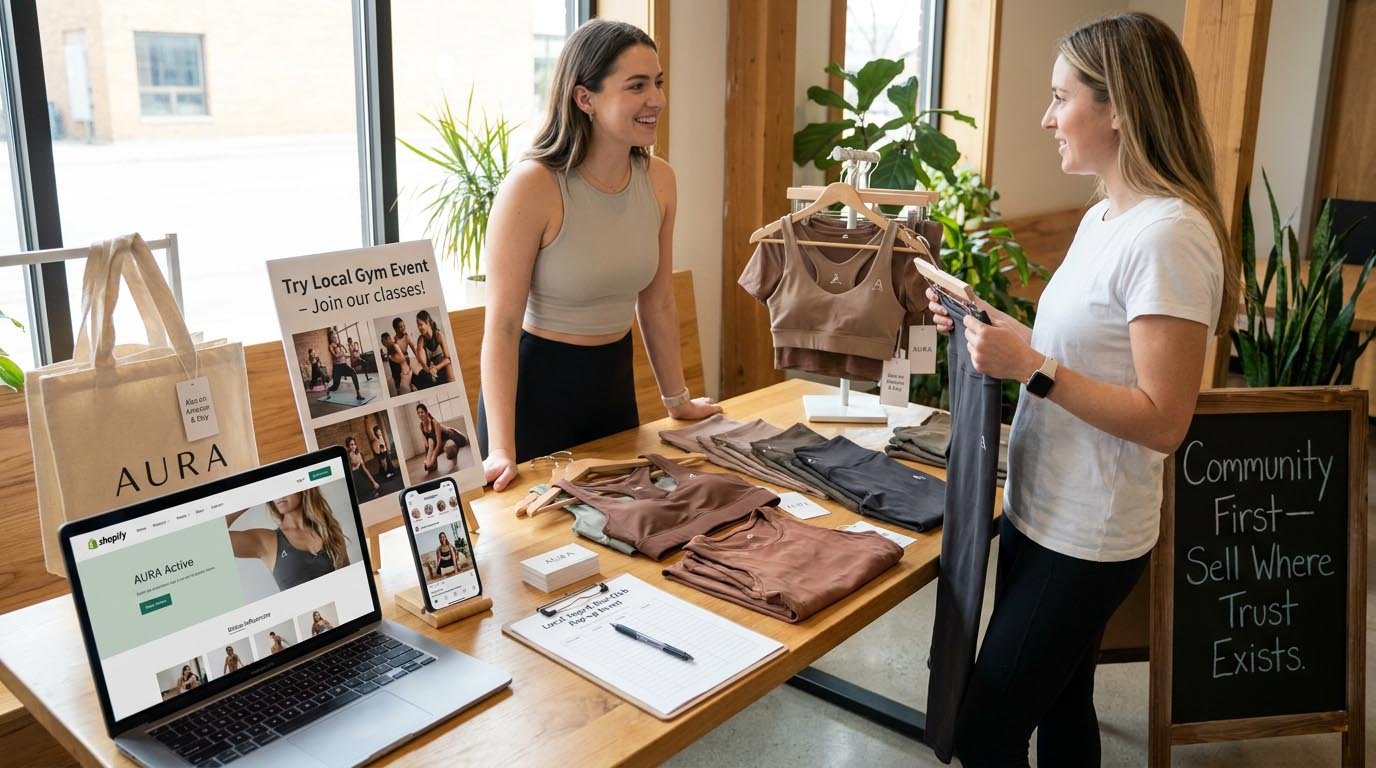
Good early sales channels include:
- your own Shopify website
- local gyms and studios
- coach or trainer partnerships
- community events and pop-ups
- micro-influencer seeding
- Amazon or Etsy for selected products
If you already have an audience, your first launch can move much faster. This is why yoga instructors, trainers, fitness creators, and niche community founders often have an advantage when launching activewear.
What matters early is not being everywhere. It is proving that a specific customer will buy your product and recommend it.
Common Mistakes When Starting an Activewear Brand
Most startup mistakes come from poor planning, not bad ideas.
1. Designing Before Understanding Manufacturing
Founders create complex products first and only later discover they exceed their budget or MOQ.
2. Launching Too Many SKUs
Too many products dilute budget, increase inventory risk, and slow learning.
3. Choosing Fabric Based on Feel Alone
A soft fabric is not automatically the right performance fabric.
4. Skipping Real Wear Testing
Static fit checks are not enough for activewear.
5. Pricing Too Low
Trying to beat competitors on price often destroys margin before the brand grows.
6. Ignoring MOQ and Color Minimums
Custom colors and specialty trims can raise order volume much more than expected.
7. Spending Too Much Before Demand Is Proven
A polished website and perfect branding cannot compensate for weak product-market fit.
FAQ: Starting an Activewear Brand
How much money do I need to start an activewear brand?
For a low-risk launch using stock products and private labeling, around $2,000-$4,000 may be enough. For a custom activewear launch, a more realistic starting budget is $8,000-$15,000+.
What is the MOQ for custom activewear?
Many factories require around 300-500 pieces per style, though it varies by product type, fabric, color count, and construction.
Should I launch with leggings first?
Leggings are popular, but they are also demanding in terms of opacity, fit, and fabric performance. They can be a strong hero product if your niche supports them and your sample testing is thorough.
How many styles should my first collection include?
Usually 2-3 styles is enough for a first launch. This helps control MOQ, cost, and inventory risk.
How long does it take to produce activewear?
A normal custom timeline is about 60-90 days, including development, sample revisions, production, and shipping.
Can I start an activewear brand without custom manufacturing?
Yes. Many brands start with ready-made products and private labeling to test demand before investing in custom development.
What is the best fabric for activewear?
There is no single best fabric. The right fabric depends on use case. Yoga, running, training, and cycling all require different performance properties.
Conclusion
Starting an activewear brand successfully is less about having the most creative designs and more about making smart product and supply chain decisions early. If you define a narrow niche, choose 2-3 strong products, understand your MOQ and true startup cost, select fabrics based on performance, and test samples properly, you give your brand a much better chance of launching profitably.
The best first collection is not the biggest one. It is the one that proves your product works, your audience responds, and your business can scale without wasting capital on the wrong inventory.