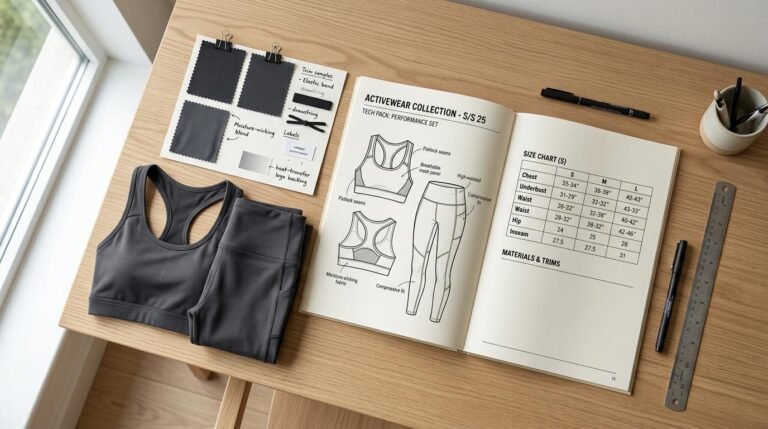
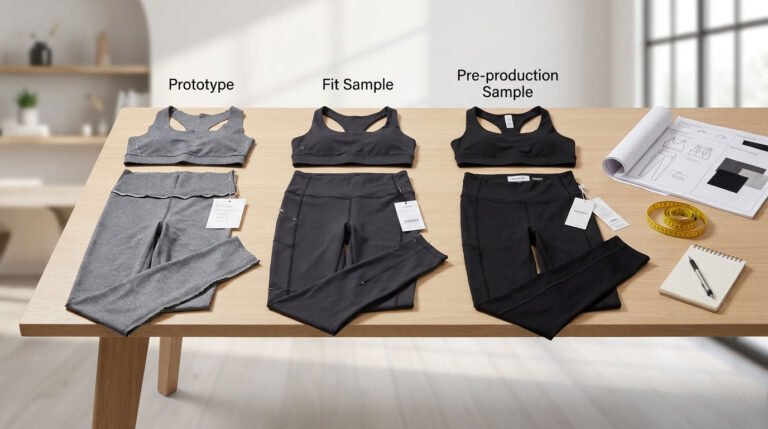
You have a leggings design and a measurement chart ready to send to a manufacturer. But when you request a quote, the factory asks for fabric details, seam construction, and a complete tech pack.
Does that mean your spec sheet is not enough?
The main difference between a tech pack and a spec sheet is scope. A garment spec sheet focuses on measurements, sizing, and tolerances. A tech pack combines those measurements with fabric, construction, trims, branding, and other manufacturing requirements.
For activewear brands, understanding this distinction helps prevent unclear quotations, unnecessary sample revisions, and production misunderstandings.
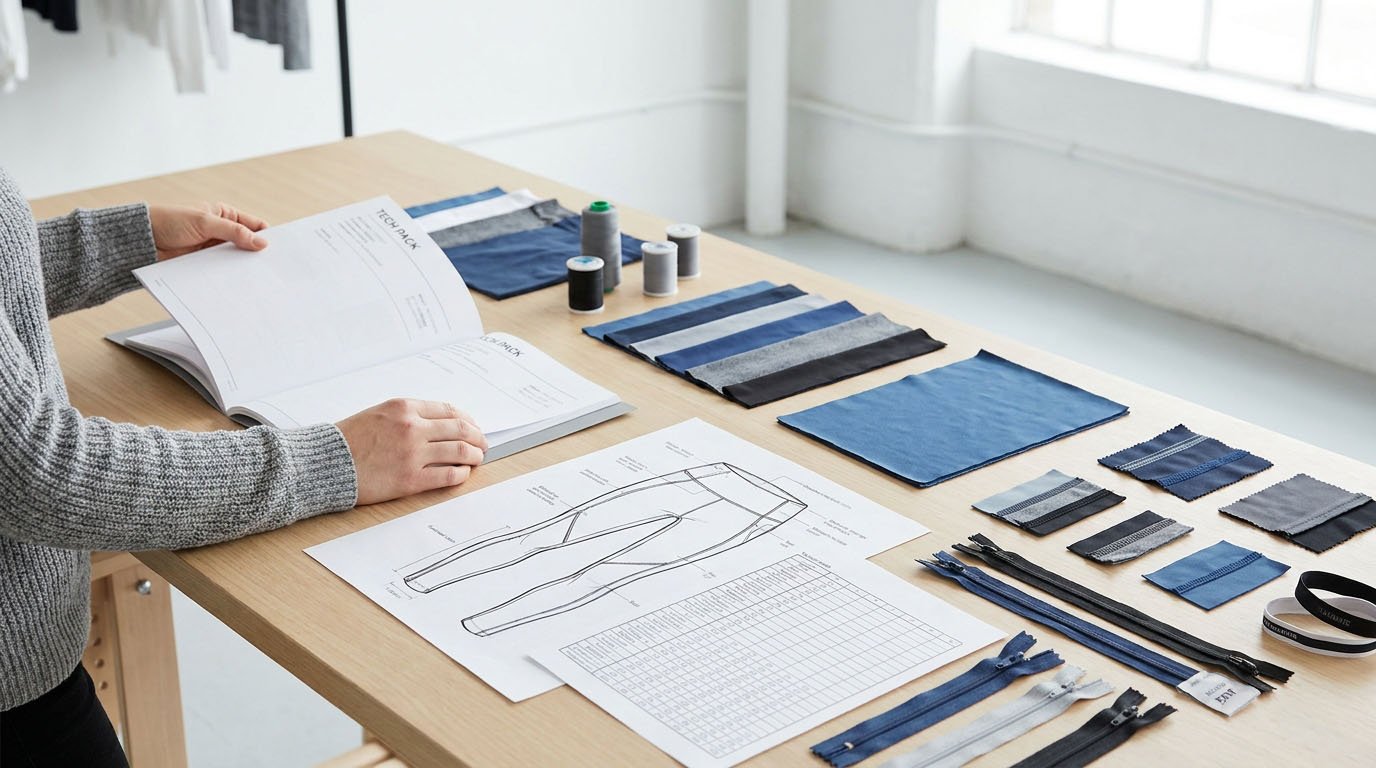
Quick Answer: Tech Pack vs Spec Sheet
A spec sheet defines selected garment specifications, particularly how a product should measure. A tech pack provides the broader instructions needed to develop and manufacture the garment.
In many apparel workflows, the measurement spec sheet is one section of the complete tech pack.
Key Differences at a Glance
| Feature | Spec Sheet | Tech Pack |
|---|---|---|
| Main purpose | Define measurements and specific requirements | Communicate complete product requirements |
| Typical contents | POM, size chart, grading, tolerances | Measurements, fabric, BOM, construction, branding |
| Main focus | Dimensions and fit | Overall product development |
| Quotation use | Supports preliminary assessment | Provides details for more accurate costing |
| Sampling use | Checks measurements and fit | Guides materials and construction |
| Bulk production | Measurement inspection reference | Approved manufacturing reference |
Key takeaway: A spec sheet explains how a garment should measure. A tech pack explains how the complete product should be made.
Terminology varies between manufacturers, so always check what each document contains rather than relying on its name.
Step 1: Understand What Each Document Does
What Is an Activewear Spec Sheet?
An activewear spec sheet defines measurable product requirements.
A typical garment measurement spec sheet includes:
- Points of Measure (POM): Where and how measurements are taken.
- Base Size Measurements: Target dimensions for the reference size.
- Size Grading: Measurements across the size range.
- Tolerances: Agreed acceptable dimensional deviations.
- Technical References: Flat sketches showing measurement locations.
For example, a leggings spec sheet may define waistband width, hip width, front rise, inseam, and leg opening.
These specifications guide pattern development, fitting, and finished-garment inspection.
However, measurements alone do not explain fabric compression, seam elasticity, or waistband construction.
A pair of leggings can meet every dimensional requirement and still perform poorly during exercise.
What Is an Activewear Tech Pack?
A tech pack coordinates the technical information needed to manufacture a product.
Beyond measurements, it typically covers:
- Fabric composition, weight, and performance requirements
- Construction methods and seam locations
- Bill of Materials (BOM)
- Elastics, labels, and other trims
- Branding placement and artwork
- Finishing and packaging instructions
It should also identify the current revision so manufacturers work from approved specifications.
For custom activewear, these details help communicate how a garment should look, fit, and function.
For a detailed breakdown of these components, see our Activewear Tech Pack Guide.
The distinction: A spec sheet defines specific requirements; a tech pack coordinates them into a complete manufacturing reference.
Step 2: Compare the Key Differences in Activewear Manufacturing
The difference matters particularly for performance garments made from stretch fabrics.
Two leggings may share identical measurements but provide different compression, comfort, and recovery.
Why Measurements Alone Are Not Enough
| Activewear Issue | What a Spec Sheet Confirms | What the Tech Pack Adds |
|---|---|---|
| Leggings slide down | Waist and rise dimensions | Fabric recovery and waistband construction |
| Sports bra lacks support | Underband and strap measurements | Elastic properties, lining, and support structure |
| Seams fail during movement | Garment dimensions | Seam type and construction requirements |
A measurement sheet is essential, but it cannot replace the broader requirements needed to evaluate performance.
Three Important Activewear Considerations
Fabric properties: Composition, fabric structure, GSM, stretch, and recovery affect garment fit and function.
Seam construction: Overlock, flatlock, coverstitch, and other methods influence appearance, comfort, and seam performance.
Support components: Waistband elastics, bra underbands, and removable pads can significantly affect how a garment behaves during movement.
These details should be specified or confirmed during development.
If materials remain undecided, a manufacturer offering fabric sourcing support can help evaluate appropriate options.
Step 3: See a Practical Example — Leggings Spec Sheet vs Full Tech Pack
Consider a brand developing high-waisted workout leggings with a supportive waistband and flat seams.
The spec sheet and full tech pack communicate different levels of detail.
Example A: Leggings Measurement Spec Sheet
A typical measurement sheet might include:
| Measurement Point | Specification |
|---|---|
| Waist width | Relaxed measurement and tolerance |
| Hip width | Defined POM and target dimension |
| Front rise | Target measurement and method |
| Inseam | Approved length for each size |
| Leg opening | Width and tolerance |
| Size grading | Measurements across the size range |
The document should explain how measurements are taken, including whether the fabric is relaxed and which reference points are used.
It helps the manufacturer develop patterns and inspect dimensions.
However, several questions remain:
- Which fabric provides the intended compression?
- How is the waistband constructed?
- Which seam types are required?
- Does the fabric maintain opacity when stretched?
- Where should the logo be positioned?
Example B: Full Leggings Tech Pack
The complete tech pack includes the measurement sheet and additional specifications.
| Technical Area | Example Information |
|---|---|
| Measurements | Approved POM, grading, tolerances |
| Fabric | Composition, GSM, stretch and recovery requirements |
| Waistband | Construction details and elastic specifications |
| Seams | Approved seam types and locations |
| Performance | Opacity, recovery, and wash-performance expectations |
| Branding | Logo size, placement, and application |
| Packaging | Labels, folding, and packing requirements |
These are illustrative fields, not fixed Wearzio production specifications.
The manufacturer now understands both the garment dimensions and the construction requirements.
Why Both Documents Matter
Imagine a sample that matches the approved waist measurement but slips during a squat test.
The spec sheet confirms whether the dimensions are correct. The broader tech pack helps the team investigate fabric recovery, waistband construction, and other relevant requirements.
Once the issue is resolved, the approved specifications can be updated.
A complete tech pack does not guarantee a perfect first sample. It makes problems easier to identify and correct.
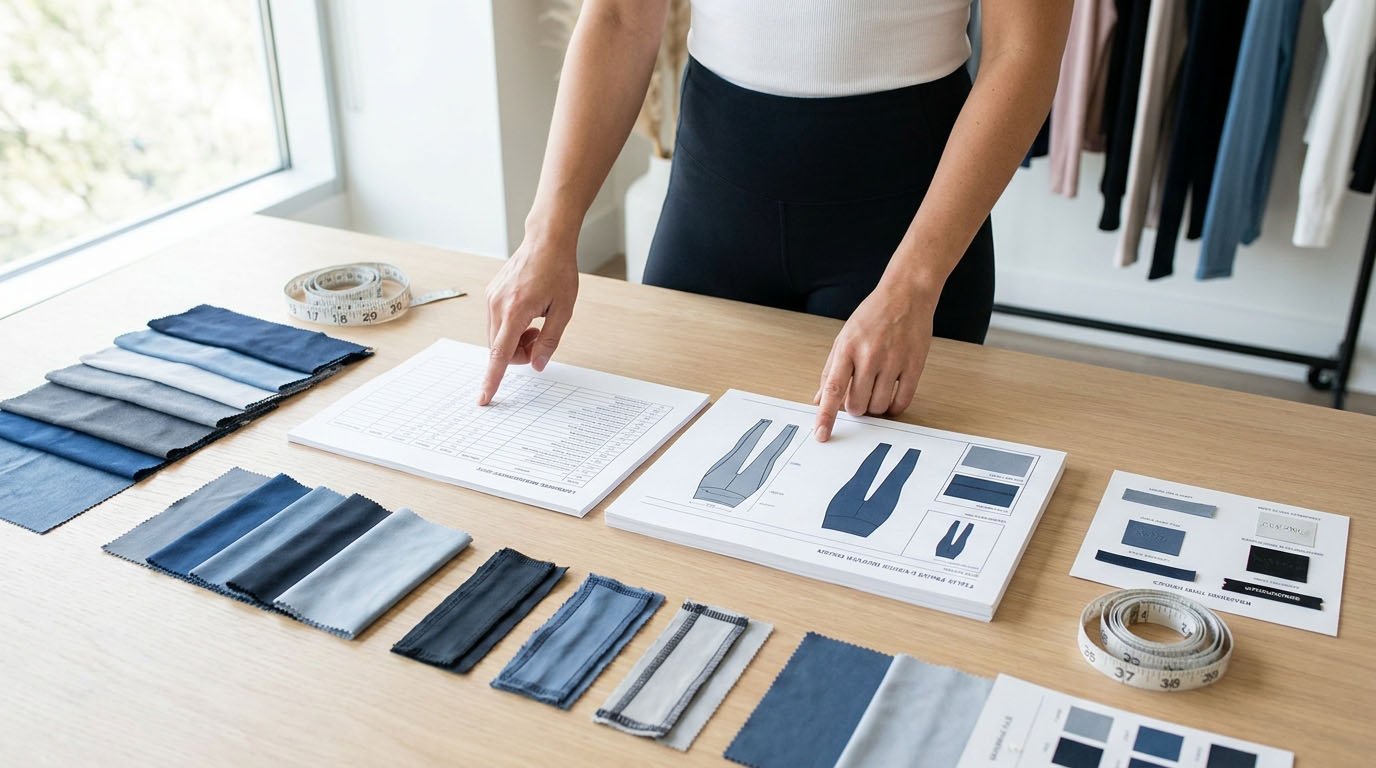
Suggested image: Replace this placeholder with actual Wearzio leggings measurement and tech pack pages. Remove confidential customer information before publishing.
Step 4: Choose the Right Document for Your Activewear Project
Not every activewear project requires the same documentation.
The appropriate level depends on whether you are using existing products, modifying factory designs, or developing original garments.
Documentation by Manufacturing Model
| Manufacturing Model | Typical Documents | Main Priority |
|---|---|---|
| Private Label | Existing style reference, branding instructions, size selection | Confirm existing product specifications |
| ODM / Modified Design | Reference style, revised measurements, change instructions | Document approved modifications |
| Custom OEM | Full tech pack, measurement sheet, material and construction specifications | Define original product requirements |
Private Label: Use Existing Product Specifications
If you select a factory-developed sports bra or legging and only change the branding, the manufacturer may already have approved patterns, fabrics, and construction specifications.
You typically need to confirm the style, size range, colors, quantities, and branding details.
A completely new tech pack may not be necessary.
ODM: Document Every Modification
When modifying an existing design, start with the factory's established specifications and document the requested changes.
Adjustments to fabric, sizing, waistbands, or construction should be recorded and approved.
More extensive modifications may require a substantially expanded technical package.
Custom OEM: Prepare a Full Tech Pack
Original leggings, sports bras, and performance apparel generally need a more complete tech pack.
It coordinates the design, fabric, construction, sizing, and finishing requirements before bulk production.
For more information on these manufacturing options, read Private Label vs OEM vs ODM Activewear.
Quick Decision Guide
Are you using an existing factory-approved design?
- Yes, branding only: Use existing product specifications and branding instructions.
- Yes, with modifications: Provide revised specifications and clear change requirements.
- No, original design: Prepare a comprehensive tech pack with measurement specifications.
The more changes you introduce, the more detailed your documentation generally needs to become.
Step 5: Check What Your Manufacturer Needs Before Quotation and Sampling
A production-ready tech pack is not always required before your first conversation with a factory.
However, documentation should become more complete as development progresses.
Documentation by Project Stage
| Stage | Documentation Priority |
|---|---|
| Initial inquiry | Product reference, customization needs, approximate quantities |
| Preliminary quotation | Fabric, construction, sizing, and branding details |
| Custom sampling | Measurements and technical instructions sufficient for development |
| Sample approval | Updated specifications reflecting approved changes |
| Bulk production | Final approved tech pack and sample references |
A quotation may remain provisional until important specifications are confirmed.
For a complete inquiry checklist, see What Information Should You Send an Activewear Manufacturer for a Quote?.
Five Questions Before Sending Your Documents
- Measurements: Are POM locations, units, target dimensions, and tolerances clear?
- Materials: Have fabric requirements been specified or identified for confirmation?
- Construction: Are important seams, waistbands, and support components explained?
- Branding: Are artwork, labels, and finishing requirements included?
- Revision control: Can the factory identify the latest approved document?
If certain details remain undecided, mark them as TBC (To Be Confirmed) and agree on when they must be finalized.
After sample approval, update the relevant specifications before production.
You can also review the Activewear Sampling Process to understand how technical approvals progress toward manufacturing.
Frequently Asked Questions
Is a Spec Sheet Part of a Tech Pack?
Usually, yes. A garment measurement spec sheet commonly forms one section of a complete tech pack.
However, manufacturers may use different terminology. Always review the actual contents.
Can I Manufacture Activewear With Only a Spec Sheet?
Sometimes, particularly when using an existing factory-approved design.
For original custom activewear, measurements alone generally cannot communicate all the fabric, construction, and performance requirements.
Do I Need a Full Tech Pack Before Requesting a Quote?
Not always.
A manufacturer may provide a preliminary estimate using reference images, approximate quantities, and basic material and design information.
However, the final quotation may change when specifications are confirmed.
Can a Manufacturer Help Create a Tech Pack?
Some OEM and ODM manufacturers provide technical development support.
Confirm who prepares the documents, who approves revisions, and what development services are included before proceeding.
Conclusion: Choose the Right Document for Your Project
A spec sheet defines specific garment requirements, particularly measurements. A tech pack connects those specifications with the materials, construction, branding, and other instructions needed for production.
Private-label projects may require only focused specifications and branding details. Original activewear development generally requires more comprehensive technical documentation.
The goal is not to create more paperwork. It is to give your manufacturer clear, approved information at the right stage.
Need Help Preparing Your Activewear Specifications?
Wearzio supports private-label and custom activewear manufacturing, including leggings, sports bras, and other performance garments.
Whether you have a complete tech pack, a measurement sheet, or an early product concept, contact Wearzio to discuss your project requirements.