Approving the wrong sample can create costly problems for activewear brands. A garment may look correct in photos but fail during movement, or an approved fit sample may behave differently when the final production fabric arrives.
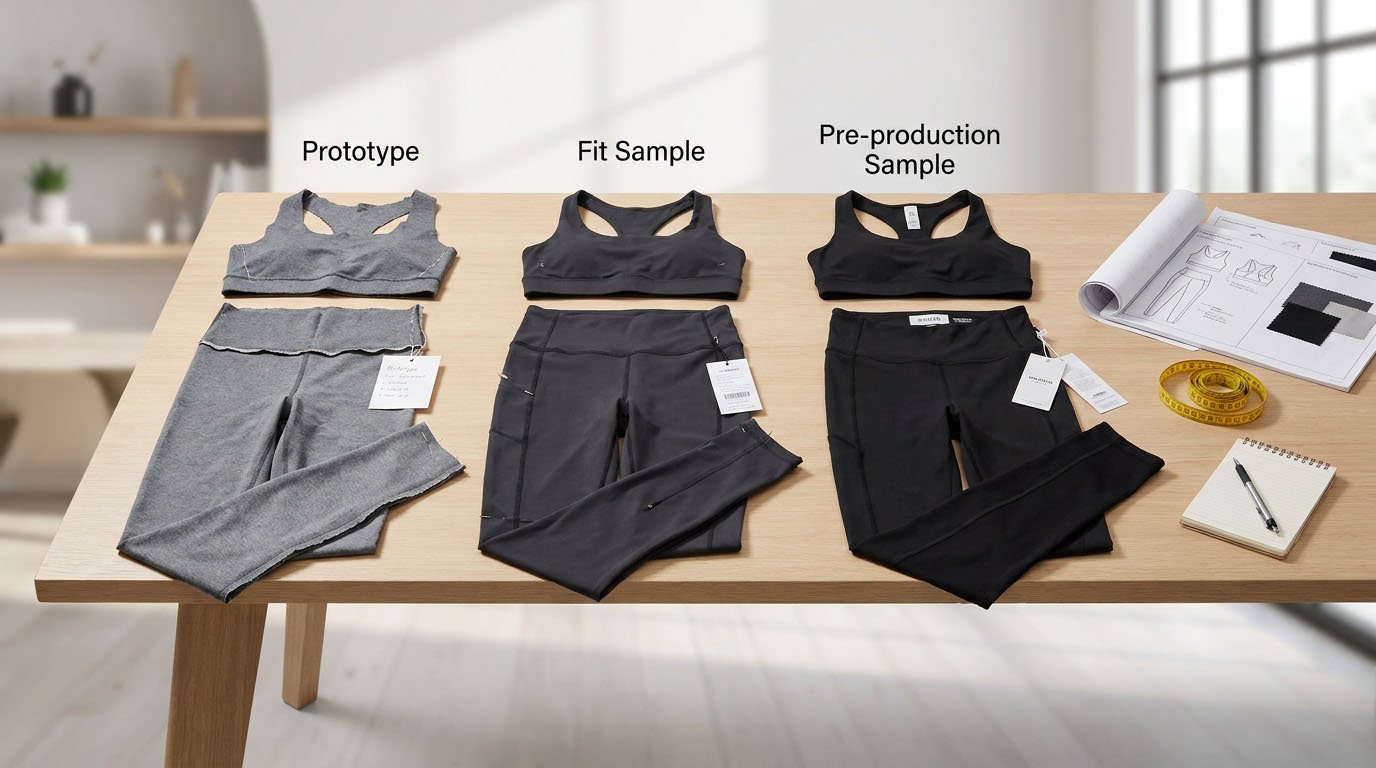
A prototype tests design feasibility. A fit sample verifies measurements and movement. A pre-production (PP) sample confirms the final product standard before bulk manufacturing.
Each sample controls a different development risk. Understanding these differences helps brands avoid premature approvals, unnecessary revisions, and production mistakes.
This guide explains what each sample checks, when to use it, and what brands should approve before moving forward.
Quick Answer: What's the Difference Between Prototype, Fit, and PP Samples?
The main difference is what each sample is designed to validate.
| Sample Type | Main Purpose | Key Checks | Approval Means |
|---|---|---|---|
| Prototype (Proto) | Validate design feasibility | Silhouette, pattern, construction | Design concept is workable |
| Fit Sample | Validate fit and movement | Measurements, stretch, comfort, support | Reviewed fit requirements are acceptable |
| Pre-Production (PP) | Confirm production readiness | Final fabric, trims, workmanship, branding | Product specifications are ready for bulk execution |
A prototype may use substitute materials. A fit sample should use fabric that closely represents the intended performance properties. A PP sample should reflect the approved bulk materials and final construction requirements.
Important: Sample terminology varies between manufacturers. Always confirm what each sample includes and what its approval covers.
For the complete development workflow, read our Activewear Sampling Process Explained.
Step 1. What Is a Prototype Sample in Activewear Development?
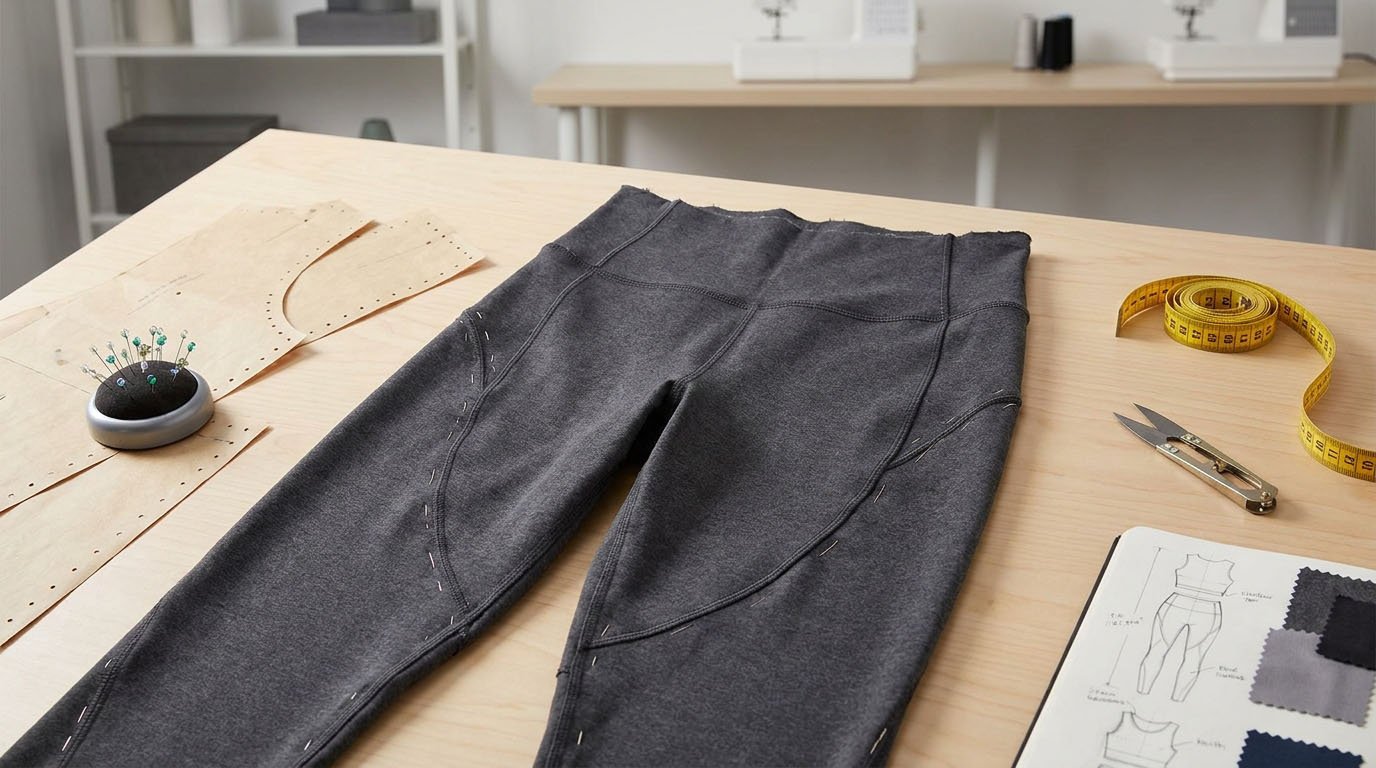
A prototype, or proto sample, is an early garment used to evaluate design feasibility and construction.
It translates technical drawings into a physical product before detailed fit refinement begins.
The primary question: Can this design be constructed as intended?
For example, leggings with curved contour seams, a high-rise waistband, and an integrated pocket may require pattern adjustments before the design can be produced correctly.
What Should Brands Check on a Prototype?
Focus on three areas:
- Silhouette: Does the overall shape match the intended design?
- Construction: Can panels, seams, and functional details be assembled correctly?
- Pattern feasibility: Are panel shapes, seam placements, and proportions suitable for development?
Common issues include twisted seams, bulky panel intersections, and awkward pocket placement.
Specialized techniques, such as flatlock stitching, may also require construction testing.
Learn more about how garment patterns and sewing methods are developed through Wearzio's Cut & Sew services.
What Should Not Be Approved Yet?
Prototypes may use available stock fabric or temporary trims.
Therefore, prototype approval should not automatically confirm final color, compression, material performance, or full size-range fit.
Approval checkpoint: Confirm that the construction concept works and document changes required before fit testing.
Step 2. What Is a Fit Sample, and Why Does It Matter for Activewear?
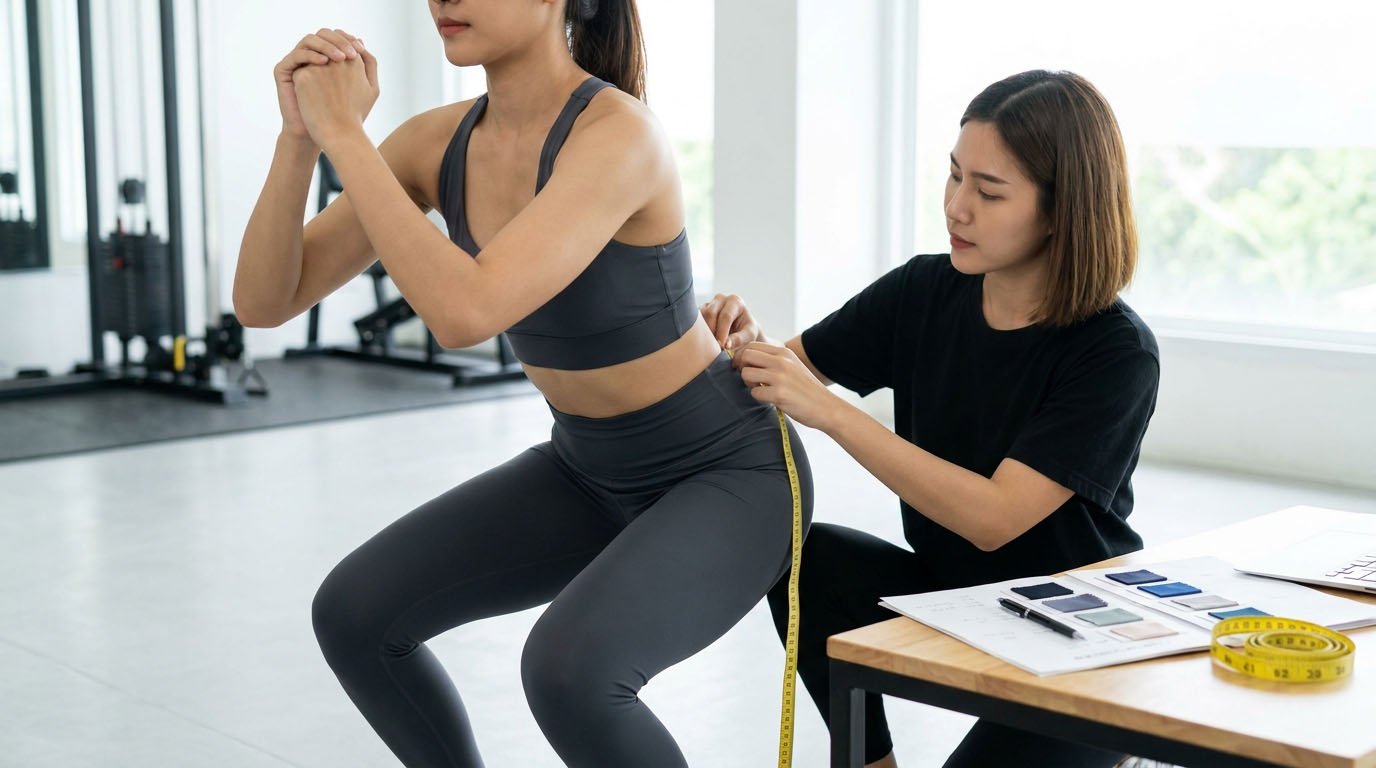
A fit sample verifies how a garment fits the body and performs during movement.
This stage is particularly important for leggings, sports bras, and compression garments because fabric behavior directly affects fit and comfort.
A pair of leggings may fit correctly while standing but slide down during squats. A sports bra may look balanced on a mannequin but shift during exercise.
The purpose of a fit sample is to verify measurements, comfort, support, and movement performance.
Why Do Stretch and Recovery Affect Fit?
Many activewear products use negative ease, meaning certain garment measurements are smaller than corresponding body measurements.
This helps create a close fit or compression effect.
Three material properties deserve attention:
| Property | Impact on Fit |
|---|---|
| Stretch / Elongation | Affects mobility and garment tension |
| Elastic Recovery | Influences whether the garment returns to shape |
| Fabric Weight and Structure | Affect drape, coverage, and support |
Two fabrics with similar composition and GSM may still behave differently because their stretch resistance and recovery differ.
If substitute fabric is used for fit testing, it should closely represent the intended production material.
Significant changes in fabric behavior may require additional fit verification.
Wearzio's Fabric Sourcing services support material selection for different activewear applications.
How Should Brands Test Fit Samples?
Fit evaluation should combine measurements with activity-appropriate movement testing.
| Product | Suggested Test | What to Check |
|---|---|---|
| Yoga Leggings | Squats and lunges | Waistband stability, rise, coverage |
| Sports Bra | Arm raises and dynamic movement | Support, strap position, band stability |
| Running Shorts | Jogging and high knees | Mobility, leg opening, chafing |
| Training Tops | Overhead reach and rotation | Shoulder comfort, hem movement |
Garment measurements should also be compared with the approved specification.
Does Base-Size Approval Cover All Sizes?
Not automatically.
A fit sample may be tested in one base size, but that does not prove grading works across the full range.
New sizing systems or technically demanding garments may require additional size-set validation.
Approval checkpoint: Confirm the reviewed measurements, fit, and movement requirements. Record any unresolved fabric or size-range limitations.
Step 3. What Is a Pre-Production Sample?
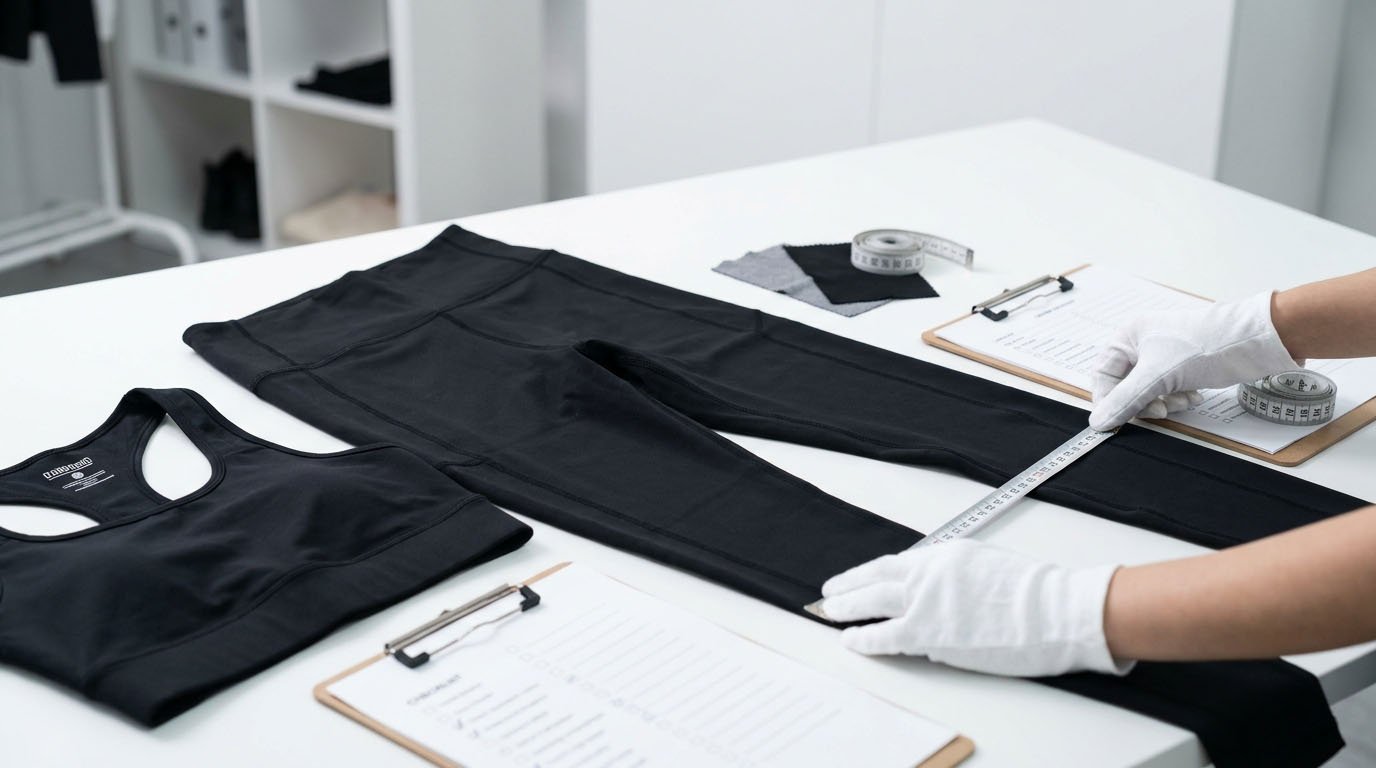
A pre-production sample, often called a PP sample or PPS, confirms the final product standard before bulk manufacturing.
Unlike early development samples, it should represent the approved production specifications as closely as possible.
The primary question: Is the garment ready to be manufactured according to the agreed requirements?
What Must Be Confirmed Before PP Approval?
| Approval Item | What to Verify |
|---|---|
| Fabric | Approved bulk material, color, and relevant properties |
| Measurements | Final specifications and agreed tolerances |
| Construction | Seams, stitching, panels, finishing |
| Trims | Correct elastic, drawcords, zippers, and components |
| Branding | Logo method, size, placement, appearance |
| Labels | Approved brand, size, content, and care information |
| Workmanship | Acceptable appearance and construction quality |
All critical corrections from previous sampling rounds should be incorporated before final approval.
Is a PP Sample the Same as a Golden Sample?
An approved PP sample may become the golden sample used as a physical production reference.
However, the manufacturer and brand should explicitly identify the approved sample and specification revision.
The physical sample supports the technical documents rather than replacing them.
Does PP Approval Guarantee Bulk Quality?
No.
PP approval establishes the accepted product standard. Bulk production still requires appropriate controls for materials, cutting, stitching, measurements, and workmanship.
Approval checkpoint: Confirm final specifications, close critical issues, and identify the approved production reference before bulk cutting.
Step 4. Prototype vs Fit vs PP: What Exactly Should Brands Approve?
One common mistake is approving a sample without defining which characteristics have been accepted.
A sample can pass its intended development stage while other requirements remain unresolved.
Activewear Sample Approval Matrix
| Approval Requirement | Prototype | Fit Sample | PP Sample |
|---|---|---|---|
| Design feasibility | Primary check | Confirm changes | Final confirmation |
| Silhouette and proportions | Initial review | Detailed review | Final confirmation |
| Base-size measurements | Preliminary | Primary check | Reconfirm |
| Fit and movement | Preliminary | Primary check | Reconfirm |
| Stretch and support | Initial assessment | Primary check | Confirm with final fabric |
| Final fabric and trims | Not required | Prefer representative materials | Required |
| Final logo and labels | Not required | If relevant | Required |
| Bulk production reference | No | No | Yes, when formally approved |
These are typical approval priorities. A manufacturer may combine checkpoints when the sample meets the relevant requirements.
How Should Sample Approval Be Recorded?
Each submitted sample should have a clear written approval record.
| Field | Example |
|---|---|
| Style Code | LG-001 |
| Sample Stage | Fit Sample 2 |
| Revision | V03 |
| Approved Items | Waistband shape, inseam, gusset |
| Open Issues | Final fabric recovery confirmation |
| Decision | Conditionally approved |
| Record | Reviewer, date, written comments |
This prevents an approved fit sample from being mistaken for approval of untested materials or final production details.
If a later change affects an approved characteristic, determine whether another sample or targeted recheck is necessary.
The rule is simple: Approve specific characteristics, not just the sample as a whole.
Step 5. When Can Brands Combine Sample Development Stages?
Not every activewear product needs three separate sampling rounds.
The appropriate path depends on design complexity, fit sensitivity, material changes, and production risk.
A new technical garment may benefit from separate prototype and fit stages. A proven style with limited modifications may allow some stages to be combined.
Activewear Sampling Decision Matrix
| Development Scenario | Suggested Sample Path | Main Consideration |
|---|---|---|
| New compression leggings | Prototype → Fit → PP | Stretch, compression, movement |
| New structured sports bra | Prototype → Fit → PP | Support, construction, fit |
| Minor modification to proven style | Combined Proto/Fit → PP | Verify affected details |
| New color of approved style | Targeted material checks → PP confirmation as needed | Color and material consistency |
| Unchanged repeat order | Confirm existing approvals; recheck changes | Materials and production consistency |
| Private label using proven stock design | Fit/branding review → Final approval | Existing pattern and customization |
These are suggested pathways, not mandatory industry rules.
Brands choosing between developing original garments and customizing existing designs can compare the options in Private Label vs OEM vs ODM Activewear.
Can One Sample Serve Two Purposes?
Yes, provided it meets the acceptance criteria for both stages.
For example, a combined prototype and fit sample may validate construction and fit in one round when the fabric and testing conditions are suitable.
However, combining sample stages should not eliminate necessary approval checks.
For established products with limited branding changes, Wearzio's Private Label services offer another development approach.
Step 6. What Are the Most Common Sample Approval Mistakes?
Even with an appropriate sampling sequence, unclear approvals can create production problems.
Mistake 1: Treating Prototype Approval as Final Product Approval
A prototype may confirm construction while using substitute materials.
Better approach: Approve the design concept separately from final fit and material performance.
Mistake 2: Approving Fit Without Checking Fabric Differences
Changes in stretch resistance or recovery may affect leggings, sports bras, and compression garments.
Better approach: Compare sample and production fabric properties. Recheck fit when material changes could affect performance.
Mistake 3: Assuming Base-Size Approval Confirms All Sizes
A successful medium-size fit does not automatically validate XS, XL, or other sizes.
Better approach: Review grading and perform size-set checks where appropriate.
Mistake 4: Approving a PP Sample With Unresolved Changes
Late changes to fabric, trims, or construction can invalidate previous approvals.
Better approach: Maintain revision records and obtain renewed approval when critical product requirements change.
The goal is not to create more samples than necessary. It is to resolve important product risks before bulk production.
Frequently Asked Questions
Do Activewear Brands Always Need All Three Sample Types?
No. New technical designs may need separate prototype, fit, and PP stages, while proven styles may allow combined checkpoints. The necessary evaluations should still be completed.
What Is the Difference Between a Fit Sample and a PP Sample?
A fit sample validates measurements, comfort, support, and movement. A PP sample confirms final production materials, construction, trims, branding, and approved specifications.
Can a Fit Sample Use Substitute Fabric?
Yes, if the substitute closely represents the intended material's relevant stretch, recovery, weight, and structure. Significant differences may require additional fit verification.
How Many Fit Sample Revisions Are Needed?
There is no universal number. The required revisions depend on design complexity, material behavior, and whether the approved fit criteria have been achieved.
What Happens if Bulk Fabric Differs From the Approved Fit Sample?
The manufacturer should assess how the change affects stretch, recovery, fit, and support. Additional testing or sample approval may be needed before bulk production.
Conclusion: Choose Samples Based on What You Need to Validate
Prototype, fit, and pre-production samples serve different purposes:
- Prototype: Confirms design and construction feasibility.
- Fit Sample: Verifies fit, movement, and comfort.
- Pre-Production Sample: Establishes the final product standard for manufacturing.
Brands may combine stages when appropriate, but each critical requirement should be evaluated and approved.
At Wearzio, we support OEM/ODM activewear development, from pattern refinement and material selection to final sample approval and bulk manufacturing.
Developing leggings, sports bras, or performance apparel? Contact Wearzio to discuss your design and sampling requirements.