You have an activewear design in mind, but your manufacturer asks for product references or technical documents. Should you send a physical garment, prepare a tech pack, or provide both?
A reference sample shows the factory the fit, fabric feel, and construction you want. A tech pack defines measurements, materials, design changes, and technical requirements. For custom activewear, using both often provides the clearest starting point.
However, you do not always need a complete tech pack before contacting a manufacturer.
This guide explains what to send at each development stage, how to label your references, and how to avoid misunderstandings before sampling.
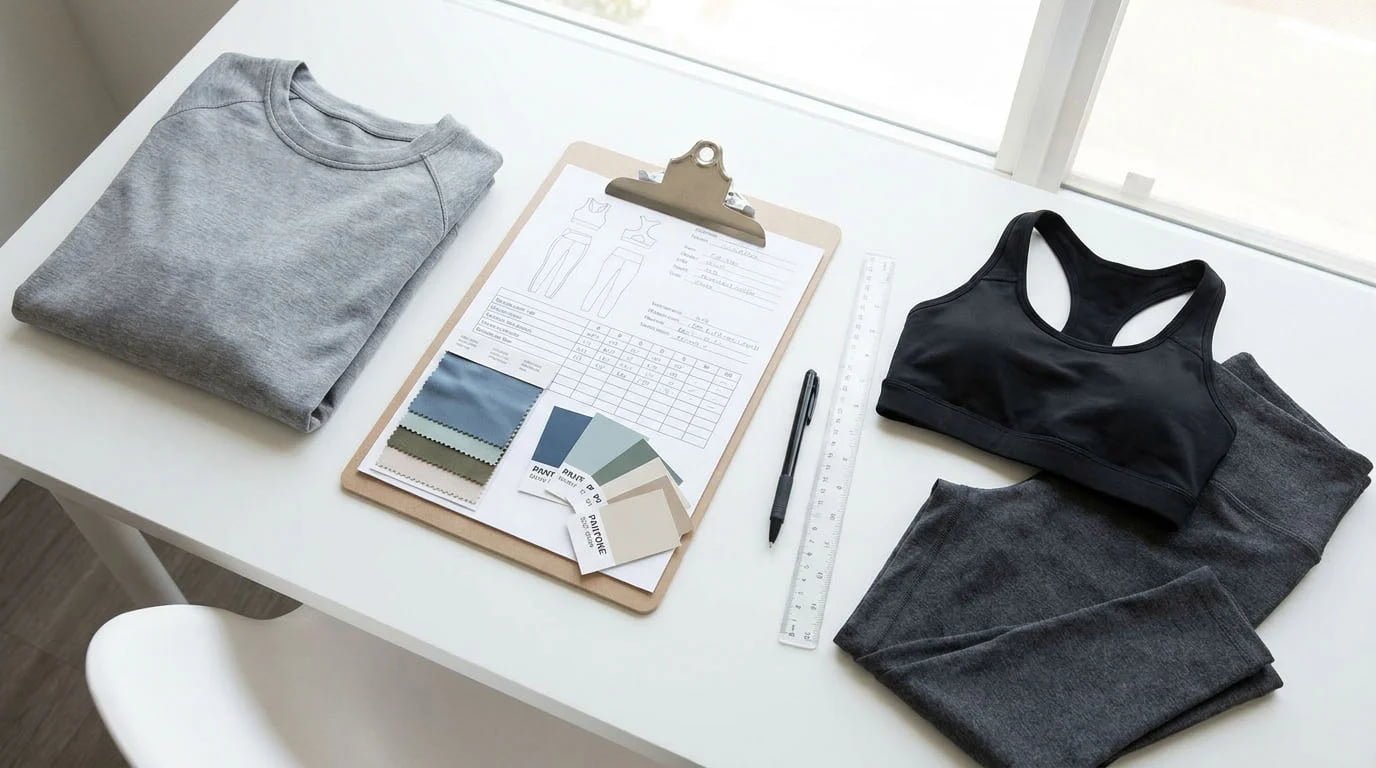
Quick Answer: Should You Send a Reference Sample or a Tech Pack?
The best submission depends on what information you have and what the factory needs to do next.
| Your Situation | What to Send | Key Consideration |
|---|---|---|
| You have a garment with the fit or fabric feel you want | Reference sample + annotated changes | Identify what to keep and ignore |
| You have an original design with defined specifications | Tech pack | Check measurements and construction details |
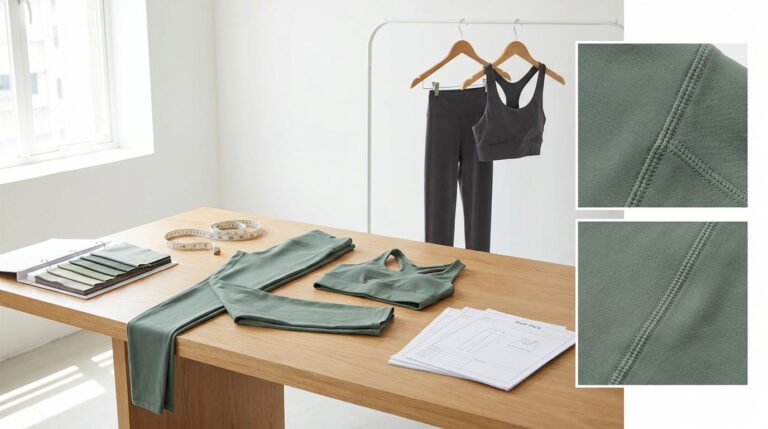
| You are developing technical leggings or sports bras | Reference sample + tech pack | Align physical performance with written requirements |
| You have an idea but no complete technical documents | Photos, sketches, and a development brief | Identify decisions requiring factory input |
| You are preparing for production approval | Updated specifications + approved sample | Confirm both references agree |
The goal is not to send more documents. It is to give the factory enough reliable information to develop your intended product without guessing.
Step 1: Understand the Difference Between a Reference Sample and a Tech Pack
Both materials support garment development, but they communicate different information.
What Is a Reference Sample?
A reference sample is an existing garment used to demonstrate desired features.
For example, an activewear brand might send leggings to show:
- Waistband fit and comfort.
- Fabric softness and stretch.
- Gusset or seam placement.
- Overall silhouette and garment length.
A physical garment helps communicate characteristics that may be difficult to explain through photos or specifications.
However, it cannot reliably reveal the original pattern, exact material specifications, or full size grading. A worn garment may also have changed dimensions through repeated washing or stretching.
What Is a Tech Pack?
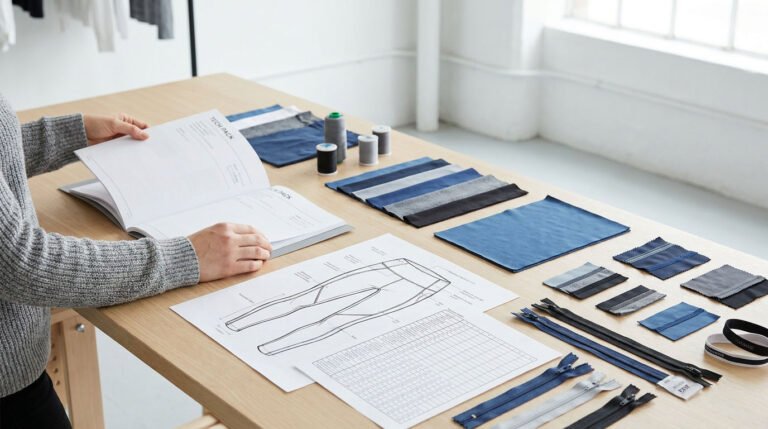
A tech pack is a technical document describing how a garment should be developed and manufactured.
It typically includes design drawings, measurements, material requirements, construction instructions, and branding details.
Unlike a physical sample, it can distinguish the original garment's characteristics from the requirements for your new product.
For a detailed breakdown of technical documentation, see Wearzio's Activewear Tech Pack Guide.
What Can Each One Communicate?
A reference sample provides a physical benchmark for fit, fabric feel, and visible construction.
A tech pack records intended measurements, materials, design modifications, and technical requirements. It can also document grading and approval criteria as development progresses.
A reference sample demonstrates the desired result. A tech pack defines the requirements for achieving it.
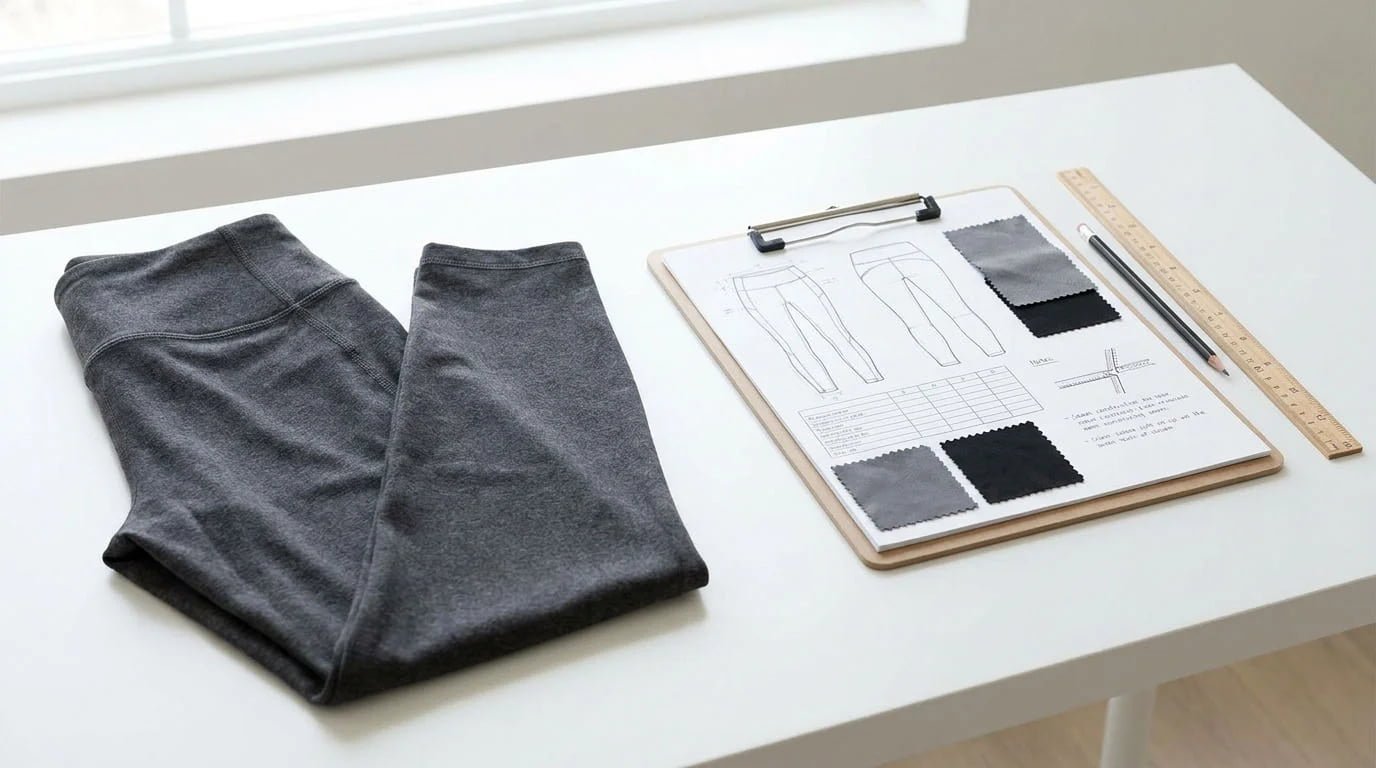
Important: A reference sample is not the same as a prototype or approved production sample. A prototype is developed to test the new design, while an approved sample represents an agreed development result.
Step 2: Decide What to Send Based on Your Development Stage
Different stages require different levels of documentation.
Early Concept or Feasibility Review
If your design is still developing, you can start with reference garments, annotated photos, sketches, and a description of your intended fit and function.
For example, you might want the fabric feel of one pair of leggings but the waistband construction of another.
The factory can review these references and identify what needs clarification before sampling.
Initial Quotation
For preliminary pricing, a manufacturer needs enough information to understand the product and customization scope.
A reference sample or design brief may support an initial estimate, although unresolved specifications can affect pricing accuracy.
A developed tech pack usually allows more consistent costing.
For commercial requirements such as quantities, colors, and customization options, see our Activewear Manufacturer Quote Guide.
Initial Sampling
Before pattern development and cutting, the essential design decisions should be clear.
For leggings or sports bras, this generally includes the target base size, important construction features, and intended fabric performance.
Complete size grading may not be necessary for the first prototype. It can be finalized after the base fit is validated, according to the agreed development process.
Pre-Production Approval
At this stage, a reference garment alone is insufficient.
The brand and factory should have updated specifications, an approved physical sample, and clear production requirements.
Practical rule: As development moves toward mass production, fewer decisions should remain undocumented.
Step 3: Label Your Reference Sample Before Sending It
One common mistake is sending a garment without explaining which features the factory should reproduce.
A reference sample may include details you intend to change.
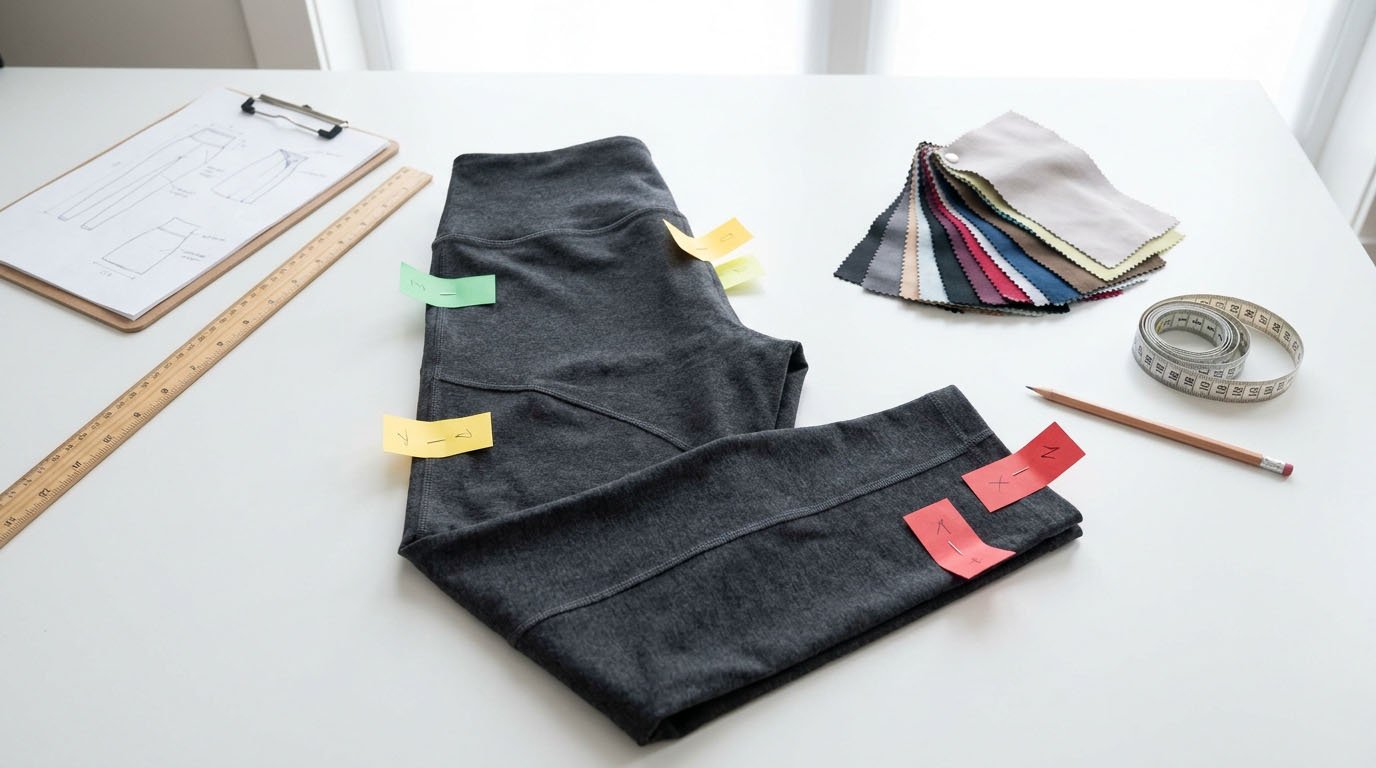
Use three simple labels:
| Label | Meaning | Leggings Example |
|---|---|---|
| KEEP | Feature to retain as a development target | High-rise silhouette and soft waistband feel |
| CHANGE | Feature requiring modification | Longer inseam and revised pocket placement |
| IGNORE | Feature that should not guide the new design | Original logo, color, and decorative stitching |
Example: Developing Custom Yoga Leggings
Imagine you have comfortable leggings but want to create an original product for your brand.
Your instructions might be:
KEEP
- High-waisted silhouette.
- Soft fabric feel.
- Comfortable four-way stretch.
CHANGE
- Adjust waistband height.
- Add a concealed waistband pocket.
- Modify the seam arrangement.
IGNORE
- Existing brand logo.
- Original garment color.
- Unwanted decorative details.
These instructions explain which characteristics are references and which require further development.
They do not replace approved measurements or construction specifications.
What If the Reference Garment Is Worn or Stretched?
A used garment can still be helpful, but its dimensions may no longer reflect the original product.
If you send an older sample:
- Tell the factory whether it has been worn or washed.
- Identify whether fit, dimensions, or fabric feel is the main reference.
- Confirm target measurements separately.
- Avoid treating every existing measurement as an approved specification.
Never assume the factory should duplicate an existing garment exactly. Use the reference to communicate selected characteristics while developing your own specifications. Avoid unauthorized copying of protected designs or branding.
Step 4: Add the Minimum Written Specifications Your Factory Needs
Even when you provide a physical garment, the factory needs written instructions.
For early development, these do not have to form an extensive technical manual.
A useful brief should identify:
- Product: Garment type, intended wearer, and activity.
- Reference: Physical sample or annotated photos.
- Base size: Target development size and fit expectations.
- Changes: Features to keep, modify, or ignore.
- Fabric direction: Desired feel, stretch, recovery, and opacity.
- Construction: Important details such as waistband, gusset, seams, or pockets.
- Open questions: Specifications requiring factory recommendations.
For leggings, waistband recovery and opacity during movement may be important. For sports bras, support and strap comfort may take priority.
What If You Do Not Know the Fabric Specifications?
You do not need to invent a fiber composition or GSM value.
Instead, describe the desired performance.
For example:
"We need a soft, four-way-stretch fabric for yoga leggings, with good recovery and sufficient opacity during movement. Please recommend suitable materials for sampling."
The manufacturer can then propose fabrics for evaluation.
Wearzio's Fabric Sourcing service supports material selection for custom activewear projects.
Separate Confirmed Requirements from Open Questions
Use three statuses:
- Confirmed: Requirements already approved.
- Proposed: Factory recommendations awaiting evaluation.
- To Be Confirmed: Important details still undecided.
This prevents preliminary suggestions from being mistaken for final production instructions.
Step 5: Resolve Conflicts Between the Reference Sample and Tech Pack
Sending both materials helps only when their intended roles are clear.
What if your reference leggings have one waistband measurement while the tech pack specifies another?
The factory should not silently choose which version to follow.
Establish a Clear Source of Truth
Consider this example:
| Item | Reference Sample | Written Requirement | Required Action |
|---|---|---|---|
| Waistband height | 9 cm | 11 cm | Confirm 11 cm as the intended new target |
| Inseam length | 66 cm | 70 cm | Develop to the approved new length |
| Fabric feel | Soft brushed finish | Material not finalized | Evaluate swatches against the reference |
| Logo | Existing retail brand | New brand artwork | Ignore original branding |
Measurements are illustrative, not universal activewear sizing recommendations.
The tech pack does not automatically override the physical sample in every situation.
The source of truth should be the latest requirements and reference priorities agreed by the brand and manufacturer.
When information conflicts, clarify it before development continues.
Record Decisions and Revisions
Use a simple revision record:
- Style Code: LG-001
- Reference Sample: REF-01
- Tech Pack Revision: V1.2
- Pending Decision: Waistband construction
- Responsible Approver: Brand product developer
- Status: Awaiting confirmation
Once the issue is resolved, update the relevant specifications and share the current version with the factory.
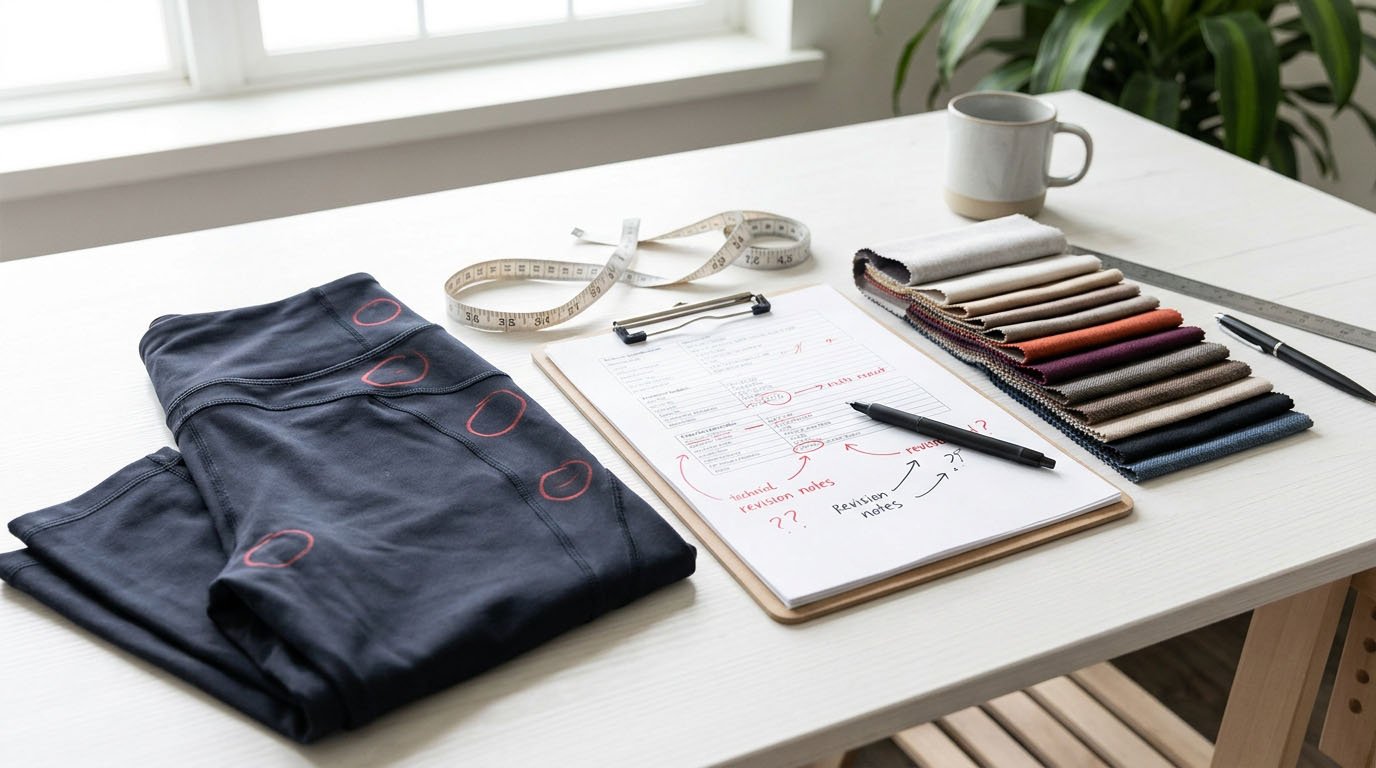
This helps prevent teams from using outdated measurements or contradictory instructions.
After the documents are aligned, development moves into physical sampling and testing. Our Activewear Sampling Process Guide covers the subsequent workflow.
Step 6: Start Without a Complete Tech Pack
A startup brand does not necessarily need a professionally formatted tech pack before contacting a manufacturer.
If you have a reference garment and a clear design direction, you can begin with a concise development brief.
Example: Lean Development Brief for Custom Leggings
Project: Women's High-Waisted Yoga Leggings
Reference: One physical pair of leggings with annotated photos.
Design Direction: Retain the general high-rise fit and soft fabric feel. Modify the waistband and add a concealed pocket.
Fabric Requirements: Soft four-way stretch, good recovery, and adequate opacity during movement.
Base Size: Size M, with target measurements to be confirmed.
Key Approval Checks: Waistband stability, movement comfort, fit, and stretch opacity.
Pending Factory Input: Fabric recommendations and construction feasibility.
This provides a practical starting point without treating unresolved specifications as approved requirements.
Final Checklist Before Sending Your Materials
- [ ] Reference garments or photos are identified.
- [ ] KEEP, CHANGE, and IGNORE instructions are clear.
- [ ] Product and intended wearer are described.
- [ ] Base-size and key fit requirements are stated or flagged as pending.
- [ ] Fabric performance expectations are explained.
- [ ] Conflicting instructions are highlighted.
- [ ] Files have clear names and revision numbers.
- [ ] The factory knows which decisions require approval.
When shipping a physical sample, label it with the same style code used in your documents.
A lean development brief can start the conversation, but production specifications must still be finalized before bulk manufacturing.
FAQ: Reference Sample vs Tech Pack
1. Can a Clothing Factory Make Samples Without a Tech Pack?
Yes. Some manufacturers can begin initial development using physical references, annotated photos, sketches, and a clear brief.
However, the documentation required depends on garment complexity and the factory's development capabilities.
2. Can a Factory Create a Tech Pack from a Reference Sample?
Some OEM/ODM manufacturers provide technical development support and can help prepare specifications from a physical reference and written requirements.
Measurements, materials, intended modifications, and fit expectations must still be confirmed. Ask the manufacturer whether this service is available.
3. Can a Reference Sample Replace Fit Testing?
No. The new garment may use different fabric, patterns, or measurements.
Fit and movement testing remain important, particularly for technical leggings, sports bras, and compression garments.
4. Is It Better to Send Both a Reference Sample and a Tech Pack?
Often, yes—especially when developing original custom activewear.
A reference garment provides a physical benchmark, while a tech pack records the intended specifications.
However, both must communicate consistent requirements. Resolve contradictions before proceeding.
Conclusion: Send Clear References, Not Just More Documents
Choosing between a reference sample and a tech pack is about communication, not document quantity.
Use a reference sample to demonstrate fit, fabric feel, and construction characteristics. Use written specifications to define intended changes, measurements, and technical requirements.
If you send both, clearly identify which features should guide development and resolve conflicting instructions before approval.
For startup activewear brands, an annotated reference garment and a concise development brief can be an effective starting point.
At Wearzio, we support activewear brands with OEM/ODM manufacturing, fabric sourcing, technical development, and sampling. Whether you have a complete tech pack or need help organizing your reference materials, our team can review your requirements and discuss the next steps.
Contact Wearzio to discuss your custom activewear development project.