Finding a low-MOQ activewear manufacturer sounds simple until you receive your first quotation. One supplier advertises 50 pieces, another requires 300, and a third offers 100 pieces—but only per style and color.
Low MOQ means a manufacturer accepts a relatively small minimum order quantity. However, the actual minimum depends on product type, fabric availability, color selection, size distribution, and customization requirements.
For startup activewear brands, understanding these conditions is more important than finding the lowest advertised number.
At Wearzio, we support brands through ready-stock sourcing, private labeling, and custom OEM/ODM manufacturing. Each approach has different production requirements.
This guide explains how low MOQs work, what affects them, and how to plan smaller orders without unnecessary costs.
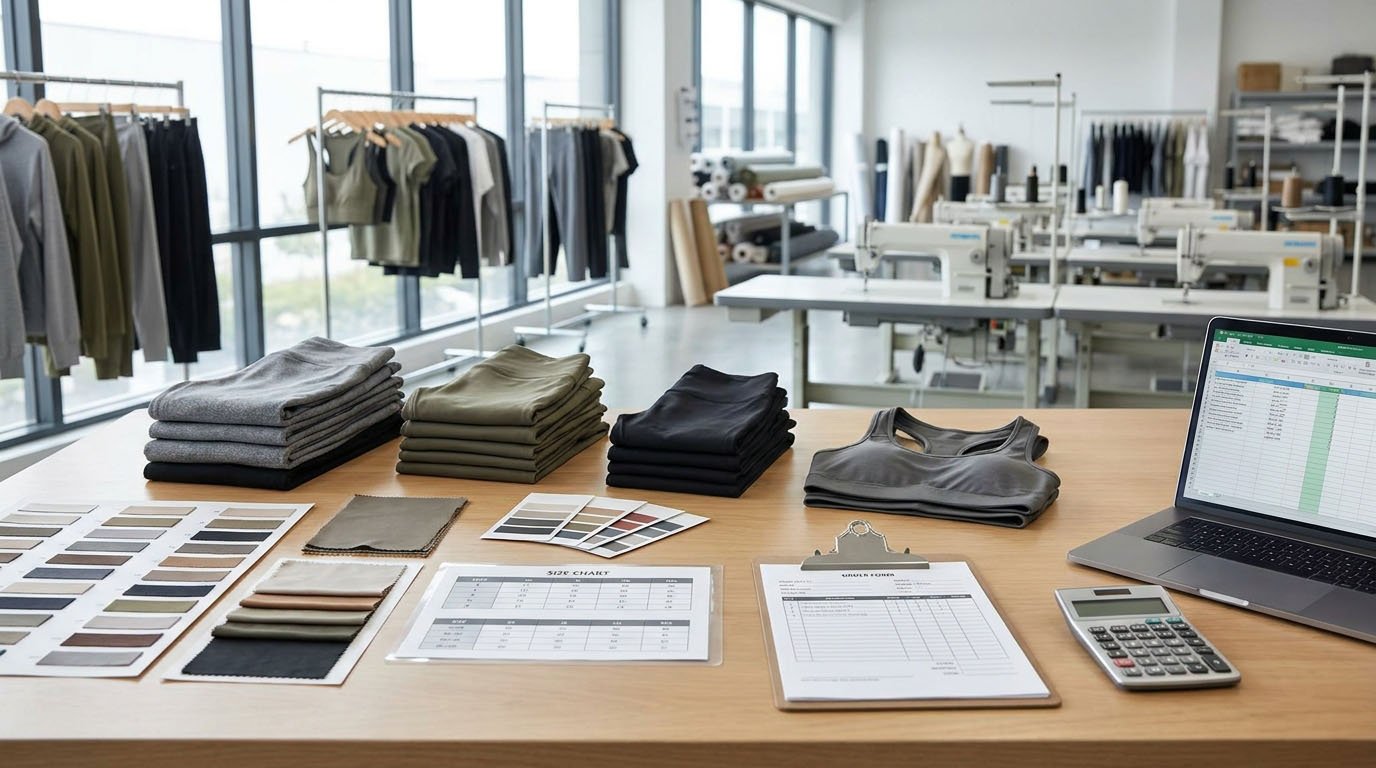
Quick Answer: What Does Low MOQ Mean in Activewear?
A low MOQ is the smallest commercially feasible quantity a manufacturer accepts for a specific product configuration. It may apply to the entire order, each style, each color, or a combination of these.
| Common Question | Quick Answer |
|---|---|
| What is low MOQ? | A relatively small minimum order accepted by a manufacturer |
| Is there a standard quantity? | No. It depends on manufacturing requirements |
| Is MOQ per style or color? | Either is possible; confirm the quotation |
| Can sizes be combined? | Often, subject to size-run requirements |
| Does low MOQ mean lower prices? | Usually not; smaller orders often cost more per garment |
| Which approach is most flexible? | Existing stock and limited customization often require less setup |
The most important question is not "What is your lowest MOQ?" but "What does that MOQ include?"
Key 1: What Is Considered a Low MOQ in Activewear?
There is no universal low-MOQ threshold.
A quantity considered small for fully customized leggings may be relatively large for existing wholesale garments. The manufacturing model determines what is feasible.
Stock Private Label vs. Custom Manufacturing
| Manufacturing Approach | MOQ Considerations | Customization Options | Best For |
|---|---|---|---|
| Ready-stock / private label | Based on inventory and branding requirements | Logos, labels, packaging | Initial market testing |
| Modified existing designs | Based on available patterns, fabrics, and trims | Selected colors, details, construction changes | Small branded collections |
| Full custom cut-and-sew | Based on materials, development, and production setup | Original fit, design, and construction | Differentiated activewear |
These categories do not represent fixed MOQ promises. Actual minimums vary by project.
Why 50 Pieces and 300 Pieces Can Both Be Low MOQ
Consider two projects:
- Project A: An existing black sports bra with a custom logo and standard packaging.
- Project B: Compression leggings requiring a new pattern, custom-dyed fabric, and specialized waistband.
Project A may support a smaller minimum because the garments or production specifications already exist.
Project B requires additional sourcing, development, and setup.
For brands testing demand, private label activewear may offer a practical starting point when suitable stock products are available.
MOQ should always be evaluated against the actual product requirements—not the advertised quantity alone.
Key 2: How Is MOQ Calculated by Style, Color, and Size?
One of the most common purchasing mistakes is assuming that an advertised MOQ applies to the entire collection.
In reality, the required quantity may increase with every additional style or color.
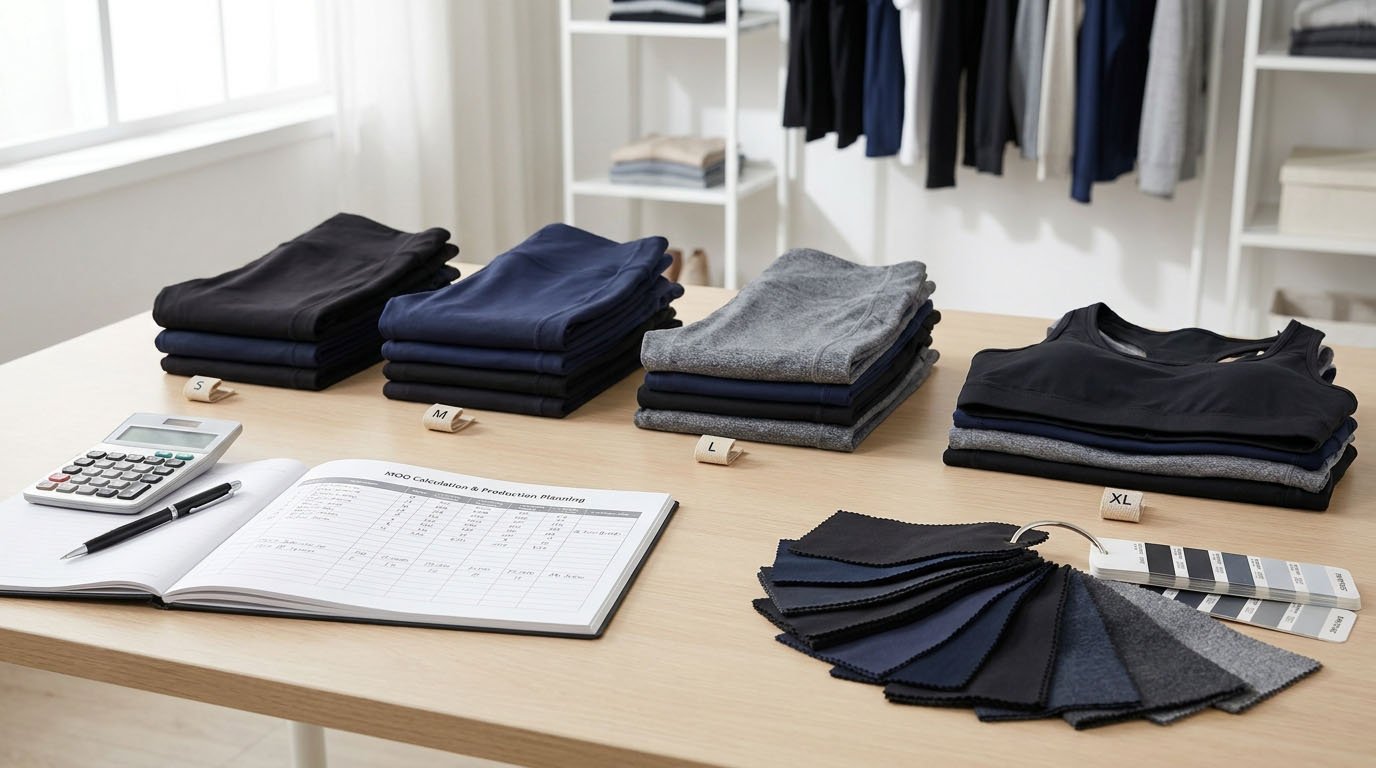
Understanding Different MOQ Units
| MOQ Unit | Meaning | Example |
|---|---|---|
| Per total order | Minimum across eligible products | 100 pieces across an approved assortment |
| Per style | Minimum for each design | 100 leggings + 100 sports bras |
| Per style and color | Minimum for each style-color combination | 100 black leggings + 100 navy leggings |
| Per size | Separate minimum for individual sizes, if required | Specified quantity per size |
| Per fabric | Minimum for material purchasing or processing | Required fabric quantity for custom dyeing |
Always confirm which unit the supplier uses.
Example: What Does a 100-Piece MOQ Actually Mean?
Suppose a manufacturer requires 100 pieces per style and color.
Your collection includes:
- 2 styles: leggings and sports bras
- 3 colors per style: black, navy, and gray
- 4 sizes: S, M, L, XL
Your actual minimum becomes:
2 Styles × 3 Colors × 100 Pieces = 600 Pieces
| Product | Colors | MOQ per Color | Total |
|---|---|---|---|
| Leggings | 3 | 100 | 300 |
| Sports bras | 3 | 100 | 300 |
| Total | 6 combinations | — | 600 |
This is an illustrative calculation, not a Wearzio quotation.
If sizes can be mixed within each color, one 100-piece order might contain:
| Size | Quantity |
|---|---|
| S | 20 |
| M | 35 |
| L | 30 |
| XL | 15 |
| Total | 100 |
However, manufacturers may apply size-distribution restrictions.
Before ordering, confirm whether MOQ applies per total order, style, color, size, or fabric configuration.
Key 3: Why Do Fabric and Customization Change MOQ?
MOQ is influenced by more than the number of garments being sewn.
Fabric procurement, cutting efficiency, garment construction, and branding may each introduce separate production requirements.
Fabric Availability and Dyeing
Standard nylon-spandex or polyester-spandex fabrics may be available from existing suppliers in common colors.
Custom-dyed fabrics, specialized knits, or unique finishes may require larger material purchases.
For example:
- In-stock black fabric may support smaller orders.
- Custom Pantone colors may require separate dyeing batches.
- Proprietary fabric blends may involve additional mill minimums.
Fabric suppliers may calculate minimums in meters or kilograms rather than finished garments.
Brands can explore suitable materials through Wearzio's fabric sourcing services before finalizing quantities.
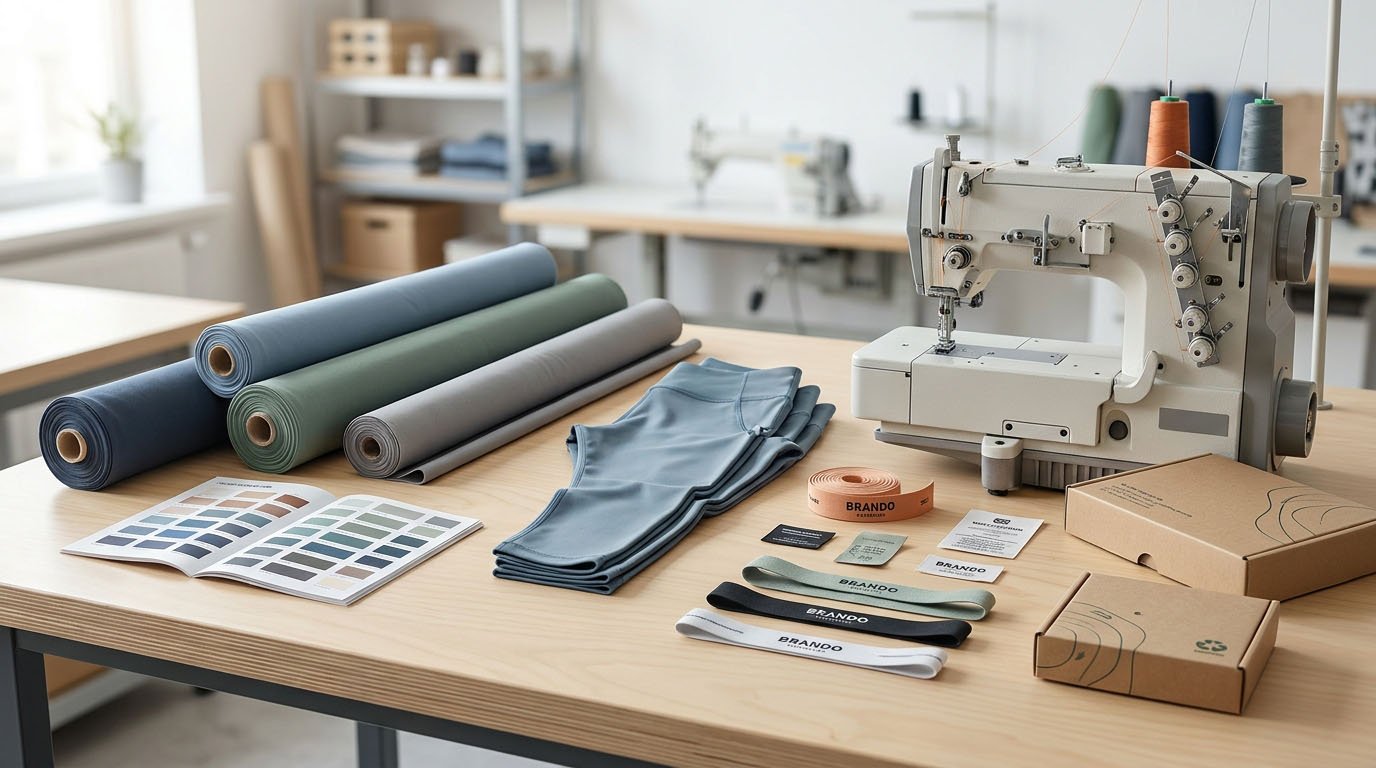
Cutting and Sewing Setup
Custom activewear production may involve:
- Pattern preparation and grading.
- Fabric cutting and marker planning.
- Sewing-machine setup for stretch materials.
- Sample development and inspection.
Leggings with gussets, flatlock seams, and multi-panel waistbands may require more preparation than basic sports T-shirts.
Smaller orders distribute these setup costs across fewer garments, increasing production cost per piece.
Logos, Trims, and Packaging
Branding can create additional minimums.
Simple logo applications using available materials may be suitable for smaller runs. Custom woven elastics, zipper pulls, or specialized trims may require separate supplier minimums.
A garment factory may accept a small sewing order while a trim supplier requires a larger purchase.
Always confirm garment MOQ and component MOQ separately.
Key 4: Low MOQ vs. Unit Cost: What's the Trade-Off?
Low MOQ reduces initial inventory commitments but does not necessarily reduce manufacturing costs.
Smaller orders often have higher unit prices because fixed expenses are distributed across fewer pieces.
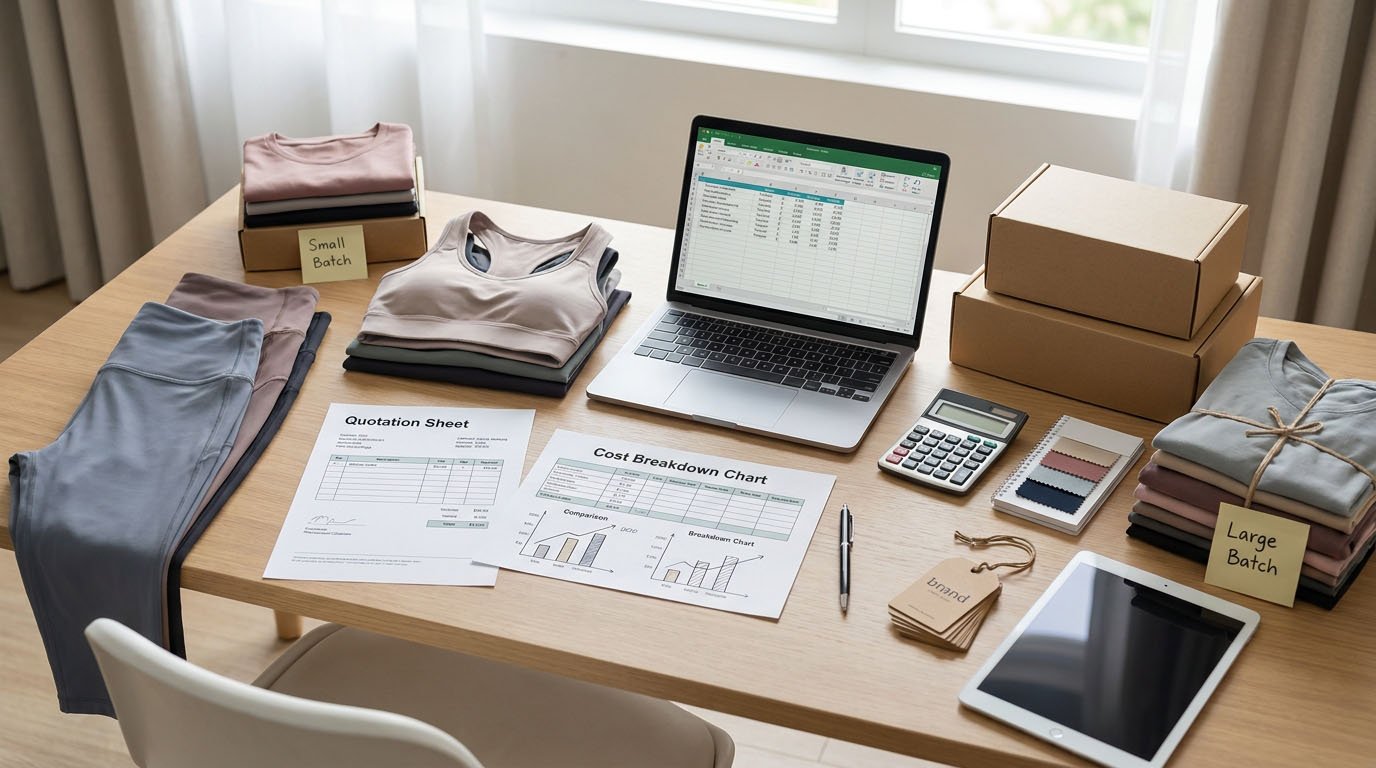
How Order Size Affects Setup Costs
Consider an illustrative fixed setup cost of $200:
| Order Quantity | Fixed Setup Cost | Setup Cost per Garment |
|---|---|---|
| 100 pieces | $200 | $2.00 |
| 500 pieces | $200 | $0.40 |
| 1,000 pieces | $200 | $0.20 |
These figures illustrate cost allocation only, not actual factory pricing. Materials, labor, branding, and shipping are excluded.
Higher quantities reduce the fixed setup cost per garment, but a larger order can also increase unsold inventory risk.
For startups, paying more per piece may be reasonable when testing an unproven product.
Costs to Confirm Before Ordering
| Cost Item | What to Check |
|---|---|
| Sample development | Sample fees and revision charges |
| Pattern development | New pattern and grading costs |
| Fabric procurement | Material minimums and surcharges |
| Logo application | Setup fees and decoration minimums |
| Labels and packaging | Separate branding component minimums |
| Shipping | Freight, duties, and taxes |
Compare total initial investment—not just the quoted unit price.
Key 5: How Can Startups Reduce MOQ Without Sacrificing Quality?
Reducing MOQ is often possible by simplifying production requirements without compromising essential garment performance.
1. Use Available Fabrics and Colors
Existing materials can reduce dependence on custom dyeing or special fabric production.
For a first collection, available black, navy, or other standard colors may be more practical than multiple proprietary shades.
However, confirm fabric stretch recovery, opacity, comfort, and durability before approval.
2. Limit Style-Color Combinations
Every additional style or color may create another minimum requirement.
Instead of launching many products simultaneously, concentrate on a smaller core collection.
This reduces inventory complexity and makes early demand easier to evaluate.
3. Consider Existing Patterns
Using a manufacturer-developed pattern can reduce development work when its fit and construction suit your brand.
Limited modifications may be more practical than creating entirely new garments.
However, changes to fabric stretch, waistband design, or garment proportions may still require additional samples.
For a detailed explanation of different manufacturing approaches, see our private label vs. OEM vs. ODM activewear guide.
4. Ask About Shared Materials
If leggings and sports bras use the same approved fabric and color, a factory may be able to coordinate fabric purchasing.
This can sometimes reduce material-sourcing constraints.
However, shared fabrics do not automatically allow different garment styles to share the same production MOQ.
5. Compare Multiple Order Quantities
Request quotations at several realistic quantities rather than only asking for the lowest minimum.
Evaluate unit price, total investment, and inventory exposure.
A higher quantity may improve unit economics but increase financial risk if demand is uncertain.
For more detailed order-planning guidance, read how a new brand should decide on MOQ for fitness apparel.
Do Not Compromise Quality to Reduce MOQ
Small-batch activewear still requires appropriate sampling and inspections.
Important checks may include:
- Fabric stretch and recovery
- Opacity during movement
- Seam strength and elasticity
- Waistband stability
- Measurement consistency
- Colorfastness and wash performance
The specific checks depend on garment design and intended use.
A lower MOQ should reduce inventory risk—not introduce avoidable product-quality problems.
Key 6: What Should You Confirm Before Placing a Low-MOQ Order?
Before paying for samples or committing to bulk production, request a written breakdown of the manufacturer's MOQ requirements.
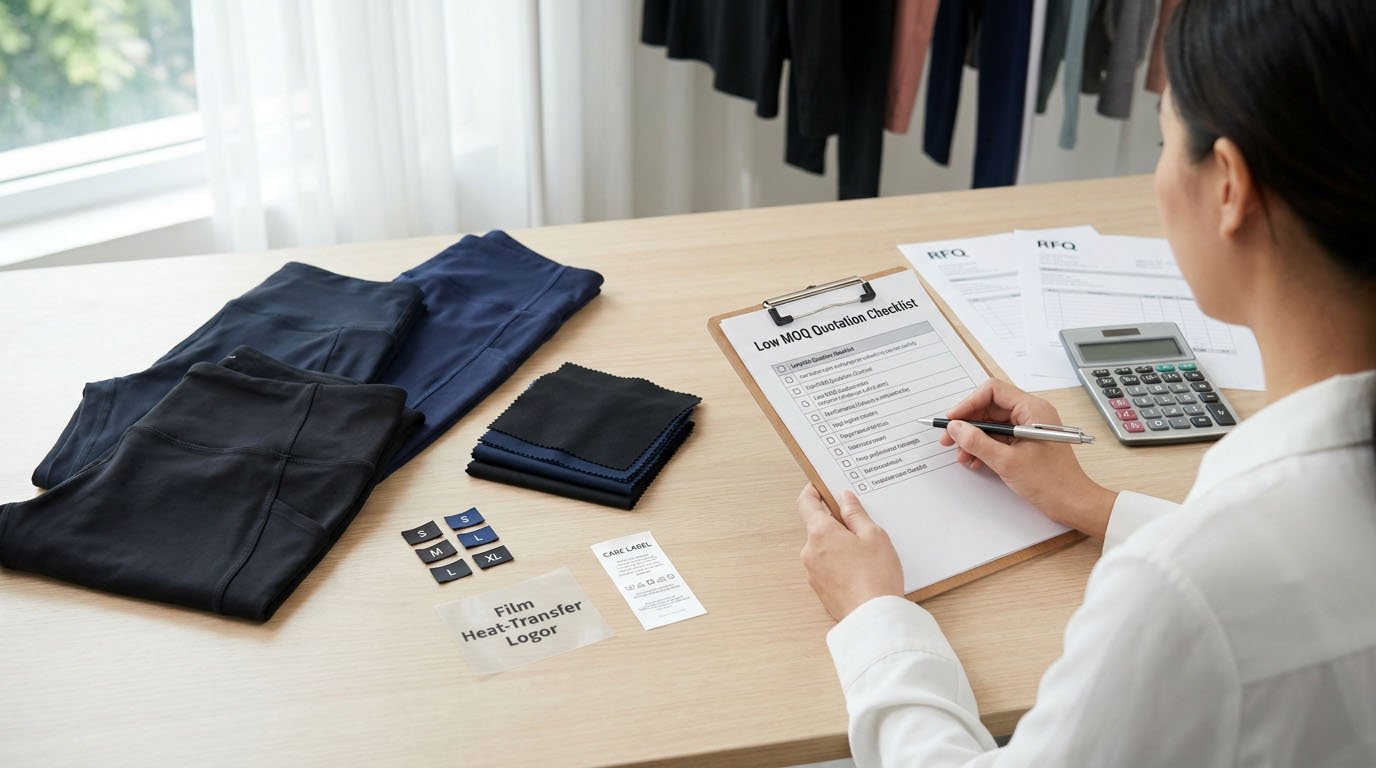
Low-MOQ Manufacturer Quotation Checklist
| Question | Why It Matters |
|---|---|
| Is MOQ per style, color, or total order? | Identifies the actual minimum |
| Can sizes be mixed? | Confirms size-run flexibility |
| Which fabrics are available? | Identifies material limitations |
| What customization is included? | Clarifies development restrictions |
| Are there separate logo or trim minimums? | Reveals additional requirements |
| Are sample and setup fees included? | Clarifies initial expenses |
| What are the prices at different quantities? | Supports cost comparison |
| What quality checks apply? | Establishes inspection expectations |
| When can bulk production begin? | Clarifies the schedule after approval |
Example: Information to Include in Your RFQ
A clear Request for Quotation helps manufacturers assess your requirements.
Product: High-waisted yoga leggings
Target quantity: 100–300 pieces per style
Colors: Black and navy
Sizes: S, M, L, XL
Fabric: Four-way stretch nylon-spandex, preferably from available options
Branding: Heat-transfer logo and custom care label
Development: Existing pattern preferred, with fit adjustments if required
Ask the manufacturer to confirm MOQ, size-color breakdown, sample charges, setup costs, unit prices, and production lead time.
Clear technical communication helps identify production limitations before money is committed.
FAQ: Low-MOQ Activewear Manufacturing
What Is a Typical Low MOQ for Activewear?
There is no universal standard. Existing stock may support smaller quantities, while custom cut-and-sew projects often require larger minimums. Actual requirements depend on materials, design, and manufacturing arrangements.
Can I Order 50 or 100 Pieces of Custom Activewear?
Possibly. Small quantities are generally easier when existing products, available fabrics, or established patterns are used. Fully customized designs may require higher minimums.
Can I Mix Sizes and Colors to Meet MOQ?
Sizes can often be combined within an approved style-color quantity, subject to factory rules. Different colors may have separate minimums because of fabric purchasing and dyeing requirements.
Is Low-MOQ Manufacturing More Expensive?
It often has a higher unit cost because setup expenses are distributed across fewer garments. However, smaller orders can reduce upfront inventory investment.
Can I Negotiate MOQ With a Manufacturer?
Sometimes. Using available fabrics, reducing color options, choosing established patterns, or accepting appropriate small-order surcharges may help. Material and component minimums cannot always be reduced.
Does Low MOQ Mean Lower Quality?
No. Quality depends on fabric selection, pattern accuracy, construction, sampling, and inspection. Small orders should still meet agreed product-quality requirements.
Conclusion: Low MOQ Is About Flexibility, Not Just Quantity
A low-MOQ activewear manufacturer offers more than small production quantities. The real value is balancing customization, manufacturing feasibility, cost, and inventory risk.
Before selecting a supplier, confirm how MOQ is calculated, which materials are available, and what additional costs apply.
For startups, a focused product range using suitable existing materials can be more practical than pursuing full customization immediately.
Wearzio supports activewear brands through ready-stock sourcing, private labeling, and OEM/ODM manufacturing. The appropriate solution depends on your designs, materials, and order requirements.
Planning a small-batch activewear collection? Contact Wearzio to discuss your product specifications, target quantities, and manufacturing options.