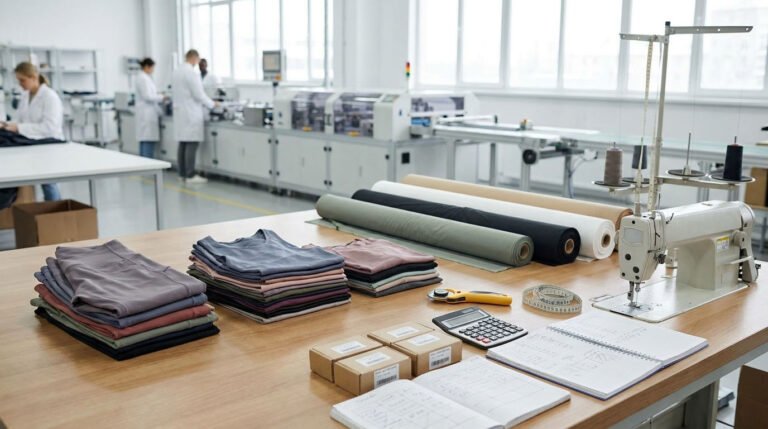
A manufacturer quotes an MOQ of 100 pieces, but your 300-piece activewear order still cannot proceed. Why?
The problem may not be your total quantity. Your order could meet the garment production minimum while falling short of fabric, color, or style requirements.
Activewear MOQ (Minimum Order Quantity) is not always one fixed number. Fabric MOQ, color MOQ, and style MOQ apply to different production requirements. Your order must satisfy every applicable minimum—not simply reach the advertised total.
Understanding these differences helps activewear brands calculate feasible quantities before placing an order.
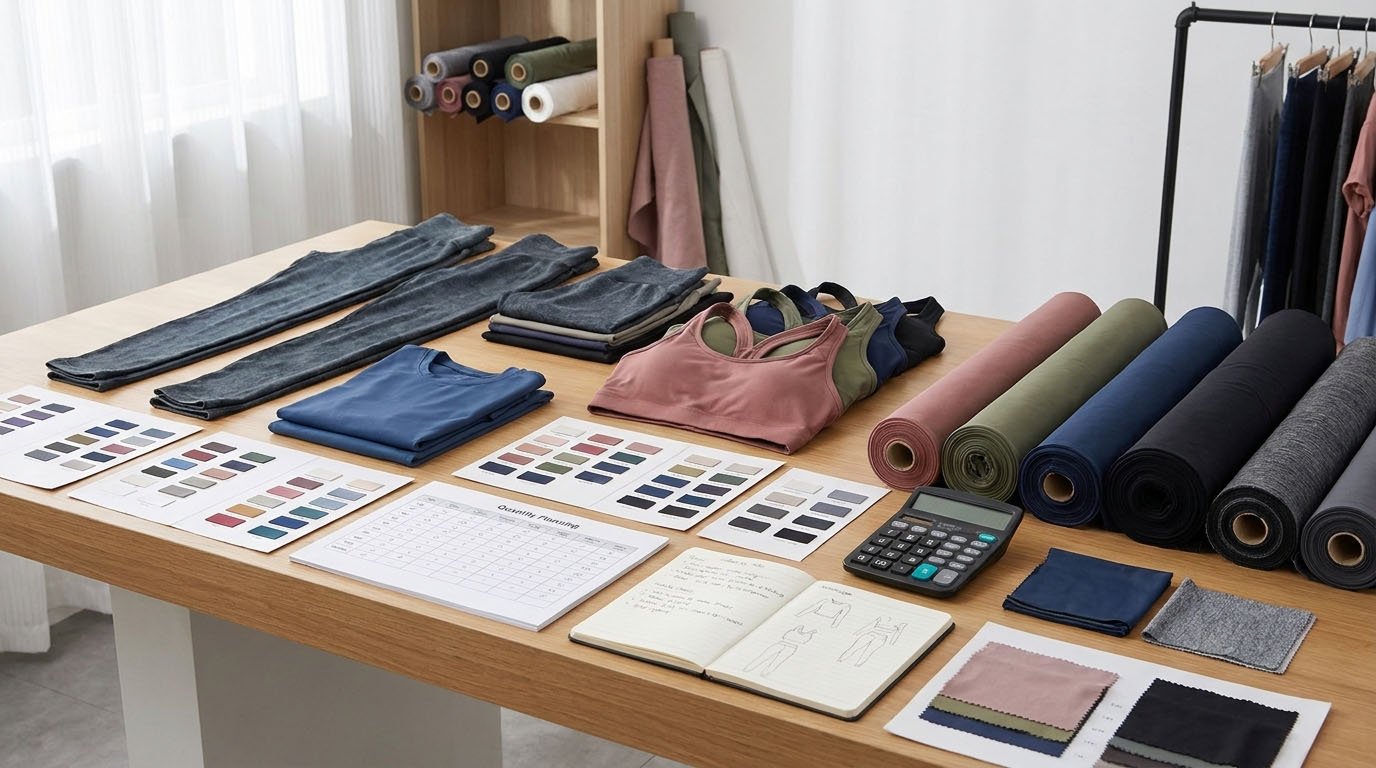
Quick Answer: What Are Fabric MOQ, Color MOQ, and Style MOQ?
| MOQ Type | What It Controls | What Buyers Should Confirm |
|---|---|---|
| Fabric MOQ | Minimum material purchasing or production quantity | Kilograms, meters, or rolls per fabric and color |
| Color MOQ | Minimum quantity for a particular colorway | Per color or per style-color combination |
| Style MOQ | Minimum garment quantity per design | Whether colors and sizes can be combined |
For example, a factory may accept 80 garments per style-color combination, but custom-dyed fabric could require a larger material order.
The key distinction: Garment MOQ determines the factory's production minimum. Fabric MOQ determines the material supplier's minimum.
Both requirements must be satisfied.
For a broader explanation of small-batch manufacturing, see our Low-MOQ Activewear Manufacturer Guide.
Key 1. Fabric MOQ: Stock Fabric vs Custom Fabric
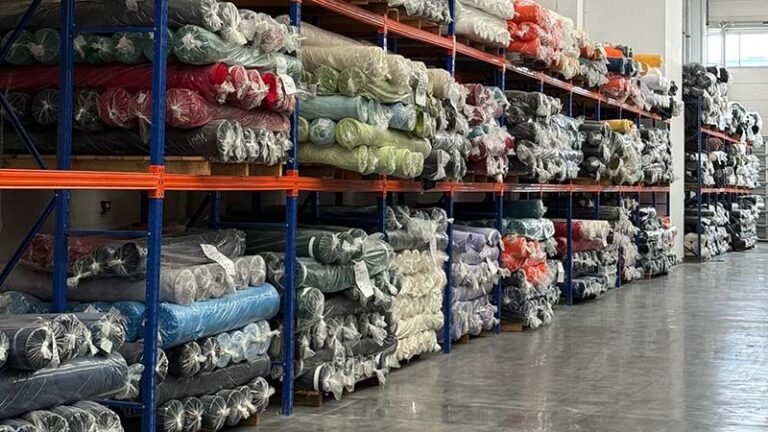
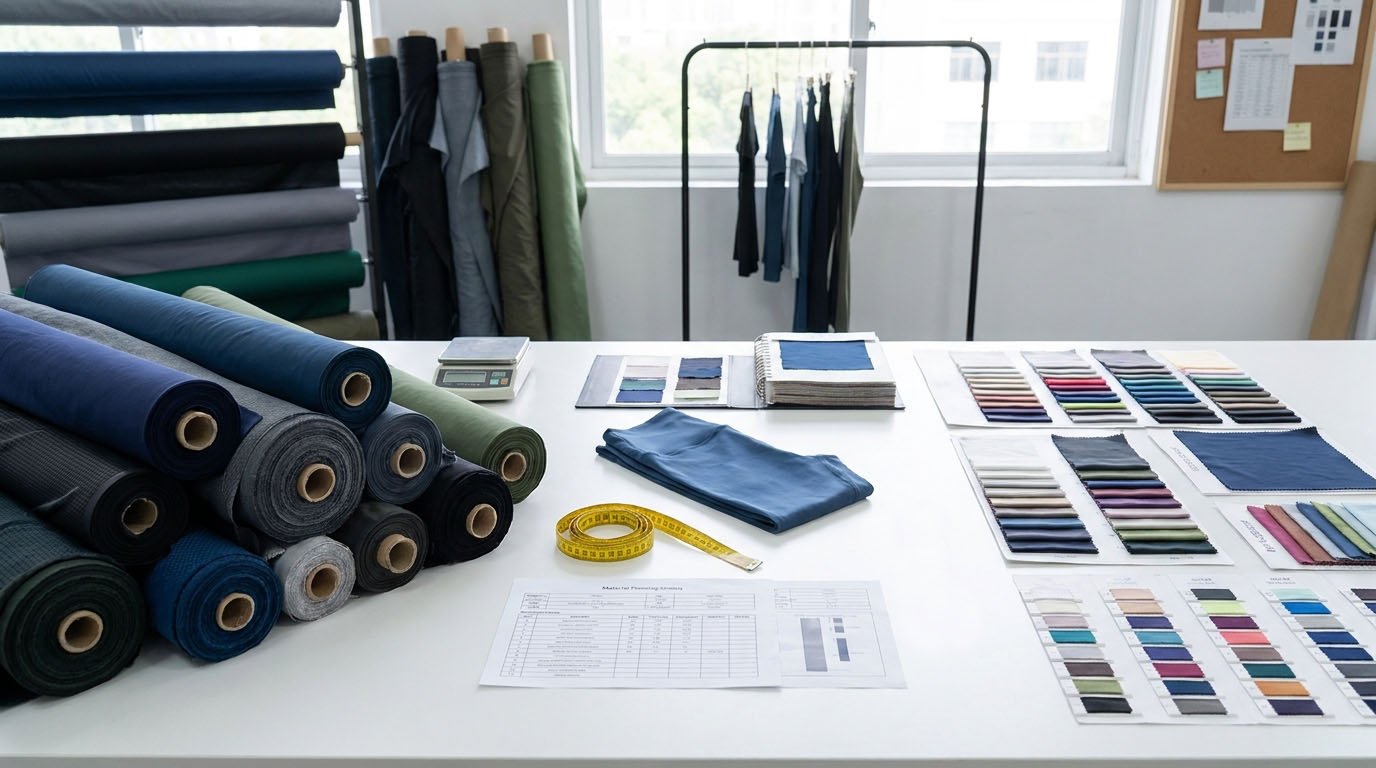
Fabric MOQ is the smallest amount of material a supplier can provide under specific purchasing or production conditions.
Unlike garment MOQ, it is normally measured in kilograms, meters, yards, or rolls.
How Fabric Selection Changes MOQ
| Fabric Option | MOQ Consideration | Main Limitation |
|---|---|---|
| Stock fabric | Often allows smaller purchases | Available colors and inventory |
| Existing fabric with custom dyeing | Separate dye-lot minimum may apply | Dyeing batch requirements |
| Custom-developed fabric | May require larger mill orders | Knitting, finishing, and setup requirements |
Using stock fabric may eliminate the need for new knitting or dyeing production. However, garment MOQ still applies.
A fabric may also be available in black but unavailable in your requested custom shade.
Why Fabric MOQ Is Different From Garment MOQ
Suppose 200 leggings require 80 kg of fabric, but the selected mill requires a minimum purchase of 120 kg.
The garment quantity may be acceptable, yet the material requirement remains unresolved.
The additional fabric might need to be purchased, stored for future production, or replaced with an available alternative.
For accurate planning, fabric consumption should be calculated using garment patterns, cutting markers, usable fabric width, and expected cutting losses.
Learn more about available materials through Wearzio's Fabric Sourcing services.
Key 2. Color MOQ: Per Color vs Per Style and Color
Color MOQ defines the minimum quantity required for an individual shade or colorway.
However, suppliers may apply different calculation rules.
Two Common Color MOQ Rules
Rule A: Minimum per fabric color
A material supplier may allow different garment styles to contribute toward one minimum when they use the same approved fabric and shade.
Rule B: Minimum per style-color combination
A garment factory may require a separate minimum for every design and color.
For example:
- 80 black leggings.
- 80 black sports bras.
These are two separate style-color combinations, even if both garments use identical black fabric.
Does Every Color Require a Separate Dye Lot?
Not necessarily.
Custom-dyed fabrics may require individual dye batches. Already-dyed stock fabrics do not necessarily require new dyeing, although stock availability and garment color minimums still apply.
Color MOQ and dye-lot MOQ are related, but they are not interchangeable.
Before ordering, confirm whether the minimum applies to fabric colors, garment colors, or individual style-color combinations.
Key 3. Style MOQ: Why Each Garment Design Has a Minimum
Style MOQ is the minimum quantity required for a particular garment design.
A legging and a sports bra are different styles, even when they share materials and colors.
Each design may require separate patterns, cutting markers, sewing operations, and production setup.
Can Different Sizes Be Combined?
Manufacturers often allow multiple sizes within an approved style-color quantity.
For example:
| Size | Quantity |
|---|---|
| XS | 10 |
| S | 20 |
| M | 30 |
| L | 20 |
| Total | 80 |
This distribution is valid only when the factory permits mixed sizes within an 80-piece style-color order.
Certain products, particularly specialized seamless constructions, may have additional size-level restrictions.
Always confirm whether MOQ applies per style, per style-color, or per individual size.
Key 4. How to Calculate Activewear MOQ: A Worked Example
Consider a brand developing two products:
- Style A: High-waisted leggings.
- Style B: Sports bra.
- Colors: Black and navy.
- Sizes: XS, S, M, and L.
Assume the manufacturer requires:
- At least 150 garments per style.
- At least 80 garments per style-color combination.
- Mixed sizes are permitted.
These are illustrative manufacturing rules, not Wearzio's actual MOQ policy.
Step 1: Calculate the Garment MOQ
| Style | Black | Navy | Total |
|---|---|---|---|
| Leggings | 80 | 80 | 160 |
| Sports bra | 80 | 80 | 160 |
| Total | 160 | 160 | 320 |
2 styles × 2 colors × 80 pieces = 320 garments
Each style reaches 160 pieces, meeting the assumed 150-piece style minimum.
Every style-color combination also meets the 80-piece requirement.
Therefore, the order satisfies both garment MOQ conditions.
Step 2: Calculate Fabric Consumption
Assume both products use the same approved main fabric.
Estimated consumption, including assumed cutting allowances:
- Leggings: 0.40 kg per garment.
- Sports bra: 0.22 kg per garment.
| Product | Units per Color | Fabric per Unit | Fabric Required |
|---|---|---|---|
| Leggings | 80 | 0.40 kg | 32.0 kg |
| Sports bra | 80 | 0.22 kg | 17.6 kg |
| Total per color | 160 | — | 49.6 kg |
The two colors together require approximately 99.2 kg of main fabric.
Separate linings, elastics, and other components must be calculated independently.
Step 3: Check the Fabric MOQ
Suppose the fabric mill requires 100 kg per custom-dyed color.
| Fabric Color | Required | Mill MOQ | Result |
|---|---|---|---|
| Black | 49.6 kg | 100 kg | Below MOQ |
| Navy | 49.6 kg | 100 kg | Below MOQ |
The garment quantities are acceptable, but neither color satisfies the assumed custom-dye minimum.
The order is therefore not yet ready for production under those material conditions.
A suitable stock fabric might resolve the issue, while custom dyeing could require additional material purchasing or another agreed arrangement.
Key takeaway: Meeting garment MOQ does not automatically mean your order meets fabric MOQ.
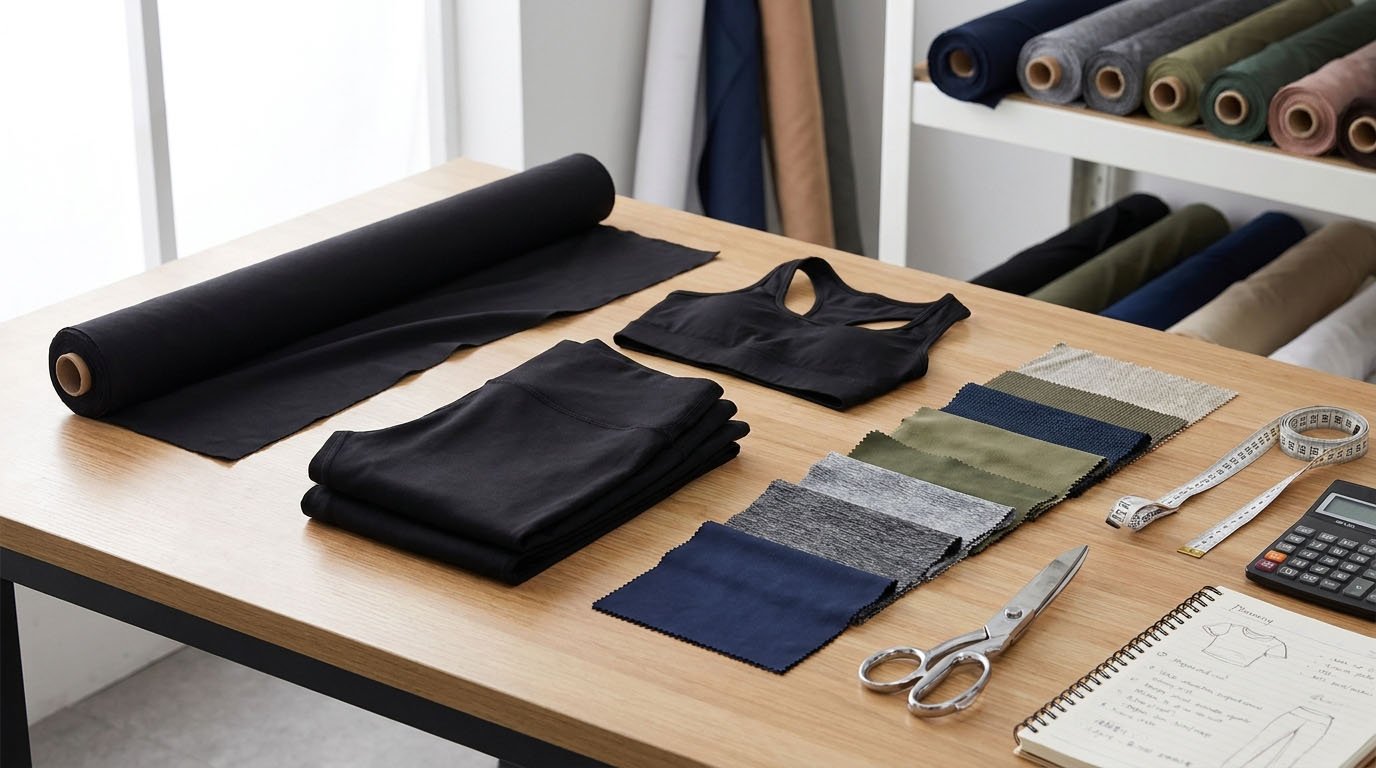
Sometimes. Material quantities can potentially be combined when different garments use identical approved fabric specifications and the supplier permits consolidated purchasing.
When Shared Fabric Purchasing May Work
For example, leggings and sports bras may share a fabric minimum when they use:
- The same fabric construction and composition.
- The same approved color.
- Compatible fabric weight and finishing requirements.
- A material supplier that accepts combined quantities.
If one style requires 40 kg and another requires 60 kg of the same fabric and color, their combined 100 kg may satisfy a 100 kg material minimum.
When Quantities Cannot Be Combined
| Situation | Can Fabric Quantities Be Combined? |
|---|---|
| Same fabric and color, different styles | Potentially, with approval |
| Same fabric, different custom colors | Generally separate dye lots |
| Different fabric compositions | Normally separate requirements |
| Same fabric, different finishes | Depends on processing specifications |
Important: Sharing fabric does not automatically allow different garment styles to share their sewing MOQ.
A factory may combine material purchasing while maintaining separate minimums for leggings and sports bras.
A properly prepared Activewear Tech Pack and bill of materials help identify shared fabrics, components, and specifications.
Key 6. What Should Buyers Check Before Accepting an MOQ Quote?
A quotation stating "MOQ: 100 pieces" is incomplete unless the manufacturer explains what that number applies to.
Use this checklist before approving your order.
| Question | What to Confirm |
|---|---|
| What is the garment MOQ? | Per order, style, or style-color |
| Can sizes be mixed? | Allowed size ratios and minimums |
| Is the fabric available? | Fabric reference, approved color, and inventory |
| What is the fabric MOQ? | Kilograms, meters, or rolls per material and color |
| Can styles share fabric? | Approved purchasing conditions |
| Are there additional minimums? | Labels, trims, printing, and packaging |
| What happens below MOQ? | Surcharges, alternatives, or excess material purchases |
| Who owns excess fabric? | Cost, storage, and future-use arrangements |
Request an MOQ Breakdown
Ask your supplier to identify three things clearly:
1. Garment MOQ: The minimum quantity for each applicable production configuration.
2. Fabric MOQ: The minimum material quantity, including custom dyeing requirements where relevant.
3. Exceptions: Additional purchases, surcharges, or alternative specifications needed to make the order feasible.
For a complete quotation preparation checklist, read What Information Should You Send an Activewear Manufacturer for a Quote?.
If your order falls below the required minimum, first identify which restriction is responsible.
A fabric sourcing problem requires a different solution from a garment production minimum.
For practical adjustment options, see How to Reduce Activewear MOQ Without Sacrificing Customization.
FAQ: Activewear Fabric, Color, and Style MOQ
Is Activewear MOQ Per Style or Per Color?
There is no universal rule. MOQ may apply per style, per color, per style-color combination, or across an approved total order. Confirm the calculation method in writing.
Can Different Activewear Styles Share Fabric MOQ?
Sometimes. Styles using the same approved material and color may contribute toward a combined fabric purchase if the supplier permits it. Garment minimums may still apply separately.
Does Every Color Need Its Own Dyeing Minimum?
No. Custom-dyed materials may require separate dye batches, while available stock fabrics do not necessarily need new dyeing. Garment-level color minimums may still apply.
Can Sizes Be Combined to Meet MOQ?
Often, sizes can be mixed within one style-color quantity. However, specialized products may have separate size minimums or required size ratios.
Can an Order Meet Garment MOQ but Fail Fabric MOQ?
Yes. A manufacturer may accept the garment quantities while the material supplier requires more fabric than the order consumes. That material shortfall must be resolved before production.
Conclusion: Calculate Every MOQ Before Ordering
Activewear MOQ is not simply a minimum number of finished garments.
Fabric MOQ determines material purchasing requirements. Color MOQ controls shade-level quantities. Style MOQ determines production minimums for individual garment designs.
These conditions may overlap, but they cannot automatically be combined.
Before placing an order, calculate your style-color-size quantities, estimate fabric consumption, and confirm each applicable minimum with your manufacturer.
A clear MOQ breakdown reduces unexpected material costs, unrealistic order plans, and avoidable production delays.
Discuss Your Activewear MOQ Requirements With Wearzio
Wearzio supports activewear brands with fabric sourcing, private labeling, and OEM/ODM manufacturing.
Whether you are developing leggings, sports bras, or a coordinated collection, our team can review your proposed quantities and specifications to identify the relevant manufacturing constraints.
Contact Wearzio with your product details, estimated quantities, and preferred materials to discuss a feasible production plan.