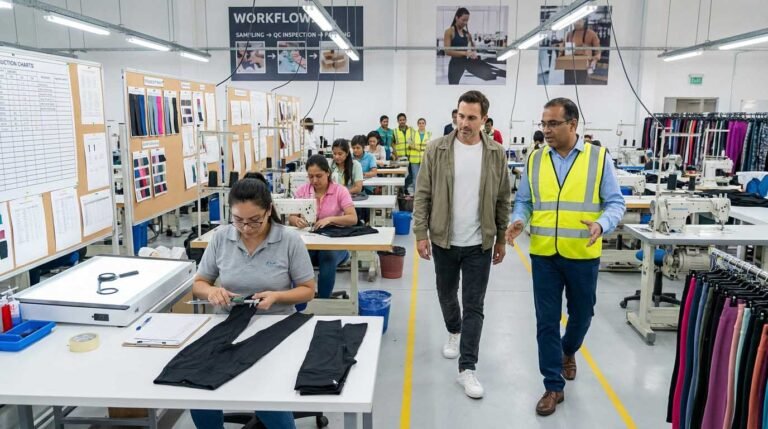
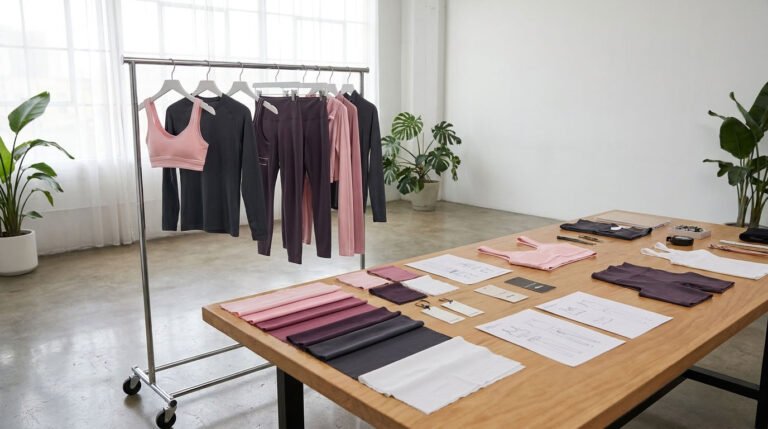
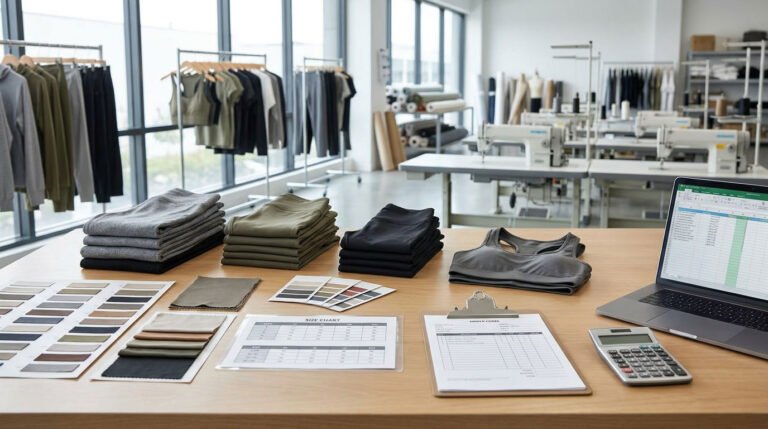
Choosing an activewear manufacturer involves more than comparing prices, samples, and production capacity. A factory may produce an excellent prototype but struggle with fabric consistency, stretch seams, quality control, or delivery during bulk production.
For activewear brands, these problems can result in costly rework, product returns, and delayed launches.
An activewear factory audit helps brands verify a manufacturer's technical capabilities, material controls, sample-to-bulk consistency, quality systems, compliance, and delivery reliability before placing a bulk order.
This checklist covers 15 essential factory audit questions, the evidence buyers should request, common warning signs, and a practical supplier evaluation scorecard.
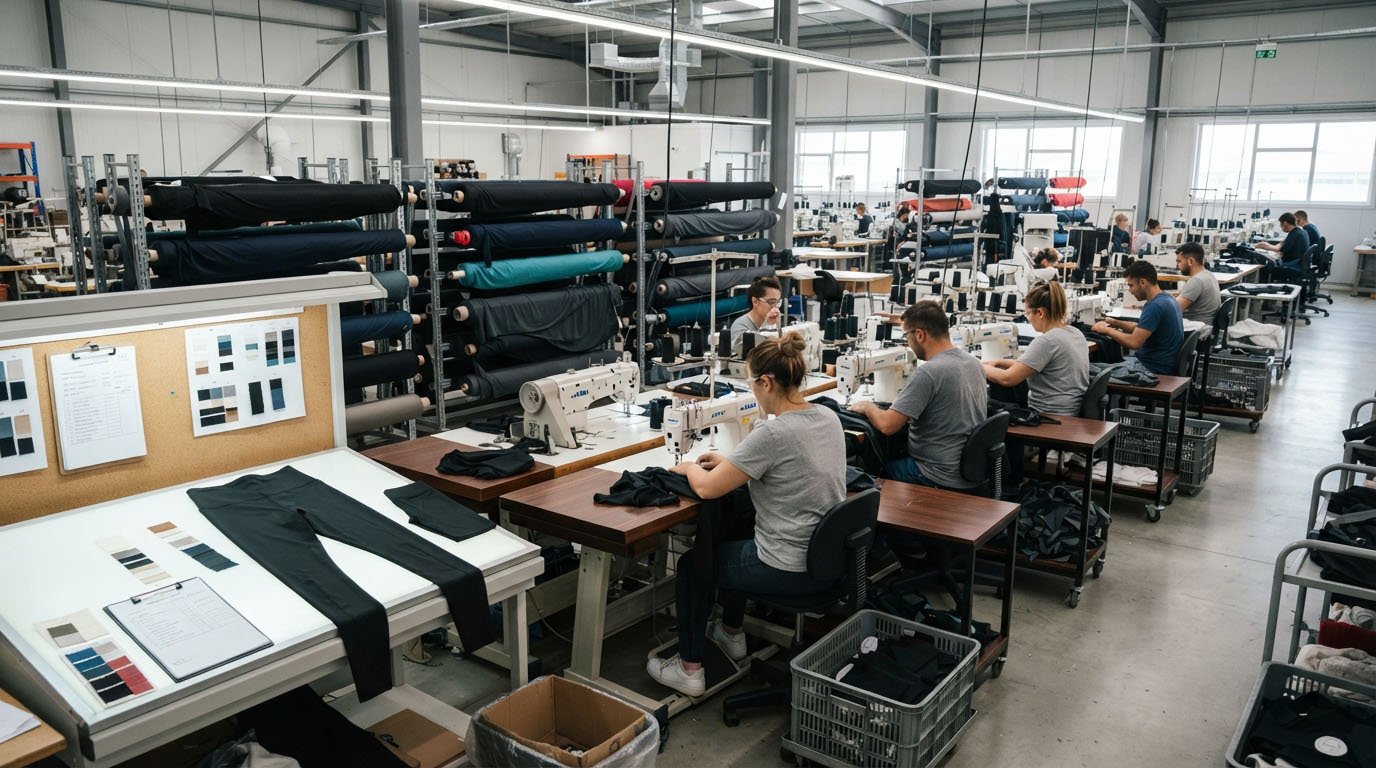
Quick Answer: What Should Brands Check During an Activewear Factory Audit?
A reliable activewear factory audit should evaluate six areas: production capability, fabric control, sample-to-bulk consistency, quality management, compliance, and commercial reliability.
| Audit Area | What to Verify | Evidence to Request |
|---|---|---|
| Production Capability | Relevant activewear experience and equipment | Similar production records, equipment list |
| Fabric Control | Stretch, recovery, shrinkage, and shade consistency | Inspection logs, test reports |
| Sample-to-Bulk | Approved specifications reach production | Approved samples, PP records |
| Quality Management | Defects are detected and corrected | QC reports, defect logs |
| Compliance | Workplace practices and certifications | Audit reports, valid certificates |
| Commercial Reliability | Pricing, capacity, and delivery commitments | Quotations, production schedules |
The key principle: request evidence, not just promises. A successful sample or professional showroom does not guarantee consistent bulk manufacturing.
Step 1: Can the Factory Demonstrate Relevant Activewear Manufacturing Experience?
Activewear requires manufacturing techniques that differ from conventional woven garments.
Leggings, sports bras, and compression products involve stretch fabrics, specialized seam construction, and precise fit control.
Ask whether the factory has successfully produced similar products.
Evidence to Request:
- Examples of comparable production orders
- Relevant equipment and operator experience
- Product-category manufacturing records
Red Flags: The supplier claims to manufacture every clothing category but cannot demonstrate relevant activewear experience.
Product specialization can matter more than overall factory size.
For a broader comparison of supplier selection criteria, see our guide to choosing a reliable activewear manufacturer, which covers product fit, sourcing requirements, and commercial considerations.
Step 2: How Does the Factory Inspect Incoming Performance Fabrics?
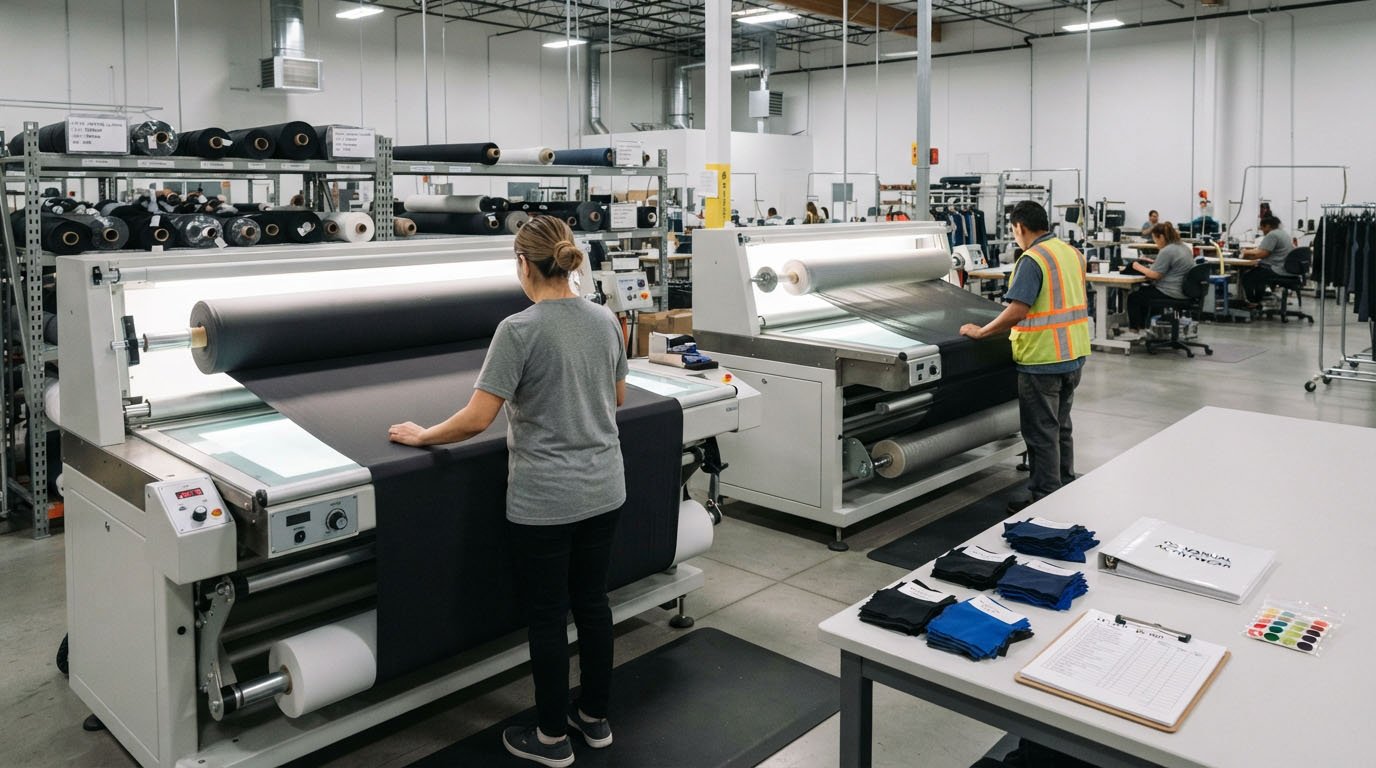
Fabric defects discovered after cutting can affect an entire production batch.
A reliable factory should inspect incoming materials for visible defects, width variations, shade differences, and compliance with approved specifications.
Evidence to Request:
- Fabric inspection reports
- Roll identification and tracking records
- Rejection and supplier feedback procedures
Red Flags: Fabric moves directly into cutting without documented acceptance checks.
Some manufacturers use a four-point inspection system for visual fabric defects. The inspection method, sampling approach, and acceptance criteria should be agreed upon for the project.
When evaluating a manufacturer's fabric sourcing capabilities, ask how incoming material specifications are verified before bulk cutting.
Step 3: How Are Fabric Stretch, Recovery, and Shrinkage Verified?
Activewear fabrics must maintain their intended fit and performance through movement and laundering.
Poor recovery can cause leggings to sag, while excessive shrinkage may affect garment measurements.
Evidence to Request:
- Stretch and recovery test reports
- Dimensional stability results
- Colorfastness and pilling reports
- Approved fabric specifications
Red Flags: The factory relies solely on supplier descriptions without verifying delivered material performance.
Which Fabric Tests Matter Most?
| Test | What It Evaluates | Product Concern |
|---|---|---|
| Stretch & Recovery | Elastic extension and recovery | Sagging leggings |
| Dimensional Stability | Changes after washing | Fit inconsistency |
| Colorfastness | Color change or transfer | Fading and staining |
| Pilling Resistance | Surface wear | Fabric appearance |
| Moisture Management | Moisture transport | Training comfort |
Testing methods should match the fabric construction and intended performance.
Qualified third-party laboratory testing can supplement in-house testing when appropriate.
Step 4: How Does the Factory Control Dye-Lot and Color Consistency?
Color variations are especially noticeable in coordinated leggings and sports bra sets.
Different dye lots or fabric constructions may produce visible shade differences even when materials share the same color reference.
Evidence to Request:
- Approved color standards
- Shade-band records
- Dye-lot identification
- Roll segregation procedures
Red Flags: Different dye lots are mixed during cutting without shade evaluation.
Ask how the factory maintains acceptable color consistency within bulk orders and across repeat orders.
For matching activewear sets, inspect finished garments together rather than relying only on individual fabric swatches.
Step 5: How Are Approved Samples Transferred to Bulk Production?
An excellent prototype does not automatically translate into consistent bulk production.
Sampling teams and production operators may use different workflows. Without clear instructions, construction details and fit requirements can be lost.
Evidence to Request:
- Approved pre-production sample
- Final tech pack and size chart
- Pre-production meeting records
- Construction and measurement instructions
Red Flags: Bulk cutting begins without documented approval of essential product specifications.
What Should Be Confirmed Before Production?
- Fabric and trim approvals
- Measurements and tolerances
- Stitch construction
- Logo placement
- Packaging requirements
- Critical quality checkpoints
The approved sample and technical documentation should become the production reference.
A strong factory does not simply reproduce a sample once. It establishes a process capable of reproducing it consistently.
For a closer look at prototype development, fit approval, and pre-production samples, read our activewear sampling process guide.
Step 6: Can the Factory Produce Durable High-Stretch Seams?
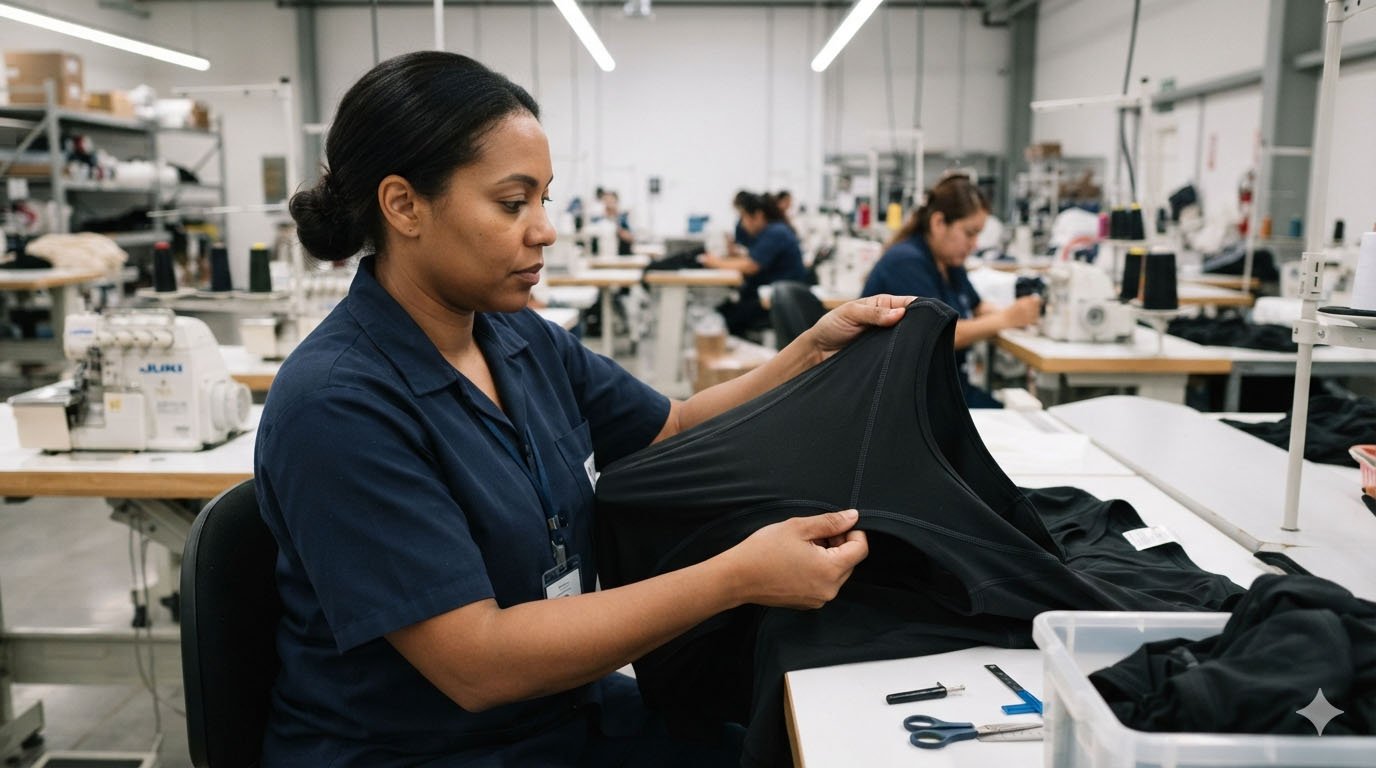
Activewear seams must withstand repeated movement, stretching, and washing.
Depending on the garment, suitable construction may involve overlock, coverstitch, flatseam, or other stitch types.
Evidence to Request:
- Sewing machine inventory
- Approved stitch specifications
- Relevant seam test results
- Equipment maintenance procedures
Red Flags: The manufacturer cannot explain how seam strength, elasticity, or comfort is controlled.
Key Activewear Seam Checkpoints
| Checkpoint | Common Problem |
|---|---|
| Seam Elasticity | Stitches break when stretched |
| Thread Tension | Puckering or uneven seams |
| Needle Selection | Fabric damage or skipped stitches |
| Seam Placement | Discomfort during movement |
| Hem Construction | Wavy or unstable hems |
No single sewing machine type is mandatory for every activewear garment.
Reviewing a factory's cut-and-sew capabilities can help determine whether its equipment and construction methods are suitable for high-stretch products.
Step 7: What In-Line Quality Control Checks Are Used During Production?
Final inspection alone cannot prevent every manufacturing defect.
A capable factory should monitor quality during cutting, sewing, assembly, and finishing.
Evidence to Request:
- In-line inspection records
- Measurement checklists
- Defect tracking reports
- Corrective action documentation
Red Flags: The factory depends exclusively on visual inspection before packing.
Critical Activewear QC Checkpoints
| Production Stage | Inspection Focus |
|---|---|
| Cutting | Panel accuracy, fabric direction |
| Sewing | Seam stretch, skipped stitches |
| Assembly | Waistbands, straps, gussets |
| Finishing | Logo durability, garment appearance |
| Final Inspection | Measurements, defects, packaging |
For leggings, pay attention to waistband attachment, gusset construction, and inseam strength.
For sports bras, inspect elastic attachment, strap positioning, support construction, and measurement consistency.
Step 8: How Are Defective Garments Identified and Corrected?
Manufacturing defects can occur even in well-managed factories.
What matters is whether nonconforming products are identified, isolated, investigated, and corrected before shipment.
Evidence to Request:
- Defect classification records
- Nonconforming product procedures
- Rework and re-inspection reports
- Corrective action records
Red Flags: Rejected garments are mixed with acceptable inventory, or repaired products are not inspected again.
What About AQL Inspection?
Acceptance Quality Limit (AQL) sampling can support final inspection decisions, but it does not replace production controls.
Brands should agree on:
- Sampling and inspection procedures
- Critical, major, and minor defect definitions
- Applicable acceptance quality limits
- Measurement tolerances
- Rework and rejection responsibilities
These requirements should reflect the product, buyer expectations, and agreed quality standards.
Step 9: How Does the Factory Verify Trims, Elastics, and Logo Durability?
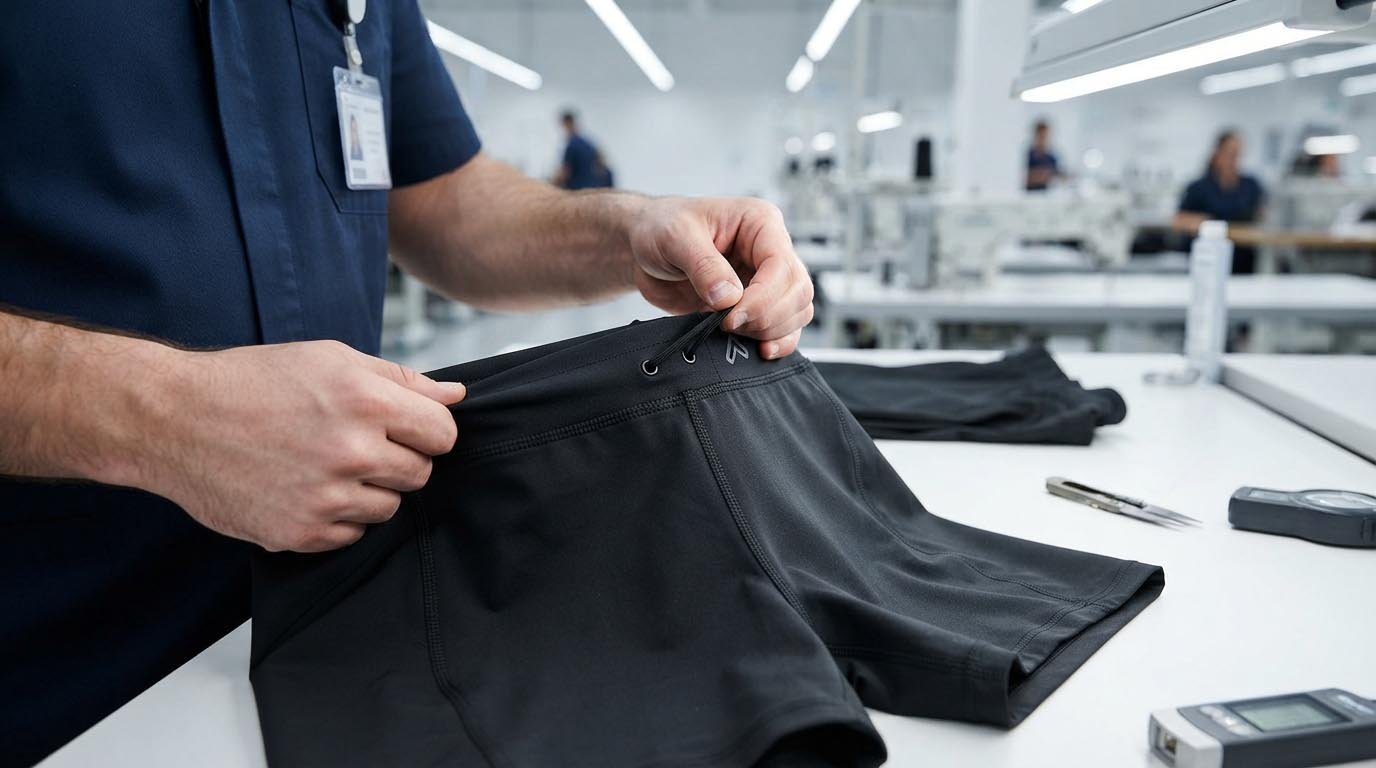
Garment performance depends on more than fabric and stitching.
Waist elastics, bra components, drawcords, and heat-transfer logos must withstand normal use and appropriate laundering.
Evidence to Request:
- Approved trim specifications
- Elastic performance records
- Heat-transfer application parameters
- Durability test results where required
Red Flags: Components are substituted without approval, or heat-transfer settings are not controlled.
For heat-applied logos, verify that the application process is suitable for the fabric and transfer material.
Step 10: How Does the Factory Verify Compliance and Workplace Standards?
Manufacturing capability does not automatically demonstrate ethical or legal compliance.
Brands should review relevant workplace practices, labor requirements, certifications, and product compliance obligations.
Evidence to Request:
- Relevant social audit reports
- Valid certificates and facility scope
- Corrective action follow-up records
- Applicable product compliance documentation
Red Flags: Certificates are expired, belong to another facility, or cannot be verified.
Does ISO 9001 Guarantee Product Quality?
No. ISO 9001 establishes quality management system requirements, but it does not guarantee that every garment passes inspection.
Similarly, social compliance audits do not replace technical production audits.
A complete factory evaluation should consider both documented management systems and actual manufacturing practices.
Step 11: What Costs Are Included in the Factory's Quotation?
A competitive unit price is meaningful only when the quoted production scope is clear.
Some quotations may exclude testing, custom labels, packaging, additional sampling, or other requirements.
Evidence to Request:
- Itemized quotation or pricing assumptions
- Fabric and trim specifications
- Packaging and labeling inclusions
- Testing and development charges
- Payment and shipping terms
Red Flags: The supplier provides an unusually low price but refuses to clarify what is included.
Factories may not disclose every internal cost, but buyers should understand the agreed product specifications and chargeable services before confirming an order.
Step 12: Who Is Responsible for Bulk Defects and Rework?
Quality responsibilities should be agreed upon before bulk production.
Otherwise, disagreements over defective products can delay shipment and increase costs.
Evidence to Request:
- Written quality agreement
- Approved specifications
- Inspection and acceptance criteria
- Rework or replacement procedures
- Dispute resolution terms
Red Flags: The supplier refuses to clarify responsibility for confirmed manufacturing defects.
Ask who investigates rejected products, how corrective actions are approved, and whether reworked garments require re-inspection.
Clear written agreements protect both brands and manufacturers.
Step 13: What Is the Factory's Usable Production Capacity?
Advertised capacity and available capacity are not identical.
A factory may operate several production lines but have limited availability during peak periods.
Evidence to Request:
- Current production planning information
- Available line capacity
- Similar-order production experience
- Projected lead times
Red Flags: The factory promises delivery without reviewing workload, material availability, or technical requirements.
For growing brands, reliable scheduling may matter more than maximum factory output.
Evaluate whether the manufacturer can support both the initial order and future repeat production.
Step 14: Does the Factory Control Subcontracting and Production Traceability?
Some manufacturers outsource specialized processes such as dyeing, printing, embroidery, or selected sewing operations.
Subcontracting is not inherently a problem when it is disclosed, authorized, and controlled.
Evidence to Request:
- Approved subcontractor details where applicable
- Outsourced process scope
- Supplier qualification records
- Material and production tracking procedures
Red Flags: The factory cannot identify where critical manufacturing occurs or refuses to disclose unauthorized production transfers.
Confirm which operations occur at the audited facility and whether any outside facilities require buyer approval.
Step 15: How Does the Factory Manage Production Timelines and Delays?
Manufacturing delays may originate from fabric procurement, dyeing, sampling revisions, production loading, or quality problems.
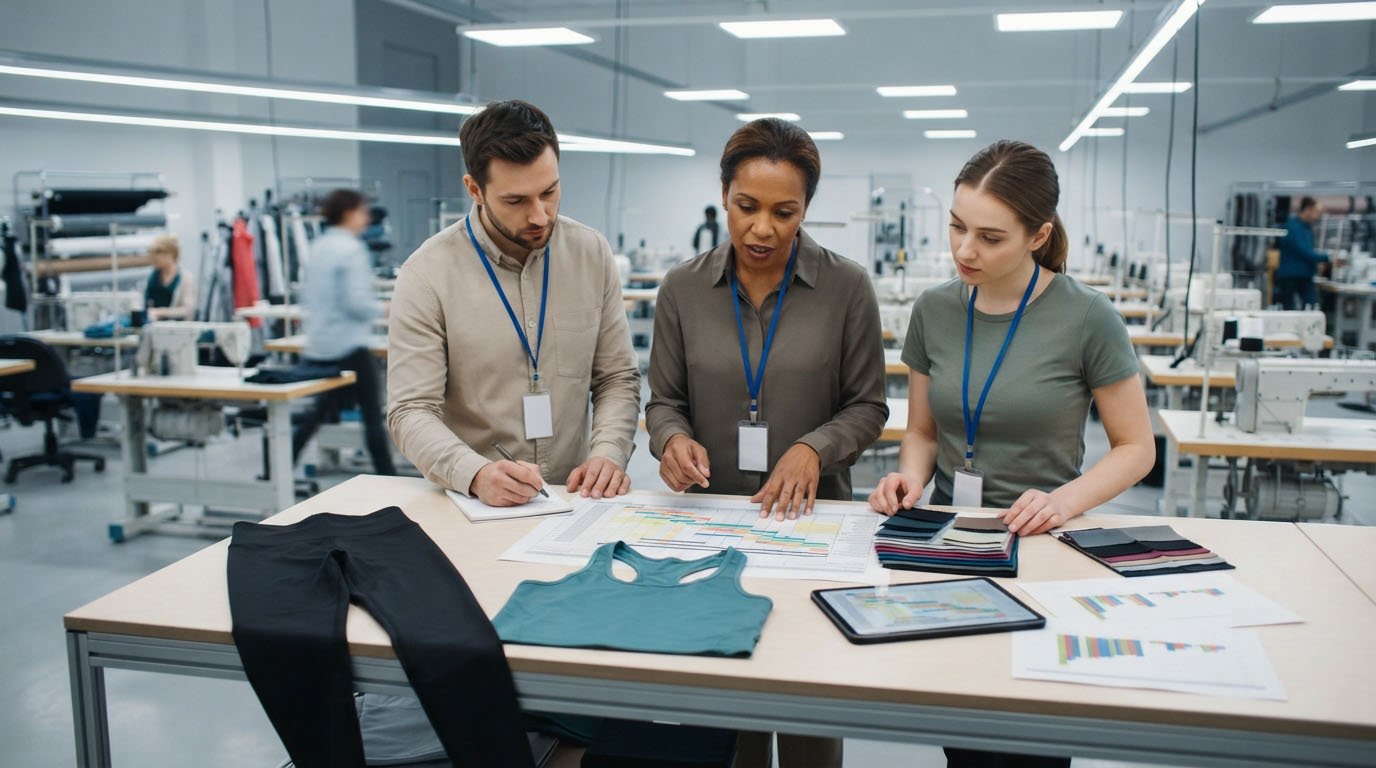
A dependable factory should provide clear production milestones rather than only a final shipment date.
Evidence to Request:
- Time and Action (T&A) schedule
- Material procurement milestones
- Production approval records
- Inspection and shipping dates
- Delay escalation procedures
Red Flags: The supplier guarantees delivery without a realistic production schedule.
Essential Production Milestones
| Milestone | Buyer Verification |
|---|---|
| Specification Approval | Tech pack and sample confirmed |
| Material Procurement | Fabric and trims scheduled |
| Pre-Production | Construction requirements approved |
| Bulk Production | Cutting and sewing monitored |
| Quality Inspection | Results reviewed |
| Shipment | Packing and delivery requirements confirmed |
Realistic timelines should reflect product complexity, material availability, and factory workload.
Activewear Factory Audit Scorecard: How Should Brands Compare Suppliers?
After reviewing the 15 questions, use a consistent scoring system to compare potential manufacturers.
| Evaluation Area | Score (0–2) |
|---|---|
| Product Capability | ___ |
| Fabric & Material Control | ___ |
| Sample-to-Bulk Consistency | ___ |
| Quality Control & Testing | ___ |
| Compliance & Traceability | ___ |
| Pricing, Capacity & Delivery | ___ |
| Total | ___ / 12 |
How to Score Each Area
- 0 — Not Verified: Sufficient evidence is missing.
- 1 — Partially Verified: Some supporting information exists, but important gaps remain.
- 2 — Verified: Relevant documents or observations support the factory's claims.
A higher score indicates stronger documented capability, not guaranteed manufacturing performance.
Critical safety, compliance, or integrity concerns must be investigated separately, regardless of the total score.
Use this scorecard alongside samples, reference checks, commercial agreements, and independent audits when appropriate.
What Are the Biggest Red Flags During an Activewear Factory Audit?
| Red Flag | Potential Risk |
|---|---|
| No comparable activewear production | Unproven technical capability |
| Missing fabric inspection records | Material defects reach cutting |
| No approved sample handoff | Inconsistent bulk production |
| QC only at final inspection | Late defect detection |
| Unverifiable certifications | Unsubstantiated compliance claims |
| Undisclosed subcontracting | Limited production visibility |
| Unclear quotation inclusions | Unexpected costs |
| No defect resolution procedure | Difficult quality disputes |
| Unrealistic delivery promises | Launch delays |
One missing document does not automatically make a factory unsuitable.
However, repeated unwillingness to provide reasonable evidence is a serious warning sign.
How Can Brands Conduct a Factory Audit Remotely?
For international buyers, remote screening can identify important risks before an on-site visit.
A practical remote audit should include:
- Verify factory identity and relevant certifications.
- Review comparable activewear production examples.
- Request sample QC and material inspection records.
- Arrange a live factory walkthrough where practical.
- Confirm production locations, subcontracting arrangements, and order responsibilities.
Remote evaluations can support supplier selection, but they cannot fully replace physical inspections when facility safety, labor compliance, or critical manufacturing processes require direct verification.
For higher-risk orders, consider an independent audit or inspection provider.
Frequently Asked Questions
What Is the Most Important Question in an Activewear Factory Audit?
Ask whether the manufacturer can consistently reproduce approved product specifications during bulk production.
Evidence should include relevant production capability, material controls, documented handoffs, and quality inspection records.
Is ISO 9001 Certification Enough to Verify an Activewear Manufacturer?
No. ISO 9001 addresses quality management system requirements. Brands should also examine product-specific processes, production records, and actual manufacturing practices.
Should Brands Audit a Factory Before Sampling or Before Bulk Production?
Initial supplier screening should happen before substantial sampling investment.
A more detailed production and quality review should take place before bulk manufacturing, particularly for complex products or new supplier relationships.
Can Small Activewear Brands Request Factory Audit Records?
Yes. Smaller brands can request relevant material test reports, quality procedures, production schedules, and sample approval records.
Confidential customer or commercial information may need to be redacted.
Conclusion: Audit the Process, Not Just the Sample
A reliable activewear manufacturer should demonstrate more than attractive samples, competitive prices, and production claims.
Brands should verify material quality, sample-to-bulk consistency, seam construction, defect management, relevant compliance, capacity, and delivery reliability.
Use these 15 activewear factory audit questions to evaluate manufacturing partners and request meaningful evidence before placing a bulk order.
At Wearzio, we support activewear brands through OEM/ODM manufacturing, fabric sourcing, product development, and customized garment production.
For brands planning a new collection, a structured factory audit is an important step toward more consistent manufacturing and fewer avoidable production risks.