You have selected the perfect Pantone color for your activewear collection. Your target order is 150 leggings, but your manufacturer says custom dyeing requires a much larger fabric commitment.
Why does changing the color increase your minimum order quantity (MOQ)?
Custom-dyed fabric raises activewear MOQ because textile dyehouses require minimum production batches, usually measured in kilograms rather than finished garments. One dye batch may contain enough fabric to produce hundreds of leggings, sports bras, or other garments.
The actual quantity depends on the dyehouse's minimum batch, fabric weight, usable width, garment consumption, and cutting efficiency.
Understanding these factors helps activewear brands plan custom colors without creating unnecessary inventory.
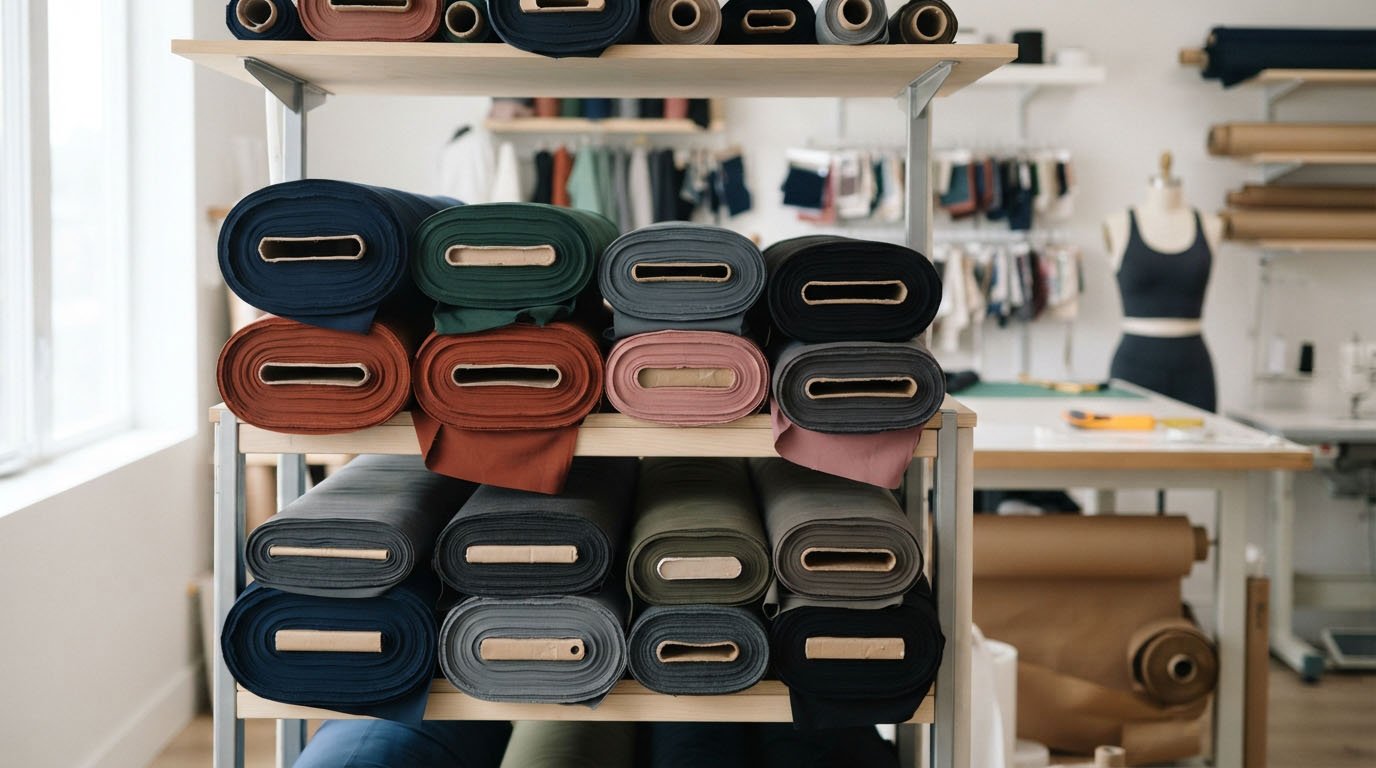
Quick Answer: Why Does Custom-Dyed Fabric Increase MOQ?
Unlike stock fabric, custom-dyed fabric requires a separate production run to achieve your specified color.
Dyehouses must prepare dye formulations, schedule equipment, process the fabric, and verify shade consistency. Their machinery and commercial requirements determine the minimum amount of fabric processed per batch.
Three factors matter most:
- Dye-batch minimum: The minimum fabric quantity required for a particular color and material.
- Garment consumption: How much usable fabric each garment requires.
- Material commitment: Whether you must purchase the full batch, even if your first garment order uses only part of it.
Fabric MOQ and finished garment MOQ are not necessarily the same. Depending on the supplier's terms, unused dyed fabric may be reserved for future production.
For an overview of different manufacturing minimums, read our Understanding MOQs and Lead Times Guide.
Key 1: Why Do Dye Mills Require Minimum Production Batches?
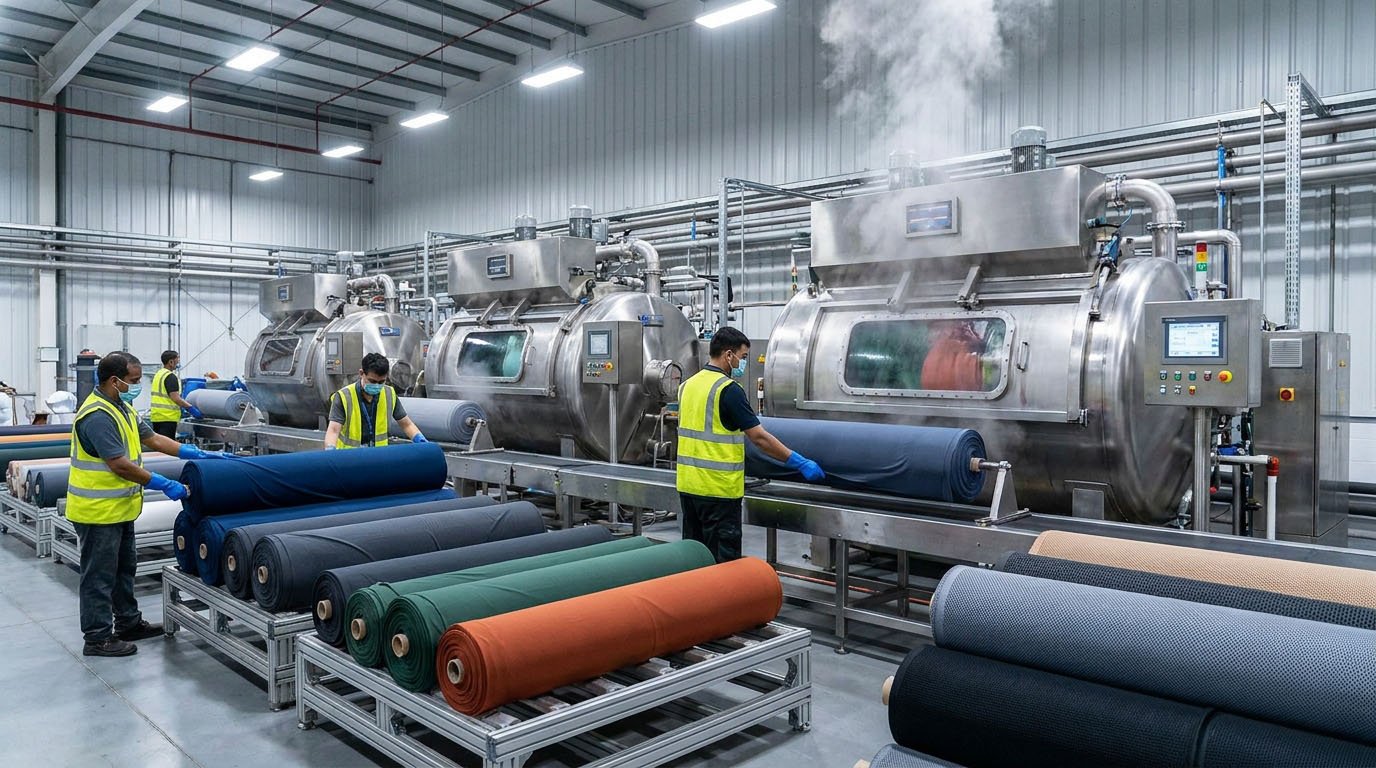
Dyeing Machines Have Operating Requirements
Industrial dyeing equipment is designed to process fabric within suitable load ranges.
Depending on machine type and fabric construction, running substantially below the intended load may affect processing efficiency, fabric movement, or shade uniformity.
Each custom dye run also involves preparation, equipment cleaning, heating, washing, finishing, and inspection.
These activities create costs that do not decrease proportionally with smaller quantities.
For this reason, a dyehouse may require a minimum batch or charge additional fees for smaller runs.
Why Minimums Apply Per Color and Fabric
A separate custom shade normally requires its own dyeing run.
For example, three custom colors using the same nylon-spandex interlock may require three separate batches.
Different fabrics can also require different processing conditions, even when the target shade is identical.
A 240 GSM interlock for leggings and a 180 GSM single jersey for training tops cannot automatically share the same dye batch.
There is no universal custom dyeing MOQ. Minimums vary by mill, equipment, composition, fabric construction, and finishing requirements.
Key 2: Stock Fabric vs Custom-Dyed Fabric — What's the Difference?
Stock fabric is already available from a supplier in established colors and specifications. Custom-dyed fabric requires a new color-matching and production process.
| Factor | Stock Fabric | Custom-Dyed Fabric |
|---|---|---|
| Color selection | Existing supplier colors | Custom shade |
| Minimum quantity | Based on stock availability | Based on dye-batch requirements |
| Color approval | Existing shade evaluation | Lab-dip approval |
| Lead time | Often shorter | Additional dyeing and approval stages |
| Material commitment | Potentially smaller | Often larger |
| Reorder considerations | Stock availability and lot variation | Repeat dye-lot consistency |
Stock fabrics are often more practical for small launches, while custom dyeing can be appropriate when an established brand color justifies the additional material commitment.
Neither option is automatically better.
The right choice depends on your design specifications, sales forecast, and acceptable inventory exposure.
Wearzio's fabric sourcing services can help brands evaluate available performance materials and custom sourcing requirements.
Key 3: How Do You Convert Dye-Lot Kilograms Into Finished Garments?
A dyehouse may quote its MOQ in kilograms, but activewear brands usually plan orders in finished pieces.
To connect the two, you need the fabric's weight, usable width, and estimated consumption per garment.
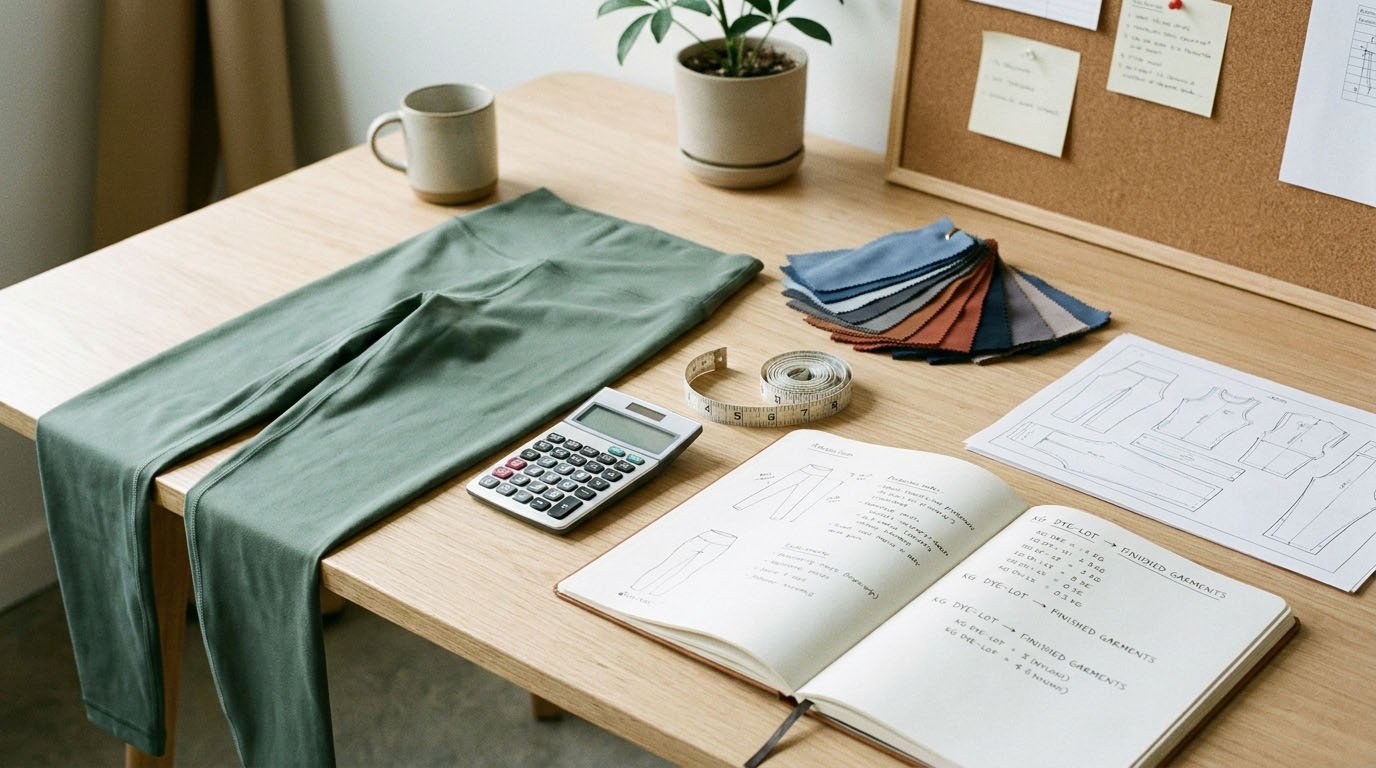
The Basic Calculation
Fabric weight per linear meter (kg) = GSM × usable width (m) ÷ 1,000
Then:
Estimated garments = Usable fabric length ÷ Marker consumption per garment
Marker consumption should account for the cutting layout and size assortment.
Example: Custom-Dyed Yoga Leggings
Consider a hypothetical project using nylon-spandex interlock.
| Variable | Example |
|---|---|
| Finished dyed fabric quantity | 180 kg per color |
| Fabric weight | 230 GSM |
| Usable width | 1.5 m |
| Unusable fabric allowance | 4% |
| Marker consumption | 1.25 m per legging, including cutting waste |
Step 1: Calculate fabric weight per linear meter.
230 ÷ 1,000 × 1.5 = 0.345 kg/m
Step 2: Convert the fabric quantity into linear meters.
180 ÷ 0.345 ≈ 522 meters
Step 3: Deduct the unusable fabric allowance.
522 × 96% ≈ 501 usable meters
Step 4: Estimate the number of leggings.
501 ÷ 1.25 ≈ 400 leggings
In this example, the purchased dyed fabric could support approximately 400 finished leggings, although the brand originally planned only 150.
The 4% allowance represents unusable material separate from cutting waste; cutting waste is already included in the 1.25-meter marker consumption.
These figures are illustrative, not fixed Wearzio MOQ requirements.
Does the Brand Have to Produce All 400 Leggings?
Not necessarily.
The brand may be able to produce its initial quantity and reserve the remaining fabric, provided the supplier agrees to storage and later production.
However, the buyer may still need to finance the full material commitment.
The calculation also assumes 180 kg of finished dyed fabric. If a mill quotes its minimum using greige fabric input weight, processing losses must be considered before calculating finished garment yield.
Always confirm whether the quoted MOQ refers to greige fabric, finished fabric, or finished garments.
Key 4: How Do Lab Dips, Testing, and Finishing Affect Custom Dyeing?
Custom dyeing requires additional approval and quality-control steps before garment cutting begins.
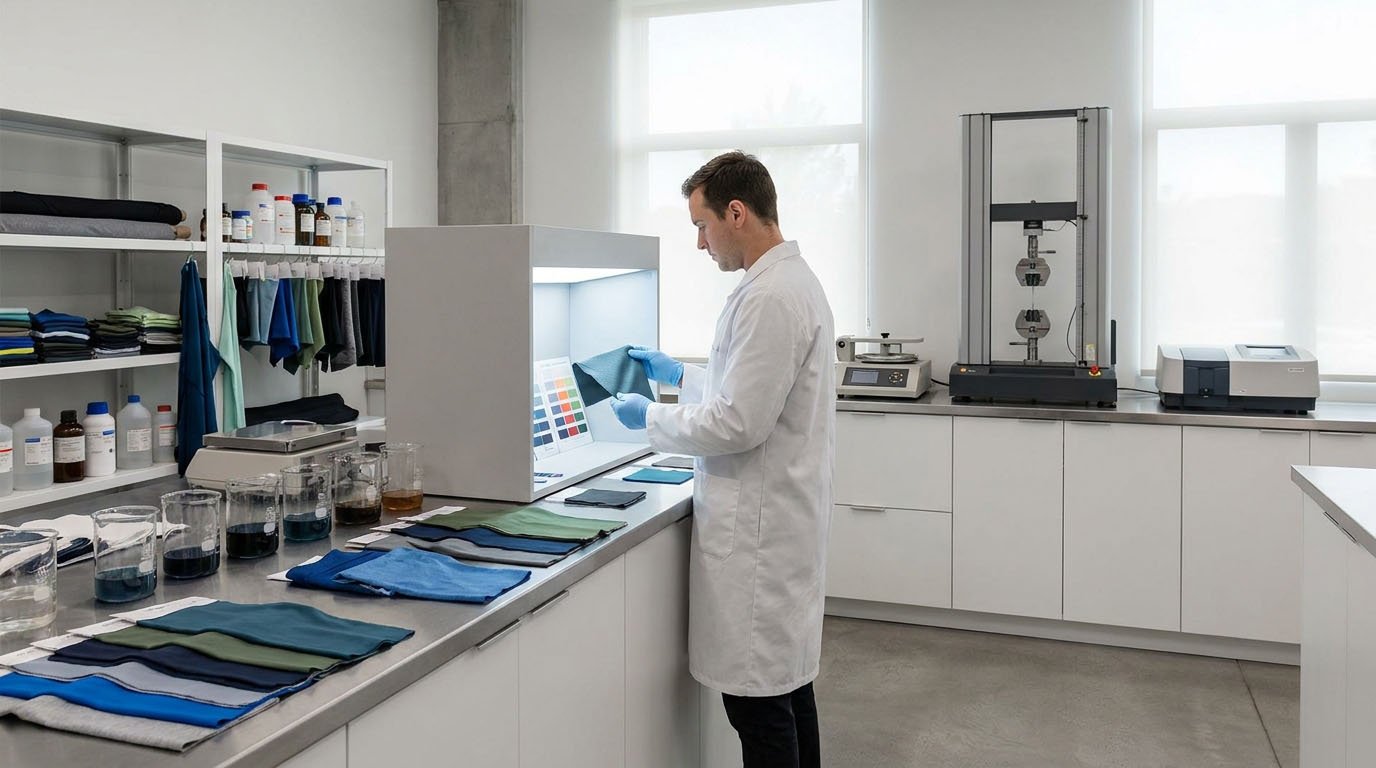
Color Matching and Lab Dips
Suppliers typically prepare small dyed fabric samples, known as lab dips, for buyer approval.
These are checked against the target color under agreed viewing conditions.
If the shade is unacceptable, another approval round may be necessary.
Lab dips increase development time and costs, but they do not automatically increase the dyeing machine's minimum batch size.
Performance Testing for Activewear
Custom-dyed performance fabrics may need checks for:
- Colorfastness to washing, perspiration, and rubbing.
- Dimensional stability after processing.
- Stretch and recovery performance.
- Surface appearance and shade consistency.
The tests depend on the garment's intended use and the agreed specifications.
For example, leggings require attention to color appearance and opacity under stretching, while running tops may prioritize lightweight comfort and moisture management.
Why Production Takes Longer
Custom dyeing adds steps such as color approval, mill scheduling, dyeing, finishing, and fabric inspection.
Actual lead time depends on supplier capacity, fabric availability, and the number of approval rounds.
Brands should request a project-specific schedule rather than assume a fixed dyeing lead time.
Yes. Compatible garments can share fabric from the same dyed lot, potentially reducing unused material and spreading the commitment across several styles.
However, matching colors alone does not guarantee compatibility.
The fabric must satisfy each garment's performance and construction requirements.
Fabric Sharing Compatibility Matrix
| Style Combination | Feasibility | Main Requirement |
|---|---|---|
| Leggings + Bike Shorts | Often suitable | Similar stretch, recovery, and opacity |
| Leggings + Sports Bra Body | Potentially suitable | Appropriate support and comfort |
| Leggings + Lightweight Running Tee | Usually unsuitable | Different weight and breathability |
| Bike Shorts + Matching Crop Top | Potentially suitable | Compatible fabric performance |
| Compression Leggings + Mesh Tank | Usually unsuitable | Different construction and function |
These are starting points for technical evaluation, not guaranteed approvals.
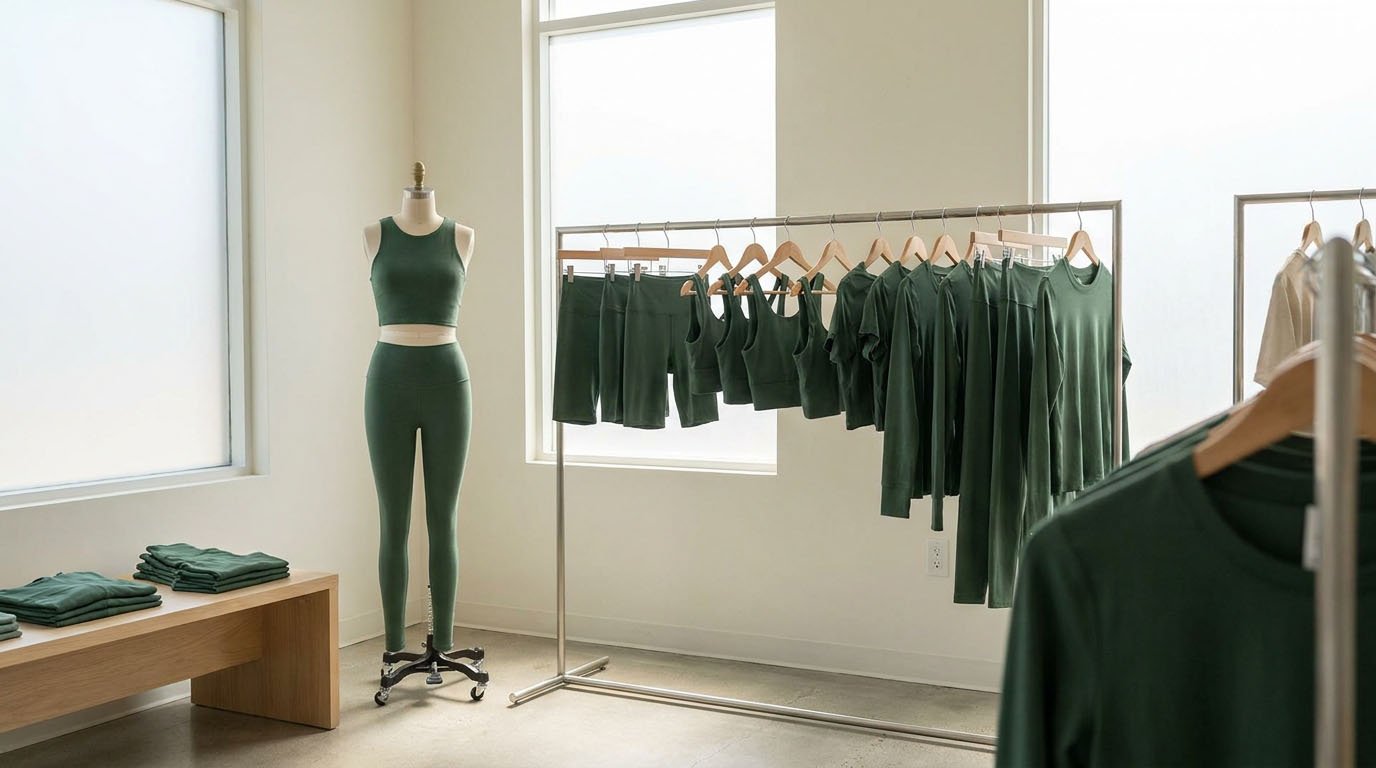
Example: A Coordinated Yoga Collection
Suppose a brand develops matching leggings, bike shorts, and crop tops.
If all three styles use the same approved nylon-spandex interlock, their main garment panels may be cut from one dyed fabric lot.
This can improve material utilization without forcing the entire quantity into a single style.
However, linings, mesh panels, elastic bands, and other components may still require separate sourcing.
Before combining styles, confirm that the fabric specifications, finish, shade standard, and performance needs match.
Brands developing coordinated products can explore additional collection-planning considerations in How to Plan Your First Activewear Collection.
Key 6: How Can Brands Manage Custom-Dye MOQ and Leftover Fabric?
Custom dyeing does not always require abandoning smaller launches. The main challenge is managing the quantity of fabric that must be purchased.
Several practical options include:
- Use stock shades for initial production. Choose from available fabrics until sales justify an exclusive color.
- Combine compatible styles. Allocate one dyed fabric lot across garments using the same approved material.
- Limit custom colorways. Focus on one signature shade rather than several separate dye batches.
- Reserve leftover fabric. Negotiate storage and later production arrangements where available.
- Explore alternative decoration. Suitable printing or trims may provide differentiation without full-fabric custom dyeing.
These alternatives have different costs and technical limitations. For example, sublimation printing is primarily suitable for polyester-based materials and does not reproduce every characteristic of piece-dyed fabric.
For broader strategies beyond fabric dyeing, see our Low-MOQ Activewear Manufacturer Guide.
What Should You Confirm About Leftover Fabric?
Before approving a custom dye order, ask the supplier:
- Who owns the remaining fabric after the first production run?
- Must the full fabric quantity be paid for immediately?
- Can unused rolls be stored, and for how long?
- Are storage charges or minimum future cutting quantities involved?
- How will remaining fabric and dye-lot details be recorded?
Document these arrangements in the purchase terms.
This helps distinguish the cost of purchasing fabric from the cost of producing finished garments.
FAQ: Custom-Dyed Fabric and Activewear MOQ
1. Is Custom Dyeing MOQ Per Color or Per Order?
It commonly applies per color and fabric specification. Three custom shades may require three separate batches, even when they use the same base fabric.
Confirm how your supplier defines each minimum.
2. Can a Dyehouse Accept Less Than Its Standard Minimum?
Sometimes. Smaller equipment, additional charges, or alternative sourcing arrangements may make reduced quantities possible.
Availability depends on the mill and fabric requirements.
3. Can One Custom Dye Batch Produce Different Garment Styles?
Yes, when the same finished fabric is suitable for multiple styles.
For example, compatible leggings and bike shorts may use the same lot. Different fabric specifications may require separate dyeing runs.
4. Will a Reorder Match the Original Custom Color Exactly?
Not necessarily. Some shade variation can occur between dye lots.
Brands should retain approved color references and establish acceptable shade tolerances for repeat production.
Conclusion: Calculate Fabric Commitments Before Approving Custom Colors
Custom-dyed fabric raises activewear MOQ because the dyehouse's minimum production scale may exceed the amount of fabric required for your initial garment order.
The most useful approach is to calculate finished garment yield before committing to a new color.
Confirm the dye-batch minimum, fabric consumption, compatible styles, and leftover material terms.
At Wearzio, we support brands with performance fabric sourcing and custom OEM/ODM activewear manufacturing.
If you are developing custom-colored leggings, sports bras, or coordinated activewear sets, share your fabric specifications, target colors, estimated order quantities, and launch requirements.
For a complete list of quotation details, review our Activewear Manufacturer RFQ Guide.