.png)
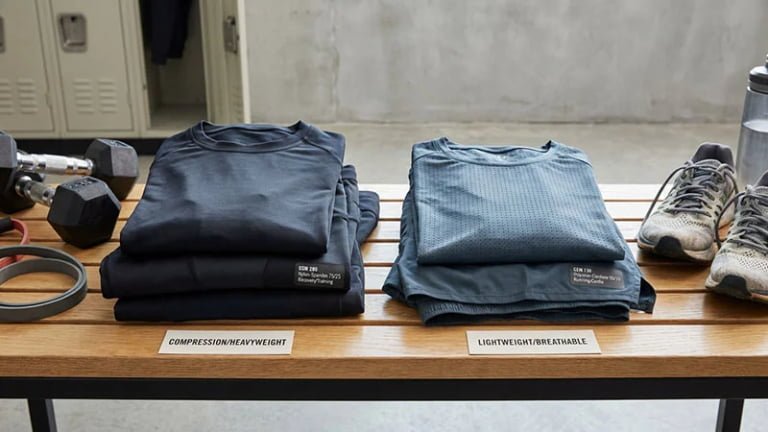
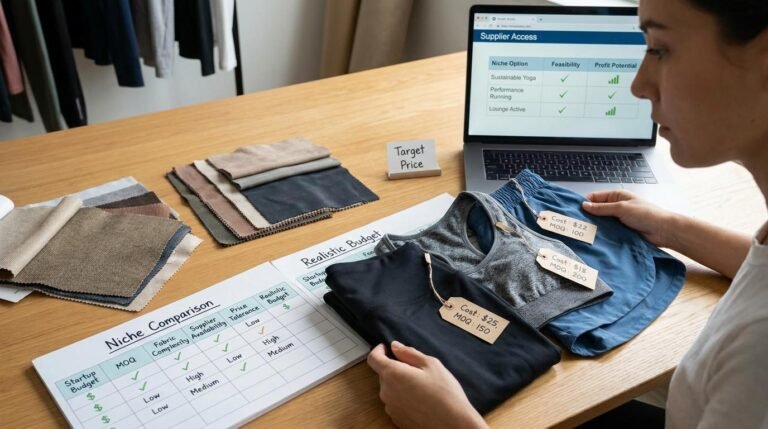
High-quality yoga leggings are not defined by a fiber label alone. Two leggings with the same 87% nylon, 13% elastane composition can perform very differently depending on GSM, knit density, stretch recovery, seam construction, and finishing.
That is where many buyers make mistakes.
A fabric tag may look premium, and a sample may feel soft in hand, but that does not tell you whether the leggings will stay squat-proof, hold shape after washing, resist pilling, or remain comfortable during movement.
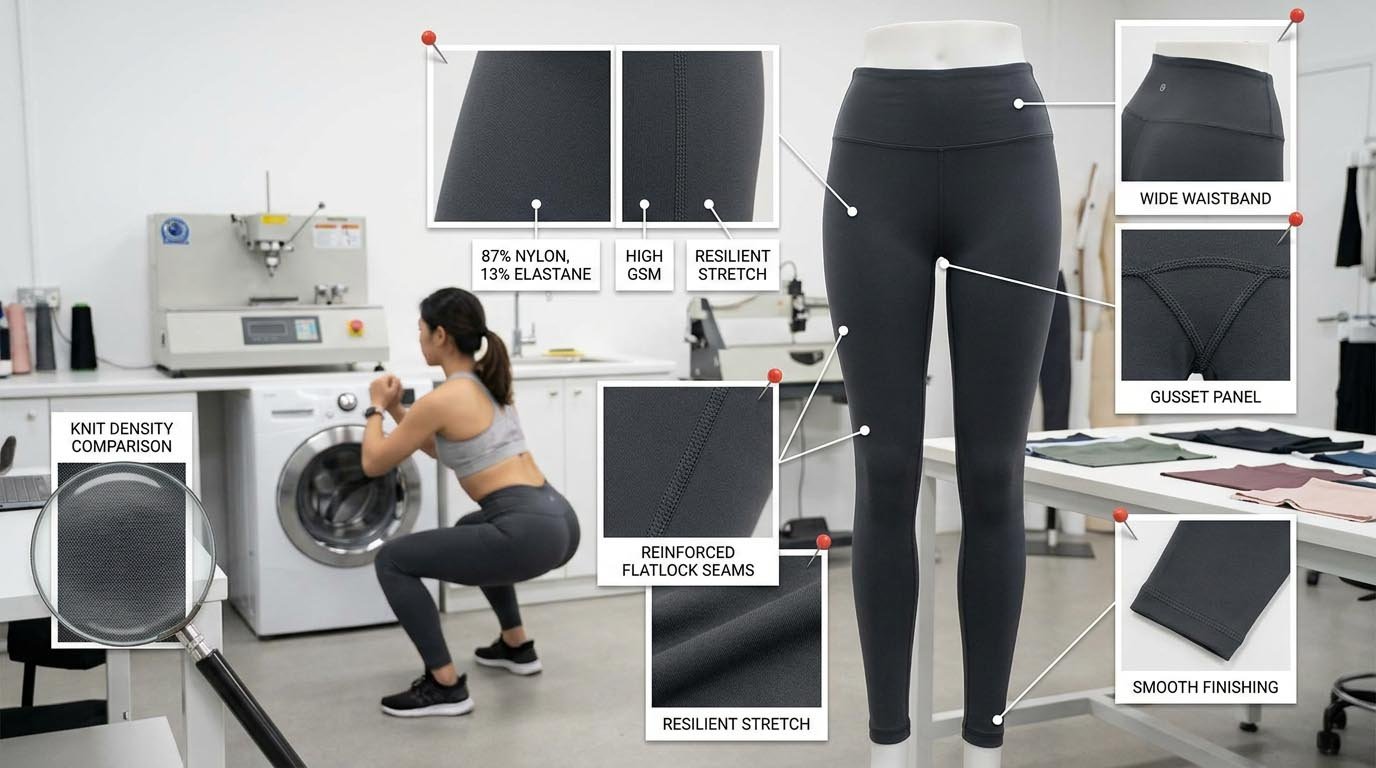
In real production, most quality complaints come from spec mismatch, not just wrong fiber choice. Buyers ask for “nylon spandex leggings” but do not lock in the actual performance requirements. The result is predictable: leggings that feel good in sampling but create complaints later about transparency, sagging waistbands, pilling, or chafing seams.
This guide explains what really makes high-quality yoga leggings, including:
- the best materials for yoga leggings
- the right GSM for squat-proof opacity
- how to evaluate stretch and recovery
- which seam and gusset construction improves comfort
- how to test for pilling, durability, and wash performance
Quick Answer: What Makes High-Quality Yoga Leggings?
High-quality yoga leggings usually combine:
- 240-280 GSM or higher for better opacity and durability
- nylon-elastane blends for softer feel, lower pilling, and better moisture management
- strong stretch recovery, ideally 85-90% retention after repeated washing
- four-way stretch for unrestricted movement
- flatlock seams in high-friction areas to reduce chafing
- a gusset panel for comfort and better crotch construction
- fabric and finishing matched to the actual use case, such as hot yoga, studio yoga, or casual wear
If you want yoga leggings that hold up well in real use, do not evaluate by fabric composition alone. You need to assess:
- fabric weight
- opacity under stretch
- elasticity recovery
- construction quality
- surface durability
- care performance after washing
Key takeaway:
The best yoga leggings are built around performance specs, not just soft hand feel or a good-looking composition label.
Why Fiber Labels Alone Do Not Define Quality
Many buyers see a label like:
- 87% nylon, 13% elastane
or - 90% polyester, 10% spandex
and assume they can judge quality from that alone.
They cannot.
The fiber label tells you the general composition, but it does not tell you:
- the GSM
- the knit structure
- the fabric density
- the grade of elastane
- the recovery rate after washing
- the seam type
- the waistband construction
- the surface finishing
- the actual durability in wear
That means two leggings with identical composition can behave completely differently.
For example:
- one nylon-elastane legging at 200 GSM may become see-through in squats and lose shape quickly
- another nylon-elastane legging at 280 GSM may stay opaque, supportive, and stable after months of use
Practical lesson:
Composition is only the starting point. Quality depends on how the fabric and garment are engineered.
What Makes High-Quality Yoga Leggings?
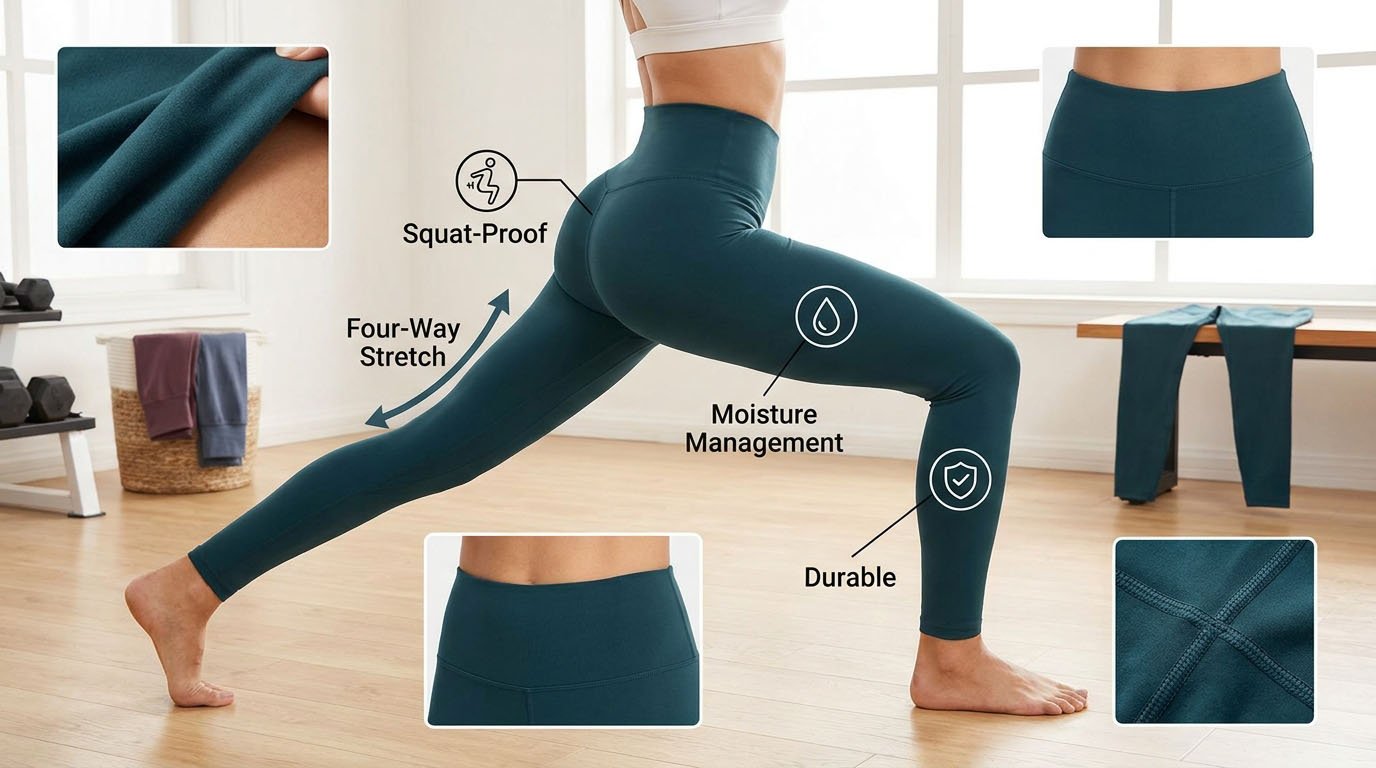
High-quality yoga leggings should perform well across four key dimensions:
1. Fit
They should:
- stay in place during movement
- avoid waistband rolling
- provide enough compression without feeling restrictive
- fit consistently across sizes
2. Feel
They should feel comfortable during real wear, not just in hand.
That includes:
- soft enough against skin
- not overly heavy or clammy during activity
- non-irritating seams and waistband finish
3. Performance
They should function during yoga and training by offering:
- four-way stretch
- squat-proof opacity
- moisture management
- reliable support during movement
4. Durability
They should maintain quality after repeated use and washing.
That means resisting:
- pilling
- sagging
- fading
- seam discomfort
- permanent growth at knees or waistband
Key takeaway:
High-quality yoga leggings are defined by long-term performance, not just first impression.
Best Materials for Yoga Leggings: Nylon vs Polyester
One of the most common questions is:
What is the best material for yoga leggings?
In most cases, the answer depends on your price point, performance goal, and expected wear life.
Nylon-elastane yoga leggings
Nylon is often preferred for premium yoga leggings because it offers:
- softer hand feel
- smoother surface
- lower pilling risk
- better abrasion resistance
- better moisture management than polyester
Typical premium blend:
- 85-88% nylon + 12-15% elastane
Best for:
- premium yoga leggings
- hot yoga
- frequent wear
- brands prioritizing feel and durability
Polyester-elastane yoga leggings
Polyester is more budget-friendly and easier to source.
Advantages:
- lower cost
- faster sourcing
- easier color development
- good performance at mid-market pricing
Disadvantages:
- higher pilling risk
- tends to hold odor more
- often feels less smooth than nylon
- may feel wetter during intense sweating
Typical blend:
- 87-90% polyester + 10-13% elastane
Best for:
- mid-market activewear
- casual yoga leggings
- budget-conscious programs
- brands needing broader color flexibility
Which material is better for yoga leggings?
In general:
- nylon leggings are usually better for premium feel, lower pilling, and better long-term wear
- polyester leggings are usually better for lower cost and easier sourcing
Practical answer:
If your goal is premium-quality yoga leggings, nylon-elastane is usually the stronger choice. If your goal is cost control, polyester-elastane may still work well with the right GSM and construction.
What GSM Should Yoga Leggings Be?
If there is one fabric spec buyers overlook too often, it is GSM.
GSM stands for grams per square meter, and it tells you the fabric weight and density. This strongly affects:
- opacity
- compression
- durability
- cost
- overall support
Typical yoga leggings GSM range
| GSM Range | Performance Level | Best Use |
|---|---|---|
| 180-220 GSM | lightweight, transparency risk | layering, fashion, very light wear |
| 220-240 GSM | basic to moderate | dark colors, casual studio use |
| 240-280 GSM | strong balance | most quality yoga leggings |
| 280-320 GSM | premium opacity and compression | hot yoga, power yoga, light colors |
Best GSM for squat-proof yoga leggings
For most brands:
- 240-280 GSM is the safest range for quality yoga leggings
- 220-240 GSM may work for dark colors
- 280-320 GSM is better for white, pastel, or compression-focused leggings
Why GSM matters so much
A buyer may ask for “nylon spandex leggings,” but the factory could use fabric anywhere from 180 GSM to 320 GSM unless the order specifies otherwise.
That difference changes everything:
- 180-220 GSM can feel light but may fail squat tests
- 260-280 GSM usually gives better opacity and durability
- 300+ GSM increases support but may feel too heavy for some customers
Light colors need higher GSM
This is where many product problems begin.
For example:
- black leggings may be acceptable at 230-240 GSM
- white or pastel leggings may need 280-300 GSM for similar opacity
If you use the same GSM across all colors, lighter shades often produce transparency complaints.
Key takeaway:
If you care about squat-proof performance, lock in the GSM in writing. Do not rely on fiber composition alone.
How Stretch and Recovery Affect Legging Quality
Good yoga leggings need more than stretch. They need recovery.
Stretch is how far the fabric extends.
Recovery is how well it returns to its original shape after use and washing.
What to look for
High-quality yoga leggings should offer:
- four-way stretch
- balanced compression
- recovery that remains strong after repeated wear and wash cycles
Why recovery matters
Low-grade elastane may look fine in the sample stage but fail in real use.
Common results of poor recovery:
- waistband rolling
- knees bagging out
- seat sagging
- reduced compression after washing
- overall loose fit after a few wears
A useful benchmark
A strong performance target is:
- 85-90% stretch retention after repeated wash cycles
If the recovery falls too low, the leggings may quickly lose their intended fit.
Why elastane grade matters
Not all spandex or elastane performs the same way.
Two fabrics may both say 13% elastane, but:
- one uses higher-grade elastic yarn with better recovery
- the other uses lower-grade elastic yarn that degrades faster
That is why experienced buyers ask for:
- recovery test data
- repeat-wash testing
- or pre-washed comparison samples
Practical lesson:
Stretch sells the sample. Recovery protects the product after 20, 30, or 50 wears.
Why Seam Construction and Gussets Matter
Fabric quality is important, but construction quality is just as critical.
Many complaints about “bad leggings” actually come from poor seam engineering.
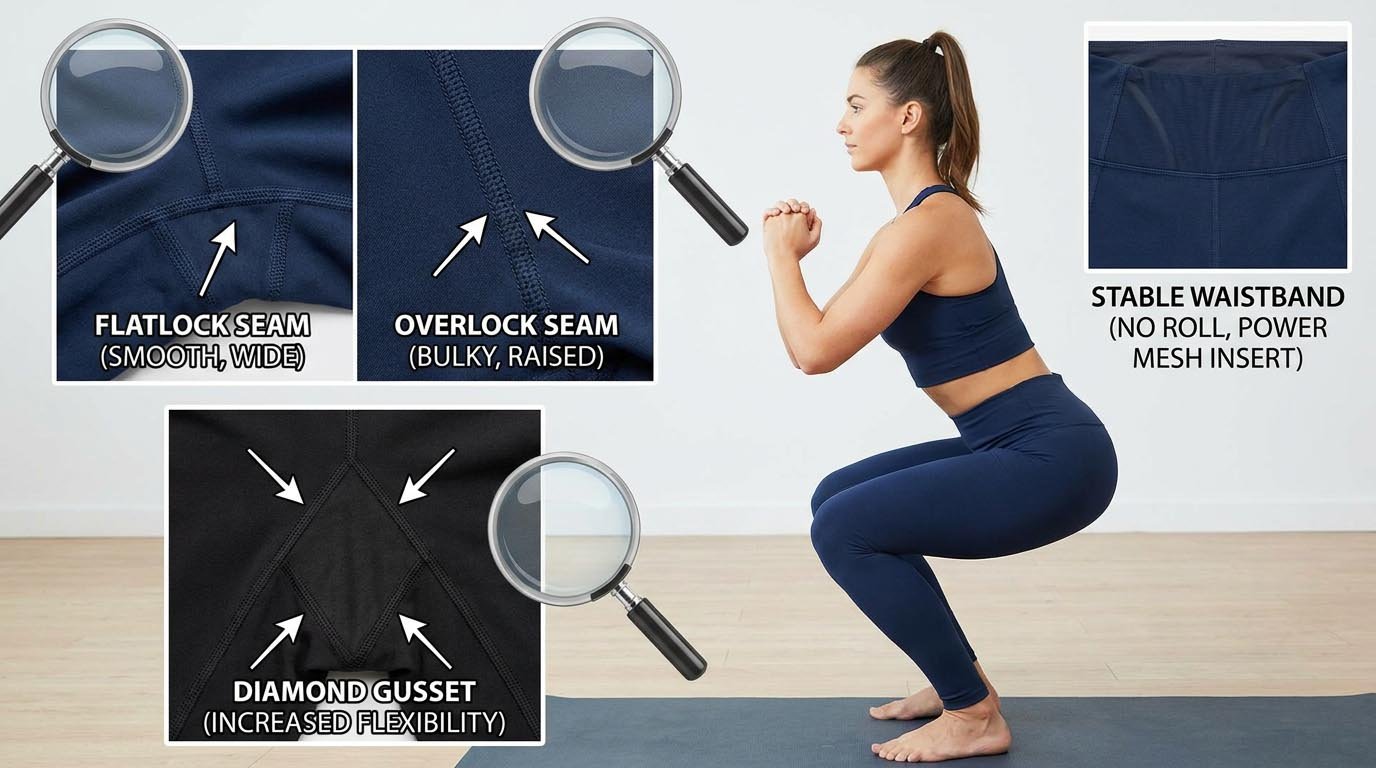
Best seam type for yoga leggings
For high-friction areas, flatlock seams are usually the best choice.
Why flatlock works better:
- lies flatter against skin
- reduces rubbing
- stretches better during movement
- improves comfort during long wear
By contrast, standard overlock seams can create:
- raised seam bulk
- inner-thigh irritation
- more chafing during yoga or training
Why a gusset matters
A gusset is a shaped panel inserted at the crotch area.
Benefits of a gusset:
- improves movement range
- reduces seam pressure in sensitive areas
- lowers chafing risk
- helps reduce front-center seam discomfort
- improves fit during squats and stretches
For yoga leggings, a gusset is usually a better construction choice than a single center seam running through the crotch.
Waistband construction matters too
A quality yoga legging should also have a stable waistband that does not:
- roll down
- twist
- lose support quickly
- dig in uncomfortably
Important waistband factors include:
- waistband height
- elastic structure
- whether power mesh is used
- stitching method
- recovery of the waistband elastic itself
Key takeaway:
Good fabric cannot fully compensate for bad seam, gusset, or waistband construction.
Moisture-Wicking, Quick-Dry and Other Finishes
Many brands use terms like moisture-wicking, quick-dry, and anti-odor as if they mean the same thing.
They do not.
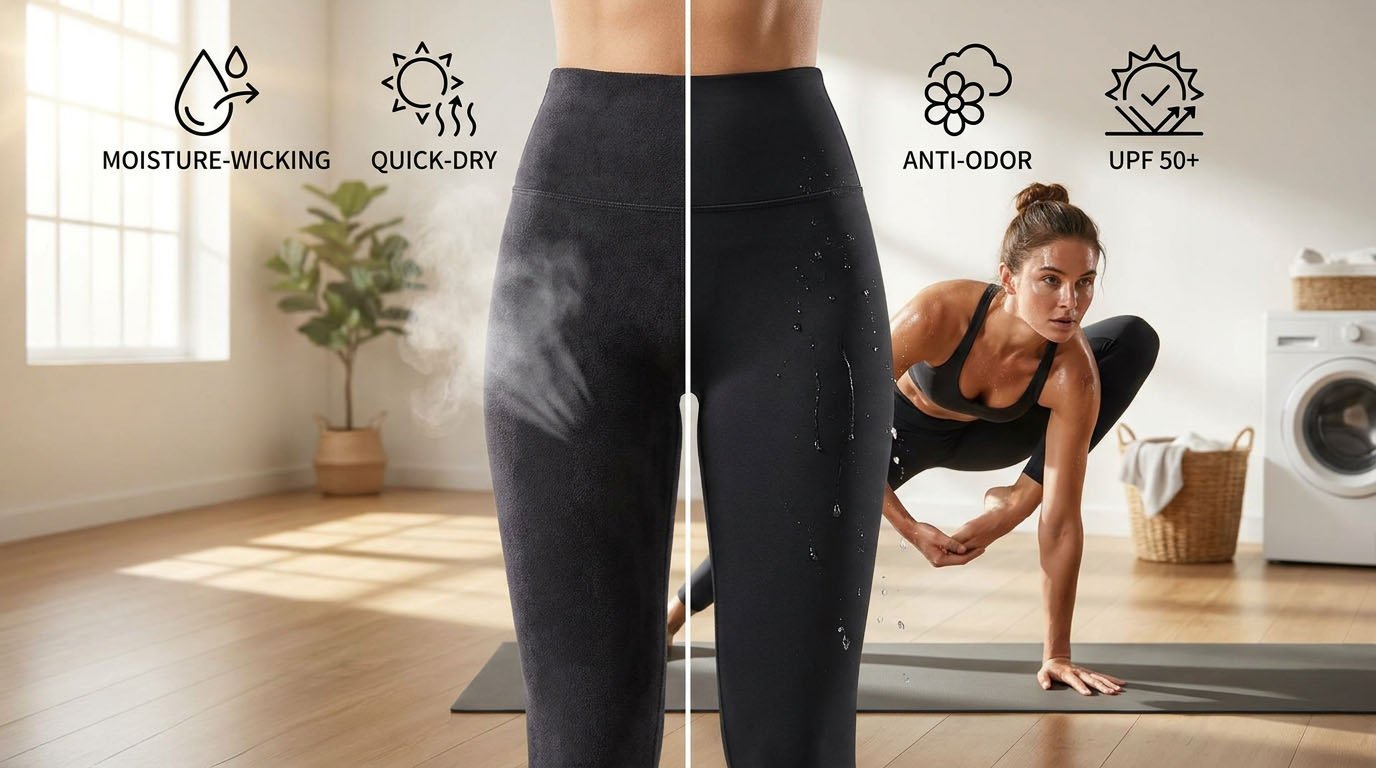
Moisture-wicking
Moisture-wicking means the fabric helps move sweat away from the skin to the outer surface.
This can improve comfort during activity, especially in yoga and studio use.
Quick-dry
Quick-dry means the fabric releases and evaporates moisture faster.
This matters more in:
- hot yoga
- high-sweat workouts
- warm climates
Why both may be needed
A fabric can wick moisture but still stay damp too long.
A fabric can also dry quickly but not move moisture away from skin as effectively.
For high-performance yoga leggings, especially for hot yoga, the best result often comes from combining:
- moisture transfer
- breathable knit engineering
- faster drying performance
Brushed vs smooth finish
A brushed finish can make leggings feel softer in hand, but it often comes with trade-offs:
- higher pilling risk
- warmer feel during activity
- lower long-term surface durability
A smooth finish often:
- pills less
- feels cooler during wear
- lasts longer under friction
Anti-odor and UPF treatments
These can add value, but buyers should understand:
- some treatments are temporary
- some performance fades with washing
- not every treatment is necessary for every use case
Practical lesson:
The best fabric finish is the one that supports the actual use case, not the one with the longest marketing list.
How to Test Yoga Leggings for Quality
If you want to identify high-quality yoga leggings, do not stop at touch and appearance. Test performance.
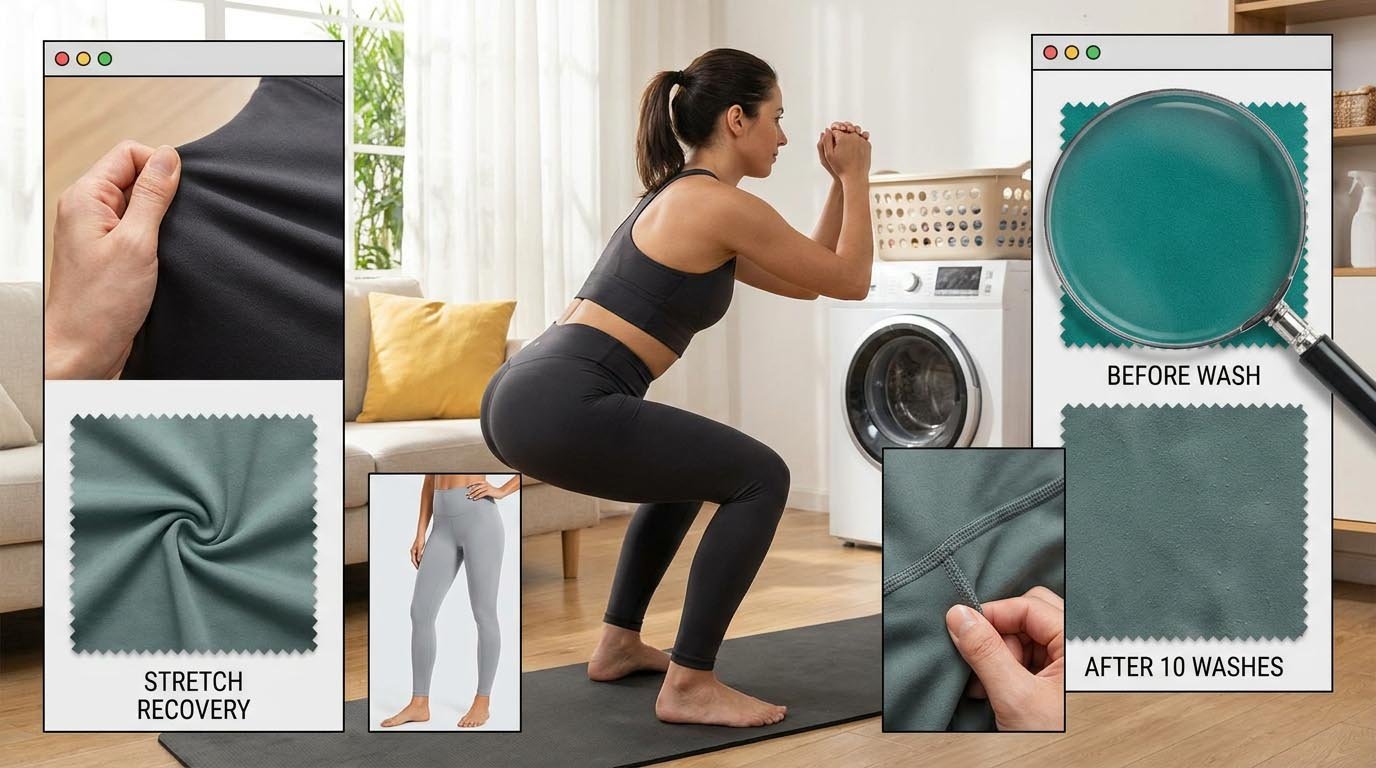
1. Squat-proof test
This is one of the most important checks.
Test by:
- wearing the leggings in bright light
- doing a deep squat
- checking whether skin tone or underwear shows through
- repeating the test in multiple positions
This test should be done for:
- every major color
- especially light shades
- every fabric weight variation
2. Stretch recovery test
Check how the fabric behaves after extension.
You can:
- stretch a measured fabric section
- hold it under tension
- release it
- measure how close it returns to original size
Better still, compare performance before and after repeated washing.
3. Wash test
Wash the sample multiple times to evaluate:
- shape retention
- waistband stability
- seam puckering
- colorfastness
- softness change
- overall fit stability
A sample that looks great before washing may behave very differently after 10 or 20 wash cycles.
4. Pilling test
Inspect whether the surface develops fuzz or pills after:
- friction
- repeated wear
- wash and dry cycles
This matters especially for:
- brushed fabrics
- polyester-heavy fabrics
- lower GSM fabrics
5. Wear test
The best non-lab test is still real wear.
Check:
- comfort during movement
- heat retention
- sweat handling
- waistband stay-up
- seam comfort
- long-wear feel
Key takeaway:
If you only evaluate yoga leggings by hand feel and composition tags, you are not really testing quality.
Common Problems in Low-Quality Yoga Leggings
Most quality complaints fall into a few repeat categories.
Transparency during squat
Usually caused by:
- GSM too low
- light colors with insufficient density
- overly stretchy low-density knit
Waistband rolling
Usually caused by:
- weak waistband structure
- poor recovery
- insufficient waistband height
- low-grade elastic yarn
Pilling after washing
Usually caused by:
- polyester-heavy blends
- brushed finishes
- loose surface structure
- low GSM fabric
Knee bagging and shape loss
Usually caused by:
- poor elastane quality
- weak recovery after stretch
- fabric that looks good initially but cannot hold shape
Chafing or seam discomfort
Usually caused by:
- overlock seams in high-friction zones
- no gusset
- poor seam placement
- bulky seam construction
Practical lesson:
Most low-quality yoga legging problems can be predicted before bulk production if the right specs and tests are used.
How to Choose the Right Specs for Different Use Cases
Not every yoga legging needs the same construction.
For hot yoga leggings
Prioritize:
- moisture-wicking
- quick-dry performance
- strong opacity under sweat and stretch
- four-way stretch
- flatlock seams
- gusset
- usually 260-300 GSM depending on color
For studio yoga leggings
Prioritize:
- comfort
- balanced compression
- squat-proof performance
- smooth fit
- moderate moisture management
A common target is:
- 240-280 GSM
For casual or lounge yoga leggings
You may accept:
- softer hand feel
- slightly lower compression
- lighter fabric weight
- fashion-first finish
But watch out for:
- pilling
- transparency
- shape loss
For premium yoga leggings
Look for:
- nylon-elastane base
- strong recovery
- smooth durable finish
- high-quality waistband structure
- flatlock or other comfort-focused seam construction
- consistent wash durability
Key takeaway:
High-quality yoga leggings are not one universal formula. The correct spec depends on how the product will actually be used.
FAQ: High-Quality Yoga Leggings
What is the best material for high-quality yoga leggings?
For premium performance, nylon-elastane is usually the best choice because it offers a softer feel, lower pilling risk, and better moisture handling than polyester. Polyester-elastane can still work well for mid-market products if the GSM and construction are correct.
What GSM is best for yoga leggings?
For most quality yoga leggings, 240-280 GSM is the strongest range. Dark colors can sometimes work at slightly lower GSM, while light colors often need 280 GSM or more.
Are nylon leggings better than polyester leggings?
Usually yes, if your priority is premium feel, lower pilling, and better durability. Polyester is more cost-effective and easier to source, but it tends to pill more and feel less premium over time.
How can I tell if yoga leggings are squat-proof?
The most reliable method is a squat test in bright light. Do not rely on appearance while standing still. You should also test each color separately, especially light shades.
Why do yoga leggings pill after washing?
Pilling is usually caused by a combination of:
- polyester-heavy content
- brushed finish
- low fabric density
- friction in wear and washing
What seams are best for yoga leggings?
Flatlock seams are usually best in high-friction areas because they lie flatter and reduce chafing.
Do yoga leggings need a gusset?
For better comfort and movement, yes. A gusset helps reduce seam pressure in the crotch area and usually improves wear comfort.
Is soft fabric always better?
Not always. Very soft brushed fabric may feel better in hand but can pill faster and feel heavier during sweating. Quality depends on balancing softness with durability and performance.
How should buyers test yoga legging quality before ordering?
At minimum, test:
- squat-proof opacity
- stretch recovery
- wash performance
- pilling resistance
- seam comfort
- waistband stability
Final Takeaway
If you want to identify high-quality yoga leggings, do not judge by composition label alone.
Look at the full performance system:
- material
- GSM
- opacity under stretch
- recovery after washing
- seam construction
- gusset design
- surface durability
- real wear comfort
In most cases, high-quality yoga leggings are built with:
- the right fabric weight for opacity
- stable four-way stretch
- strong recovery
- thoughtful seam and waistband construction
- finish and performance matched to the actual use case
If you remember one thing, remember this:
A fabric label tells you what is in the leggings. It does not tell you how well the leggings will perform.
The best way to evaluate yoga leggings is to test them the way customers will actually use them.
Need Help Developing High-Quality Yoga Leggings?
If you are sourcing or developing yoga leggings and want help with:
- material selection
- GSM recommendations
- squat-proof fabric choices
- seam and gusset construction
- sample evaluation
- private label activewear development
send us your target market, price level, and use case, and we can help you build a product spec that works in real production.