.png)
The US activewear market reached $119.44 billion in 2024 and is projected to grow at a CAGR of 7.8% through 2030, driven by the athleisure trend, increasing health consciousness, and the rise of DTC fitness brands. For entrepreneurs and established brands alike, private label manufacturing offers the fastest path to market—but choosing the wrong partner can cost you months of time, thousands in wasted inventory, and damage to your brand reputation.
Understanding Private Label vs. Full Custom:
- Private Label: You select from pre-designed styles in a manufacturer's catalog, customize colors/logos/branding, and go to market quickly. Best for speed and proven designs.
- Full Custom/OEM: You develop original designs with tech packs, patterns, and unique constructions. Best for brand differentiation and proprietary fit.
- Hybrid Model: Many manufacturers offer both—use their base patterns with moderate customization.
Common Sourcing Mistakes by Brand Stage:
- Startup mistake (0-$250K revenue): Ordering 1,000+ pieces when you need 100-300 pieces to test market fit. Result: Dead inventory and cash flow crisis.
- Growth-stage mistake ($250K-$2M revenue): Staying with a low-quality, low-MOQ factory when you need 500-1,000 pieces per style with consistent quality. Result: Customer returns spike as you scale.
- Established brand mistake ($2M+ revenue): Choosing manufacturers without BSCI/WRAP compliance or performance fabric testing, risking major retailer rejections or quality claims.
Strategic Framework by Brand Stage:
Pre-launch/Startup (0-$250K revenue):
- Priority: MOQ 50-300 units, sampling 5-10 days, flexible customization
- Budget: $8-18 per unit for leggings, $6-14 per unit for tops
- Timeline: 45-60 days from order to delivery
- Accept higher per-unit costs for speed and learning
Growth stage ($250K-$2M revenue):
- Priority: MOQ 300-1,000 units, proven QC systems, BSCI/WRAP certified
- Budget: $6-14 per unit for leggings, $5-10 per unit for tops
- Timeline: 50-75 days with established production schedules
- Focus on fabric performance testing and shade consistency
Established ($2M+ revenue):
- Priority: Capacity for 1,000-5,000+ units per style, vertical integration, sustainability certifications
- Budget: $5-11 per unit for leggings, $4-8 per unit for tops at scale
- Timeline: 60-90 days with staggered seasonal deliveries
- Implement comprehensive QA protocols and dual-sourcing strategies
This guide analyzes 10 verified private label activewear manufacturers serving the US market, from agile low-MOQ specialists to large-scale production powerhouses.
Manufacturer Overview List
1.Wearzio – Premium low-MOQ activewear specialist for US brands
2.P5 Performance – USA-based full-service custom activewear
3.Activewear Bali – Indonesian sustainable activewear manufacturer
4.Tokalon Clothing – China-based private label powerhouse
5.Gym Clothes – Direct factory wholesale activewear supplier
6.Aktik Sportswear – Turkish European-quality activewear OEM
7.Spark Gymwear – Pakistan technical sportswear manufacturer
8.Fitness Clothing Manufacturer – Large-scale private label catalog
9.Aurae Fit – Boutique premium activewear production house
10.UGA Wear – China activewear factory with US focus
Top 10 Private Label Activewear Manufacturers for the US Market
1. Wearzio – Premium Low-MOQ Activewear Specialist for US Brands
Introduction:
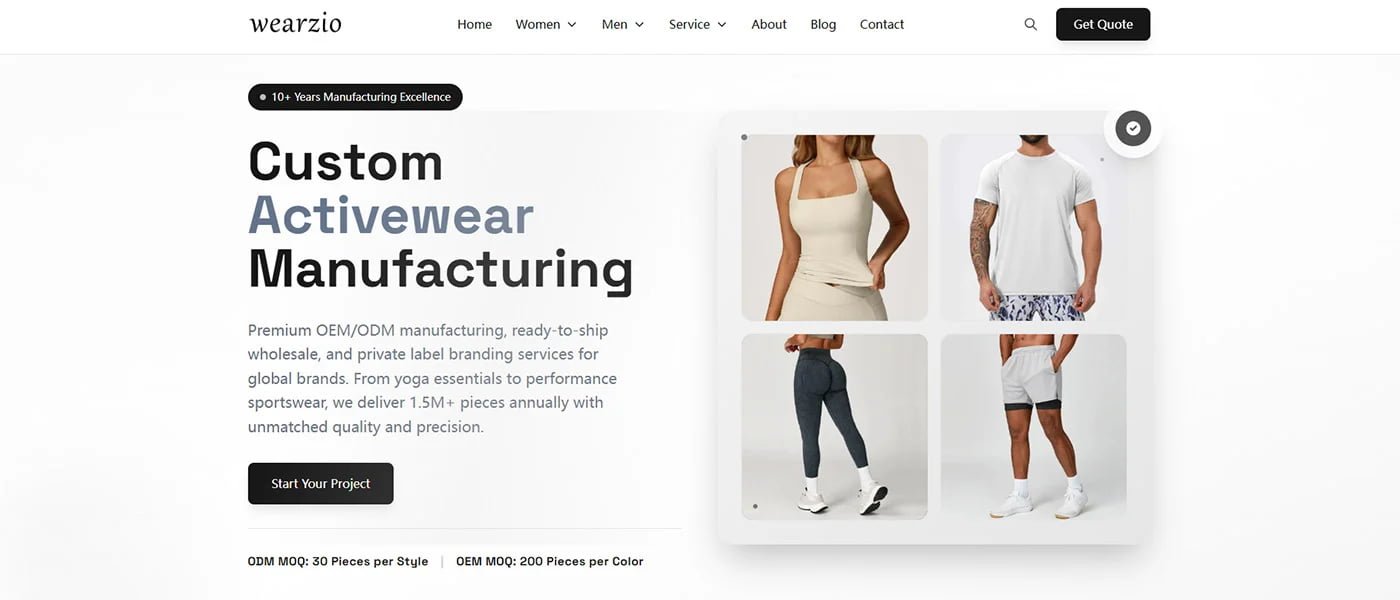
Wearzio has emerged as a top choice for US-based DTC activewear brands seeking the perfect balance of low MOQs, premium quality, and fast turnaround. Unlike large-scale manufacturers that demand thousands of units, Wearzio specializes in serving startup and growth-stage brands with minimum orders starting at just 50-100 pieces per style. Their expertise spans high-performance leggings, sports bras, seamless activewear, and athleisure collections using advanced fabrics like moisture-wicking polyester blends, nylon/spandex compression fabrics, and recycled materials.
What sets Wearzio apart is their full-service approach: from design consultation and tech pack development to fabric sourcing, sampling, production, and quality control. They understand that emerging brands often lack in-house technical expertise, so they guide clients through every step—recommending fabric weights, suggesting construction improvements, and refining fit based on body type data.
Key Products:
- High-compression leggings (squat-proof, 4-way stretch, 280-320 GSM)
- Seamless activewear (knit technology for chafe-free comfort)
- Sports bras (all support levels: low, medium, high-impact)
- Athleisure sets (matching tops/bottoms, ribbed textures)
- Performance shorts (compression, running, yoga styles)
- Custom designs with brand-specific fits and details
Pros:
- ✅ Ultra-low MOQ: 50-100 pieces per style – ideal for market testing and crowdfunding campaigns
- ✅ Fast sampling: 5-7 days for initial prototypes with 2-3 revision rounds included
- ✅ Full design support: Tech pack creation, fabric recommendations, fit refinement
- ✅ Premium fabric library: 200+ performance fabrics including recycled polyester, bamboo blends, antimicrobial treatments
- ✅ Transparent pricing: Detailed quotations with per-unit costs from $8-18 for leggings, $6-14 for tops
- ✅ US market expertise: Understanding of US sizing standards, labeling requirements, and trending aesthetics
- ✅ Production timeline: 40-55 days from order confirmation to shipment
- ✅ Quality control: Pre-production sample approval, inline inspection, AQL 2.5 standard final inspection
- ✅ Sustainable options: GRS-certified recycled fabrics, OEKO-TEX Standard 100 materials available
Cons:
- ⚠️ Higher per-unit cost than ultra-large-scale manufacturers (trade-off for low MOQ and service)
- ⚠️ Limited capacity for brands requiring 5,000+ units per style (max efficient capacity ~2,000 units/style)
- ⚠️ Certifications: ISO 9001 standard; BSCI/WRAP status needs verification for major retail partnerships
- ⚠️ Not ideal for ultra-fast fashion (45-55 day timeline vs. 30-day rush options at commodity factories)
Pricing Guidance:
- Leggings: $8-14 per unit at 100 pieces, $7-12 at 300 pieces, $6-11 at 500+ pieces
- Sports bras: $6-12 per unit at 100 pieces, $5-10 at 300+ pieces
- Tops/tanks: $5-10 per unit at 100 pieces, $4-8 at 300+ pieces
- Sampling: $50-120 per sample depending on complexity (seamless designs higher)
Website: https://wearzio.com/
2. P5 Performance – USA-Based Full-Service Custom Activewear
Introduction:
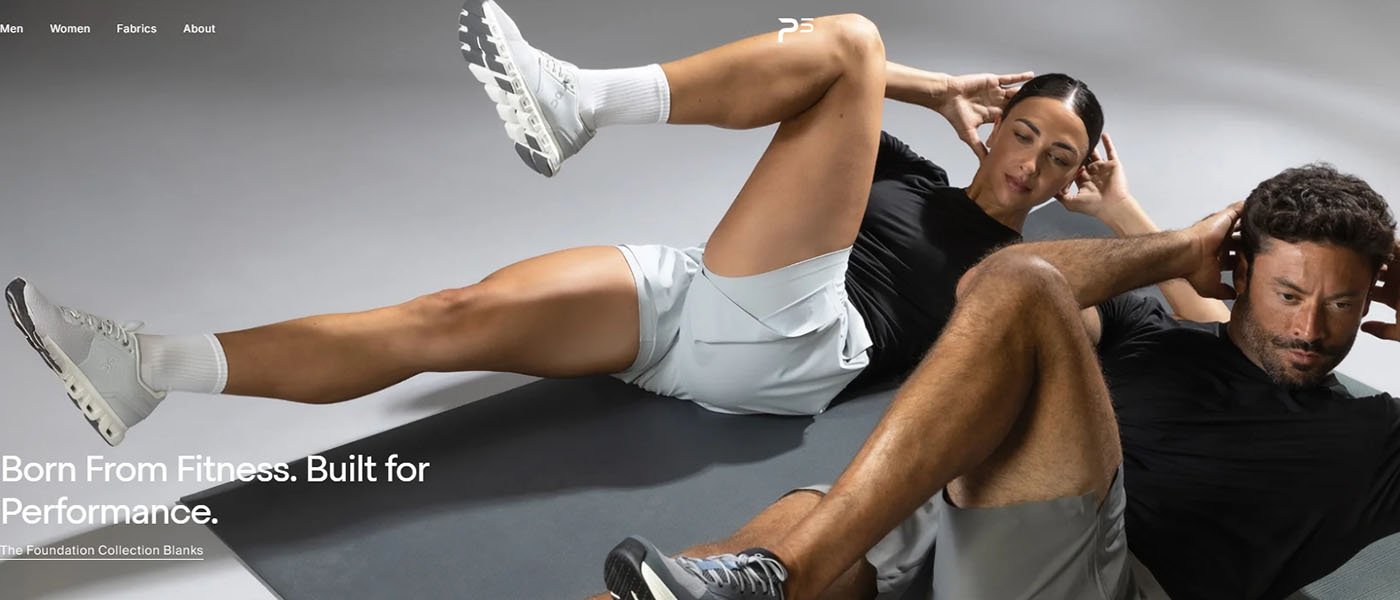
P5 Performance is a Los Angeles-based full-service production house specializing in custom activewear development for premium US brands. Unlike overseas manufacturers, P5 offers the advantages of "Made in USA" positioning, IP protection under US law, zero time zone barriers, and ultra-fast iteration cycles. Their model serves well-funded startups, premium lifestyle brands, and companies requiring 50-200 pieces per style for exclusive drops or limited editions.
P5's team includes pattern makers, technical designers, fabric sourcers, and production managers who guide brands from concept sketches to finished products. They're particularly strong in technical construction details: princess seam leggings for body contouring, multi-panel sports bras for lift and support, seamless knit technologies, and advanced fabric applications like laser-cutting and ultrasonic bonding.
Key Products:
- Custom-fit leggings with proprietary pattern development
- High-support sports bras (encapsulation and compression designs)
- Performance tops with ventilation engineering
- Athleisure jackets and hoodies
- Specialty items: maternity activewear, adaptive fitness wear
Pros:
- ✅ Made in USA: Premium positioning, faster shipping to US customers, no import duties
- ✅ Ultra-low MOQ: 50-150 pieces per style for true custom development
- ✅ IP protection: Strong legal protection for original designs under US law
- ✅ Fast iteration: 3-5 day sampling with proximity for fit sessions
- ✅ No language/time barriers: Real-time communication with production team
- ✅ High-quality execution: Suitable for $80-150 retail price points
- ✅ Full-service: Pattern making, grading, sourcing, production, fulfillment support
- ✅ Ethical production: Fair labor practices, transparent supply chain
Cons:
- ⚠️ Extremely high cost: $25-45 per unit for leggings, $20-35 for tops – only viable for premium/luxury pricing
- ⚠️ Limited scalability: Not designed for 500+ units per style efficiently
- ⚠️ Fabric costs separate: Premium performance fabrics add $8-15 per yard to costs
- ⚠️ Long development timeline: Custom pattern development adds 4-8 weeks before production
Pricing Guidance:
- Custom leggings: $30-45 per unit at 50-100 pieces
- Sports bras: $25-40 per unit at 50-100 pieces
- Tops: $20-30 per unit at 50-100 pieces
- Pattern development: $500-1,500 per style (one-time fee)
- Sample development: $150-300 per sample with iterations
Best For: Premium brands with $100+ retail pricing, limited-edition drops, brands prioritizing "Made in USA"
Website: https://p5performance.co/
3. Activewear Bali – Indonesian Sustainable Activewear Manufacturer
Introduction:
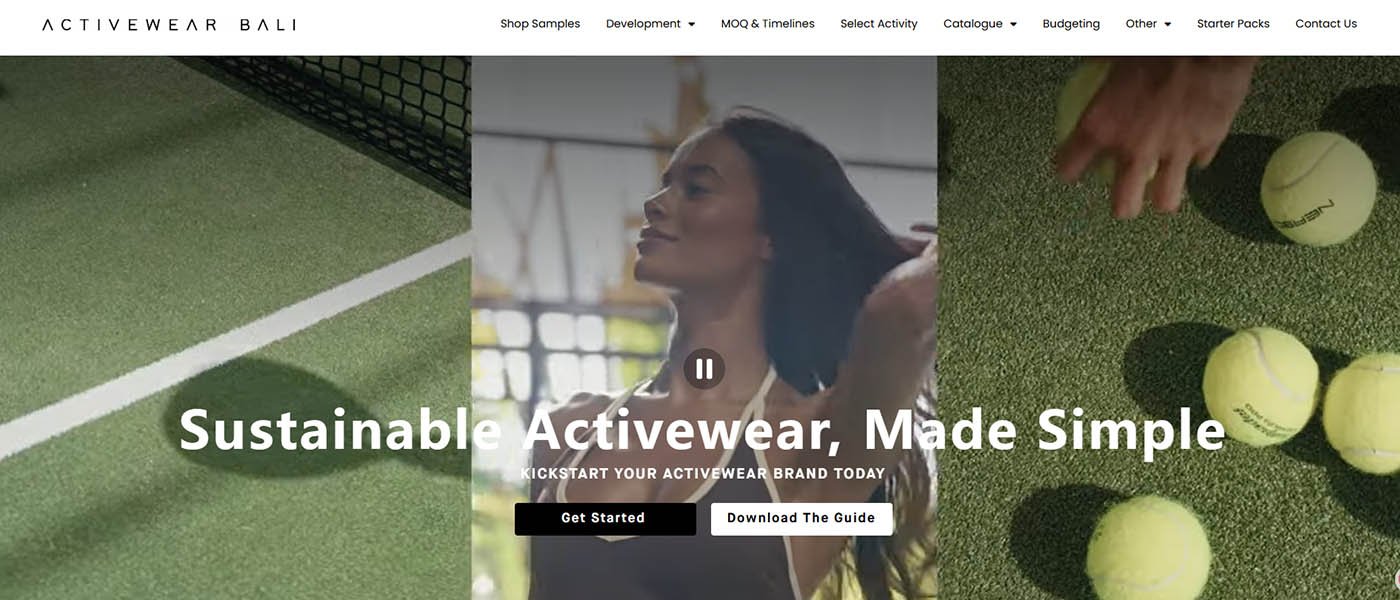
Activewear Bali represents Indonesia's growing reputation as a sustainable activewear manufacturing hub. Located in Bali, they've built expertise in eco-friendly performance fabrics (recycled polyester, bamboo viscose, organic cotton blends) while maintaining competitive pricing. Their MOQs start at 100-300 pieces per style, positioning them well for eco-conscious brands in the growth stage.
Indonesia offers strategic advantages: 15-20% lower labor costs than China, growing technical fabric capabilities, and strong government support for sustainable manufacturing. Activewear Bali leverages these advantages while adding artisanal quality touches—hand-finished details, unique dyeing techniques, and attention to fit that larger factories often miss.
Key Products:
- Sustainable leggings (recycled poly/spandex, GRS certified)
- Bamboo activewear (natural antimicrobial properties)
- Yoga wear (soft, non-compression fits)
- Eco-friendly sports bras
- Resort activewear (swim-to-studio versatility)
Pros:
- ✅ MOQ: 100-300 pieces per style – accessible for growing eco-brands
- ✅ Sustainability focus: GRS-certified recycled fabrics, OEKO-TEX materials, low-impact dyes
- ✅ Cost-effective: 15-20% lower than comparable Chinese manufacturers
- ✅ Unique aesthetic: Balinese design sensibility, hand-finished details
- ✅ Ethical production: Fair wages, transparent labor practices
- ✅ Natural fabrics expertise: Bamboo, organic cotton, Tencel blends
- ✅ Production timeline: 50-65 days
Cons:
- ⚠️ Limited technical fabric range compared to Chinese/Pakistani giants (less experience with advanced synthetics)
- ⚠️ Smaller scale: Max capacity ~1,500 units per style
- ⚠️ Shipping logistics: Indonesia to US takes 25-35 days by sea
- ⚠️ Communication: May require more detailed tech packs and follow-up
- ⚠️ Certifications: Sustainability strong, but BSCI/WRAP verification needed
Pricing Guidance:
- Recycled leggings: $9-15 per unit at 100-300 pieces
- Bamboo tops: $7-12 per unit at 100-300 pieces
- Sports bras: $8-14 per unit at 100-300 pieces
- Sampling: $60-100 per sample with sustainable materials
Best For: Eco-conscious brands, yoga/wellness positioning, brands targeting sustainability-focused customers
Website: https://activewearbali.com/
4. Tokalon Clothing – China-Based Private Label Powerhouse
Introduction:
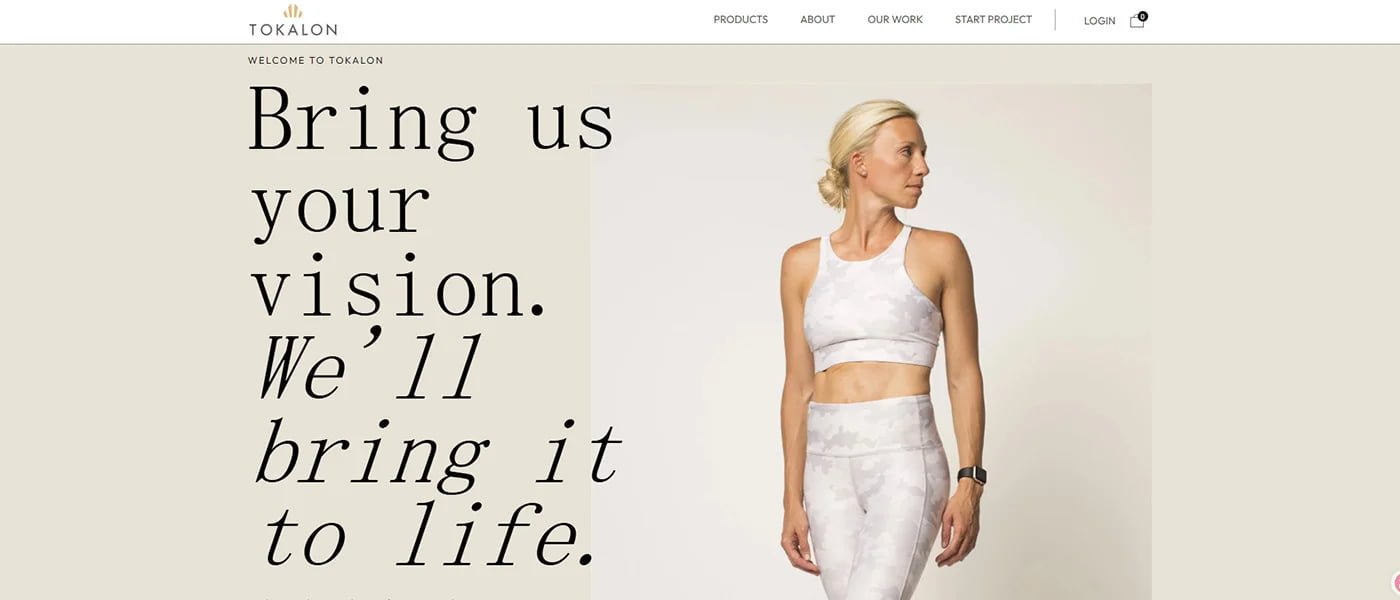
Tokalon Clothing is a China-based private label manufacturer with extensive experience serving US and European activewear brands. They operate a hybrid model: a large catalog of proven designs available for quick customization, plus full OEM/ODM capabilities for brands requiring original patterns. With MOQs starting at 200-500 pieces per style and production capacity exceeding 50,000 units monthly, they serve brands from late-startup through established scale.
Their fabric sourcing network includes relationships with China's top performance textile mills, providing access to the latest innovations: seamless circular knitting, laser-cut bonding, reflective prints, gradient dyeing, and advanced moisture management technologies.
Key Products:
- Seamless leggings and sports bras (circular knit technology)
- High-waisted compression leggings (squat-proof, 300+ GSM)
- Ribbed athleisure sets (trending textures and colors)
- Performance shorts (compression and loose-fit styles)
- Activewear jackets with technical features
- Custom sublimation printing for all-over patterns
Pros:
- ✅ Flexible MOQ: 200-500 pieces per style for private label, 500-1,000 for full custom
- ✅ Massive fabric library: 500+ performance fabrics with technical specifications
- ✅ Seamless expertise: Advanced circular knitting for chafe-free activewear
- ✅ Fast sampling: 7-12 days with detailed tech packs
- ✅ Cost-effective: $6-12 per unit for leggings, $5-9 for tops at moderate volumes
- ✅ Production capacity: Can scale to 5,000+ units per style
- ✅ Full customization: Logo placement, custom tags, packaging, hangtags
- ✅ Quality systems: ISO 9001, inline QC, AQL 2.5 inspection
Cons:
- ⚠️ Communication layers: Account managers vs. direct production team access
- ⚠️ Lead time: 55-75 days during peak season (longer than smaller factories)
- ⚠️ Quality variability: First order vs. repeat orders may differ without strict approvals
- ⚠️ BSCI/WRAP status: Verify current certification status before major commitments
Pricing Guidance:
- Seamless leggings: $7-11 per unit at 200 pieces, $6-9 at 500+ pieces
- Sports bras: $6-10 per unit at 200 pieces, $5-8 at 500+ pieces
- Ribbed sets: $12-18 per set at 200 pieces
- Sampling: $40-80 per sample depending on complexity
Best For: Growth-stage brands needing 500-2,000 units per style, brands wanting seamless technology, private label speed
Website: https://tokalonclothing.com/
5. Gym Clothes – Direct Factory Wholesale Activewear Supplier
Introduction:
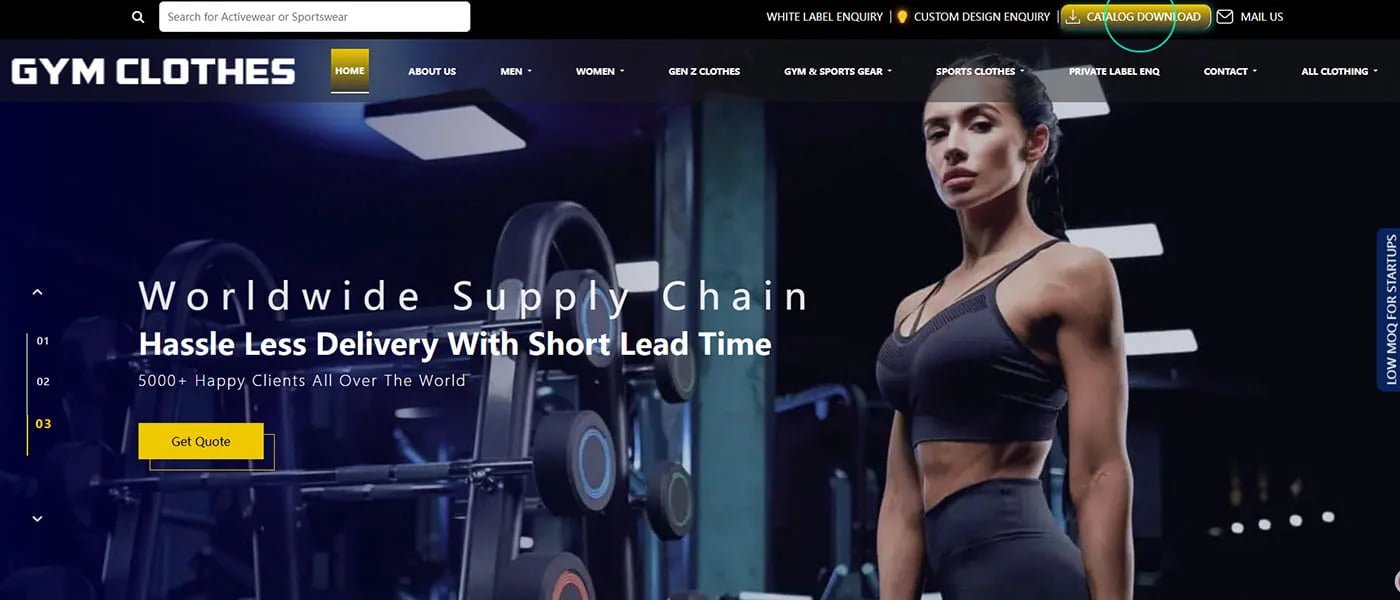
Gym Clothes operates as a direct-from-factory wholesale supplier with a massive catalog of stock activewear designs. Their business model prioritizes speed and volume: select from 300+ pre-made styles, add your logo, and launch in weeks. MOQs are typically 100-300 pieces per style, making them accessible for brands testing market demand before investing in full custom development.
While they sacrifice uniqueness (your leggings may be sold by competitors with different logos), they offer proven designs that have sold thousands of units. Their bulk pricing becomes highly competitive at 500+ pieces, appealing to brands focused on margin efficiency over design exclusivity.
Key Products:
- Stock leggings catalog (100+ styles: high-waisted, capri, mesh-insert, printed)
- Sports bras (low, medium, high support in 50+ designs)
- Activewear tops (tanks, tees, long-sleeves, hoodies)
- Shorts and joggers
- Gym accessories (bags, headbands, gloves)
Pros:
- ✅ Speed to market: 3-4 weeks from order to delivery for stock items
- ✅ Low MOQ: 100-300 pieces per style with logo customization
- ✅ Proven designs: Styles tested with thousands of units sold
- ✅ Competitive pricing: $5-10 per unit for leggings, $4-7 for tops at volume
- ✅ No design burden: No tech packs or pattern development needed
- ✅ Mix and match: Build collections quickly across size ranges
- ✅ Volume discounts: 20-30% savings at 1,000+ total pieces
Cons:
- ⚠️ Zero uniqueness: Same base products available to all buyers
- ⚠️ Limited customization: Color and logo only; can't modify fit or construction without moving to high MOQs
- ⚠️ Transactional relationship: Less collaborative partnership than custom manufacturers
- ⚠️ Quality variability: Stock items may use different fabric batches
- ⚠️ Certifications unclear: Verify fabric testing and compliance documentation
Pricing Guidance:
- Stock leggings: $6-9 per unit at 100-300 pieces, $5-7 at 500+ pieces
- Sports bras: $5-8 per unit at 100-300 pieces, $4-6 at 500+ pieces
- Tops: $4-6 per unit at 100-300 pieces
- Logo application: $0.50-2 per unit depending on method (screen print, heat transfer, embroidery)
Best For: Brands prioritizing speed over uniqueness, testing market demand, maximizing margin on proven styles
Website: https://www.gymclothes.com/
6. Aktik Sportswear – Turkish European-Quality Activewear OEM
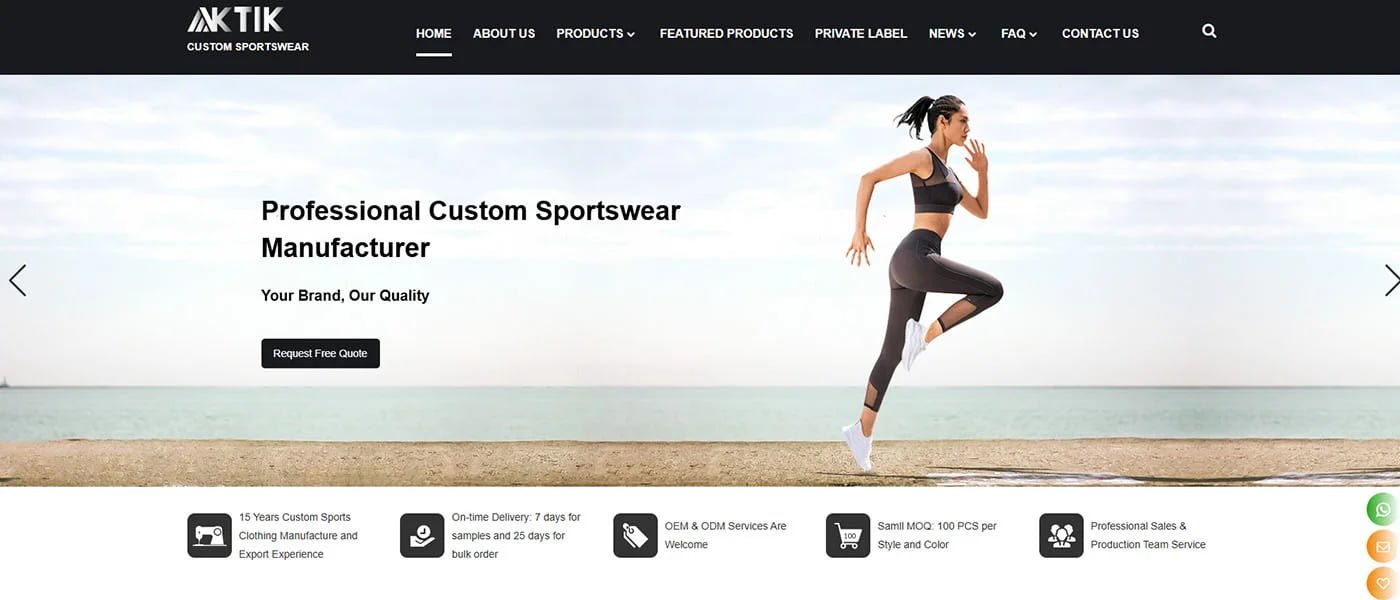
Introduction:
Aktik Sportswear represents Turkey's growing activewear manufacturing sector, offering a compelling middle ground: European quality standards at Asian-competitive pricing, with faster shipping to the US East Coast (15-20 days) compared to Asia (30-40 days). Turkey has invested heavily in technical textile infrastructure, and Aktik leverages this with advanced seamless knitting, laser-cutting technologies, and OEKO-TEX certified fabrics.
Their MOQs start at 300-500 pieces per style, positioning them for brands in the $500K-$2M revenue range seeking quality improvements without the rigidity of ultra-large manufacturers. They're particularly strong in European fit preferences (slightly longer torsos, different hip-to-waist ratios), which can differentiate US brands targeting diverse body types.
Key Products:
- Seamless activewear (advanced circular knitting)
- Laser-cut leggings (clean edges without stitching)
- Technical sports bras with European engineering
- Performance outerwear (softshell, waterproof)
- Sustainable collections (recycled polyester, bamboo)
Pros:
- ✅ European quality standards: Stricter QC, OEKO-TEX Standard 100 common
- ✅ MOQ: 300-500 pieces per style – mid-range flexibility
- ✅ Faster shipping: 15-20 days to US East Coast vs. 30-40 from Asia
- ✅ Technical expertise: Seamless, laser-cut, bonding technologies
- ✅ Sustainability: Strong infrastructure for recycled and organic materials
- ✅ Diverse fit options: European fit development expertise
- ✅ Compliance: Often BSCI certified, EU chemical regulations
Cons:
- ⚠️ Higher costs: 10-15% more expensive than China/Pakistan for similar styles
- ⚠️ Limited capacity: Not ideal for 3,000+ units per style
- ⚠️ Less established in US market than Asian manufacturers
- ⚠️ Communication: Time zone overlap only 3-4 hours with US East Coast
Pricing Guidance:
- Seamless leggings: $9-14 per unit at 300-500 pieces
- Laser-cut sports bras: $8-13 per unit at 300-500 pieces
- Technical tops: $7-11 per unit at 300-500 pieces
- Sampling: $70-120 per sample with advanced construction
Best For: Brands prioritizing European quality, faster turnaround to US, OEKO-TEX compliance, diverse fit needs
Website: https://www.aktiksportswear.com/
7. Spark Gymwear – Pakistan Technical Sportswear Manufacturer
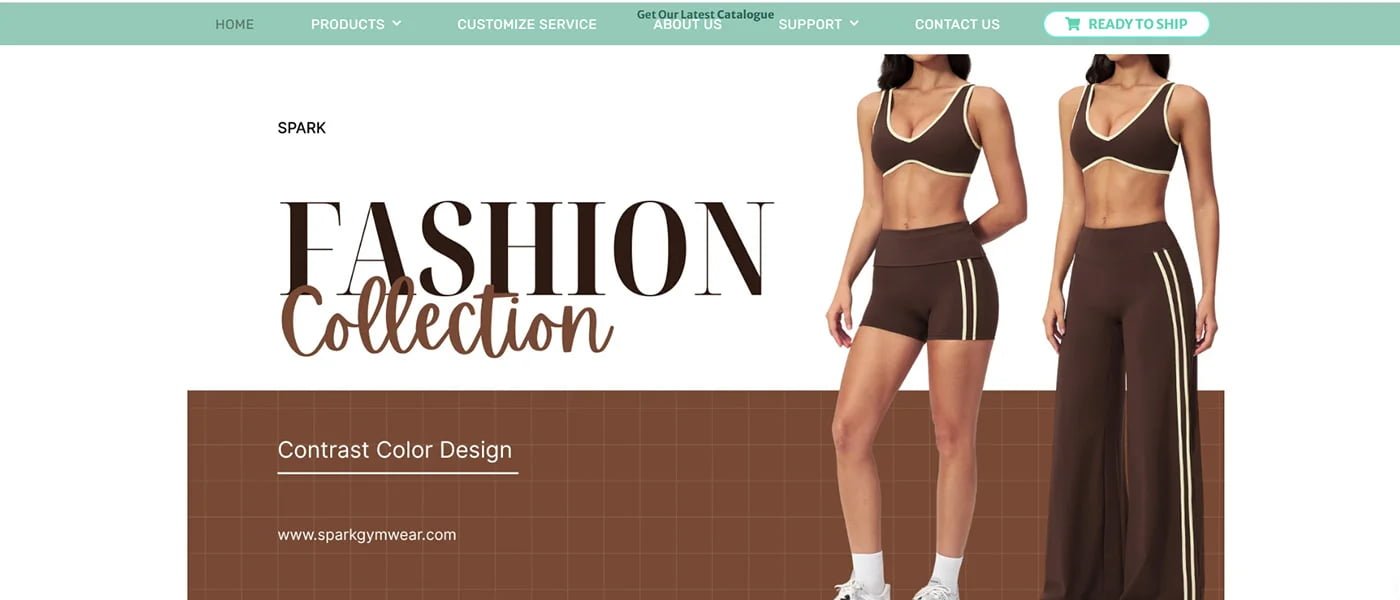
Introduction:
Spark Gymwear is based in Sialkot, Pakistan—a global hub for technical sportswear manufacturing alongside soccer balls and sporting goods. Pakistan offers cost advantages of 15-25% compared to China for similar quality levels, making Spark attractive for price-sensitive brands requiring 500-1,500 units per style. Their expertise spans compression fabrics, moisture-wicking treatments, and durable construction suitable for high-intensity training apparel.
Pakistan's sportswear infrastructure includes specialized fabric mills producing high-GSM compression fabrics (280-340 GSM), advanced dyeing facilities, and experienced pattern makers familiar with performance apparel ergonomics.
Key Products:
- High-compression leggings (squat-proof, 300+ GSM)
- Gym shorts (compression and relaxed fits)
- Performance tops with moisture management
- Sports bras (compression-focused designs)
- Activewear sets (matching tops/bottoms)
Pros:
- ✅ Cost-effective: 15-25% lower than China for comparable quality
- ✅ MOQ: 500-1,000 pieces per style – suitable for growing brands
- ✅ Technical fabric expertise: High-compression, moisture-wicking, antimicrobial
- ✅ Durable construction: Known for stitching quality and longevity
- ✅ Direct factory relationship: No intermediary markups
- ✅ ISO 9001 common; many hold BSCI/WRAP (verify per facility)
- ✅ Sialkot specialization: Decades of sportswear manufacturing heritage
Cons:
- ⚠️ Longer shipping: 30-40 days from Pakistan to US
- ⚠️ Communication discipline: Requires detailed tech packs and follow-up
- ⚠️ Limited ODM services: Best with client-provided designs
- ⚠️ Aesthetic trends: Stronger in performance than fashion-forward athleisure
- ⚠️ Fabric sourcing: Primarily through local mills vs. global fabric access
Pricing Guidance:
- Compression leggings: $5-9 per unit at 500 pieces, $4.50-8 at 1,000+ pieces
- Sports bras: $4.50-8 per unit at 500 pieces
- Performance tops: $3.50-6 per unit at 500 pieces
- Sampling: $40-70 per sample
Best For: Brands competing on price, high-performance training apparel, brands comfortable with Asian manufacturing timelines
Website: https://www.sparkgymwear.com/
8. Fitness Clothing Manufacturer – Large-Scale Private Label Catalog
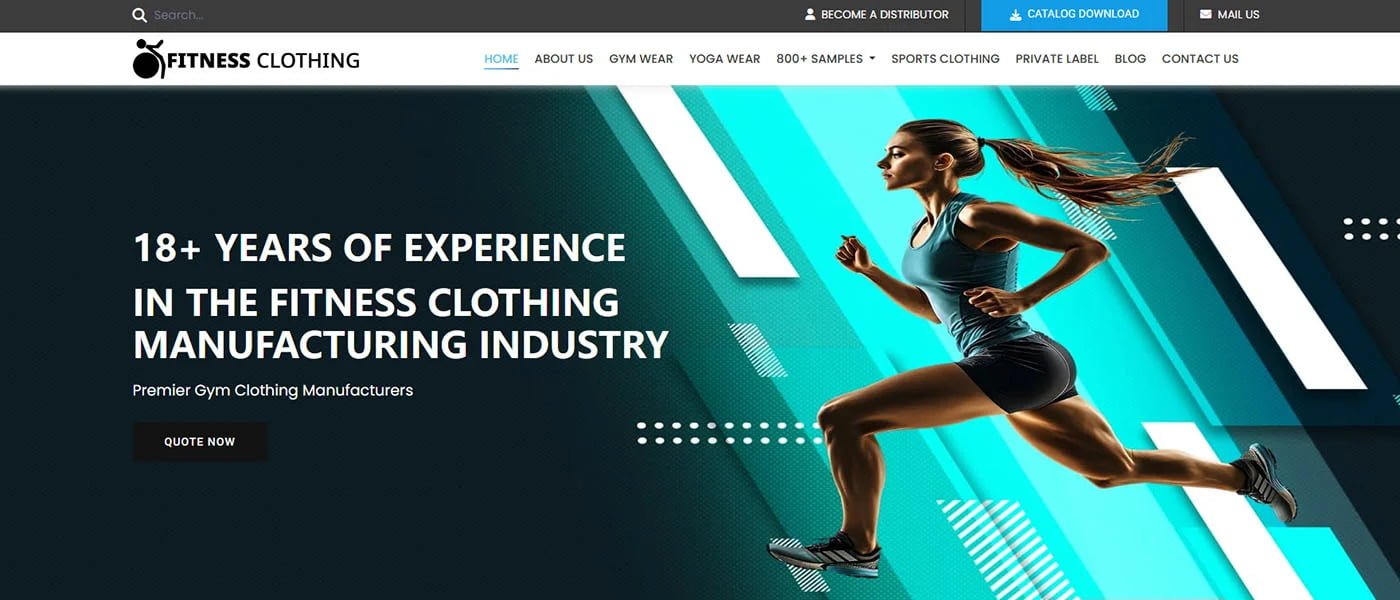
Introduction:
Fitness Clothing Manufacturer (often appearing as a sister brand to Alanic Global) operates as a massive private label wholesaler with one of the industry's largest activewear catalogs—500+ SKUs spanning leggings, sports bras, tops, shorts, outerwear, and accessories. Their model serves brands needing speed, breadth, and proven products over custom uniqueness.
MOQs are typically 100-300 pieces per style with the option to mix styles to reach $3,000-5,000 minimum order values. This allows new brands to launch 10-15 style collections quickly. Their global factory network (primarily China, Bangladesh, Vietnam) provides production flexibility and volume scalability.
Key Products:
- Massive leggings catalog: High-waisted, capri, mesh-panel, printed, seamless (100+ styles)
- Sports bras: Every support level and design (strappy, racerback, longline, 80+ styles)
- Activewear tops: Tanks, tees, long-sleeves, hoodies, crops (150+ styles)
- Shorts and joggers: Compression, relaxed, biker shorts (50+ styles)
- Accessories: Yoga mats, bags, resistance bands, headbands
- Full sublimation printing for custom patterns
Pros:
- ✅ Largest catalog: 500+ proven designs eliminate development risk
- ✅ Speed: 3-5 weeks from order to delivery for stock items
- ✅ Low MOQ per style: 100-300 pieces with mix-and-match flexibility
- ✅ No design costs: Select, brand, and launch immediately
- ✅ Scalable: Can handle 5,000+ total units across multiple styles
- ✅ Global sourcing: Multiple factories reduce single-point dependency
- ✅ Competitive pricing: $5-11 per unit for most styles at moderate volumes
- ✅ Full-package service: Fabric, manufacturing, logo, tags, packaging
Cons:
- ⚠️ Zero exclusivity: Designs sold to unlimited brands with different logos
- ⚠️ Limited customization: Significant modifications trigger high MOQs (1,000+ pieces)
- ⚠️ Transactional relationship: Customer service vs. partnership
- ⚠️ Quality inconsistency: Styles may come from different factories
- ⚠️ Fabric transparency: Limited visibility into exact mill sources and testing
Pricing Guidance:
- Stock leggings: $6-10 per unit at 100-300 pieces, $5-8 at 500+ pieces
- Sports bras: $5-9 per unit at 100-300 pieces
- Tops: $4-7 per unit at 100-300 pieces
- Full collections: $3,000-5,000 minimum order value to mix styles
Best For: Brands needing full collections fast, testing multiple styles simultaneously, maximizing margin on proven designs
Website: https://www.fitnessclothingmanufacturer.com/
9. Aurae Fit – Boutique Premium Activewear Production House
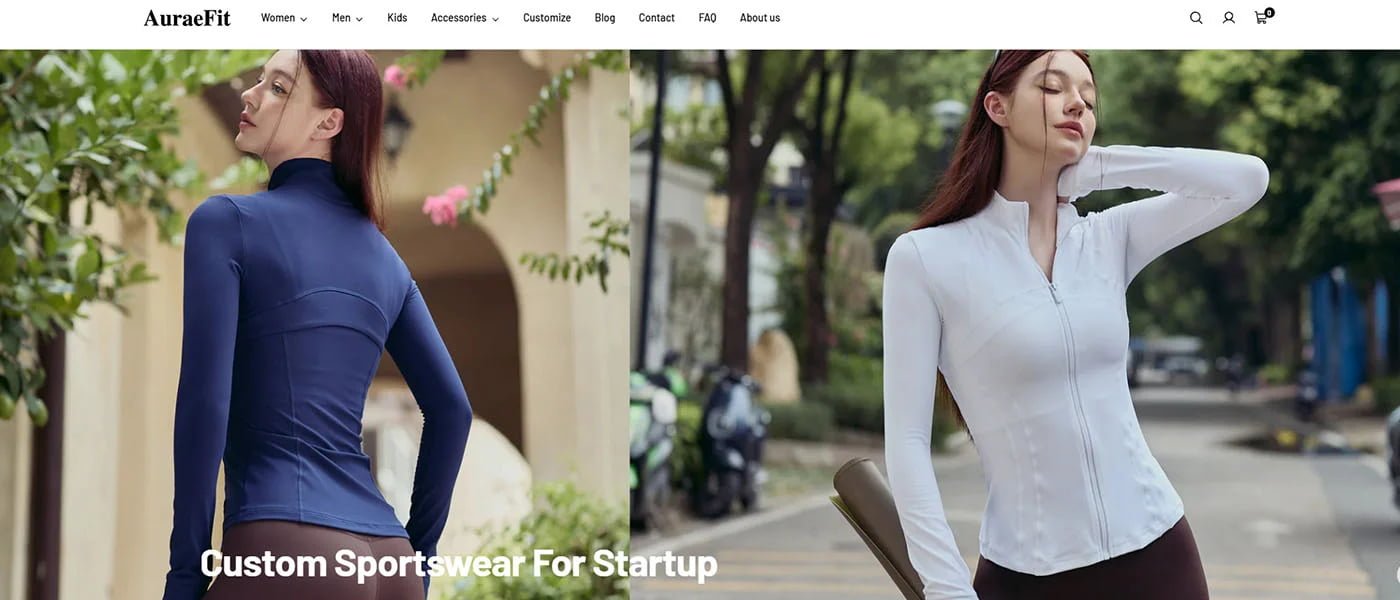
Introduction:
Aurae Fit positions itself as a boutique production house specializing in premium, detail-oriented activewear for brands targeting $70-120 retail price points. Unlike mass-production factories, Aurae focuses on craftsmanship, fit perfection, and luxe fabric selection. Their MOQs start at 100-200 pieces per style, making them accessible to premium startups willing to invest in quality over cost efficiency.
They excel in complex construction details: princess seam leggings for body contouring, multi-panel sports bras with interior support structures, laser-cut finishes, reflective details, and premium trims (metal hardware, embossed logos, custom zippers).
Key Products:
- Luxury leggings with sculpting seam placement
- High-support sports bras with advanced engineering
- Premium athleisure (elevated fabrics and finishes)
- Limited-edition collections with unique details
- Custom design development
Pros:
- ✅ MOQ: 100-200 pieces per style for premium small-batch production
- ✅ Exceptional quality: Suitable for $80-120 retail pricing
- ✅ Design collaboration: Tech pack refinement, fit development, detail suggestions
- ✅ Premium fabrics: Buttery-soft blends, 320+ GSM compression, luxe finishes
- ✅ Attention to detail: Flat-lock seaming, hidden pockets, reflective accents, custom hardware
- ✅ Fast sampling: 7-10 days with fit session support
- ✅ Production: 50-65 days with dedicated project management
Cons:
- ⚠️ Premium pricing: $15-28 per unit for leggings, $12-22 for sports bras
- ⚠️ Limited capacity: Max 1,000-1,500 units per style
- ⚠️ Higher minimums than ultra-low-MOQ specialists
- ⚠️ Requires premium brand positioning to absorb costs
Pricing Guidance:
- Premium leggings: $16-24 per unit at 100-200 pieces
- Luxury sports bras: $14-22 per unit at 100-200 pieces
- Athleisure sets: $28-45 per set at 100-200 pieces
- Sampling: $100-180 per sample with premium construction
Best For: Premium/luxury activewear brands, limited-edition drops, brands targeting Lululemon/Alo Yoga quality levels
Website: https://www.auraefit.com/
10. UGA Wear – China Activewear Factory with US Focus
Introduction:
UGA Wear is a China-based activewear manufacturer with specific focus on US market requirements—US sizing standards, labeling compliance, trending aesthetics, and streamlined logistics to US ports. With MOQs starting at 300-500 pieces per style, they serve brands transitioning from startup to growth stage, offering both private label catalog selection and OEM custom development.
Their strength lies in balancing cost efficiency with quality systems: they're 20-30% less expensive than US/European manufacturers while maintaining documented QC protocols. They've built relationships with US-based sourcing agents and logistics partners, simplifying import processes for first-time buyers.
Key Products:
- Stock activewear catalog (200+ designs) plus full OEM
- Compression leggings (high-waisted, seamless, printed)
- Sports bras (all support levels)
- Activewear tops and outerwear
- Custom sublimation printing
- Yoga and athleisure collections
Pros:
- ✅ MOQ: 300-500 pieces per style for private label, 500-1,000 for full custom
- ✅ Cost-effective: $6-11 per unit for leggings, $5-9 for tops at moderate volumes
- ✅ US market expertise: Sizing, labeling, trending styles for American consumers
- ✅ Dual model: Quick private label OR full custom development
- ✅ Quality systems: ISO 9001, AQL 2.5 inspection standard
- ✅ Logistics support: US-based partners for simplified importing
- ✅ Production capacity: Scalable to 3,000-5,000 units per style
- ✅ Sampling: 10-14 days with detailed feedback
Cons:
- ⚠️ Lead time: 60-75 days from order to US delivery (longer than domestic)
- ⚠️ Communication: 12-hour time difference requires asynchronous workflows
- ⚠️ BSCI/WRAP status: Verify current certification before major retail partnerships
- ⚠️ Fabric transparency: Some fabrics sourced through traders vs. direct mill relationships
Pricing Guidance:
- Compression leggings: $7-10 per unit at 300-500 pieces, $6-8.50 at 1,000+ pieces
- Sports bras: $6-9 per unit at 300-500 pieces
- Tops: $5-7 per unit at 300-500 pieces
- Sampling: $50-90 per sample depending on construction
Best For: US brands seeking China cost efficiency with US-focused service, growing brands needing 500-2,000 units per style
Website: https://ugawear.com/
How to Choose the Right Private Label Activewear Manufacturer
For Startup/Pre-Launch Brands (Annual Revenue <$250K):
Decision Framework:
Your budget determines your path:
-
Budget <$5,000: Start with private label wholesalers (#5 Gym Clothes, #8 Fitness Clothing Manufacturer) to test market demand with 100-200 pieces total across 3-4 styles. Accept generic designs for speed.
-
Budget $5,000-15,000: Choose low-MOQ specialists (#1 Wearzio, #3 Activewear Bali, #9 Aurae Fit) for 200-400 pieces with moderate customization. Balance uniqueness with manageable inventory risk.
-
Budget $15,000-30,000 + premium positioning: Consider US production houses (#2 P5 Performance) for 100-200 pieces of true custom development. Only viable if retail pricing is $80-150.
Priority Checklist:
- [ ] MOQ 50-300 pieces per style (allows testing without cash flow crisis)
- [ ] Sampling under 10 days (critical for iteration speed)
- [ ] Total investment clarity: Get all-in costs including samples, production, shipping, duties
- [ ] Fabric performance basics: Moisture-wicking, 4-way stretch, squat-proof opacity
- [ ] Simple payment terms: 30-50% deposit, balance before shipping
- [ ] Clear size grading: Standard S-XL with measurement specs
Critical Questions to Ask:
- "How many activewear brands did you produce for last year?" (Verify category experience)
- "Can I see production photos of legging construction and sports bra assembly?" (Visual proof of capability)
- "What is your exact sampling cost and timeline?" (Should be $40-120 per sample, 5-14 days)
- "Do your fabrics have moisture-wicking/squat-proof testing?" (Critical for customer satisfaction)
- "What happens if I receive defective products?" (Understand quality guarantee)
- "Can you provide a detailed quote for 100, 200, and 300 pieces?" (See pricing scale)
Red Flags:
- ❌ Vague responses about fabric specifications or construction methods
- ❌ Pushing you to MOQs 3-5x higher than advertised minimums
- ❌ Sampling takes 20+ days (sign of deprioritized small clients)
- ❌ Requires 100% payment upfront for orders over $3,000
- ❌ No photos of actual activewear production
- ❌ Can't explain difference between 180 GSM vs. 280 GSM fabric weight
Recommended from This List:
- Ultra-tight budget: #5 Gym Clothes, #8 Fitness Clothing Manufacturer
- Best balance: #1 Wearzio, #10 UGA Wear
- Eco-positioning: #3 Activewear Bali
- Premium US market: #2 P5 Performance, #9 Aurae Fit
For Growth-Stage Brands ($250K-$2M Revenue):
Decision Framework:
You're past the "Will anyone buy this?" phase and into "How do we scale profitably and consistently?" Your manufacturer choice should prioritize:
- Quality consistency (first order = tenth order)
- Documented QC systems (AQL sampling, inline inspection)
- Compliance (BSCI/WRAP for retail partnerships)
- Scalability (can handle 1,000-3,000 units per style efficiently)
Priority Checklist:
- [ ] MOQ 300-1,000 pieces per style (cost efficiency without excessive inventory)
- [ ] BSCI or WRAP certification (required for specialty retail, boutique fitness partnerships)
- [ ] Proven activewear portfolio (request 3-5 brand references in similar category)
- [ ] Fabric mill relationships (not buying from traders—ensures shade consistency)
- [ ] Formal QC process: Pre-production sample → Inline inspection → AQL 2.5 final inspection
- [ ] Lead time: 50-75 days with clear production schedules
- [ ] Capacity verification (can they handle 2x-3x growth next year?)
- [ ] Size grading expertise (consistent fit across S-XXL)
Advanced Validation Steps:
1. Fabric Performance Testing:
Request lab reports for key fabrics:
- Moisture management (AATCC 195): Wetting time, absorption rate, spreading speed
- Colorfastness (AATCC 61): Grade 4 minimum for wash durability
- Pilling resistance (ASTM D3512): Grade 3.5+ after 2,000 cycles
- Stretch recovery: ≥20% stretch, ≥90% recovery after 50 cycles
- Opacity testing: Squat test with 300+ GSM fabrics
2. Size Set Validation:
Order pre-production samples in 5 sizes (XS-XL) to verify:
- Rise height consistency (high-waisted = 10-11 inches across sizes)
- Inseam proportions (not just scaled linearly)
- Compression consistency (larger sizes shouldn't lose compression)
- Waistband fit (should scale with hip measurements)
3. Reference Check Questions:
When speaking with current clients:
- "How consistent is quality between your first and fifth reorder?"
- "Have you experienced shade-lot mismatches? How were they resolved?"
- "What is their on-time delivery percentage?"
- "How do they handle defects? (replacement timeline, cost responsibility)"
- "What's their communication response time for urgent issues?"
Strategic Considerations:
Payment Terms Negotiation:
- Leverage consistent $50,000-200,000 annual volume for better terms
- Negotiate: 30% deposit → 70% against B/L copy (vs. 50/50 for startups)
- Request net-30 terms after 3 successful orders
Quality Approval Sequence:
Implement formal checkpoints:
- Lab dip approval (fabric color before bulk dyeing)
- Strike-off approval (print before mass production)
- Fit sample approval (one size for fit/construction verification)
- Pre-production sample (from actual production fabric/trims)
- Inline inspection (during production at 30-50% completion)
- Final random inspection (AQL 2.5 standard before shipment)
Fabric Shade Standards:
- Create master reference swatch cards for all core colors
- Specify ΔE <1.5 for shade tolerance (industry standard for activewear)
- Lock fabric suppliers for seasonal consistency
Recommended from This List:
- Best overall balance: #1 Wearzio, #4 Tokalon Clothing
- Cost efficiency focus: #7 Spark Gymwear, #10 UGA Wear
- European quality: #6 Aktik Sportswear
- Seamless technology: #4 Tokalon Clothing
- Premium positioning: #9 Aurae Fit
For Established Brands ($2M+ Revenue):
Decision Framework:
At this scale, manufacturing is a strategic competitive advantage, not just a cost center. Your focus shifts to:
- Vertical integration or direct mill partnerships (fabric consistency critical)
- Sustainability compliance (GRS, OEKO-TEX, bluesign for retail/DTC credibility)
- Dual-sourcing risk mitigation (70% primary, 30% secondary manufacturer)
- Annual contracts with volume commitments for 15-25% better pricing
Priority Checklist:
- [ ] Capacity: 1,000-5,000+ units per style with documented production planning
- [ ] Multiple certifications: ISO 9001, BSCI/WRAP, OEKO-TEX Standard 100 minimum
- [ ] Sustainability capabilities: GRS for recycled content, GOTS for organic (if brand-relevant)
- [ ] Comprehensive QC systems: Inline, final AQL 1.5-2.5, measurement tolerances ±0.5cm
- [ ] Financial stability: Years in business, facility ownership, client portfolio
- [ ] Multi-seasonal delivery: Staggered production schedules, warehouse coordination
- [ ] Technical innovation: Fabric development, custom knit structures, proprietary treatments
Advanced Requirements:
1. Fabric Development Capability:
Can they develop exclusive performance fabrics?
- Custom moisture-wicking constructions
- Proprietary compression blends (e.g., your own "ButterSoft™" fabric)
- Unique textures (ribbed, brushed, waffle-knit patterns)
- Advanced treatments (cooling yarns, antimicrobial, UV protection)
2. Sustainability Documentation:
For DTC credibility and retail requirements:
- GRS certification: Recycled content verification (30-90% recycled polyester)
- OEKO-TEX Standard 100: Chemical safety (mandatory for Target, Nordstrom)
- bluesign: Sustainable chemistry (emerging standard for premium brands)
- Carbon footprint reporting: Growing requirement from major retailers
- Dye chemistry transparency: Comply with ZDHC restricted substance lists
3. Supply Chain Visibility:
Request full transparency:
- Fabric mill names and locations
- Dyehouse certifications
- Chemical suppliers for finishes/treatments
- Subcontracting policies (who else touches your products?)
Strategic Initiatives:
Annual Contracting:
- Commit to $200,000-500,000+ annual volume for pricing leverage
- Negotiate 15-25% better unit costs with volume guarantees
- Lock production windows 6 months ahead for seasonal planning
- Establish dedicated production lines during peak season
Quality Assurance Protocol:
Implement comprehensive system:
- Approved vendor list for all fabrics/trims
- Color approval system: Lab dips, strike-offs, bulk production with ΔE <1.5
- Fit standards library: Master fit samples for all styles/sizes
- Measurement spec sheets: Tolerance levels (±0.5cm critical areas, ±1cm non-critical)
- Testing infrastructure: AATCC standards for all performance claims
- Defect classification: Critical, major, minor with acceptance levels
Dual-Sourcing Strategy:
Mitigate risk with 70/30 split:
- Primary manufacturer (70%): Core styles, high volumes, seasonal programs
- Secondary manufacturer (30%): Backup capacity, style innovation, risk hedge
- Benefits: Leverage negotiation, avoid single-point failure, maintain flexibility
Cost Structure Optimization:
- Negotiate FOB pricing and manage logistics independently (save 8-15%)
- Consolidate shipments to reach full container loads (40' HQ = $2-4/unit savings)
- Establish annual fabric pricing agreements (hedge against commodity fluctuations)
Recommended from This List:
Most manufacturers on this list cap at 2,000-3,000 units per style efficiently. For true enterprise scale (5,000+ units), you'll need to:
- Partner with multiple manufacturers from this list simultaneously (#1 Wearzio + #4 Tokalon + #7 Spark Gymwear as a diversified portfolio)
- Or graduate to larger OEMs not on this list (Shenzhou, Fountain Set, Regina Miracle for 10,000+ unit capacity)
Best combinations for $2M+ brands:
- Primary: #4 Tokalon Clothing or #8 Fitness Clothing Manufacturer (scale capacity)
- Secondary/Premium line: #1 Wearzio or #9 Aurae Fit (quality differentiation)
- Cost optimization: #7 Spark Gymwear (Pakistan pricing for basic styles)
Activewear-Specific Technical Considerations
Fabric Selection Guide by Product Category:
Leggings (Compression/High-Performance):
- Fabric weight: 280-320 GSM (squat-proof opacity)
- Composition: 75-80% polyester/nylon + 20-25% spandex
- Stretch: 4-way with ≥90% recovery after 50 cycles
- Moisture-wicking: AATCC 195 tested, wetting time <5 seconds
- Opacity: Test at full squat position, no sheerness
- Waistband: Wide (3-4 inches), non-rolling, internal gripper tape optional
Sports Bras (Support Critical):
- Low-impact: 200-240 GSM, soft hand feel, <25% compression
- Medium-impact: 240-280 GSM, moderate compression, molded cups optional
- High-impact: 280-320 GSM, encapsulation design, internal support structures, compression + structure hybrid
- Moisture management: Critical for underband (wicking away from skin)
- Straps: Width proportional to cup size, adjustable for D+ cups
- Band: Wide underband (2-3 inches) with elastic and gripper
Performance Tops:
- Fabric weight: 140-180 GSM (breathability priority)
- Composition: 90-100% polyester or poly/spandex blend
- Moisture-wicking: AATCC 195 Grade A performance
- Ventilation: Mesh panels, laser-cut perforations, or breathable knit zones
- Fit: Relaxed or compression based on activity (yoga vs. HIIT)
Athleisure/Lifestyle:
- Fabric weight: 220-280 GSM (soft hand, moderate compression)
- Composition: Poly/spandex with brushed finish or cotton-feel blends
- Stretch: 4-way with comfort priority over performance compression
- Details: Ribbed textures, vintage washes, fashion colors
Construction Quality Checkpoints:
Seams:
- Flat-lock seams: Prevents chafing, lies flat against skin (critical for leggings)
- Cover-stitch: For hems and decorative topstitching
- 4-thread overlock: Standard for side seams, durable
- Stitch density: 12-14 stitches per inch for activewear durability
Waistbands:
- Construction: Separate piece folded and attached, not just folded fabric
- Width: 3-4 inches for high-waisted styles
- Elastic: Covered elastic or power mesh for compression
- Gripper tape: Optional interior silicone strip to prevent rolling
Gussets:
- Diamond gusset: Standard for leggings, prevents center seam stress
- Fabric: Same as main body or lined cotton for comfort
Labeling Compliance (US Market):
- Care label: Fiber content (%), country of origin, care instructions
- Size label: Clearly marked (S, M, L, XL or numerical sizes)
- Brand label: Woven or printed, attached at center back neck/waistband
- RN number: US requirement (obtain from FTC if selling in US)
Conclusion: Building Your Private Label Activewear Partnership
The US private label activewear market offers unprecedented opportunity: proven designs, low barriers to entry, and manufacturers at every price point and service level. Success requires matching factory capabilities to your brand stage, budget, and strategic positioning.
Immediate Action Steps:
1. Define Your Sourcing Brief (30 minutes):
- Target MOQ: Based on realistic sales projections + buffer (recommend 1.5-2x projected first 90-day sales)
- Budget per unit: Calculate backward from retail price (aim for 15-25% COGS for DTC, 30-40% for wholesale)
- Styles needed: Start with 3-5 core styles (2 legging styles, 2 sports bras, 1 top)
- Certifications required: OEKO-TEX for premium DTC, BSCI/WRAP for retail partnerships
- Timeline: When do you need inventory? (Add 60-90 days from order to delivery)
2. Shortlist 2-3 Manufacturers (1 hour):
Use this decision matrix:
| Your Situation | Recommended Manufacturers | Expected Investment |
|---|---|---|
| Startup, budget <$5K, testing demand | #5 Gym Clothes, #8 Fitness Clothing Manufacturer | $3,000-5,000 |
| Startup, budget $5-15K, want uniqueness | #1 Wearzio, #3 Activewear Bali, #10 UGA Wear | $8,000-15,000 |
| Startup, premium positioning, "Made in USA" | #2 P5 Performance, #9 Aurae Fit | $15,000-30,000 |
| Growth stage, scaling to 500-1,500 units | #1 Wearzio, #4 Tokalon, #7 Spark Gymwear | $15,000-40,000 |
| Established, 1,000-3,000 units, need compliance | #4 Tokalon, #6 Aktik, #1 Wearzio | $30,000-75,000+ |
3. Request Detailed Quotations (2-3 days):
Email template:
Subject: Private Label Activewear Quotation Request – [Your Brand Name]
Hello [Manufacturer Name],
We are [startup/established] activewear brand targeting [yoga/gym/athleisure] market in the US. We're interested in your private label services for our [Spring 2025] collection.
Target styles:
- High-waisted compression leggings (25" inseam): [100/300/500] pieces
- Sports bra (medium support): [100/300/500] pieces
[Add other styles]
Could you please provide:
1. MOQ per style and pricing at [100/300/500] piece breaks
2. Fabric options with GSM specifications
3. Sampling cost and timeline
4. Production lead time from order confirmation
5. Payment terms and shipping options (FOB/CIF to [your port])
6. Certifications held (ISO/BSCI/WRAP/OEKO-TEX)
Please include photos of similar styles you've produced.
Thank you,
[Your Name]
4. Evaluate Through Sampling (7-14 days):
Order 2-3 samples per style from shortlisted manufacturers:
- Fabric assessment: Hand feel, stretch, recovery, opacity
- Construction quality: Seam strength, waistband rolling, gusset placement
- Fit accuracy: Compare to your tech pack measurements
- Wash test: Launder 5-10 times to check color bleed, shrinkage, pilling
- Competitive benchmark: Compare to Lululemon/Alo Yoga/Gymshark products at your price point
5. Place Test Order (4-6 weeks):
Start with at or near minimum MOQ:
- Document everything: approved samples, Pantone colors, measurement specs
- Request pre-production sample from actual production fabric
- Specify inspection requirements (AQL 2.5 or stricter)
- Use third-party inspection service if ordering from overseas ($250-500)
Final Strategic Recommendation:
Don't chase the absolute lowest price. In activewear, fabric quality and construction directly impact customer satisfaction. A $2 per unit savings that leads to 20% return rate destroys profitability and brand reputation.
Invest in these critical areas:
- Fabric testing: Moisture-wicking, squat-proof opacity, pilling resistance ($200-400 per fabric type)
- Pre-production samples: Never skip this step ($50-150 per style)
- Third-party inspection: Essential for first 2-3 orders from new manufacturers ($250-500 per inspection)
The manufacturers in this guide represent verified options across budget, quality, and service spectrums. Wearzio (#1) offers the best balance of low MOQ, quality, and service for most US startups. Tokalon (#4) and Spark Gymwear (#7) provide scalability for growing brands. P5 Performance (#2) and Aurae Fit (#9) serve premium positioning requiring domestic production or luxury quality.
Your task: Honestly assess your brand stage, define realistic MOQ needs, and select the partner aligned with where you are now and where you'll be in 12-18 months. The right manufacturing partnership accelerates growth; the wrong one stalls your brand before it begins.