.png)
I see this every week. A brand owner calls me excited about launching their men's activewear line. They have three quotes. They pick the cheapest one. Six months later, they're back asking if we can fix 2,000 defective units.
The right manufacturer is not the one with the lowest price. It's the one whose quality system can deliver the same standard from sample to bulk order. One failed shipment costs more than the savings from a cheaper quote.
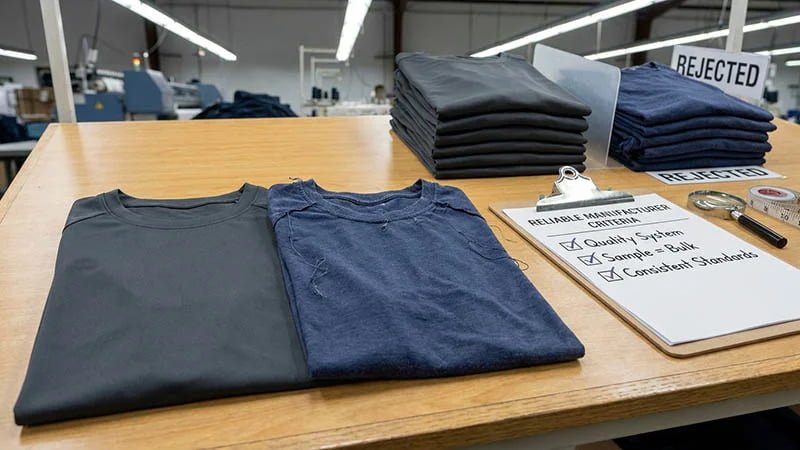
Most new brand owners ask the wrong questions first. They start with "what's your MOQ?" before they understand how a factory maintains quality. I want to show you what actually matters when you're choosing a manufacturing partner.
Quick Answers: Choosing a Men's Activewear Manufacturer
Q: What’s the most important selection criteria?
Consistent quality from sample to bulk, not just sample quality. Lowest quote is often misleading.
Q: What’s the startup MOQ for activewear?
300–500 pieces/style.
Lower than this = higher unit pricing or risk of quality/commitment issues.
Q: How to check a factory’s technical capability?
Request fabric test reports, inspect machinery on-site, ask for batch production samples (not just sales samples).
Q: Which certifications should I require?
OEKO-TEX Standard 100, ISO 9001 (quality), BSCI (social compliance) or similar.
Q: What’s a standard production lead time?
45–60 days total:
- Fabric sourcing: ~15 days
- Manufacturing: 25–30 days
- Quality check/packing: 10 days
Define Your Requirements: Product Scope, Quality Level and Budget?
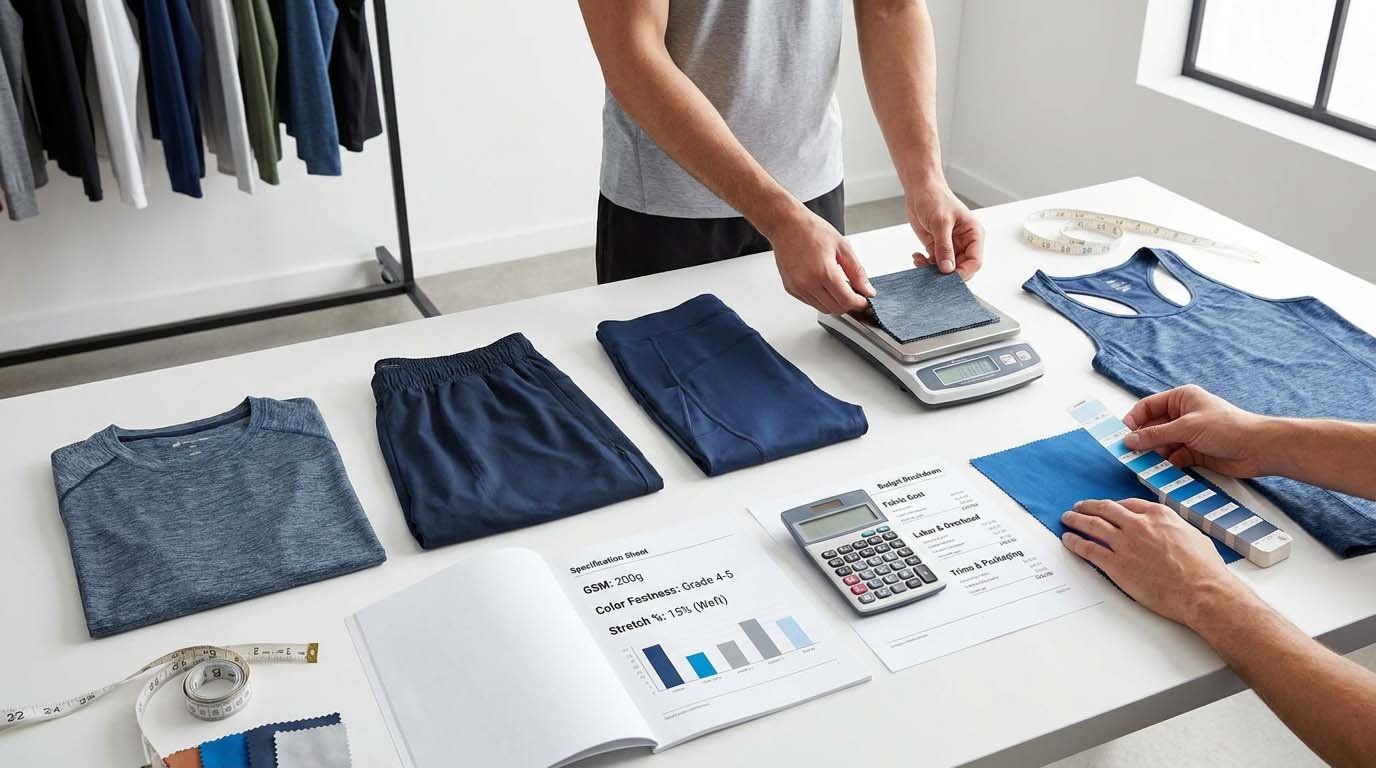
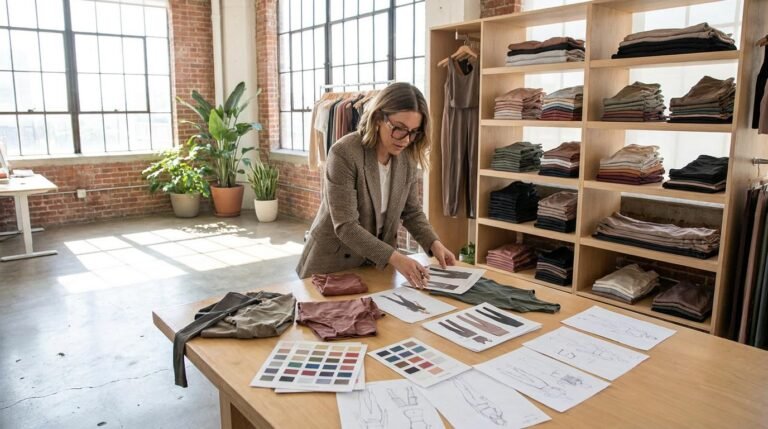
A brand owner once told me he needed "high-quality activewear" with a "$12 target price." He couldn't explain what "high-quality" meant. He had no fabric specs. He just knew his competitor's product looked good.
Before you contact manufacturers, define three things: exact product types, measurable quality standards, and realistic budget ranges. Vague requirements lead to mismatched proposals and wasted time.
Many founders skip this step. They jump straight to collecting quotes. Then they get confused when one factory quotes $14 and another quotes $9 for "the same" product.
Start with Product Categories
I need you to be specific. "Men's activewear" covers too much ground. Break it down:
- Tops: T-shirts, tanks, long sleeves, hoodies
- Bottoms: Shorts, joggers, leggings, training pants
- Compression wear: Base layers, recovery garments
- Outerwear: Track jackets, windbreakers
Each category requires different machinery and expertise. A factory good at cutting and sewing basic tees might struggle with seamless compression wear. When someone tells me they want to produce everything, I ask them to prioritize. Start with 2-3 core products. Master those first.
Set Quality Benchmarks You Can Measure
"Good quality" means nothing to a factory. I've learned to ask: what specific performance do you need? Here's how I help clients define this:
| Quality Aspect | Measurable Standard | Why It Matters |
|---|---|---|
| Fabric weight | 180-220 GSM for tees | Affects durability and feel |
| Moisture wicking | Dry time under 2 hours | Core activewear function |
| Stretch recovery | Returns to 95%+ after 50 washes | Prevents sagging |
| Color fastness | Grade 4+ (ISO 105) | No bleeding onto skin |
| Seam strength | 80+ lbs breaking force | Prevents splits during movement |
Find reference products. Buy your competitor's best-selling items. Send them to potential manufacturers and say: "Match or exceed this." That gives everyone a clear target.
Budget Reality Check
Last month someone asked if we could make moisture-wicking compression tees for $6 per unit. The fabric alone costs $4.80 for the grade they wanted. I showed them the math. They were shocked.
Here's the baseline cost structure for mid-range men's activewear:
- Fabric: 40-50% of total cost
- Labor: 20-25%
- Trims and packaging: 10-15%
- Quality control and overhead: 15-20%
If you want OEKO-TEX certified fabric, add 10-15%. Four-way stretch instead of two-way adds another 8-12%. Every feature has a cost. Decide what's essential and what's nice-to-have. I always tell clients: you can control two of these three variables—quality, speed, price. Never all three.
Build and Vet a Shortlist: Channels, Screening and Red Flags?
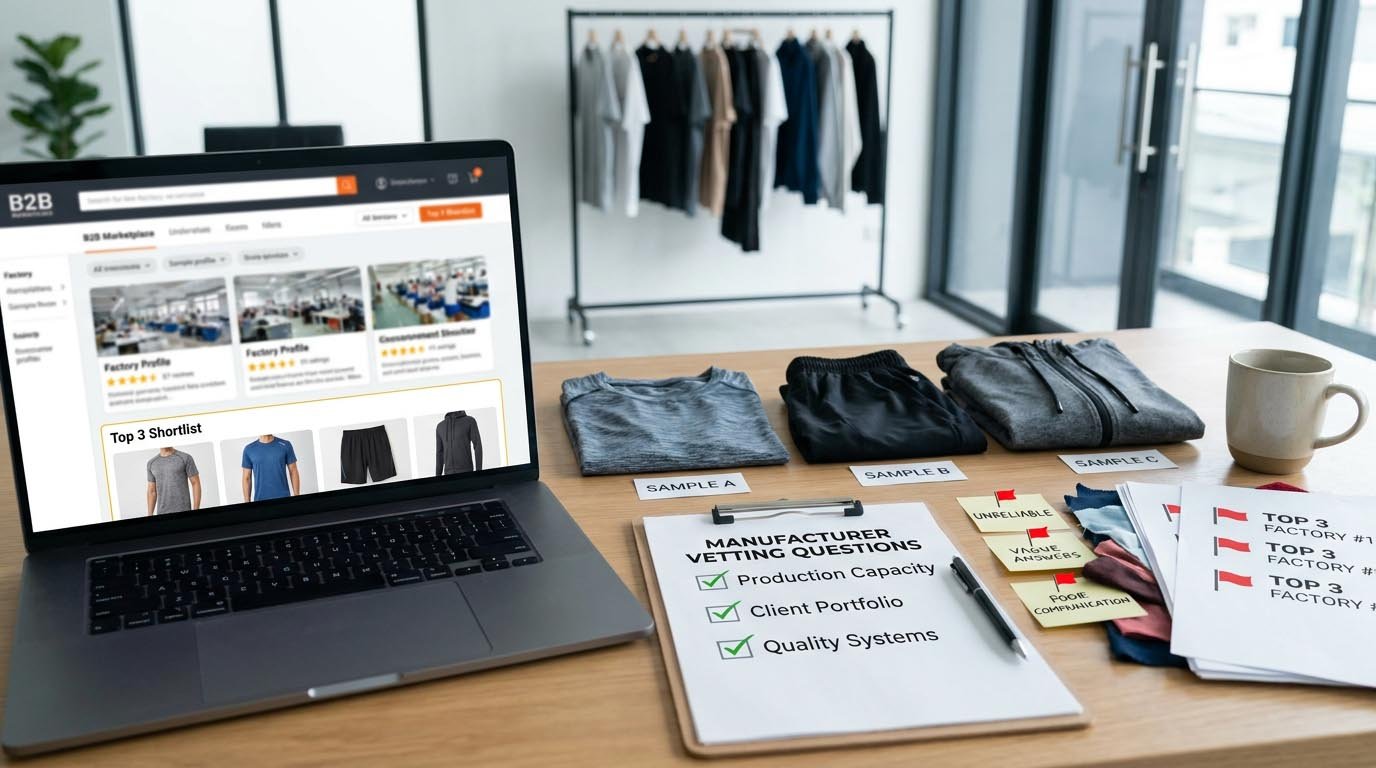
Where do you even find activewear manufacturers? Most founders start with Google searches or Alibaba. That's fine. But the real work is screening out unreliable options before you waste time on sample rounds.
Use trade platforms and referrals to build a list of 8-10 candidates. Then cut that list to 3-4 through targeted questions about production capacity, client portfolio, and quality systems before requesting any samples.
I've seen people request samples from 15 factories at once. They spend months reviewing samples. Then they realize none of those factories can meet their delivery timeline. Screening needs to happen before sampling.
Where to Find Manufacturers
Start with these channels:
- B2B platforms: Alibaba, Global Sources, Made-in-China
- Trade shows: MAGIC (Las Vegas), Texworld, Canton Fair
- Industry referrals: Ask other brand owners (not direct competitors)
- LinkedIn: Search "activewear manufacturer" + location
- Google: "[Country] activewear OEM manufacturer"
I recommend targeting 3-5 manufacturers in your final evaluation. More than that and you're spreading yourself too thin. Fewer than three and you have no leverage or backup plan.
First-Round Screening Questions
When I train our sales team, I tell them: qualified leads ask about systems, not just prices. Here's what you should ask during initial contact:
Production capacity questions:
- How many units per month do you produce?
- What's your current capacity utilization?
- How many production lines do you run?
Red flag: Vague answers like "we can handle any volume." Good manufacturers know their numbers exactly.
Client portfolio questions:
- Can you share 3-5 brands you currently produce for?
- What's your average order size?
- What percentage of clients are repeat customers?
Red flag: They can't name any clients or only show samples without brand context. This often means they're trading companies, not actual factories.
Quality system questions:
- What inspection stages do you have?
- How do you handle defect rates above 2%?
- Can I see your QC checklist template?
Red flag: They only mention "final inspection" or say "we rarely have quality issues." Every factory has quality challenges. The question is how they manage them.
Warning Signs During Initial Communication
I can usually tell within three email exchanges if a manufacturer is reliable. Watch for these patterns:
- Generic responses: They copy-paste the same message to everyone
- Pressure tactics: "Special price only this week" or "minimum order just for you"
- Avoidance: They skip your technical questions and push you to order samples
- No questions back: Good manufacturers ask about your target market, sales channels, and timeline
One client ignored all these red flags because the factory offered a 30% lower price. Their first bulk order had a 12% defect rate. The savings vanished in rework costs and delayed launch.
Technical Strength: Fabrics, Machinery, Sampling and Performance Tests?
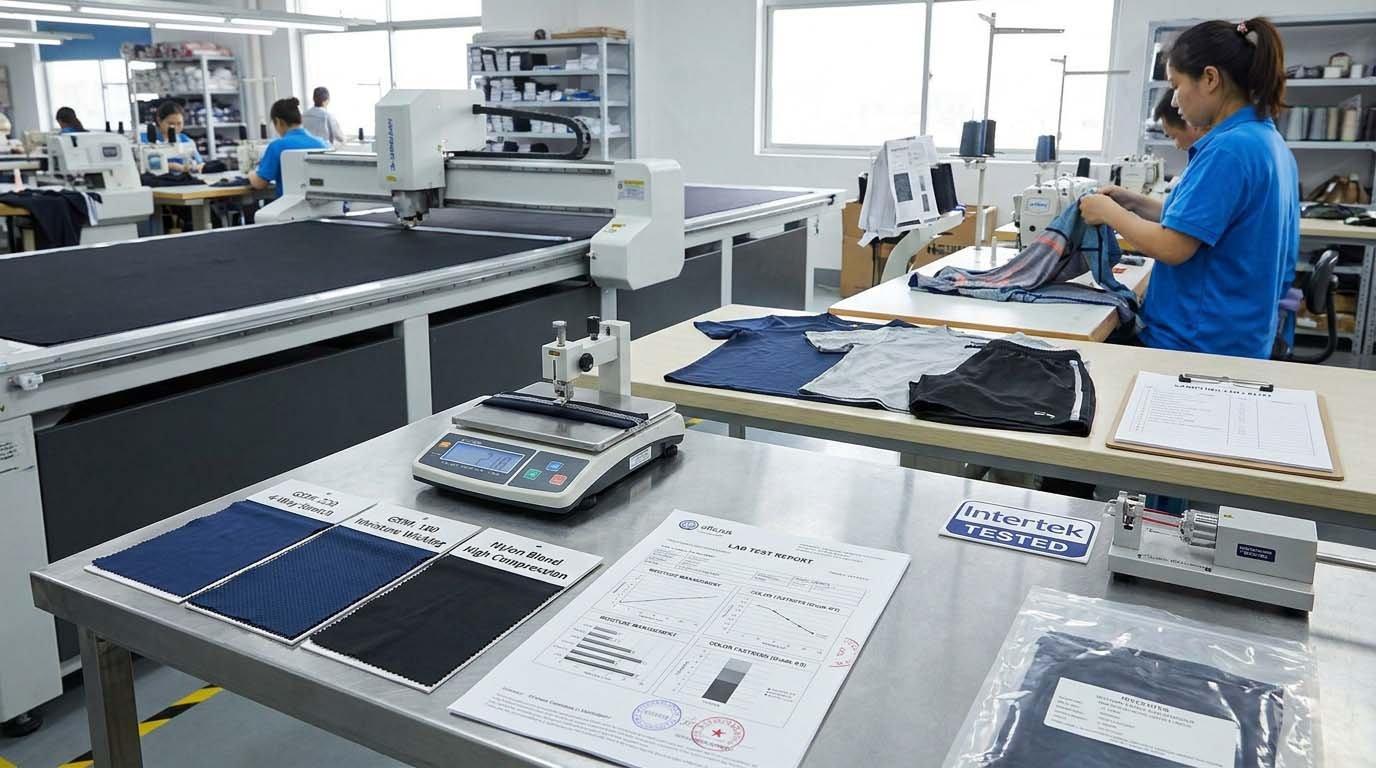
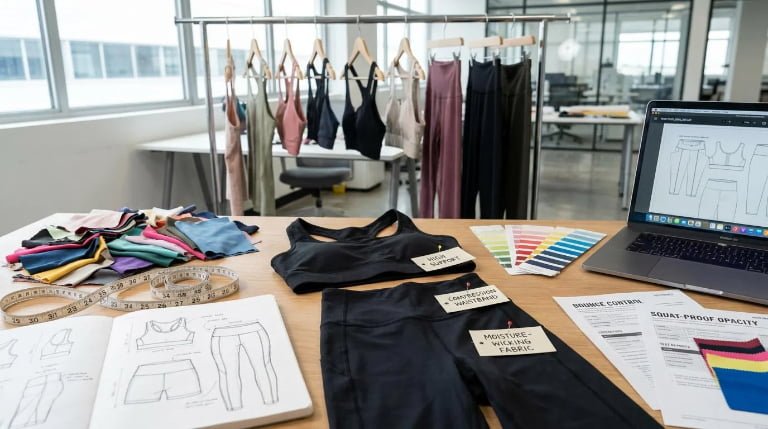
Technical capability separates real manufacturers from middlemen. This is where I see the biggest gap between what founders think matters and what actually predicts production success.
A manufacturer's technical strength is proven through fabric sourcing options, machinery specifications, and documented performance testing protocols—not through impressive showrooms or smooth-talking sales reps.
Last year a founder visited five factories in two weeks. He was impressed by the newest facility with the cleanest floors. Their machinery was brand new. He placed his order there. The bulk production came back with uneven stitching across 40% of garments. New machines mean nothing if operators aren't trained.
Fabric Sourcing and Knowledge
Ask potential manufacturers: where do you source your performance fabrics? Good activewear requires specific fabric properties:
Moisture management fabrics:
- Polyester with wicking finish
- Nylon-spandex blends
- Bamboo-polyester combinations
Key fabric specifications to discuss:
| Fabric Type | Common Weight | Stretch Type | Best Use |
|---|---|---|---|
| Single jersey | 150-180 GSM | 2-way stretch | Basic training tees |
| Interlock | 180-220 GSM | 4-way stretch | Performance tees |
| French terry | 240-280 GSM | Minimal stretch | Hoodies, joggers |
| Supplex nylon | 200-240 GSM | 4-way stretch | Shorts, leggings |
I always ask: can you provide fabric mill certifications? Reliable manufacturers work with established mills and can show you:
- OEKO-TEX certificates for chemical safety
- Test reports for colorfastness
- Performance data for moisture wicking rates
- Physical property reports (tensile strength, elongation)
Red flag: They say "we can source any fabric you want" but can't name their main suppliers. That often means they're buying from spot markets with inconsistent quality.
Machinery and Production Line Setup
Visit the factory floor if possible. If not, request detailed photos. Here's what I look for:
Essential machinery for men's activewear:
- Cutting: Automatic cutting machines (not manual) for consistency
- Sewing: Flatlock machines for seamless finish, overlock machines for stretch seams
- Finishing: Heat press for logos, steamers, packaging equipment
The machinery matters less than how it's organized. I've seen factories with $2 million in equipment produce worse quality than operations with older machines but better workflow.
Ask: what's your typical production line setup? For activewear, you need:
- Workers trained in stretch fabric handling
- Quality checkpoints every 10 stations
- Dedicated lines for different product categories
One manufacturer told me they "can make anything." When I visited, they were switching between lingerie, formal wear, and sportswear on the same lines. That's a quality risk.
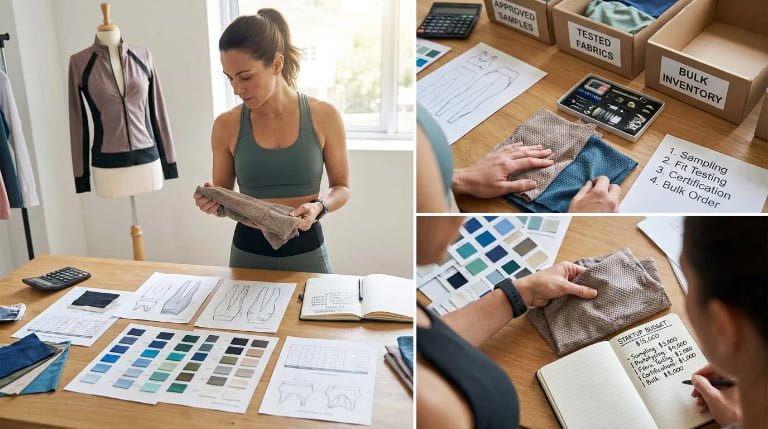
Sampling Process and What It Reveals
Most founders think sampling is about approving the design. That's only half of it. The sampling process tells you how the factory operates.
Pre-production sampling stages:
- Development sample: First version from your tech pack
- Fit sample: Size grading verification
- Production sample: Made on actual production line with bulk fabrics
Red flag: They only offer one sample round and push you to approve quickly. Good manufacturers expect 2-3 revision rounds and build that into their timeline.
I tell clients: pay attention to how they handle your feedback. Do they ask clarifying questions? Do they explain why certain changes might affect cost or lead time? Or do they just say "yes" to everything?
Performance Testing and Documentation
Before bulk production, insist on these tests:
- Wash testing: 20+ wash cycles to check color stability and shrinkage
- Stretch recovery: Fabric returns to original dimensions after 50 stretches
- Pilling resistance: Grade 3 or better after standard abrasion tests
- Seam slippage: Seams hold under force equivalent to 5x normal use
Ask: can you provide test reports from third-party labs? Some factories have in-house testing equipment, which is fine for development. But for final verification, use independent labs like SGS, Intertek, or TÜV.
I've seen manufacturers skip these tests to save time. Then the bulk order fails basic performance requirements. The cost of fixing that problem is always higher than the cost of testing.
Compliance & Quality Assurance: Certifications, RSLs and AQL Processes?
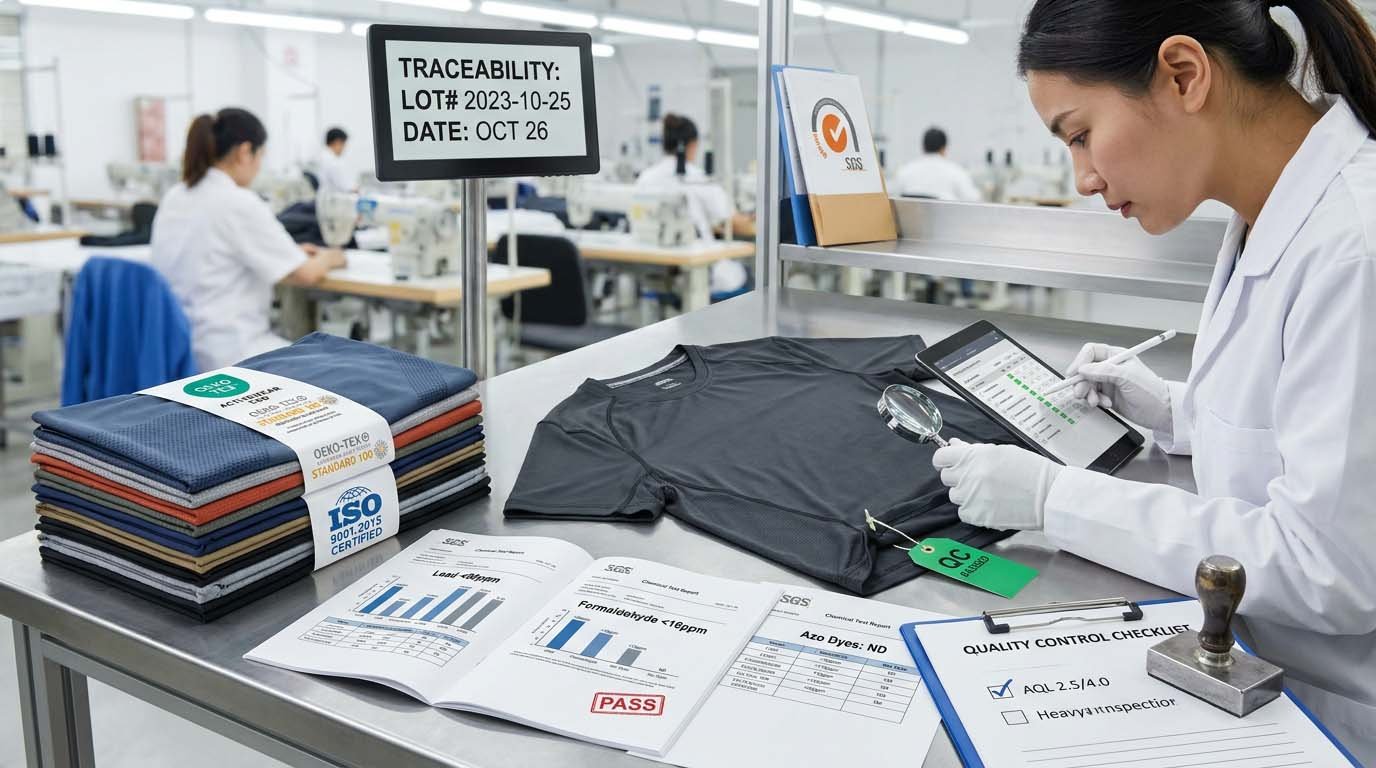
Certifications and compliance feel like paperwork problems until they become crisis problems. One brand owner told me "we'll handle certifications later." Later arrived when their shipment was held at customs because the fabric failed lead content limits.
Compliance certifications and quality assurance systems are not optional extras—they're the framework that prevents catastrophic failures that can destroy your brand and drain your capital before launch.
I spend more time explaining this than any other topic. New brand owners see certifications as costs. I see them as insurance against much bigger costs.
Essential Certifications for Activewear
Different certifications protect different risks. Here's what matters for men's activewear:
OEKO-TEX Standard 100:
This certifies that fabrics are free from harmful chemicals. It's not legally required everywhere, but it's becoming a market expectation. Cost: $800-2,000 per fabric depending on testing scope.
Why it matters: Many retailers (especially in EU and North America) won't accept products without it. Your factory should have relationships with certified fabric suppliers.
ISO 9001 (Quality Management):
This certifies the factory has documented quality processes. It doesn't guarantee perfect products, but it means they have systems for catching problems.
Red flag: Factories claiming ISO certification but refusing to share certificate numbers. You can verify any ISO certificate online through the issuing body.
Social Compliance (BSCI, SMETA, WRAP):
These audit labor conditions, working hours, and safety. Required by most major brands and retailers.
Restricted Substances Lists (RSLs)
RSLs define chemical limits for fabrics, dyes, and trims. Major RSLs include:
- REACH (European Union): Most comprehensive chemical restrictions
- Prop 65 (California): Carcinogen and reproductive toxin limits
- CPSIA (USA children's products): Heavy metal restrictions
Even if you're selling men's activewear (not children's), you need REACH and Prop 65 compliance for US and EU markets.
Ask your manufacturer: do you test fabrics against REACH and Prop 65? They should provide test reports showing:
| Substance | Legal Limit | Test Method |
|---|---|---|
| Lead (Pb) | <90 ppm | CPSC-CH-E1001 |
| Azo dyes | Specific dyes banned | DIN 54231 |
| Formaldehyde | <75 ppm (skin contact) | ISO 14184-1 |
| Phthalates | <0.1% by weight | CPSC-CH-C1001 |
Testing costs $300-800 per fabric type. Good manufacturers build this into their pricing. If a quote seems too cheap, ask if testing is included.
AQL Standards and Inspection Protocols
AQL stands for Acceptable Quality Limit. It's the industry standard for how many defects you'll accept in a production batch. Common AQL levels:
- AQL 1.0: Critical defects (structural failures) - accept 0%
- AQL 2.5: Major defects (visible flaws affecting function) - accept 2.5%
- AQL 4.0: Minor defects (small cosmetic issues) - accept 4%
Ask manufacturers: what's your standard AQL? If they don't know what AQL means, that's a massive red flag.
Quality control checkpoints should happen at:
- Fabric inspection: Before cutting (check for weaving flaws, shade variation)
- Cutting audit: Random checks on pattern accuracy
- In-line inspection: During sewing (every 10-15 stations)
- Final inspection: 100% visual check of finished garments
Some factories only do final inspection. That's too late. By then, systemic problems have already affected the entire batch.
I recommend hiring third-party inspection companies for your first 3-5 orders. Companies like SGS, Bureau Veritas, or TÜV will inspect before shipment. Cost: $300-500 per inspection day. That fee pays for itself if it catches problems before shipping.
Documentation and Traceability
Ask for a production file that includes:
- Fabric test reports (physical properties and chemical compliance)
- Approved lab dip (color standard)
- Approved strike-off (print standard if applicable)
- Graded spec sheets for all sizes
- Sewing construction details
- Approved packaging samples
Good manufacturers maintain digital records of every production run. If something goes wrong with order 1,000, they should be able to pull up fabric lot numbers, production dates, and operator assignments.
One client had allergic reactions reported by three customers. Because their manufacturer maintained detailed records, we traced it to one fabric batch from a specific dyeing run. We recalled just 180 units instead of the entire 2,400-piece inventory. That documentation saved their brand.
Business Terms: MOQs, Lead Times, Costing, Incoterms and Contracts?
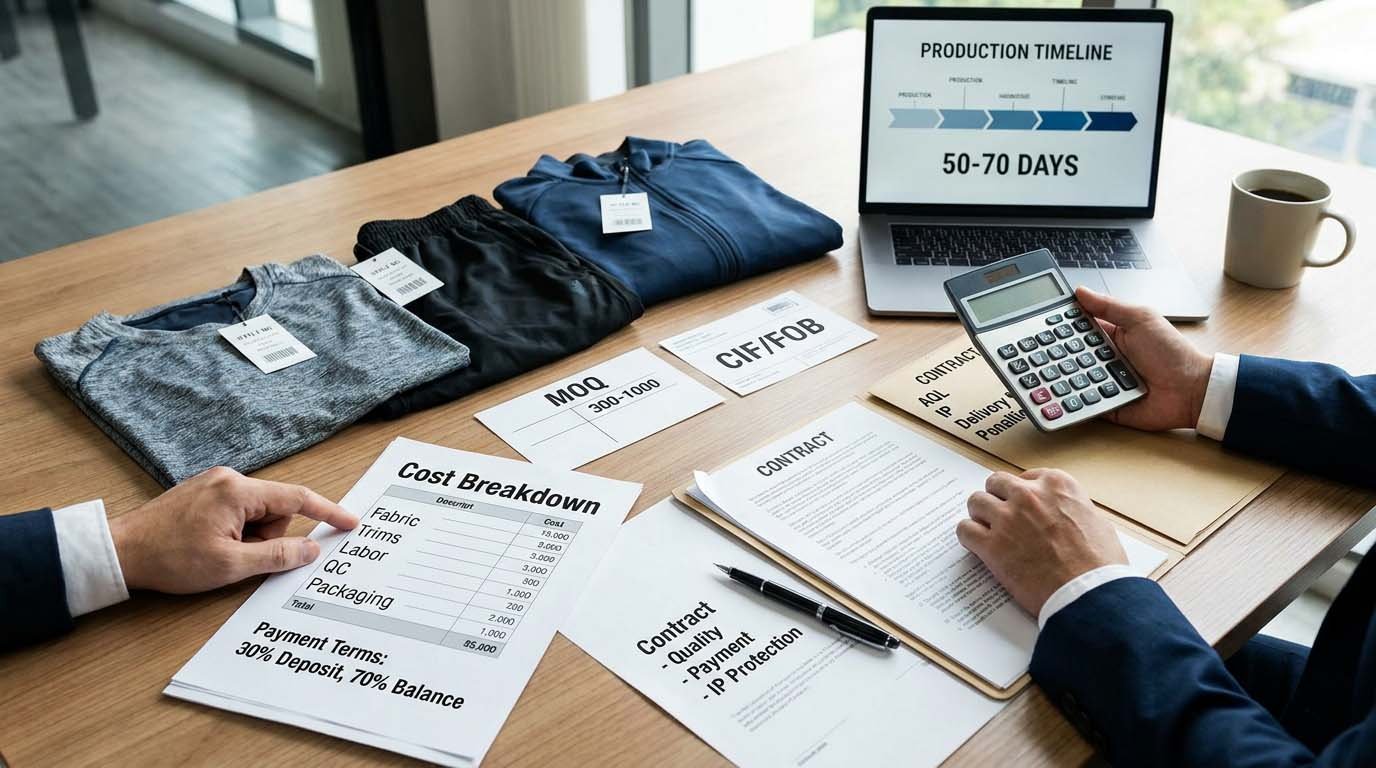
This is where most founders focus their energy. They negotiate price. They push for lower MOQs. They argue over payment terms. But they skip the clauses that actually protect them when things go wrong.
Business terms matter less than the quality systems we covered earlier—but badly negotiated terms can kill your cash flow or leave you with no recourse when problems arise.
I've watched founders save $2 per unit on pricing, then lose their entire investment when the manufacturer missed the delivery deadline and had no penalty clause in the contract.
Minimum Order Quantities (MOQs)
For men's activewear, expect these typical MOQs:
- Basic items (solid color tees, shorts): 300-500 pieces per color per style
- Complex items (printed designs, multi-panel construction): 500-800 pieces per color
- Fully customized (unique fabrics, proprietary designs): 1,000+ pieces
Lower MOQs are possible but come with tradeoffs:
| MOQ Level | Price Impact | Quality Risk | When It Makes Sense |
|---|---|---|---|
| 100-200 pcs | +25-40% cost | Higher (less efficient setup) | Testing new designs |
| 300-500 pcs | Baseline cost | Standard | First production runs |
| 1,000+ pcs | -10-15% cost | Lower (optimized workflow) | Proven bestsellers |
One pattern I see: founders order minimum quantities across 8-10 styles to offer variety. Then they're stuck with inventory they can't sell. I recommend: start with 2-3 core styles at higher quantities. You'll get better pricing and lower per-unit risk.
Lead Time Structure
Break down the timeline with your manufacturer:
Pre-production (15-20 days):
- Fabric sourcing: 7-10 days
- Lab dip approval: 3-5 days
- Sample development: 5-7 days
Production (25-35 days):
- Cutting: 2-3 days
- Sewing: 15-20 days
- Finishing and QC: 5-7 days
- Packing: 3-5 days
Post-production (10-15 days):
- Final inspection: 1-2 days
- Documentation: 1-2 days
- Shipping to port: 7-10 days
Total timeline: 50-70 days from order confirmation to ready-to-ship. Add shipping time (30-45 days for ocean freight, 5-7 days for air).
Red flag: Manufacturers promising "45 days door-to-door" for custom activewear. That timeline only works if they're holding fabric stock and have open production capacity. Both are rare.
Pricing and Cost Breakdown
When comparing quotes, demand itemized pricing:
- Fabric: cost per meter and consumption per garment
- Trims: labels, tags, hangtags, poly bags
- Labor: cutting, sewing, finishing
- QC and testing: inspection costs, lab tests
- Packaging: poly bags, carton boxes, shipping marks
If a manufacturer won't break down costs, you can't verify their pricing or negotiate intelligently. I've seen factories hide profit margins in "fabric costs" or "testing fees" because clients don't ask for details.
Payment terms typically follow this structure:
- 30% deposit: Upon order confirmation
- 70% balance: Before shipment or against copy of shipping documents
For first-time orders, some factories require 50% deposit. That's reasonable if they're ordering custom fabrics. For ongoing orders, negotiate for 20-30% deposit with extended payment terms on the balance.
Incoterms and Shipping Responsibility
Incoterms define who pays for what during shipping and who bears risk if something goes wrong. Common terms for clothing:
FOB (Free On Board):
Manufacturer is responsible until goods are loaded on the ship. You arrange and pay for ocean freight and insurance.
CIF (Cost, Insurance, and Freight):
Manufacturer arranges and pays for shipping and insurance to your destination port. You handle customs clearance and inland transport.
DDP (Delivered Duty Paid):
Manufacturer handles everything including customs. You receive goods at your warehouse.
For first-time importers, I recommend CIF terms. The manufacturer has better shipping rates and experience handling export documentation. Once you have a freight forwarder relationship, switch to FOB for more control.
Contract Clauses That Matter
Your purchase order or contract should include:
Quality standards:
- Reference approved samples
- Define acceptable defect rates (AQL levels)
- Specify testing requirements
Delivery terms:
- Production lead time
- Penalty for late delivery (typically 1-2% per week)
- Maximum delay before order cancellation right
Payment protection:
- Deposit refund terms if production fails to start
- Balance payment contingent on passing inspection
- Partial payment holdback (5-10%) for 30 days post-delivery
Intellectual property:
- Manufacturer cannot produce your designs for other clients
- Your tech packs and samples remain confidential
- Clear ownership of any design modifications
I learned this the hard way early in my career. A client's manufacturer started selling their exact design to other brands six months after their first order. The contract had no IP clause. There was no legal recourse.
One more thing: insist on email confirmations for all changes. Verbal agreements or WeChat messages aren't enforceable. Every time you modify quantities, colors, delivery dates, or specs, get written confirmation.
FAQ: Choosing a Men's Activewear Manufacturer
How do I verify a manufacturer's factory actually exists?
Request a video tour showing production floor, machinery, and QC areas. Check their business registration through local government databases. For Chinese manufacturers, verify their export license and customs records. Third-party audit companies like SGS can conduct factory verification for $500-800.
What questions should I ask during a factory visit?
Ask to see their QC checkpoints in action, not just empty production lines. Request to speak with production managers (not just sales staff) about their quality processes. Ask about their biggest quality challenge last month and how they solved it. Watch how they respond to unexpected questions—that reveals their actual knowledge.
How many quotes should I get before deciding?
Get 3-5 detailed quotes from pre-screened manufacturers. More than five becomes unmanageable. Fewer than three gives you no pricing context. Focus on comparing quality systems and capability, not just unit prices. The cheapest quote is rarely the best choice.
Should I use a sourcing agent or go directly to factories?
For your first production run, consider an agent if you lack import experience. Good agents charge 3-8% of order value but provide quality control oversight and communication support. Once you've completed 2-3 orders and understand the process, you can go direct. Avoid agents who won't disclose factory identities—they're preventing you from building direct relationships.
What happens if my bulk order fails inspection?
Your contract should define this. Standard terms: manufacturer must rework defective units at their cost if defect rate exceeds agreed AQL. If rework isn't possible or timeline is missed, you should have the right to partial payment reduction or order cancellation with deposit refund. This is why inspection before final payment is critical.
How do I protect my designs from being copied?
Include non-disclosure agreements (NDAs) and IP protection clauses in your contract. Choose manufacturers who already work with established brands—they understand the importance of confidentiality. Avoid factories that display other brands' samples in their showrooms without permission. Register your designs where possible (design patents or trademarks) before sharing tech packs.
What's the difference between OEM and ODM manufacturers?
OEM (Original Equipment Manufacturer) means they produce based on your designs and specifications. ODM (Original Design Manufacturer) means they have in-house design capabilities and existing style libraries you can customize. Most activewear manufacturers offer both. For your first collection, ODM can save development time—you modify their proven designs instead of starting from scratch.
Conclusion
Choosing a manufacturer is not about finding the cheapest quote. It's about identifying who can maintain quality from sample to bulk. Focus on their quality systems, technical capability, and compliance processes before you negotiate price. One failed shipment will cost more than any savings from a lower quote.