.png)
Activewear trends in 2027 will be shaped by studio sport growth, outdoor performance demand, testable fabric specs, stricter sustainability requirements, smaller and more cautious buying plans, and faster sourcing models such as nearshoring. For brands and suppliers, the biggest shift is clear: buyers are no longer ordering broad “athleisure” concepts as easily as before. They are buying more use-case-specific products with clearer performance, compliance, and margin logic.
In practical terms, the activewear market in 2027 is moving toward fewer generic products, more specialized categories, stronger certification requirements, and tighter control over lead times and inventory risk. That affects what brands develop, what manufacturers can supply, and which product categories are most likely to receive repeat orders.
This guide explains the most important activewear market trends for 2027, including category demand, fabric and sustainability changes, design innovation, sourcing strategy, pricing pressure, and what these shifts mean for buyers and manufacturers.
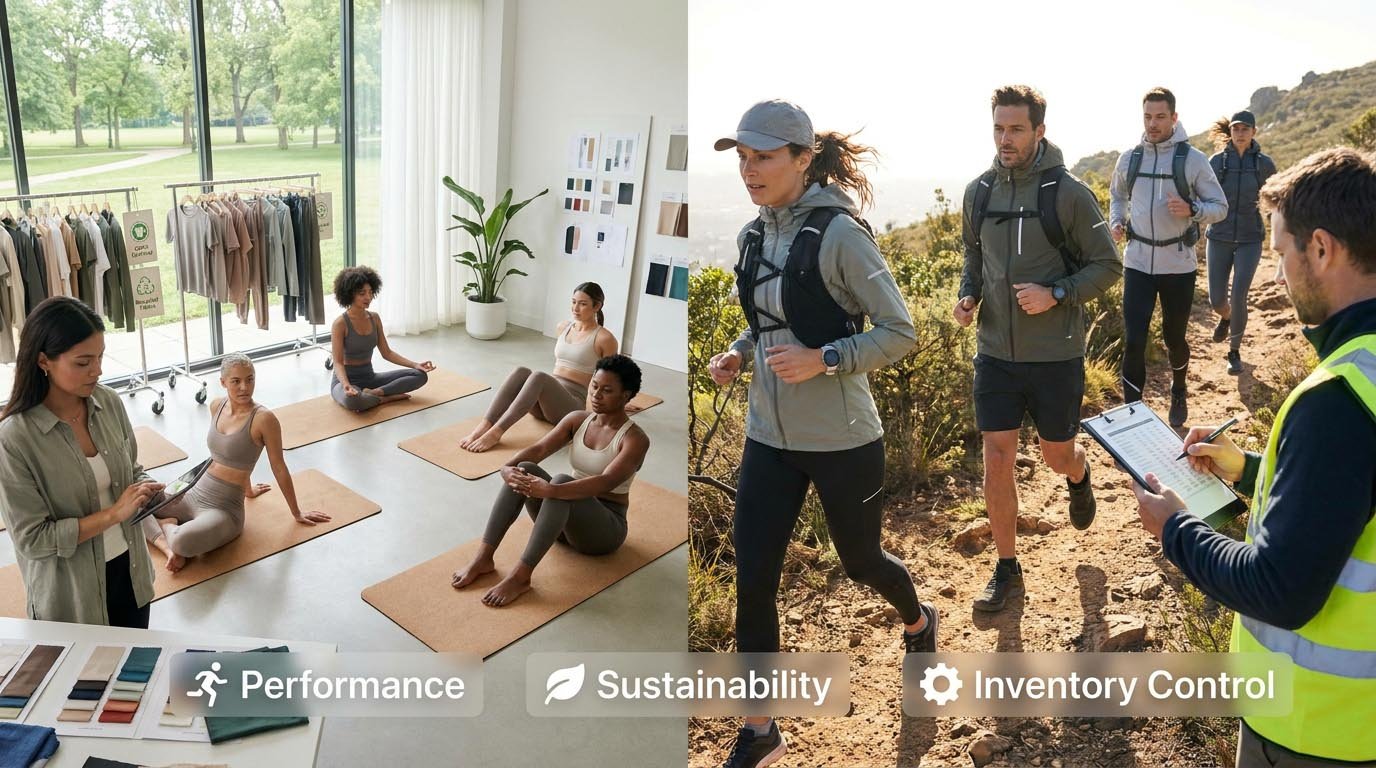
Quick Answers: Activewear Trends 2027
What are the biggest activewear trends in 2027?
The biggest trends include studio sport growth, outdoor training demand, measurable fabric performance, sustainability compliance, more selective buying behavior, and faster supply chain planning.
Which activewear categories are growing fastest?
Studio sports such as yoga, pilates, and barre, along with outdoor performance activewear, are showing the strongest momentum.
What do buyers now expect from activewear fabrics?
Buyers increasingly want testable performance data, such as moisture management, recovery, abrasion resistance, and UV protection, rather than broad marketing claims.
Are sustainability certifications becoming mandatory?
In many export markets, especially Europe and parts of North America, certifications such as OEKO-TEX, GRS, and REACH-related compliance support are moving closer to baseline requirements.
Is nearshoring becoming more important in activewear?
Yes. Many brands are exploring nearshoring and regional sourcing to reduce lead times, lower inventory risk, and support faster replenishment.
Activewear Trends 2027 at a Glance
| Trend | What Is Changing | Why It Matters |
|---|---|---|
| Studio Sport Growth | More demand for yoga, pilates, barre, and fitted sets | Buyers want products built for specific activities |
| Outdoor Performance | Growth in weather-ready, UV-protective, and durable activewear | More consumers train outdoors and expect technical function |
| Testable Performance | Buyers ask for measurable fabric and garment performance | Marketing claims alone are no longer enough |
| Sustainability Compliance | Certifications and chemical compliance are more important | Market access increasingly depends on verified standards |
| Specialized Product Design | Products are being developed for clearer use cases | Generic all-purpose activewear is under pressure |
| Nearshoring and Flexibility | Brands explore faster sourcing regions and smaller batches | Lead time and inventory control matter more than before |
| MOQ and Margin Pressure | Buyers want lower risk without losing product quality | Suppliers must balance flexibility with production economics |
Why Activewear Trends in 2027 Are Changing
Several forces are reshaping the activewear market in 2027.
Consumers want performance they can feel
Customers are becoming less willing to pay premium prices for products that look good but fail in real use. Durability, comfort, recovery, skin feel, and wash performance matter more than before.
Buyers are reducing product risk
Many brands are becoming more cautious with inventory. Instead of betting heavily on broad seasonal collections, they are testing tighter assortments, smaller launches, and use-case-specific categories.
Compliance is affecting purchasing decisions
Sustainability and chemical compliance are no longer only brand storytelling tools. In many markets, they are becoming part of the product qualification process.
Lead time matters more than trend speed alone
Fast replenishment, smaller buying cycles, and shorter development windows are pushing brands to rethink where and how they source activewear.
Which Activewear Categories Will Grow Most in 2027?
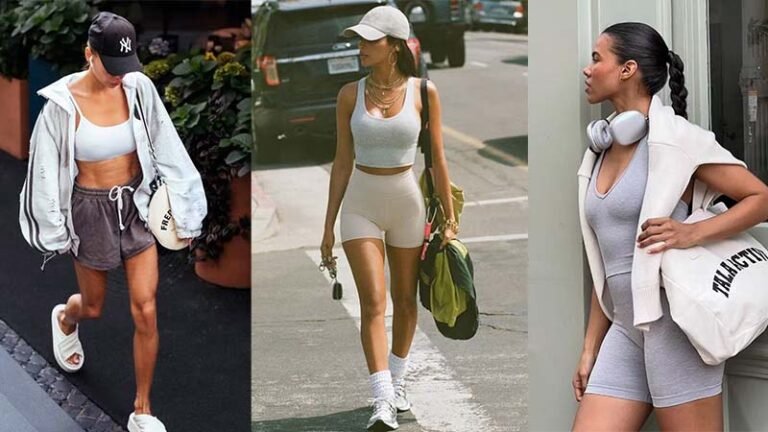
One of the clearest activewear trends for 2027 is the shift away from generic gym basics and toward more specific movement-based categories.
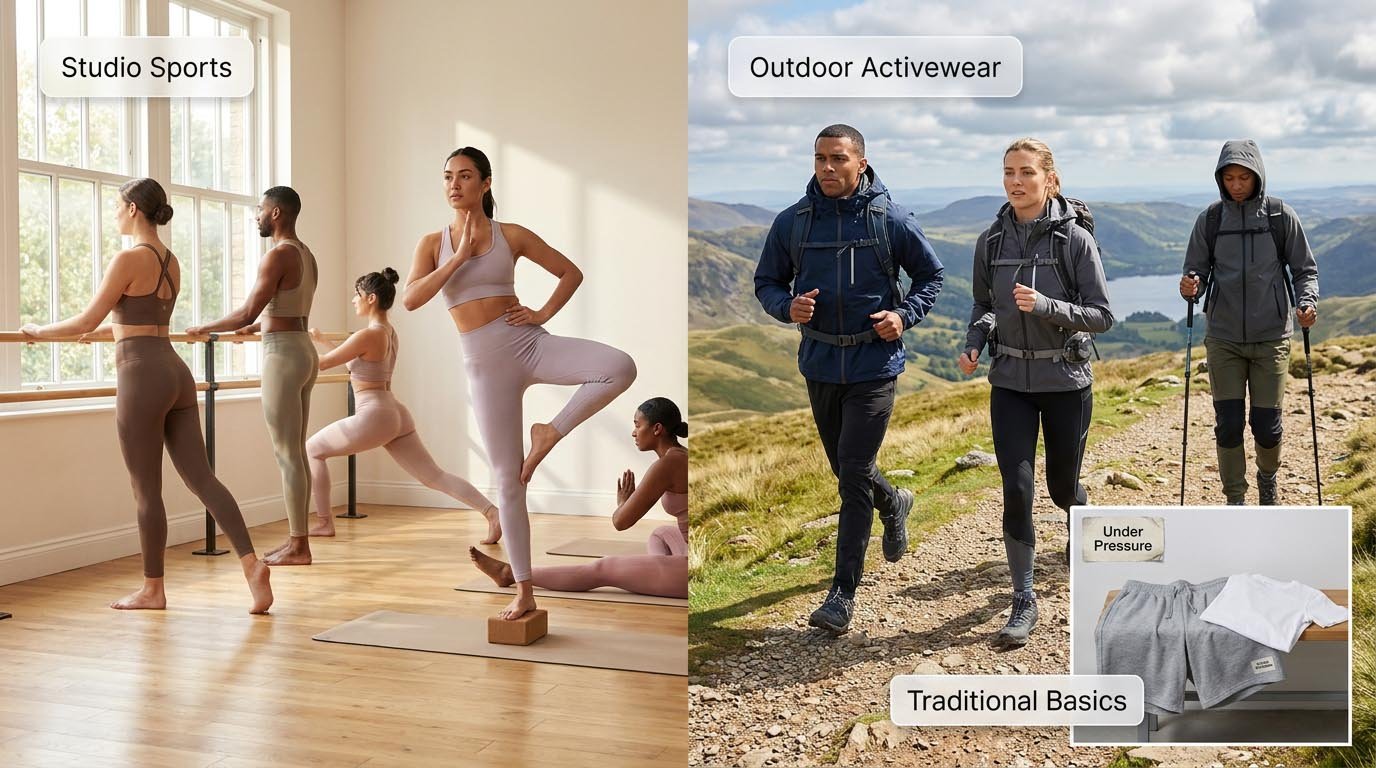
Studio sports
Studio categories such as yoga, pilates, reformer training, and barre continue to gain attention. These products are usually more coordinated, more fitted, and more style-sensitive than traditional gym basics.
Typical product features include:
- Matching bra and legging sets
- Soft hand feel
- Controlled compression
- Clean waistbands
- Premium finish and color consistency
- Lower-bounce support for studio movement
Outdoor activewear
Outdoor-ready activewear is also growing, especially for consumers who train outside in changing conditions. This category may include:
- UPF-protective tops
- Weather-resistant joggers
- Trail leggings
- Reinforced panels
- Reflective details
- Light wind and moisture protection
What is under pressure?
Traditional loose gym shorts, standard training tees, and generic athleisure basics are seeing more competition. These categories still sell, but they face weaker differentiation and more pricing pressure.
The key shift
The strongest product categories in 2027 are not necessarily the most fashionable. They are often the ones with the clearest use case, strongest repeat-wear logic, and easiest value explanation to the customer.
Is Athleisure Still Growing in 2027?
Athleisure still matters, but it is changing.
Premium athleisure is becoming more technical
Higher-end athleisure is increasingly overlapping with studio and performance categories. Buyers want premium aesthetics, but they also expect real fabric performance, better fit retention, and stronger durability.
Entry-level athleisure is becoming more price sensitive
Basic lifestyle activewear is facing heavier margin pressure. Without a strong brand, technical feature, or standout fit, it is harder for generic products to maintain premium pricing.
The result
In 2027, athleisure is no longer a catch-all growth label. It is splitting into:
- performance-led premium casual activewear
- basic comfort or lounge products
- studio-inspired fashion-performance hybrids
Brands that define their segment clearly are more likely to perform well than brands that try to serve every use case with one silhouette.
Performance Fabric Trends in Activewear 2027
Another major activewear industry trend in 2027 is the move toward measurable performance.
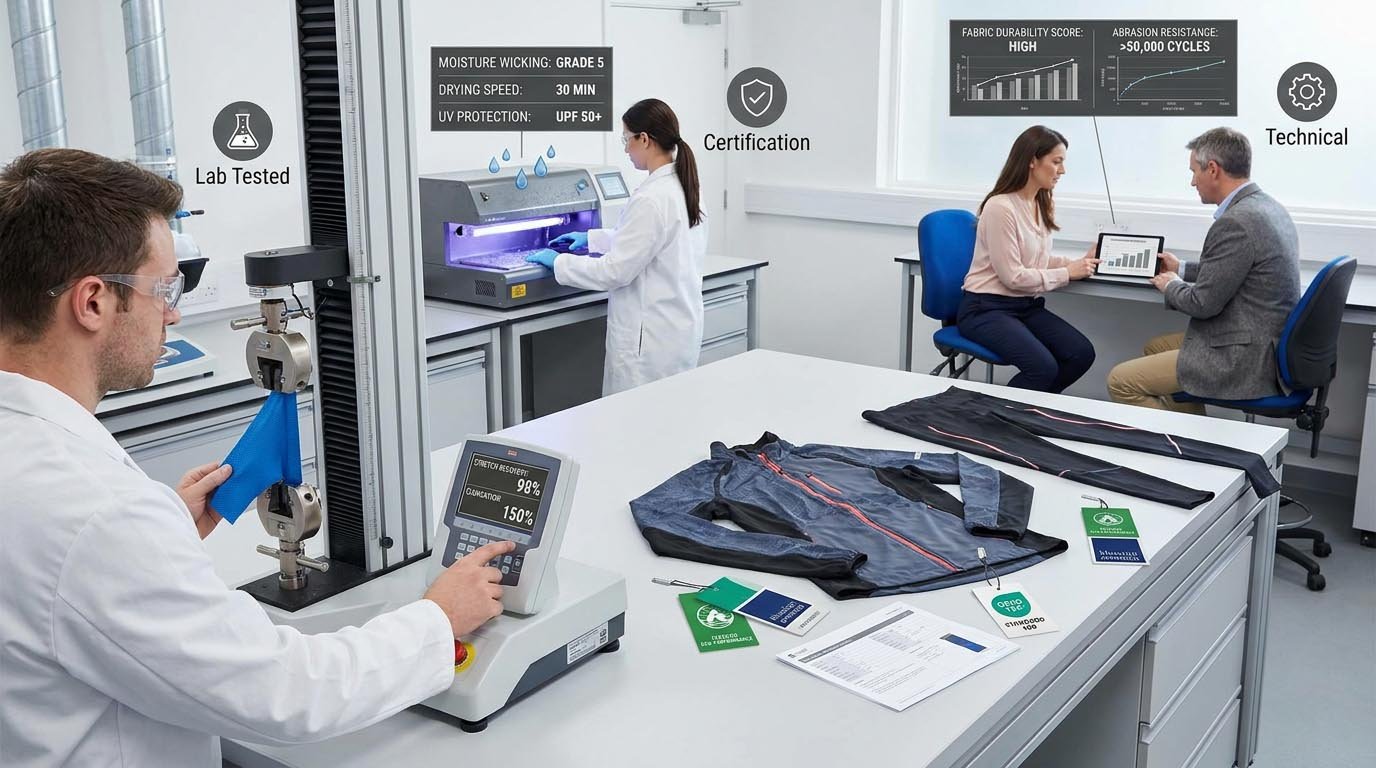
Buyers want testable specifications
Instead of broad claims like “moisture-wicking” or “high performance,” buyers increasingly ask for data tied to:
- Moisture management
- Drying speed
- Stretch recovery
- Abrasion resistance
- Opacity
- UV protection
- Pilling performance
- Wash durability
Why this matters
This shift changes how brands work with fabric mills and factories. Suppliers need to support product development with:
- fabric test reports
- certification records
- clearer spec sheets
- more stable sourcing partners
What this means for brands
Brands that want to position themselves above commodity competition need products with technical credibility, not just strong visual branding.
Sustainability Trends in Activewear 2027
Sustainable activewear trends in 2027 are moving from marketing language to sourcing requirements.
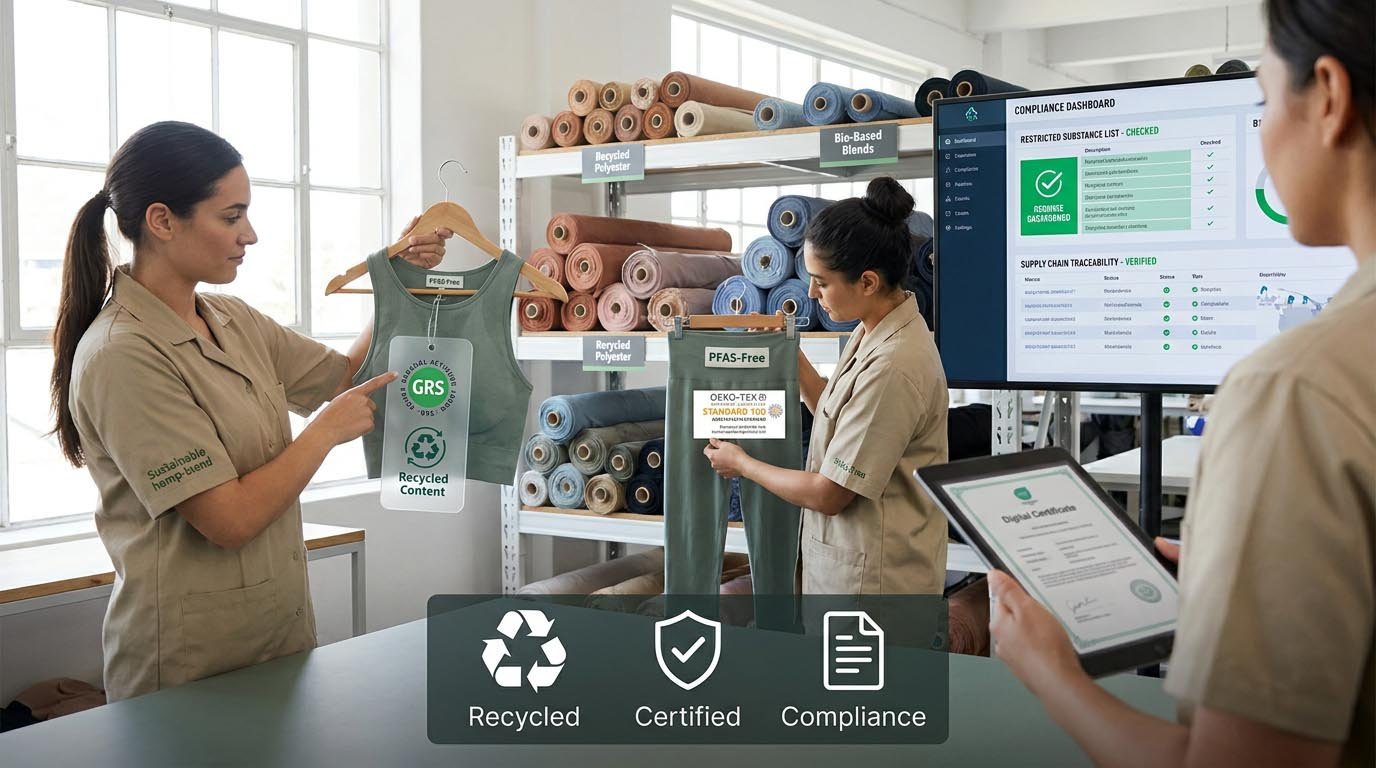
Recycled materials remain important
Recycled polyester and related certified synthetics are still widely requested, especially in export-focused activewear programs.
Certifications are becoming harder to avoid
Depending on the target market, buyers increasingly expect support around:
- OEKO-TEX Standard 100
- GRS certification
- REACH-related compliance documentation
- restricted substance management
- PFAS-free treatment options
Bio-based materials are still emerging
Bio-based fibers and blends continue to attract interest, but adoption is still more limited because of:
- higher cost
- supply consistency concerns
- performance balance questions
- cautious first-order demand
The real takeaway
For many activewear suppliers, sustainability in 2027 is less about trendy language and more about whether the factory can support compliance, documentation, and verified material claims.
PFAS-Free, Skin-Safe and Chemical Compliance Requirements
Chemical compliance is becoming a more visible part of activewear sourcing trends in 2027.
Why brands care more
Activewear is worn close to the skin, often during heat, sweat, friction, and repeated washing. That makes buyers more sensitive to:
- restricted substances
- skin contact safety
- treatment chemistry
- dye system compliance
- fabric finishing transparency
Where this trend is strongest
This is especially relevant in:
- outdoor activewear
- premium studio wear
- products marketed as clean or wellness-focused
- products targeting regulated retailers or export channels
Practical impact on sourcing
Factories and brands may need to plan for more:
- test reports
- supplier declarations
- RSL management
- approved chemistry systems
- development cost before bulk production
Design and Product Innovation Trends in 2027 Activewear
Design innovation in 2027 is becoming more technical and more tied to movement.
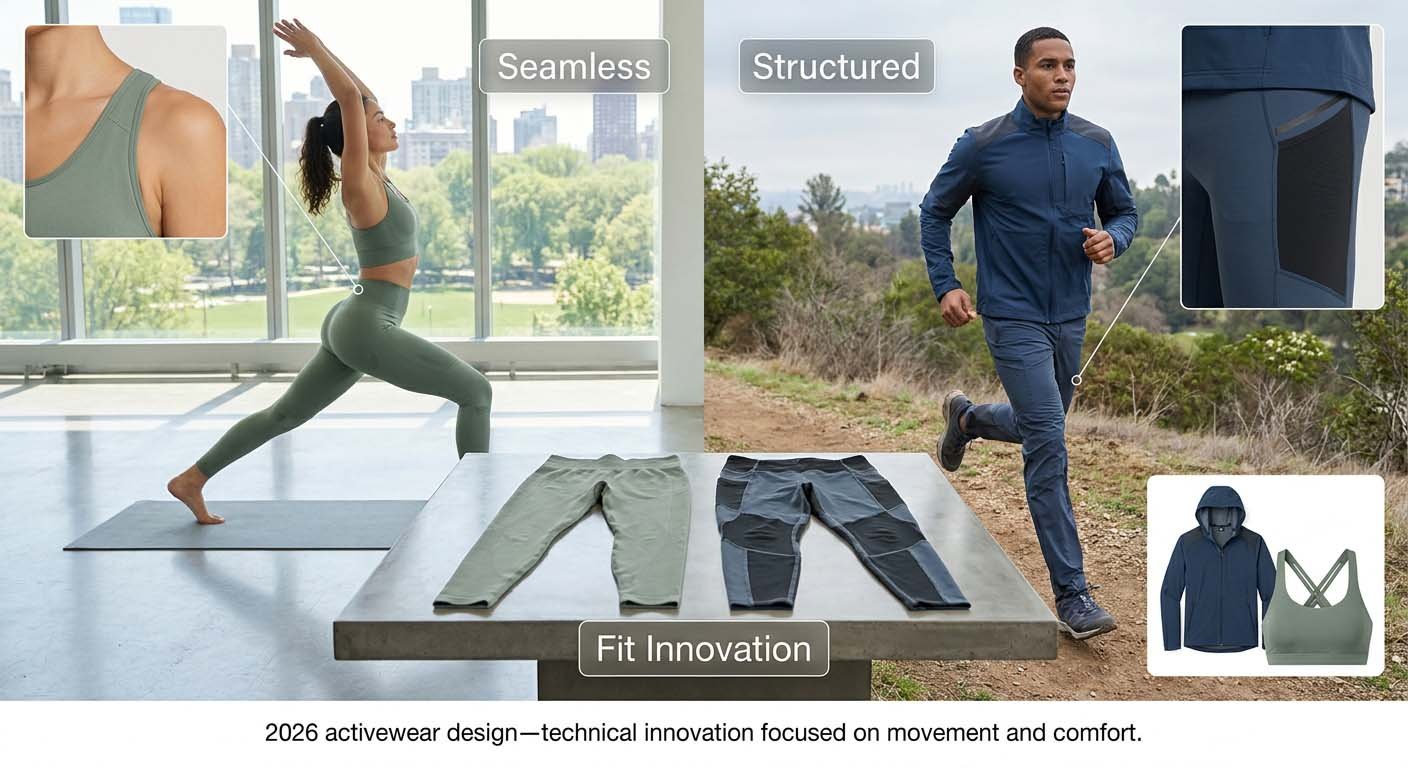
Fit-specific construction
Buyers are paying more attention to how garments behave during movement, not just how they look on a model. Product development is focusing more on:
- waistband stability
- compression zone placement
- anti-chafe seam positioning
- support by activity type
- better grading and fit consistency
Seamless continues to grow
Seamless activewear remains attractive in categories where comfort, smoothness, and reduced irritation matter. However, it is not automatically the best choice for every product type.
Seamless is usually stronger for:
- studio tops
- leggings
- lower-impact support categories
- comfort-led performance products
Structured cut-and-sew still has advantages in:
- high-impact support
- outdoor durability
- technical reinforcement
- more complex trims and panels
Modular features remain niche
Convertible straps, removable components, and multi-use details continue to appear, but they are not yet a mainstream volume driver. Brands still need to weigh feature value against complexity and cost.
What Buyers Want from Activewear Products in 2027
The buying mindset behind activewear market trends 2027 is changing in several clear ways.
Buyers want fewer vague product stories
Broad claims such as “premium active lifestyle wear” are less convincing without a clear category and function.
Buyers want stronger product logic
Products are more likely to move forward when buyers can answer:
- Who is this for?
- What activity is it built for?
- What performance problem does it solve?
- Why is it better than a generic alternative?
Buyers want lower risk
Many brands are trying to reduce inventory exposure by ordering more carefully, testing categories, and focusing on products with clearer demand logic.
Buyers want reliable supply partners
Factories that can support compliance, stable quality, flexible development, and realistic lead time planning are more valuable than suppliers who compete only on price.
Sourcing and Manufacturing Trends for Activewear in 2027
Supply chain strategy is a major part of activewear manufacturing trends in 2027.
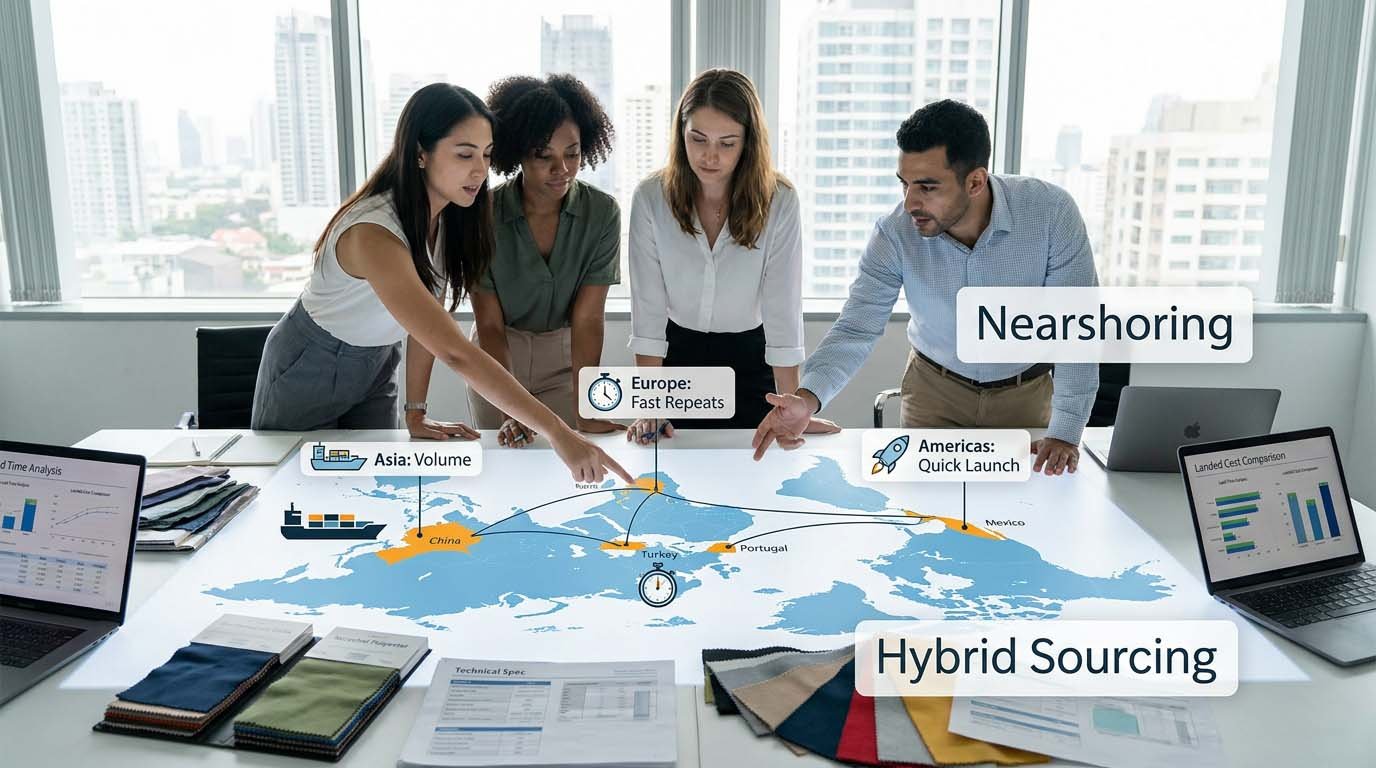
Nearshoring is growing
More brands are evaluating regional production options to reduce lead times and improve replenishment speed. Common sourcing discussions include:
- Turkey and Portugal for Europe
- Mexico and Central America for North America
- mixed sourcing strategies for core and fashion-driven categories
But nearshoring is not a complete solution
Moving production closer does not automatically solve:
- unclear specifications
- compliance delays
- fabric sourcing problems
- low-MOQ cost pressure
- weak planning discipline
A more realistic sourcing model
In many cases, brands are not replacing Asia completely. Instead, they are using a hybrid model:
- Asia for price-sensitive or large-volume programs
- regional suppliers for faster repeats or urgent launches
Pricing, MOQ and Inventory Trends in 2027
Pricing pressure remains intense, but the structure behind it is changing.
Buyers want more flexibility
Brands increasingly ask for:
- lower MOQs
- shorter lead times
- more colors
- certified materials
- premium performance
- smaller inventory risk
Suppliers still need production efficiency
These requests create tension because lower-risk buying for brands can mean higher unit cost for factories. MOQ, machine setup, dye minimums, and certification workflows still affect cost in real ways.
What this means in practice
In 2027, activewear brands need to make clearer tradeoffs between:
- flexibility and cost
- speed and development depth
- certification and margin
- lower inventory and higher per-unit pricing
How DTC Brands and Retail Buyers Are Ordering Differently
Direct-to-consumer brands
DTC brands often prefer:
- smaller test orders
- more frequent replenishment
- faster trend validation
- tighter color bets
- more agile launch planning
Retail and wholesale buyers
Retail programs usually require:
- larger seasonal commitments
- stronger compliance support
- earlier development timelines
- packaging and labeling accuracy
- more structured line planning
Why this matters
Factories need to understand not only the product, but also the buyer’s channel model. The same garment may need a different MOQ, timeline, and compliance approach depending on whether it is for DTC, marketplace, retail, or wholesale distribution.
What These Trends Mean for Activewear Manufacturers
For manufacturers, the message behind activewear trends 2027 is clear.
Product development needs to be more technical
Factories need stronger support for testing, fit feedback, material matching, and specification control.
Compliance readiness is becoming a competitive advantage
Being able to show documentation early can affect whether a supplier reaches the sampling stage at all.
Category understanding matters more
A supplier who understands the difference between studio, outdoor, training, and athleisure categories is better positioned to help buyers develop the right product.
Speed must be realistic
Fast delivery is valuable, but only when paired with stable quality and compliant sourcing.
Who Should Pay Attention to These Activewear Trends?
These 2027 trends matter especially for:
- Activewear startup brands planning first collections
- DTC sellers testing new categories or replenishment models
- Private label buyers sourcing certified and performance-led products
- Retail brands building category-specific assortments
- Sourcing managers reviewing lead times, cost, and compliance risk
- Manufacturers repositioning their activewear offering for higher-value buyers
How Brands Can Respond to Activewear Trends in 2027
Narrow the product focus
Instead of offering broad all-purpose styles, develop products around a clearer use case.
Build fabric credibility early
Work with mills and suppliers that can support test reports, compliance documents, and stable quality.
Match sustainability goals with market reality
Use the certifications and materials that your target market actually requires, rather than adding cost without clear commercial value.
Plan MOQ and channel strategy together
A DTC launch, retail line, and wholesale collection should not all follow the same sourcing model.
Avoid trend overload
Products do not need every innovation at once. In many cases, one strong benefit is more commercially useful than a long list of features.
Final Thoughts
The most important activewear trends in 2027 are not just about style. They are about product logic, measurable performance, compliance readiness, sourcing flexibility, and category clarity.
Brands that are likely to perform better in 2027 are those that:
- build products for real use cases
- support claims with measurable performance
- prepare sustainability and chemical compliance early
- use sourcing models that match their channel and inventory strategy
- focus on fewer, clearer, more commercially logical products
For manufacturers and suppliers, the opportunity is not just to make activewear. It is to help buyers build activewear lines that are more specific, more credible, and easier to sell.