.png)
The global activewear market is projected to surge from USD 353.5 billion in 2023 to USD 546.2 billion by 2030, exhibiting a robust CAGR of 6.5%. This explosive growth is fueled by rising health consciousness, the athleisure revolution, and consumer demand for technical performance fabrics that deliver both function and style.
Yet choosing the wrong activewear manufacturer can devastate your brand before launch. The stakes are brutally high: 60-70% of your product cost comes from fabric and production decisions, quality failures trigger 15-25% return rates, and compliance gaps expose you to reputational disasters and retailer blacklisting.
Critical Mistakes by Brand Stage:
-
Startup Error: Partnering with 5,000+ unit MOQ factories when you need 300-500 pieces to test market demand. Result: You're locked into excess inventory or can't launch at all.
-
Growth-Stage Error: Staying with low-MOQ agile suppliers past the point where you need 2,000-5,000 units per style with documented quality systems. Result: Inconsistent sizing between runs, fabric shade variations, and inability to fulfill retail orders.
-
Established Brand Error: Prioritizing price per unit over technical capability. Result: Moisture-wicking failures, seam splitting under tension, color bleeding, and expensive product recalls.
This guide analyzes verified manufacturers across the capability spectrum—from agile low-MOQ specialists serving DTC brands to vertical giants powering global retailers.
Manufacturer Overview List
1.WEARZIO – Digital-first activewear OEM/ODM with sustainable focus and low MOQ flexibility
2.HUCAI Sportswear – 25-year women's sportswear specialist with MOQ 200 pieces and 25-30 day delivery
3.Eation Wear – High-volume powerhouse with 400,000 units/month capacity and seamless bonding technology
4.Bloomto – Premium yoga and activewear manufacturer with 99.8% on-time delivery and design support
5.ZCH Yoga (Zechuang) – Custom activewear factory with MOQ 100 pieces and 11 quality checks
6.Ohsurewear – Versatile OEM with 3 million pieces annually and specialized lines (maternity, adaptive, eco-friendly)
7.UGA Wear – Performance-driven manufacturer with BSCI/Intertek certification and 5-7 day sampling
8.X Athletic Wear Industries – Pakistan-based OEM offering cost advantages and organic/recycled fabric options
9.Ingor Sportswear – 17-year veteran with 9,900+ daily capacity and comprehensive eco-fabric portfolio
10.Sino Finetex – Integrated Activewear OEM with 20+ Years Experience and Fabric Innovation
Top 10 Activewear Manufacturers at a Glance
| Manufacturer | MOQ (units/style) | Lead Time (Bulk) | Key Certifications | Core Speciality |
|---|---|---|---|---|
| 1. WEARZIO | 100-300 | 25-35 days ⚡ | BSCI, OEKO-TEX Standard 100, GRS | Low-MOQ sustainable activewear with 7-10 day sampling |
| 2. HUCAI Sportswear | 200 | 25-30 days ⚡ | BSCI, GRS, OEKO-TEX, SGS | Women's sportswear specialist with fastest delivery |
| 3. Eation Wear | 100 | 65-75 days | BSCI, GRS, ISO 9001, BLUESIGN | High-volume powerhouse: 500K monthly capacity |
| 4. Bloomto | 300-500 (est.) | Not specified | TS16949 Quality Standards | Premium yoga & activewear with 99.8% on-time delivery |
| 5. ZCH Yoga | 100 | 70-80 days | Not publicly specified | 11 quality checkpoints, 400K monthly capacity |
| 6. Ohsurewear | 100 | 15-20 days ⚡ | BSCI (needs verification) | Specialized lines: maternity, adaptive, eco-friendly |
| 7. UGA Wear | 300-500 (est.) | 65-75 days | BSCI, Intertek | 5-7 day sampling, 2-3% defect rate |
| 8. X Athletic Wear | 500-1,000 (est.) | Standard + 30-40 days shipping | ISO 9001, WRAP | Pakistan cost advantage: 15-20% lower pricing |
| 9. Ingor Sportswear | 300-500 (est.) | 70-80 days | BSCI, ISO 9001, OEKO-TEX | Eco-fabric specialist, 17 years experience |
| 10. Sino Finetex | Flexible (small-large batch) | 60-75 days | Not publicly detailed | 20+ years, 3 fabric patents, integrated supply chain |
Top 10 Activewear Manufacturers in The World
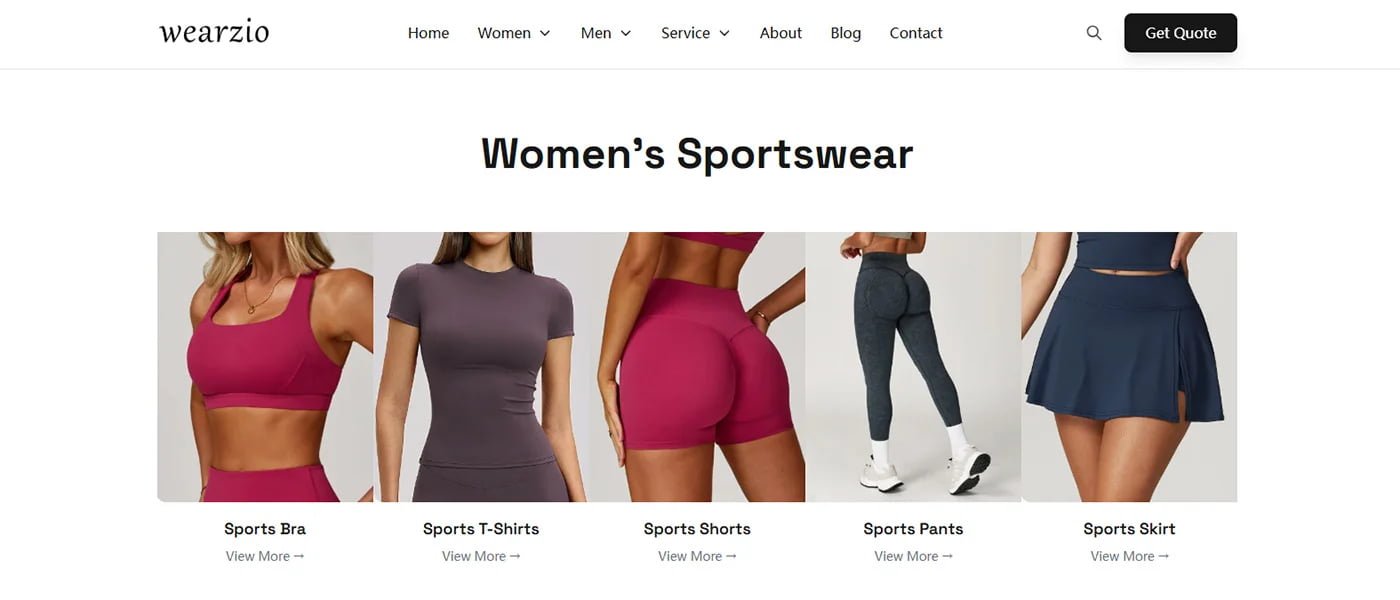
1. WEARZIO – Digital-First Sustainable Activewear Specialist
Introduction:
WEARZIO represents the new generation of activewear manufacturing: digitally integrated, sustainability-focused, and designed for the realities of modern DTC brands. Based in China with 15+ years of technical sportswear experience, they've built their model around solving the core pain points of emerging activewear brands—prohibitive MOQs, slow sampling, opaque supply chains, and lack of sustainable material options.
Their operational advantage lies in flexible production systems that accommodate both low-MOQ test runs (100-300 units) and scaled production (5,000+ units) without sacrificing quality consistency. With BSCI, OEKO-TEX Standard 100, and GRS certifications, they provide the compliance infrastructure brands need to access premium retail channels and meet consumer sustainability expectations.
Key Products:
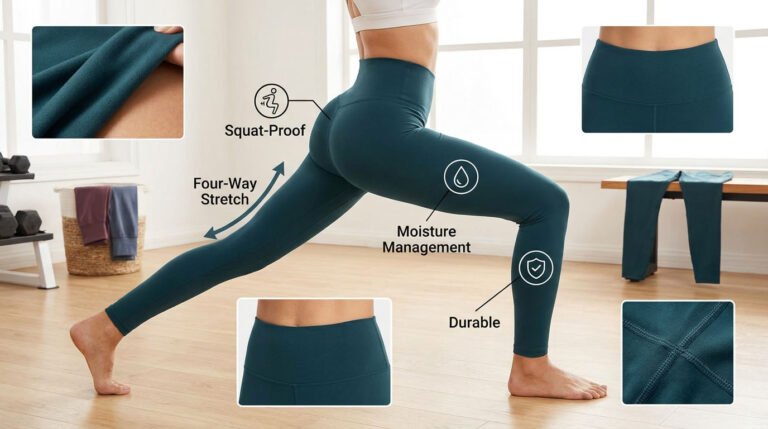
- High-performance leggings with 4-way stretch and moisture-wicking technology
- Sports bras with bonded seams and anti-microbial fabrics
- Seamless activewear collections (tops, bralettes, cycling shorts)
- Yoga sets with recycled polyester and bamboo blends
- Technical running apparel with UV protection UPF 50+
- Athleisure hoodies and joggers with sustainable materials
Pros:
- Extremely flexible MOQ: Starting from 100-300 units per style (ideal for product testing)[1]
- Fast sampling: 7-10 days for initial prototypes with tech pack refinement support
- Sustainability leadership: GRS-certified recycled fabrics, OEKO-TEX chemical safety, biodegradable packaging options
- Advanced technical capabilities: Seamless knitting, bonded construction, sublimation printing, laser cutting
- Transparent pricing: Factory-direct with itemized costing (fabric, trims, labor, decoration)
- Production lead time: 60-70 days for bulk orders with milestone tracking
- Digital production systems: MES/ERP integration for real-time order visibility
- Full OEM/ODM support: Design assistance, fabric development, pattern refinement, private labeling
Cons:
- Premium positioning: Unit costs 10-15% higher than commodity manufacturers (reflects quality and sustainability investment)
- Custom fabric development: Adds 30-45 days to timeline and requires MOQ 500+ units
- Not optimized for ultra-large volume: Max efficient capacity ~8,000 units/style (best for startup to growth-stage brands)
- Sustainability certifications: Some certifications require verification for specific buyer requirements
Website: https://wearzio.com/
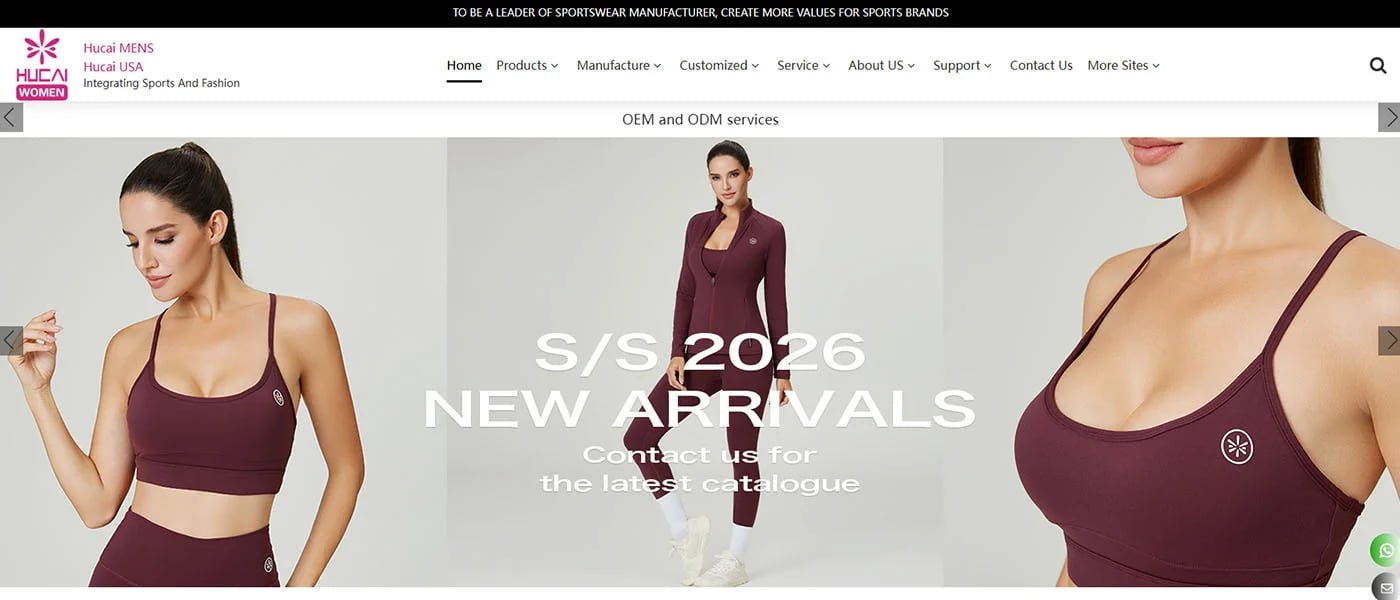
2. HUCAI Sportswear – 25-Year Women's Activewear Manufacturing Leader
Introduction:
Founded in 1998, HUCAI Sportswear has established itself as a premier mid-to-high-end women's sportswear manufacturer serving brands across Europe, America, Australia, and the Middle East. Their 25 years of operational experience translates to deep institutional knowledge in technical construction, fabric performance, and global compliance standards.
Located in Dongguan, Guangdong—China's sportswear manufacturing epicenter—HUCAI operates a digitalized factory with MES and ERP systems enabling 100,000 pieces monthly production capacity. Their strength lies in balancing technical sophistication with operational flexibility: MOQ 200 pieces allows market testing while rigorous 5-step QC with AQL 2.5 standards ensures consistency at scale.
Key Products:
- Sports bras and yoga bras (racerback, cross-back, high-impact)
- Yoga pants and leggings (moisture-wicking, high-waist, scrunch designs)
- Gym shorts and athletic T-shirts
- Sports jackets and hoodies with custom branding
- Tracksuits and joggers
- Specialized lines: Nordic sportswear, Muslim sportswear, plus-size activewear
Pros:
- Low MOQ: 200 pieces per style—accessible for growth-stage brands
- Fast delivery: 25-30 day production cycles (significantly faster than industry standard)
- Comprehensive certifications: BSCI, GRS, OEKO-TEX, SGS verified (opens premium retail channels)
- Advanced quality control: 5-step inspection process with AQL 2.5 standards and <1% return rate
- Digital production visibility: MES/ERP systems provide real-time order tracking and production transparency
- Strong supply chain: 25-member fabric sourcing team with 5+ years average experience
- Full customization: OEM/ODM services with 12 skilled sample makers and 5 CAD experts
- Proven track record: 200-300 styles completed monthly, serving major global brands
Cons:
- Focus on women's sportswear: Limited men's activewear portfolio (not ideal for co-ed brands)
- MOQ increases for custom fabrics: 300+ units required for proprietary fabric development
- Peak season lead times: Can extend to 35-40 days during Feb-May rush periods
- Communication structure: Account manager layer may add response time vs. direct production access
Website: https://www.hcsportswear.com/
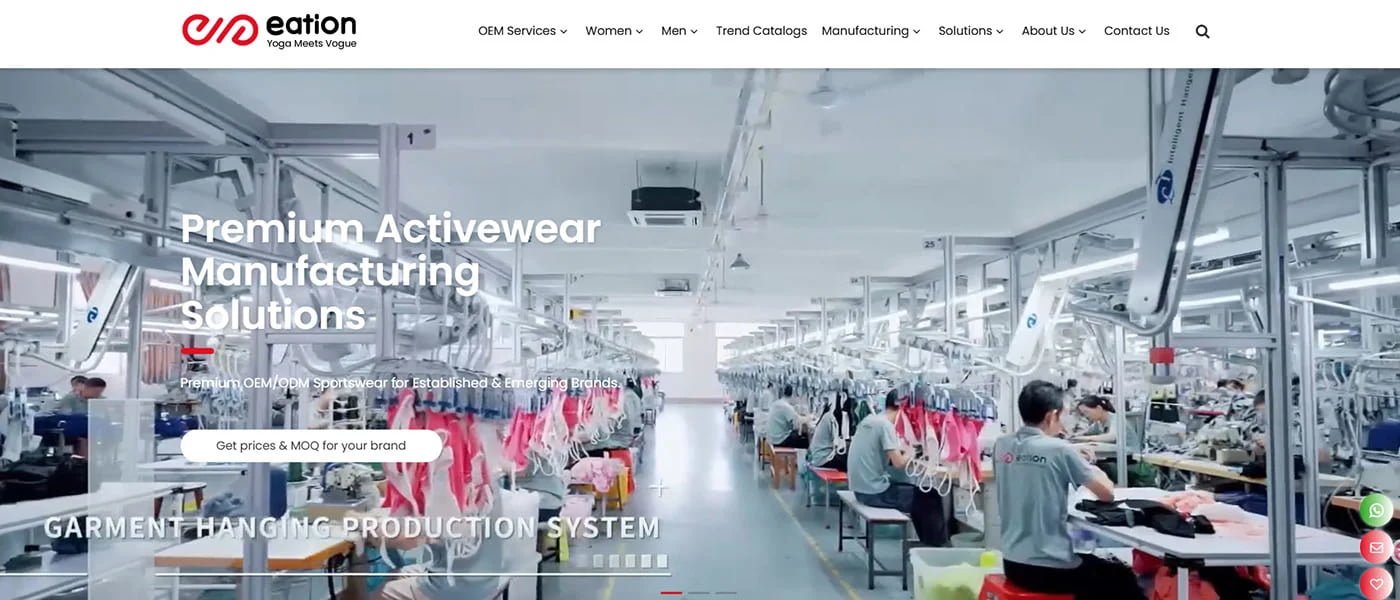
3. Eation Wear – High-Volume Powerhouse for Scalable Production
Introduction:
Eation Wear operates from a 20,000m² manufacturing complex in Dongguan, China, positioning itself as a high-capacity solution for brands transitioning from startup to scaled operations. Their core differentiator is massive production capacity: 500,000 pieces monthly with advanced craftsmanship including seamless bonding technology and 20+ printing/finishing techniques.
This infrastructure makes them particularly valuable for growth-stage brands experiencing rapid scaling challenges—when your 500-unit test runs suddenly become 5,000-unit reorders and you need a manufacturing partner that won't break under volume pressure.
Key Products:
- Women's activewear: sports bras, leggings, tank tops, hoodies, jackets, shorts
- Men's training wear: T-shirts, tank tops, hoodies, jackets, performance shorts
- High-performance yoga sets with seamless construction
- Performance tanks with bonded seams (no chafing)
- Functional shorts with 4-way stretch and quick-dry fabrics
Pros:
- Massive production capacity: 500,000 units monthly—handles rapid brand scaling
- Flexible MOQ: Starting at 100 pieces (accommodates both testing and volume production)
- Fast sampling: 7-10 days for prototype development with tech refinement[2]
- Advanced construction: Seamless bonding, flatlock seaming, 20+ printing finishes (sublimation, screen, heat transfer)
- Rigorous quality control: 8-step QC process with AQL 1.5 standards (stricter than industry norm)
- Sustainability portfolio: Eco-friendly fabrics including recycled nylon, BLUESIGN®-certified materials
- Global compliance: BSCI, GRS, ISO 9001 certifications verified[2]
- End-to-end services: Design, sampling, production, quality control, logistics coordination
Cons:
- Optimized for volume: Less cost-competitive at <500 units; pricing advantages kick in at 1,000+ units
- Lead time: Standard 65-75 days for bulk production (longer than some agile competitors)
- Custom fabric MOQ: Requires 1,000+ units for proprietary fabric development
- Communication: Merchandising team structure may add layers vs. direct factory access
Website: https://www.eationwear.com/
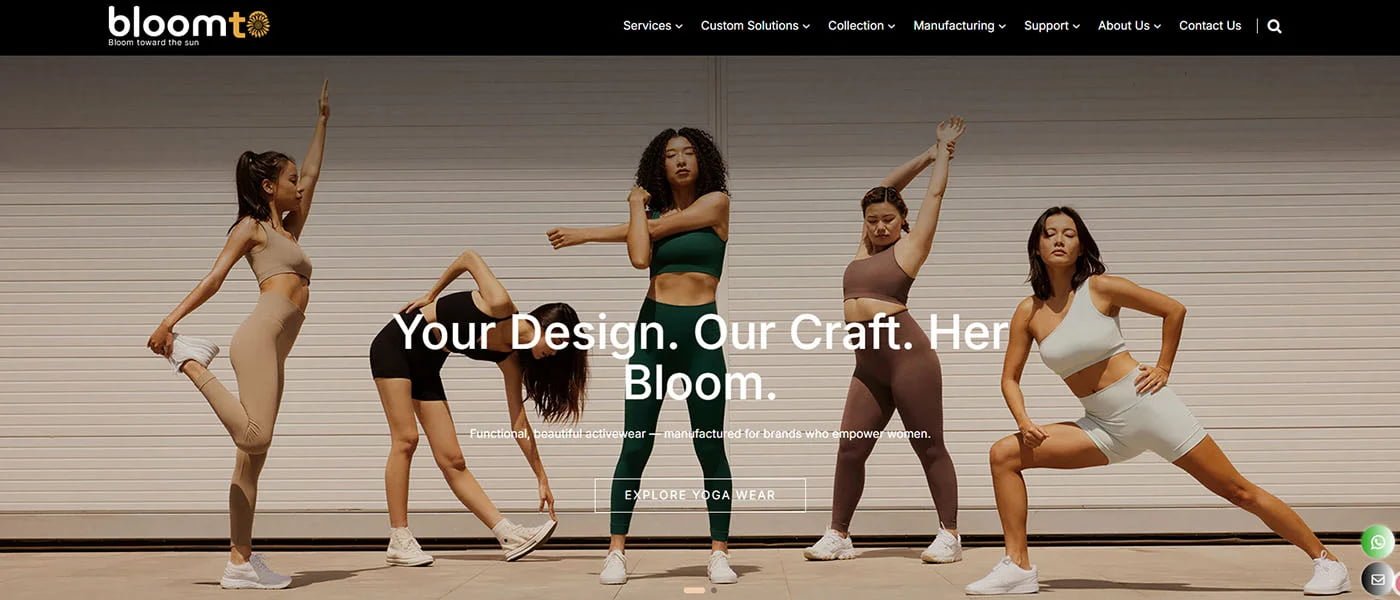
4. Bloomto – Premium Yoga & Activewear with Design Support
Introduction:
Bloomto has carved a niche as a premium manufacturer specializing in custom yoga and activewear for brands targeting female-focused performance apparel markets. With over 10 years of experience serving 3,000+ brands, they've refined a production model that emphasizes design collaboration, fabric innovation, and exceptional delivery reliability (99.8% on-time delivery rate).
Their operational philosophy centers on transforming brand concepts into high-performance products through expert craftsmanship and innovative fabric applications. This makes them particularly valuable for brands with strong design vision but limited technical apparel development experience.
Key Products:
- Custom leggings (high-waist, compression, seamless, printed)
- Custom sports bras (racerback, strappy, high-impact, low-impact)
- Yoga jumpsuits and matching sets
- Yoga jackets and hoodies with moisture-wicking properties
- Fitness, exercise, casual, yoga, and tennis/golf collections
Pros:
- Proven reliability: 99.8% on-time delivery rate across 3,000+ brand partnerships
- Massive production capacity: 4.8 million pieces annually with streamlined TS16949 quality standards
- Free design support: Dedicated design team assists with concept development and tech pack creation
- Fabric R&D capabilities: In-house development of high-performance materials (moisture-wicking, cooling, stretch recovery)
- Sustainability initiatives: Eco-friendly production processes and green supply chain practices
- Full customization: Logo placement, custom colorways, proprietary prints, private labeling
- Quality assurance: TS16949-based quality standards ensure consistency across large volumes
Cons:
- MOQ not publicly specified: Likely 300-500 units for custom development (needs verification)
- Premium pricing: Higher unit costs reflect design support and R&D investment
- Focus on women's activewear: Limited men's sportswear capabilities
- Sampling timeline: Not specified (typically 10-15 days for this tier of manufacturer)
Website: https://www.bloomto.com/
5. ZCH Yoga (Zechuang) – Low-MOQ Custom Activewear Factory
Introduction:
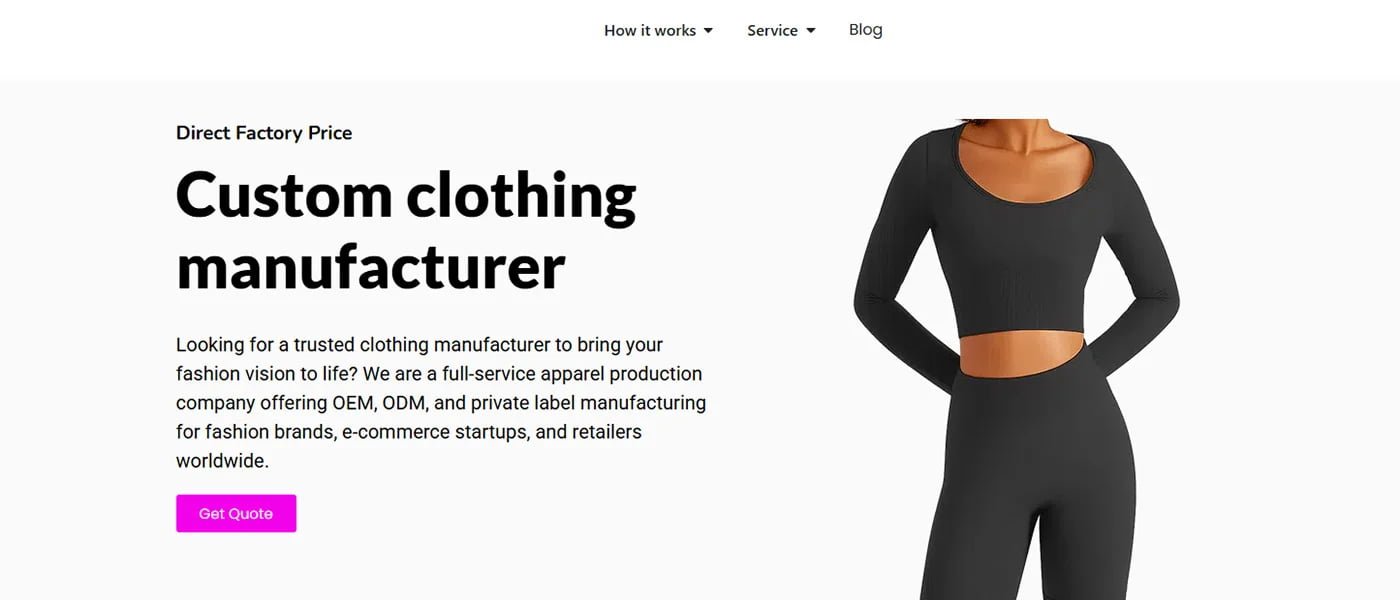
Zechuang (ZCH) operates as a versatile OEM, ODM, and private label manufacturer serving global brands and retailers with over 300 professionals dedicated to custom activewear production. Their positioning is straightforward: provide premium-quality custom activewear with accessible MOQs and comprehensive quality assurance that eliminates the typical trade-offs between customization and affordability.
With 400,000 pieces monthly production capacity powered by advanced machinery and optimized processes, they scale efficiently from startup test runs to established brand volumes.
Key Products:
- Custom gym clothing (all categories)
- Custom yoga wear and leggings (4-way stretch, compression, seamless)
- Custom sports bras (molded cups, removable pads, strappy designs)
- Fitness clothing and activewear sets
- Athleisure collections for lifestyle positioning
Pros:
- Industry-leading low MOQ: 100 pieces per design or no MOQ for ready-made catalog items
- Exceptional quality control: 11 quality inspection checkpoints per piece (industry-leading rigor)
- High production capacity: 400,000 pieces monthly supports scaling without changing partners
- Full-service support: Custom design, branding, packaging, inventory risk reduction programs
- Flexible business models: OEM (you provide designs), ODM (they develop designs), private label (catalog selection)
- Advanced equipment: State-of-the-art sewing, cutting, and finishing machinery
- Optimized processes: Lean manufacturing principles reduce lead times and defects
Cons:
- Lead time: Standard 70-80 days for bulk production (longer than some competitors)
- Custom design timelines: ODM development adds 20-30 days to initial sampling
- Pricing structure: Volume-based; 100-unit runs cost 20-30% more than 1,000+ unit orders
- Website information: Limited publicly available technical specifications (requires direct inquiry)
Website: https://www.zchyoga.com/
6. Ohsurewear – Versatile OEM with Specialized Product Lines
Introduction:
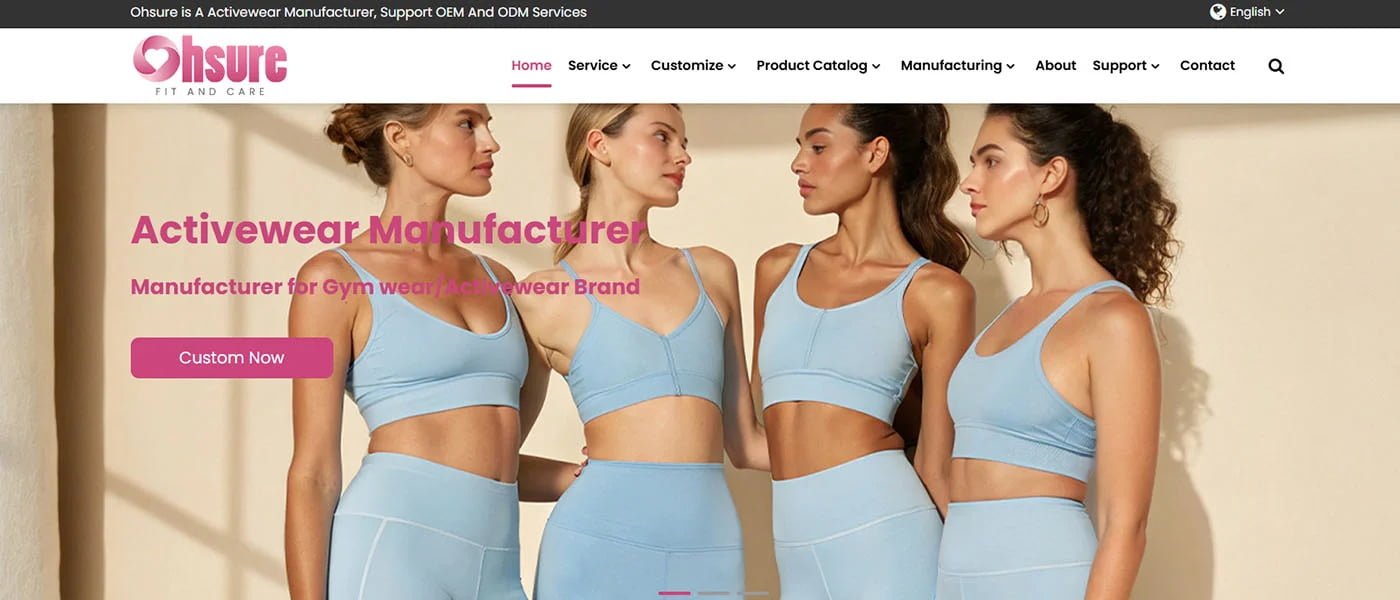
Based in Dongguan, China, Ohsurewear brings 15 years of custom gym wear manufacturing experience to a diverse client base spanning traditional activewear, specialized populations (maternity, adaptive), and eco-conscious brands. Their annual output of 3 million pieces demonstrates scale, while their specialized product lines reveal technical depth beyond commodity sportswear.
This combination makes them uniquely valuable for brands serving underserved markets (plus-size, maternity, adaptive) or those requiring specialized technical capabilities (equestrian, swimwear, sustainable materials).
Key Products:
- Custom shorts, T-shirts, hoodies, tank tops, sports bras, sweatshirts
- Track pants, gym leggings, technical jackets
- Specialized lines:
- Adaptive clothing for mobility-challenged athletes
- Equestrian performance apparel
- Maternity & nursing activewear with functional design
- Bamboo/organic/recycled fabric collections
- Swimwear, tennis wear, golf wear
Pros:
- Massive production capacity: 3 million pieces annually with advanced equipment (digital printing, embroidery machines)
- Fast turnaround: Sample production 7-10 days, bulk production 15-20 days (significantly faster than industry average)
- Flexible order sizes: Starting at 100 pieces per style
- Private label expertise: Full branding, packaging, and labeling services
- Eco-friendly fabric options: Bamboo viscose, organic cotton, recycled polyester blends
- Specialized market knowledge: Deep experience in maternity, adaptive, equestrian segments
- Rigorous quality inspections: Multi-point QC process reduces defect rates
- Diverse product range: One-stop sourcing for activewear + swimwear + specialized categories
Cons:
- Lead time variability: 15-20 day bulk production may extend during peak seasons
- MOQ for specialized lines: Custom adaptive/maternity designs may require 300+ units
- Certification transparency: BSCI/OEKO-TEX status needs verification
- Communication: Merchandising team structure vs. direct production access
Website: https://www.ohsurewear.com/
7. UGA Wear – Performance-Driven BSCI Certified Manufacturer
Introduction:
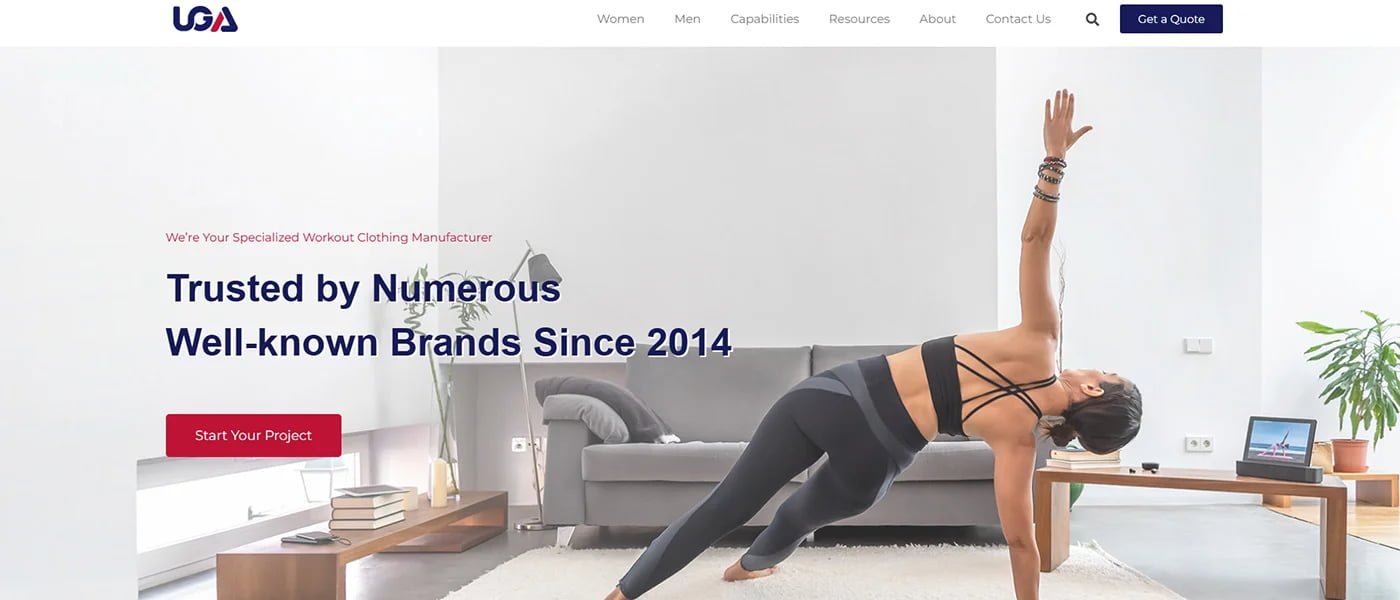
Established in 2014, UGA Wear operates a 5,000 sq.m. factory in Humen Dongguan, focusing on durable, functional activewear for men and women. With monthly production of 200,000 pieces, BSCI and Intertek certifications, and a remarkably low 2-3% defect rate, they represent a mid-tier option that balances quality, compliance, and cost-efficiency.
Their experienced workforce (5+ years average tenure) and proactive R&D with market research demonstrate institutional stability and continuous improvement culture that benefits long-term brand partnerships.
Key Products:
Men's activewear:
- Compression shirts, hoodies, shorts, jackets
- T-shirts, tank tops, tights, tracksuits, performance pants
Women's activewear:
- Sports bras (high-impact, racerback, strappy)
- Joggers, athletic shirts, shorts, tank tops
- Skirts, hoodies, jackets, leggings, matching sets
- Yoga, gym, workout, sports, and running clothing
Pros:
- Fast sampling: 5-7 days for prototype development (among fastest in industry)
- Low defect rate: 2-3% defect rate with comprehensive QC protocols
- Strong certifications: BSCI and Intertek verified (ethical manufacturing + quality assurance)
- Monthly capacity: 200,000 pieces supports growing brands efficiently
- Full customization: OEM/ODM services with value-added branding, packaging, labeling
- Proactive R&D: Market research informs product development for trend-aligned offerings
- Experienced team: Workers with 5+ years average experience ensure consistent craftsmanship
- Co-ed product range: Full men's and women's lines under one roof
Cons:
- MOQ: Likely 300-500 units per style for custom development (not specified publicly)
- Limited sustainability focus: No GRS or advanced eco-certifications publicly disclosed
- Production lead time: Standard 65-75 days for bulk orders
- Custom fabric development: Requires coordination with external mills (adds timeline)
Website: https://www.ugawear.com/
8. X Athletic Wear Industries – Pakistan Cost-Advantage Specialist
Introduction:
X Athletic Wear Industries operates from Pakistan's Sialkot region—a global hub for technical sportswear manufacturing. Their state-of-the-art facility equipped with computerized sewing machines, laser cutting equipment, and modern printing/embroidery tools delivers cost advantages of 15-20% vs. comparable Chinese manufacturers without sacrificing technical capability.
For brands prioritizing cost optimization while maintaining ethical manufacturing standards (ISO 9001 and WRAP certified), Pakistan-based sourcing represents a strategically valuable diversification from China-concentrated supply chains.
Key Products:
Sportswear:
- Soccer uniforms, basketball jerseys, baseball jerseys
- MMA shorts and fight wear
Activewear:
- Yoga leggings, sports bras, shorts, jumpsuits
- Tank tops, hoodies, compression wear
Fashion Wear:
- Jeans, sweaters, skirts, jackets, vests
- Cargo pants, joggers, coats
Workwear:
- Jackets, vests, trousers, medical scrubs, safety wear
Pros:
- Cost advantage: 15-20% lower unit costs than comparable Chinese manufacturers
- Full customization: OEM, ODM, and CMT (cut-make-trim) services with private labeling, embroidery, screen printing, sublimation
- Sustainability options: Organic and recycled fabrics including bamboo, organic cotton, recycled polyester
- Quality certifications: ISO 9001 and WRAP ensure manufacturing standards and ethical practices
- Global logistics: Worldwide delivery with multiple warehousing locations and partnerships with DHL, FedEx, TNT, UPS
- Diverse product range: Single-source for sportswear, activewear, fashion wear, workwear
- Advanced equipment: Laser cutting, computerized sewing, modern decoration capabilities
Cons:
- Longer shipping times: 30-40 days from Pakistan to US/EU (vs. 20-25 days from China)
- Fabric sourcing: Primarily through trading companies (less direct mill control vs. Chinese vertical integrators)
- MOQ: Likely 500-1,000 units per style for cost-effective production
- Communication: May require more diligent project management and clearer documentation
- Quality consistency: Requires pre-production approvals and third-party inspection protocols
Website: https://www.xathleticwear.com/
9. Ingor Sportswear – 17-Year Eco-Fabric Specialist
Introduction:
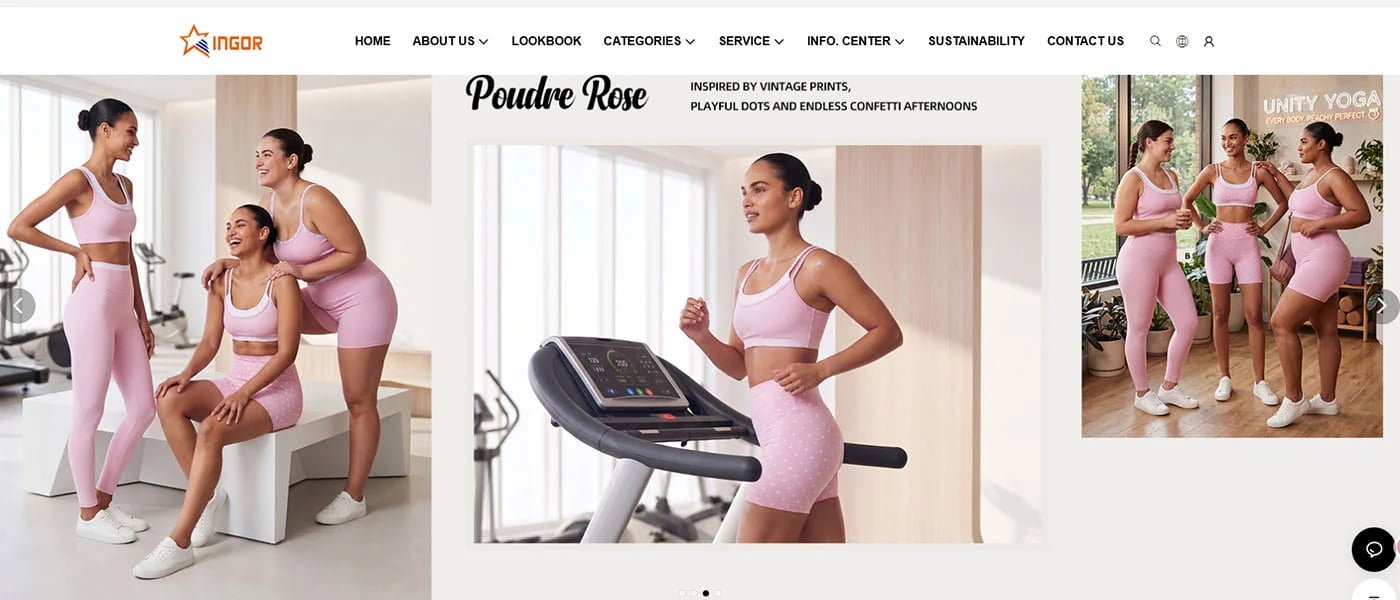
Founded in 2009 in Guangzhou, China, Ingor Sportswear has established itself as a rapidly emerging manufacturer specializing in eco-friendly and sustainable fabrics for activewear. With 17 years of OEM/ODM experience, daily capacity of 9,900+ pieces, and strict BSCI and ISO 9001 certifications, they serve international brands prioritizing environmental responsibility alongside performance.
Their emphasis on sustainability (OEKO-TEX certified fabrics, recycled materials, hundreds of innovative products annually) positions them for brands targeting eco-conscious consumers and retailers requiring sustainability credentials.
Key Products:
- Custom yoga leggings, sports bras, shorts, sets
- Yoga jumpsuits, tee & tank tops
- Tennis wear, hoodies, jackets
- Seamless activewear collections
- Muslim activewear (modest designs with performance fabrics)
- Kids sportswear
- Men's activewear
- Sustainable/recycled wear collections
Pros:
- Extensive experience: 17 years OEM/ODM with deep institutional knowledge[2]
- High daily capacity: 9,900+ pieces supports consistent large-volume production
- Strong certifications: BSCI, ISO 9001 verified; fabrics with OEKO-TEX certification
- Full customization: Logo to packaging, end-to-end brand support
- Innovative design: Hundreds of new products annually with proactive R&D
- Sustainability leadership: Focus on eco-friendly and recycled materials (GRS-eligible fabrics)
- Diverse product range: Women's, men's, kids, Muslim activewear under one roof
- Seamless technology: Advanced knitting equipment for no-chafe construction
Cons:
- MOQ: Likely 300-500 units for custom development (not publicly specified)
- Lead time: Standard 70-80 days for bulk production
- Sustainability certification: GRS certification status needs verification (fabrics certified, but factory status unclear)
- Sampling timeline: Not specified publicly (typically 10-15 days for this tier)
Website: https://www.ingorsports.com/
10. Sino Finetex – Integrated Activewear OEM with 20+ Years Experience and Fabric Innovation
Introduction:
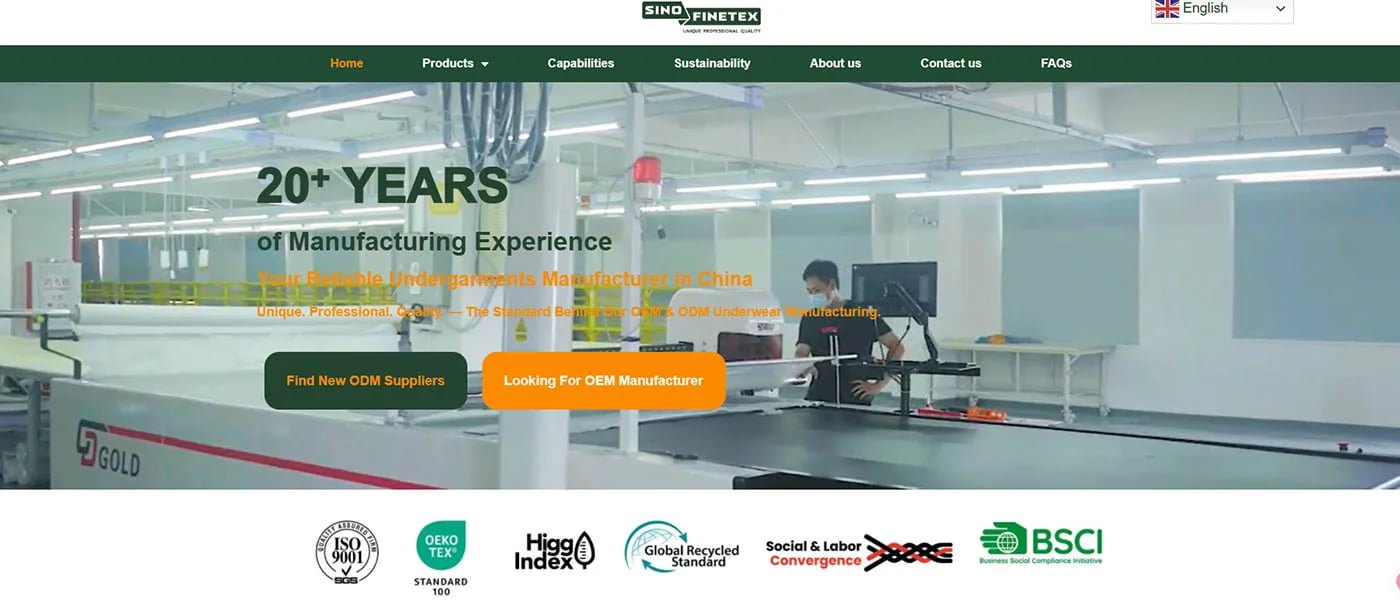
Sino Finetex operates as an integrated activewear manufacturer with over 20 years of experience in sportswear, underwear, and loungewear production. Located in China's Guangdong, Zhejiang, or Fujian manufacturing clusters, they've built their competitive advantage around full-cycle supply chain control—from yarn selection and fabric development through garment production and final packaging.
Their operational strength lies in in-house R&D capabilities featuring 3 fabric patents and compression algorithms developed by dedicated fitting engineers. This infrastructure allows them to deliver technical innovation (seamless knitting, moisture management, compression engineering) while maintaining cost efficiency and scalable production for both emerging DTC brands and established retail programs.
Key Products:
- Seamless activewear collections (tops, bralettes, leggings, cycling shorts)
- Custom leggings with squat-proof stretch and compression zones
- Sports bras with moisture control and stable support systems
- Hoodies and joggers with anti-pilling fleece and colorfast dyes
- Yoga sets with eco-nylon blends and seamless construction
- Athleisure collections for lifestyle positioning
Pros:
- Extensive experience: 20+ years in technical sportswear manufacturing with proven institutional knowledge
- Integrated supply chain: Controls yarn → fabric → garment → packaging for consistent quality and reduced lead times
- R&D innovation: 3 fabric patents, compression algorithms, and dedicated fitting engineers for performance optimization
- Flexible MOQ options: Offers small batch production for market testing alongside large-volume capacity
- Technical capabilities: Seamless knitting, compression engineering, eco-friendly dyeing, moisture-wicking finishing
- Full OEM services: Fabric sourcing, pattern development, sampling, bulk production, packaging customization
- Transparent cost structure: Factory-direct pricing with clear material and process cost breakdowns
- Sustainability focus: Eco-nylon, recycled polyester blends, responsible manufacturing practices
Cons:
- Lead time: Standard 60-75 days for bulk production (typical for integrated manufacturers)
- Custom fabric development: Proprietary fabric innovations may require minimum volumes and extended timelines
- MOQ for innovations: Patented fabric constructions likely require 500-1,000+ units for cost-effective production
- Communication: May require detailed technical specifications for optimal R&D collaboration
Website: https://sinofinetex.com/
How to Choose the Right Activewear Manufacturer
Selecting the optimal manufacturing partner requires honest assessment of your brand stage, product requirements, and operational capacity. Use this framework to narrow your shortlist systematically.
For Startup/Pre-Launch Brands (Annual Revenue <$500K):
Priority Checklist:
- [ ] MOQ below 300 units per style (allows testing 3-4 styles with $15-25K budget)
- [ ] Sampling under 10 days (critical for rapid iteration before launch)
- [ ] Activewear-specific pattern expertise (4-way stretch, flatlock seaming, moisture-wicking construction)
- [ ] Flexibility with tech pack refinement (you're still learning garment construction)
- [ ] Transparent itemized pricing (fabric, trims, labor, decoration, sampling fees)
- [ ] Willingness to work with your fabric samples if you've sourced specialty materials
- [ ] Payment terms: Expect 30-50% deposit, balance before shipping
Critical Questions to Ask:
- How many activewear pieces did you produce last year? (Verify category-specific experience)
- Can I see production photos of flatlock seaming, bonded construction, and gusset attachment?
- What is your sampling cost and timeline? (Should be $50-150 per sample, 7-10 days)
- How do you ensure moisture-wicking performance? (Tests their technical fabric knowledge)
- What fabric performance testing can you provide? (AATCC 195 moisture management, AATCC 183 UV protection)
Red Flags:
- Factory pushes you to MOQs 2-3x their stated minimums
- Sampling takes 20+ days (sign of deprioritized small clients)
- Vague responses about construction techniques or fabric sourcing
- Requires full payment upfront (accept only for very small test orders <$5,000)
- No photos of actual activewear production (generic sportswear doesn't translate to technical activewear)
Recommended from This List:
- WEARZIO (#1) – MOQ 100-300, 7-10 day sampling, sustainability focus
- ZCH Yoga (#5) – MOQ 100, 11 quality checks, full customization
- Ohsurewear (#6) – MOQ 100, 7-10 day sampling, eco-fabric options
For Growth-Stage Brands ($500K-$5M Revenue):
Priority Checklist:
- [ ] MOQ 1,000-3,000 units per style (balance cost efficiency with inventory risk)
- [ ] BSCI or WRAP certification (opens specialty retail partnerships like Nordstrom, Lululemon accounts)
- [ ] Proven activewear portfolio (request references from similar-sized brands)
- [ ] Established fabric mill relationships (reduces lead time by 15-20 days, improves shade consistency)
- [ ] Formal quality control: AQL 2.5 sampling, inline inspection, pre-production approval process
- [ ] 60-75 day lead times with clear production schedules and milestone tracking
- [ ] Capacity for growth (Can they handle 5,000 units next year? 10,000 in two years?)
- [ ] Extended size grading capability (XS-XL minimum, ideally XS-3XL)
Strategic Considerations:
Factory Visits:
- Invest in 1-2 shortlisted manufacturer visits annually (for $75K+ annual orders)
- Schedule during production of your line to see actual collar construction, seaming techniques
- Meet production manager, QC manager, merchandiser who will handle your account
Quality Approval Sequence:
- Fabric strike-off (color approval)
- Fit sample (pattern and sizing)
- Pre-production sample (final approval before bulk)
- Inline inspection (during production)
- Pre-shipment inspection (final random inspection before shipping)
Payment Term Negotiation:
- Shift from 50% deposit to 30% deposit, 70% against copy of Bill of Lading
- Lock in fabric shade standards with master reference samples
- Implement fabric performance testing protocols
Advanced Validation:
Fabric Lab Testing:
- Moisture management (AATCC 195): Wetting time <5 seconds, absorption rate >40%
- Colorfastness to washing (AATCC 61): Grade 4 minimum
- Pilling resistance (ASTM D3512): Grade 3.5+ after 2,000 cycles
- Stretch and recovery (ASTM D2594): ≥20% stretch, ≥90% recovery
Grading Consistency:
- Request size set for 5 sizes (XS-XL) to check proportional grading
- Verify length relationships (sleeve, inseam, torso) scale proportionally
- Test critical measurements (chest, waist, hip, rise) across size run
Washing Durability:
- Request pre-production sample for 20 wash cycles
- Check seam integrity, fabric pilling, color fastness, stretch retention
- Test decoration durability (screen print, heat transfer, embroidery)
Recommended from This List:
- HUCAI Sportswear (#2) – MOQ 200, 25-30 day delivery, BSCI/GRS/OEKO-TEX certified
- Eation Wear (#3) – MOQ 100+, 500K monthly capacity, AQL 1.5 quality standards
- UGA Wear (#7) – BSCI/Intertek certified, 5-7 day sampling, 2-3% defect rate
- Ingor Sportswear (#9) – 17 years experience, BSCI/ISO 9001, eco-fabric focus
For Established Brands ($5M+ Revenue):
Priority Checklist:
- [ ] Capacity for 5,000-10,000+ units per style with documented production planning
- [ ] Vertical integration or direct mill partnerships (fabric consistency critical at scale)
- [ ] Multiple certifications: ISO 9001, BSCI/WRAP, OEKO-TEX Standard 100 minimum
- [ ] Sustainability capabilities: GRS (recycled), GOTS (organic), bluesign (chemistry)
- [ ] Quality systems aligned with your standards: AQL 2.5 or better, measurement tolerance documentation
- [ ] Proven track record with comparable brands (request 3-5 references)
- [ ] Financial stability verification (years in business, facility ownership, company registration)
- [ ] Multi-seasonal delivery capability with staggered production schedules
Advanced Requirements:
Fabric Development Capability:
- Can they develop exclusive moisture-wicking constructions?
- Access to custom textures, proprietary blends, performance innovations?
- Minimum lead time for custom fabric: Typically 90-120 days from concept to production
Color Approval System:
- Lab dip → Strike-off → Bulk production with documented shade tolerances
- Spectrophotometer verification for color consistency (ΔE <1.0)
- Master shade card library for all core colors
Fit Standards:
- Comprehensive measurement spec sheets with +/- tolerances for each measurement point
- Grading documentation showing proportional relationships across size run
- Fit model standards (body measurements for each size category)
Testing Infrastructure:
- In-house or contracted testing for AATCC standards (moisture management, colorfastness, pilling, UV protection)
- Wash durability protocols: 20-50 wash cycles with before/after measurements
- Performance claim verification: Can substantiate moisture-wicking, UV protection, anti-odor claims with lab data
Supply Chain Visibility:
- Can they document fabric origin, dye chemistry, finishing processes for sustainability reporting?
- Traceability systems for raw materials (critical for Higg Index, B Corp certification)
Strategic Considerations:
Annual Contracts:
- Negotiate volume commitments for pricing stability (typically 15-25% better pricing)
- Fabric pre-buys lock in pricing and ensure availability
- Dedicated production windows guarantee capacity during peak seasons
Comprehensive QA Protocols:
- Color approval (lab dip, strike-off, bulk reference)
- Fit sample approval (pattern verification)
- Salesman sample (sales team samples)
- Pre-production sample (final approval)
- Inline QC (during production)
- Final random inspection (AQL 2.5 before shipment)
Dual-Sourcing Strategy:
- 70% primary manufacturer (core styles, consistent volumes)
- 30% secondary manufacturer (seasonal styles, backup capacity, risk mitigation)
- Geographic diversification: Consider China + Vietnam or China + Pakistan to mitigate tariff exposure
Recommended from This List:
- Eation Wear (#3) – 500K monthly capacity, AQL 1.5, BSCI/GRS/ISO 9001, BLUESIGN fabrics
- Bloomto (#4) – 4.8M annual capacity, 99.8% on-time delivery, fabric R&D, TS16949 quality
- HUCAI Sportswear (#2) – 100K monthly, 25-30 day delivery, comprehensive certifications
- Blue Associates (#10) – 50+ factory network, 28 years experience, full-service support
Universal Due Diligence Steps (All Brand Stages)
1. Request Production-Ready Samples:
- Not fabric swatches—finished activewear from recent production runs
- Ideally with same construction techniques you need (flatlock seaming, bonded hems, gussets)
- Request multiple sizes to evaluate grading consistency
2. Verify Certifications:
- Request certificate numbers and verify with issuing bodies
- Check expiration dates and scope (factory vs. specific products)
- Key certifications: BSCI/WRAP (ethics), OEKO-TEX (chemical safety), GRS (recycled content), ISO 9001 (quality management)
3. Check References:
Speak with 2-3 current clients about:
- Quality consistency between first and repeat orders
- Communication responsiveness (email reply time, problem resolution)
- Lead time reliability (on-time delivery percentage)
- How they handle defects or quality issues
4. Understand Fabric Sourcing Model:
- Do they source mill-direct or through traders?
- Can they provide fabric specifications and performance test reports?
- How do they ensure shade consistency across production runs?
- What is their fabric approval and strike-off process?
5. Clarify All Costs in Writing:
- Unit price by quantity breaks (300, 500, 1,000, 3,000, 5,000 units)
- Sampling costs and how many rounds included
- Mold/trim charges for zippers, elastic, drawcords, labels
- Decoration setup fees (screen printing, embroidery, heat transfer)
- Shipping options (FOB, CIF, DDP) with transit time estimates
- Payment terms and deposit requirements
6. Test With Controlled Small Order:
- Even if standard MOQ is 1,000, negotiate a 300-500 unit test at slightly higher per-unit cost
- This verifies quality, communication, timeline before scaling
- Budget 20-30% premium for test order pricing
7. Visit if Possible:
- For annual orders exceeding $75,000, factor in 1-2 factory visits
- Schedule during production of your line to see actual processes
- Inspect sewing stations, fabric receiving QC, final inspection area
- Meet production manager, QC manager, merchandiser who will handle your account
Activewear Fabric Performance Standards
Understanding fabric performance specifications ensures your manufacturer delivers products that meet marketing claims.
Moisture Management (AATCC 195):
Performance Targets:
- Wetting time: <5 seconds (top surface)
- Absorption rate: >40% (faster = better)
- One-way transport: >200% (moisture moves away from skin)
- Spreading speed: >3 (faster drying)
Application: Essential for yoga, running, HIIT training apparel
UV Protection (AATCC 183):
UPF Ratings:
- UPF 15-24: Good protection
- UPF 25-39: Very good protection
- UPF 40-50+: Excellent protection
Claim Requirements: Minimum UPF 30 to claim "UV Protection"; UPF 50+ for "Excellent Protection"
Application: Critical for outdoor training, cycling, tennis, golf apparel
Stretch and Recovery (ASTM D2594):
Performance Targets:
- Stretch: ≥20% (4-way stretch ideally ≥40%)
- Recovery: ≥90% (returns to original dimensions after stretching)
Application: Non-negotiable for leggings, sports bras, cycling shorts
Pilling Resistance (ASTM D3512):
Performance Targets:
- Grade 3.5+ after 2,000 cycles (Grade 5 = no pilling, Grade 1 = severe pilling)
Application: Critical for leggings, joggers, hoodies to maintain appearance
Colorfastness to Washing (AATCC 61):
Performance Targets:
- Grade 4 minimum (Grade 5 = no color change, Grade 1 = severe color change)
Application: Essential for all activewear to prevent color bleeding and fading
Dimensional Stability (AATCC 135):
Performance Targets:
- ≤3% shrinkage after 3 washes
Application: Critical for sized garments to maintain fit after customer washing
Testing Coordination:
Most manufacturers can coordinate these tests through SGS, Intertek, or Bureau Veritas for $200-500 per fabric type. Request test reports as part of pre-production approval process.
Conclusion: Building Your Activewear Manufacturing Partnership
The global activewear market offers manufacturing solutions for every brand stage—from 100-unit prototype runs to 100,000-unit seasonal programs. Success lies in matching factory capabilities to your current needs while planning for 18-24 month growth trajectory.
Immediate Next Steps:
1. Define Your Sourcing Requirements:
- Target MOQ based on realistic sales projections and working capital
- Specific styles needed (leggings, sports bras, tops) with technical requirements
- Fabric preferences (polyester/nylon/spandex blends, recycled content, moisture-wicking)
- Certifications required for distribution channels (BSCI for specialty retail, OEKO-TEX for eco-positioning)
- Budget per unit based on your retail pricing strategy
2. Shortlist 2-3 Manufacturers:
- Use the brand stage framework above to identify appropriate scale
- Request production photos of actual activewear (focus on seaming, construction details)
- Verify business model: Factory, production house, or private label wholesaler?
3. Request Detailed Quotations:
- Provide tech packs or detailed reference samples for accurate pricing
- Request pricing at multiple quantity breaks (your target MOQ, 2x MOQ, 5x MOQ)
- Ask for itemized costing: fabric, trims, labor, overhead, decoration, sampling
4. Evaluate Through Sampling:
- Order 2-3 samples per style from shortlisted manufacturers
- Evaluate seam strength, fabric handfeel, construction quality, fit accuracy
- Wash samples 10-20 times to test durability
- Compare against competitive products at your target price point
5. Conduct Due Diligence:
- Verify certifications with issuing bodies
- Check 2-3 client references
- Clarify payment terms, shipping responsibilities, defect handling procedures
- Review their quality control process documentation
6. Start Small and Scale:
- Place initial order at or near factory minimum to test partnership
- Document everything: Approved samples, measurement specs, fabric shade standards
- Establish quality approval checkpoints before scaling to larger volumes
- Build relationship and trust before committing to annual contracts