.png)
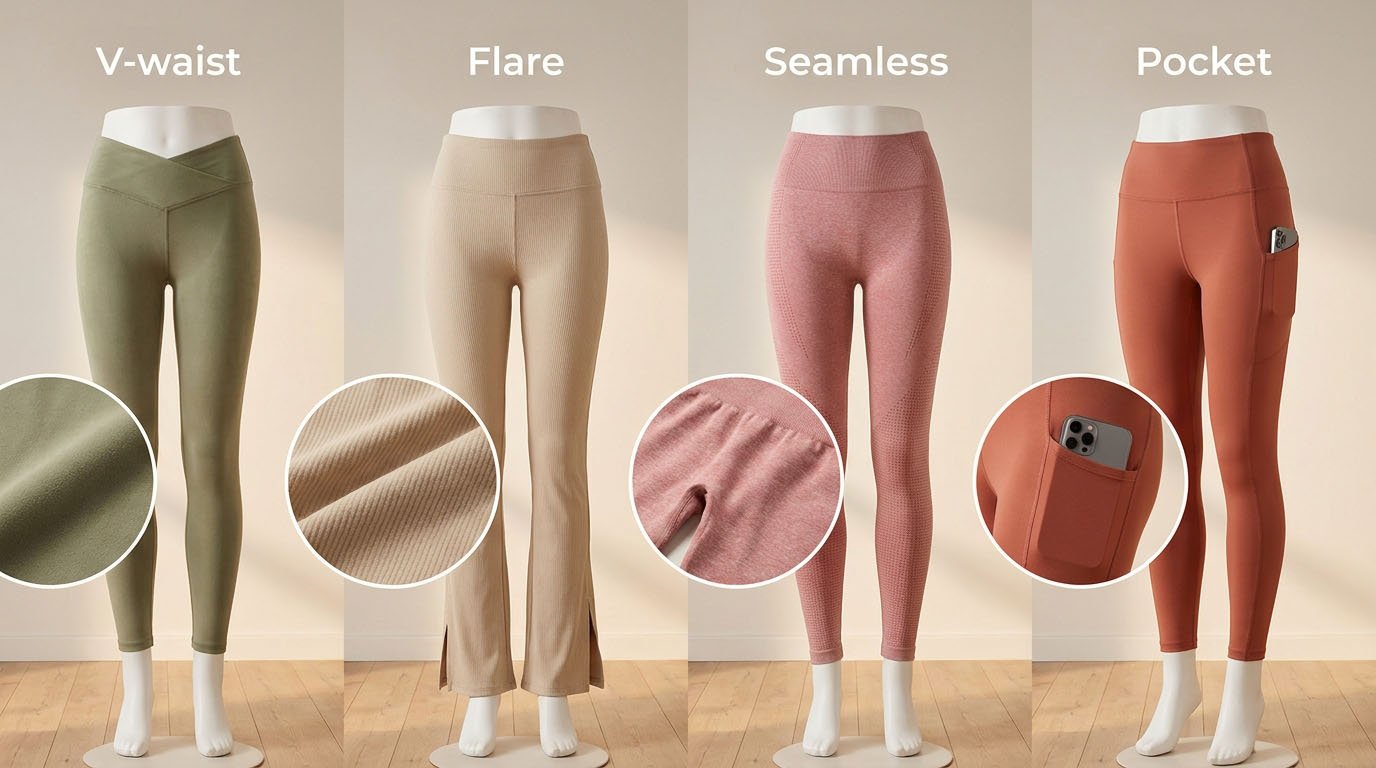
Yoga legging trends in 2026 are being led by crossover V-waist styles, selected flare and split-hem silhouettes, soft brushed fabrics, slick compression materials, seamless construction, functional pockets, and earth-tone color palettes. However, the styles most likely to succeed are not simply the ones trending on social media. The strongest performers depend on target market, use case, MOQ, price point, fabric choice, and construction complexity.
For brands, sourcing teams, and private label buyers, the main challenge is not finding trend inspiration. It is choosing yoga legging styles that can actually sell, fit the brand position, and work within manufacturing constraints. A style that performs well in one region or price tier may fail in another because of cost, fit risk, or customer expectations.
This guide breaks down the most important yoga leggings trends for 2026, including silhouettes, fabrics, construction methods, functional features, color direction, and what buyers should consider before placing a first order.
Quick Answers: Yoga Legging Trends 2026
What yoga legging styles are trending in 2026?
The main styles include crossover V-waist leggings, flare leggings, split-hem styles, seamless leggings, and shaping contour designs.
What fabric trends matter most for yoga leggings in 2026?
The biggest fabric trends are brushed soft-touch materials, slick compression fabrics, moisture management, and PFAS-free or compliance-supported fabric options.
Are flare yoga leggings still in style in 2026?
Yes, but mostly in selected markets and lifestyle-driven collections. They are not equally strong in every region or yoga segment.
Is seamless better than cut-and-sew for yoga leggings?
Seamless offers comfort and a premium look, but cut-and-sew is often better for lower MOQs, easier testing, and more flexible development.
What yoga legging features matter most to buyers?
The most requested features include pockets, stable waistbands, gussets, no-roll support, and fit details that improve comfort during movement.
Yoga Legging Trends 2026 at a Glance
| Trend | What Is Growing | Best Fit | Main Risk |
|---|---|---|---|
| Crossover V-Waist | Visible waistband styling and studio appeal | Studio yoga, premium set styling | Less suitable for every market |
| Flare Leggings | Fashion-performance crossover | US lifestyle and studio collections | Weaker fit in some international markets |
| Split-Hem Leggings | Modern hem detail and lifestyle look | Trend-led collections | Regional demand varies widely |
| Seamless Construction | Comfort and clean body fit | Premium studio categories | Higher MOQ and cost |
| Brushed Fabrics | Soft hand feel and lounge-to-studio appeal | Restorative yoga, comfort-led lines | Lower compression, higher cost |
| Slick Compression | Performance feel and support | Power yoga, hot yoga, technical lines | Can feel less soft for casual users |
| Functional Pockets | Everyday convenience | General active and studio categories | Wrong pocket type can affect performance |
| Earth-Tone Colors | Neutral but fresh color direction | Broad commercial use | Shade approval can be difficult |
Which Yoga Legging Styles Are Trending in 2026?
The biggest yoga legging style trends in 2026 are not only about appearance. They reflect a larger shift toward products designed for specific use cases, price levels, and customer lifestyles.
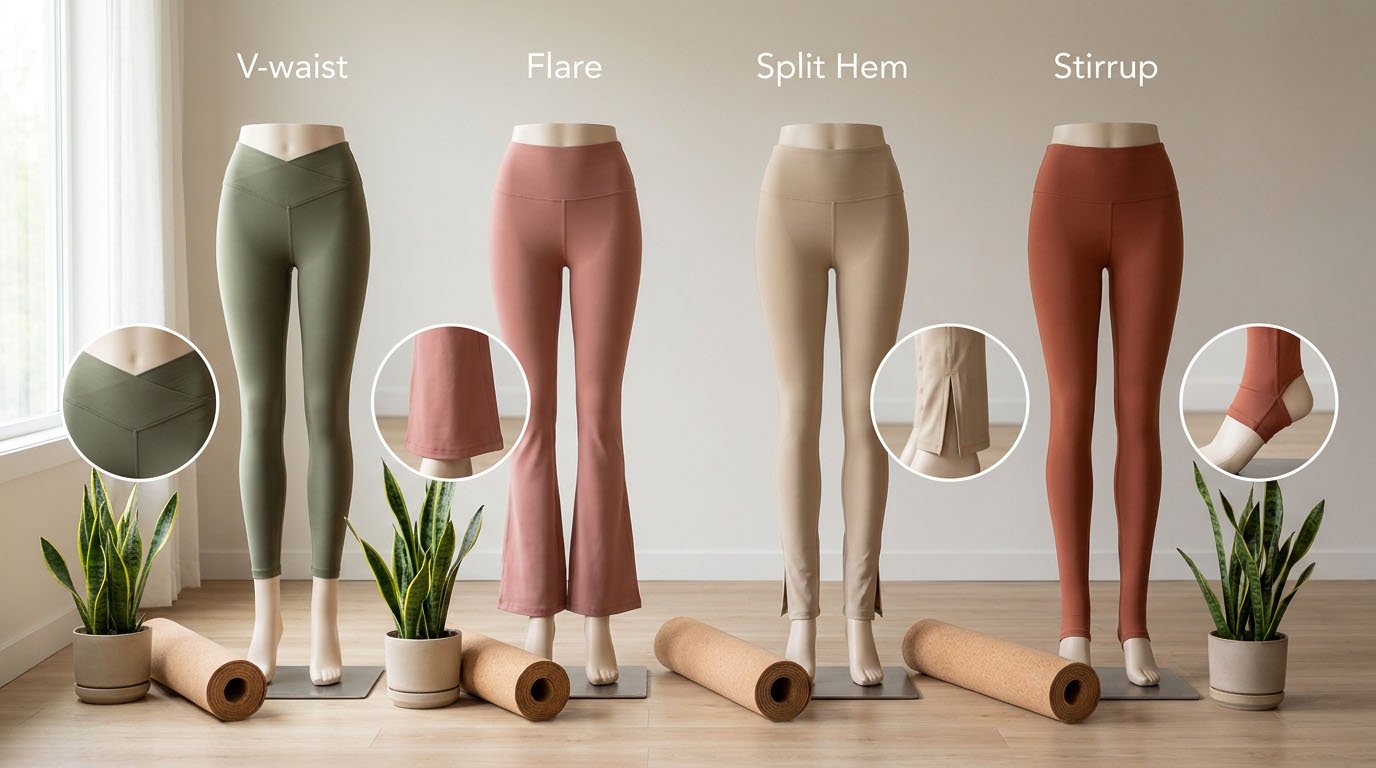
Crossover V-waist leggings
Crossover waistbands remain one of the most visible style directions in yoga leggings. They are especially strong in:
- studio yoga collections
- premium matching sets
- lifestyle-focused activewear
- markets where design detail helps differentiate basics
Why they work:
- visually flatter the waistline
- feel more trend-forward than standard waistbands
- support fashion-performance positioning
What to watch:
- more complex cutting and sewing
- slightly higher cost
- not equally strong in all regions or fitness segments
Flare yoga leggings
Flare leggings continue to attract demand in lifestyle and studio-led assortments. They perform best when sold as part of a broader studio or wellness aesthetic rather than as technical performance gear.
Best for:
- low-impact studio use
- fashion-led yoga collections
- premium wellness branding
Less ideal for:
- power yoga
- high-sweat performance positioning
- highly technical training use
Split-hem yoga leggings
Split hems are appearing in trend-driven collections as a subtle alternative to full flare silhouettes. They can help a style feel more directional without completely changing the leg shape.
Best for:
- trend testing
- studio-lifestyle crossover collections
- brands that want a more editorial look
Stirrup and niche silhouettes
Stirrup leggings and other directional shapes may generate interest, but they remain niche. These styles can work in small premium collections, though they often carry more fit risk and lower universal appeal.
The practical takeaway
For most brands, the safest first move is not to launch many trend silhouettes at once. It is usually more effective to choose one or two commercially strong styles and build volume around them.
Best Yoga Legging Styles by Use Case
| Style | Best For | Not Ideal For |
|---|---|---|
| Crossover V-Waist | Studio yoga, premium sets, US and Australia-focused launches | Basic gym wear, very price-sensitive lines |
| Straight Waistband Leggings | Broad commercial use, lower risk launches, EU-friendly assortments | Highly trend-led positioning |
| Flare Leggings | Lifestyle collections, wellness-led branding | Technical or high-intensity training |
| Split-Hem Leggings | Fashion-forward yoga edits | Conservative or utility-first collections |
| Stirrup Leggings | Niche premium capsules | First launches, mass-market programs |
What Fabrics Will Matter Most for Yoga Leggings in 2026?
Fabric choice is one of the biggest factors shaping yoga leggings trends in 2026 because it affects cost, comfort, performance, and market positioning all at once.
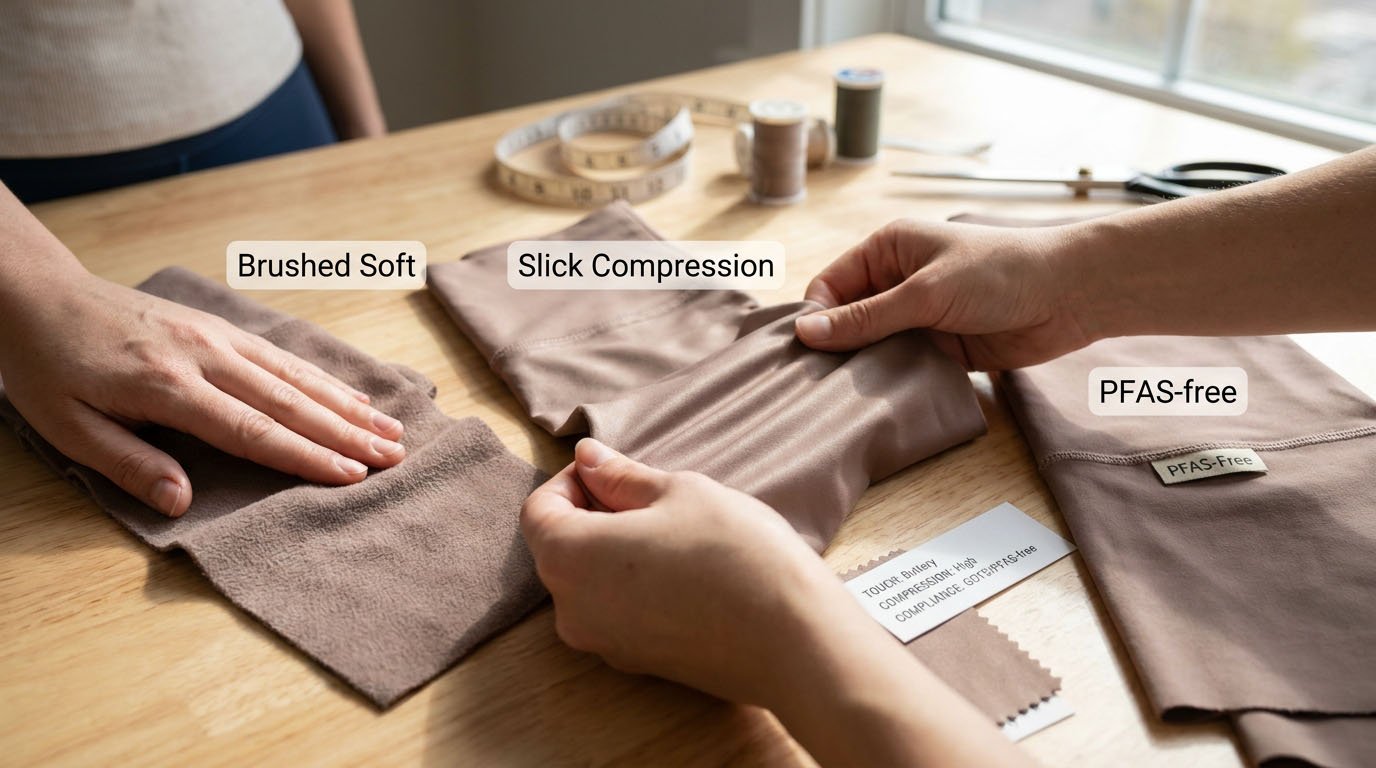
Brushed soft-touch fabrics
Brushed fabrics continue to grow because they feel soft, warm, and premium. They are especially strong in:
- gentle yoga
- restorative yoga
- lounge-to-studio collections
- winter or cooler-season launches
Advantages:
- strong comfort perception
- premium hand feel
- high consumer appeal in softness-led segments
Tradeoffs:
- higher fabric cost
- lower compression compared with firmer knits
- not always ideal for high-heat workouts
Slick compression fabrics
Compression-led fabrics remain important in performance yoga categories. These materials are smoother, more technical, and often better suited to hot yoga or support-focused positioning.
Advantages:
- stronger support feel
- lower moisture retention
- cleaner, more technical appearance
Tradeoffs:
- less soft than brushed options
- may feel too firm for comfort-first customers
Balancing softness and compression
Many buyers want both softness and support, but those features usually require careful fabric development or more premium material choices. The more balanced the fabric target, the more important it becomes to test samples before going to bulk.
PFAS-free and compliance-supported fabrics
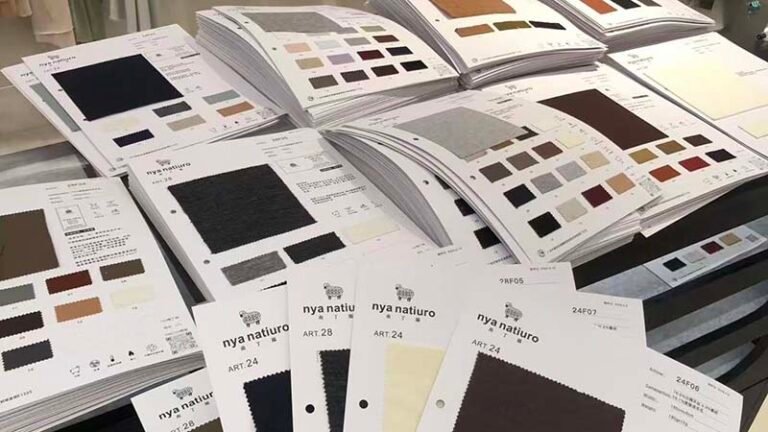
Chemical compliance and treatment transparency are increasingly part of fabric selection. For some markets, PFAS-free options and stronger compliance support are becoming more relevant during sourcing and retail discussions.
Yoga Legging Fabric Comparison for 2026
| Fabric Type | Best For | Main Benefit | Main Tradeoff |
|---|---|---|---|
| Brushed Fabric | Restorative yoga, lounge-to-studio | Softness and comfort | Higher cost, lower compression |
| Slick Compression Fabric | Power yoga, hot yoga | Support and moisture performance | Firmer hand feel |
| Ribbed Fabric | Studio fashion-performance styles | Textured look and differentiation | More complex fit control |
| Standard Performance Knit | Entry and mid-range collections | Balanced cost and function | Less distinctive positioning |
Should You Choose Seamless or Cut-and-Sew Yoga Leggings in 2026?
This is one of the most important development decisions for brands planning private label yoga leggings in 2026.
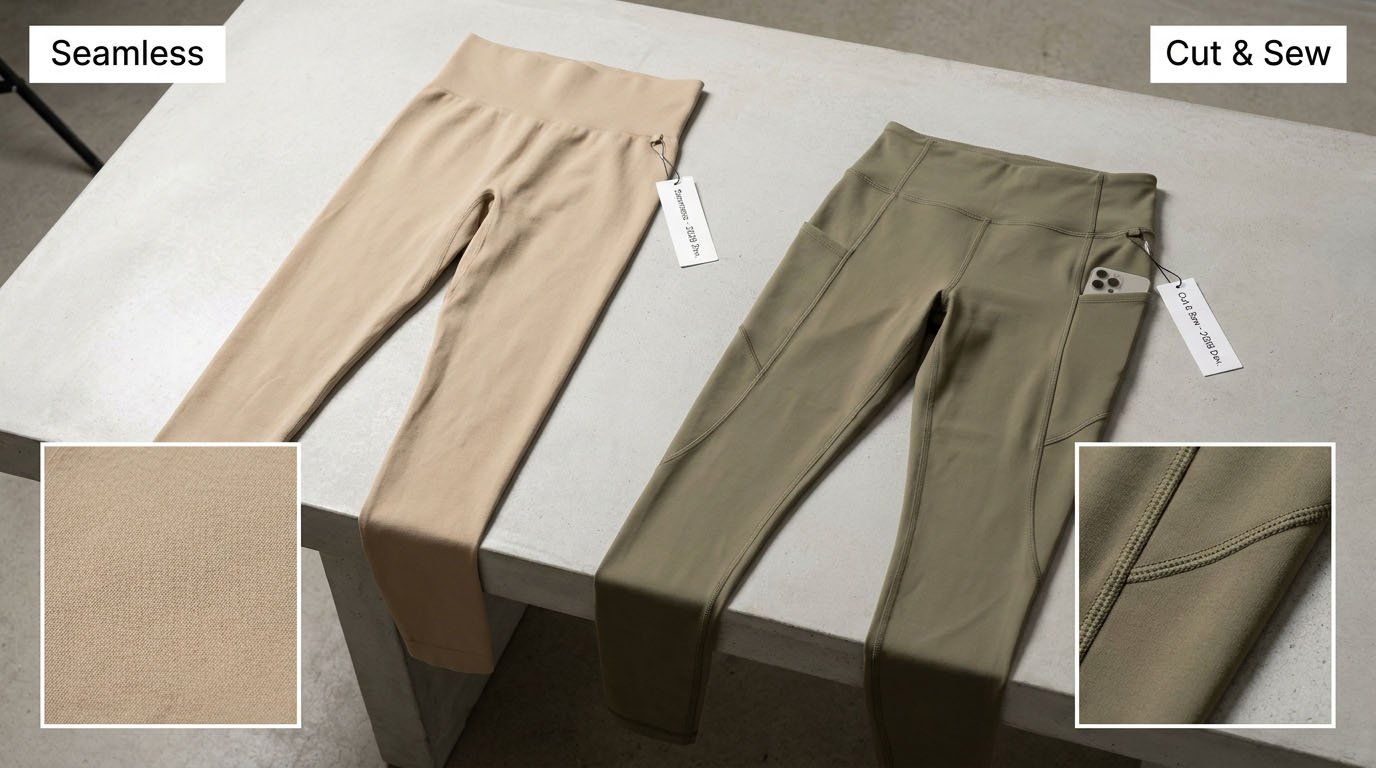
Seamless yoga leggings
Seamless leggings remain attractive because they offer:
- a smooth body-hugging look
- fewer irritation points
- premium category perception
- strong fit appeal in studio and fashion-performance products
However, seamless usually comes with:
- higher MOQs
- more machine setup dependency
- less flexibility for small test orders
- narrower development options in some trims and panel layouts
Cut-and-sew yoga leggings
Cut-and-sew construction remains the more practical choice for many brands because it allows:
- lower MOQ entry
- easier market testing
- more flexible pattern changes
- better control for panels, pockets, and feature placement
Which is better?
Neither is automatically better. The right choice depends on:
- collection price level
- target customer
- development budget
- expected order volume
- launch timeline
For many first collections, cut-and-sew offers a more realistic path. Seamless becomes more attractive once a brand has validated demand and can commit to larger runs.
What Construction Details Matter Most in Yoga Leggings?
Contour paneling
Contour seams and shaping panels are popular because they enhance appearance and help create a more sculpted fit. They work well in premium and body-conscious collections, though they add sewing complexity.
Rib panels
Rib elements, whether full-body or placed in specific zones, can create texture and visual differentiation. They may also affect fit control, so extra sampling is often needed.
Gussets
Gussets are a practical feature that improves mobility and comfort. They are especially useful in leggings intended for deep stretch, squatting, or repeated movement transitions.
Waistband engineering
Stable waistbands are becoming more important than decorative waistbands alone. Buyers increasingly want waistbands that stay in place, resist roll-down, and maintain support during movement.
What Features Do Buyers Want in Yoga Leggings in 2026?
Feature selection is one of the clearest areas where trend appeal and commercial practicality need to align.
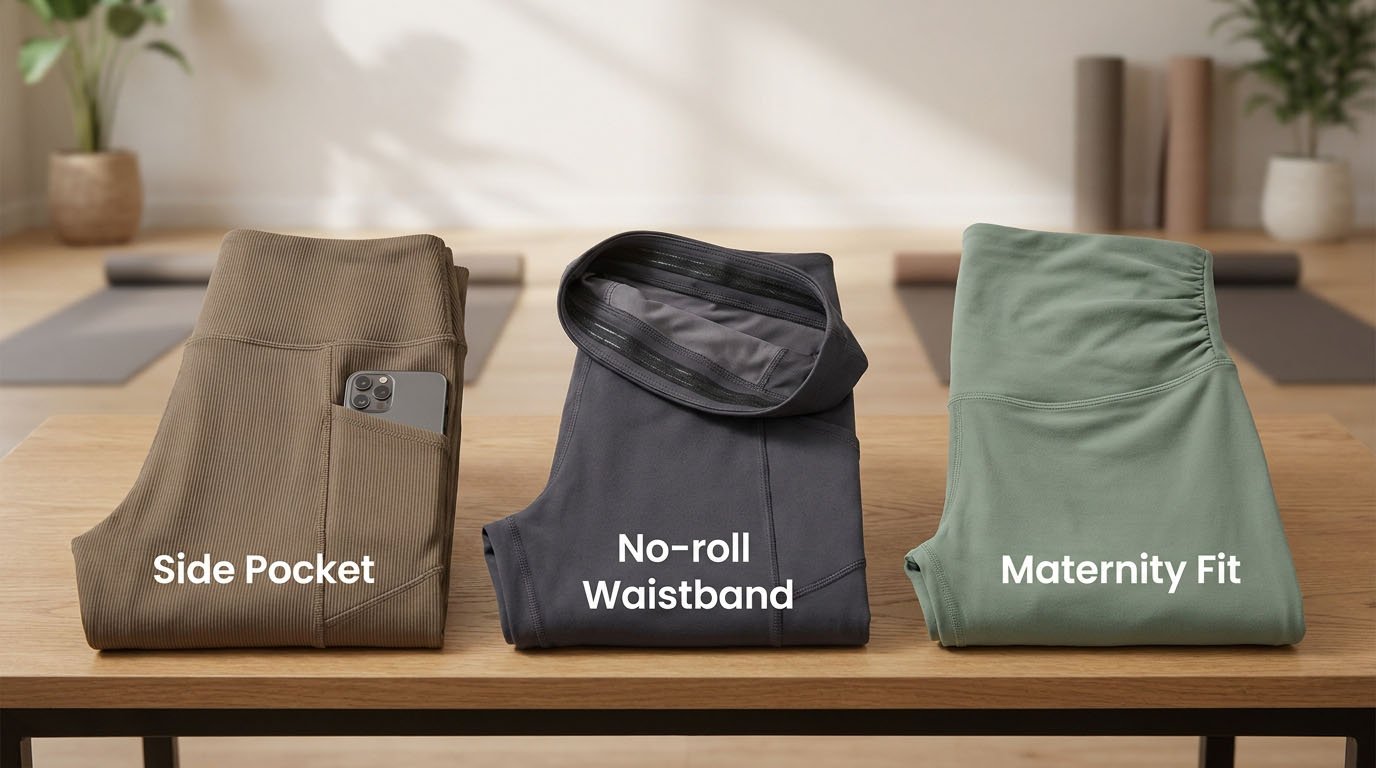
Pockets
Pockets remain one of the most requested yoga legging features. However, the right pocket depends on how the product will actually be used.
Common options include:
- side leg pockets
- waistband pockets
- zip pockets
- drop-in thigh pockets
Best practice:
Choose pocket type based on movement intensity, customer habits, and garment silhouette rather than adding pockets automatically.
No-roll waist support
Secure waistband performance is a major customer priority. This can include:
- double-layer waistbands
- reinforced waistband panels
- internal elastic support
- improved waistband shaping
Maternity yoga leggings
Maternity leggings remain a smaller but important niche. They require dedicated fit development rather than simple adjustment of standard leggings.
Adaptive features
Adaptive yoga leggings are still emerging, but they represent a meaningful long-term opportunity where product design is driven by accessibility and ease of use.
Yoga Legging Features: Best for Performance vs Comfort
| Feature | Best For | Key Consideration |
|---|---|---|
| Side Pocket | General active use | Must avoid bulk at hip line |
| Waistband Pocket | Low-bounce storage | Limited capacity |
| Drop-In Thigh Pocket | Lifestyle and low-intensity use | Can bounce with larger items |
| Double-Layer Waistband | Support and stability | Adds cost and structure |
| Gusset | Better mobility | Requires correct pattern execution |
| Maternity Panel | Pregnancy-specific fit | Needs separate fit development |
Which Yoga Legging Colors and Prints Will Sell Best in 2026?
Color direction is a major part of yoga legging style trends in 2026, but commercial success usually comes from balancing safe volume colors with selective newness.
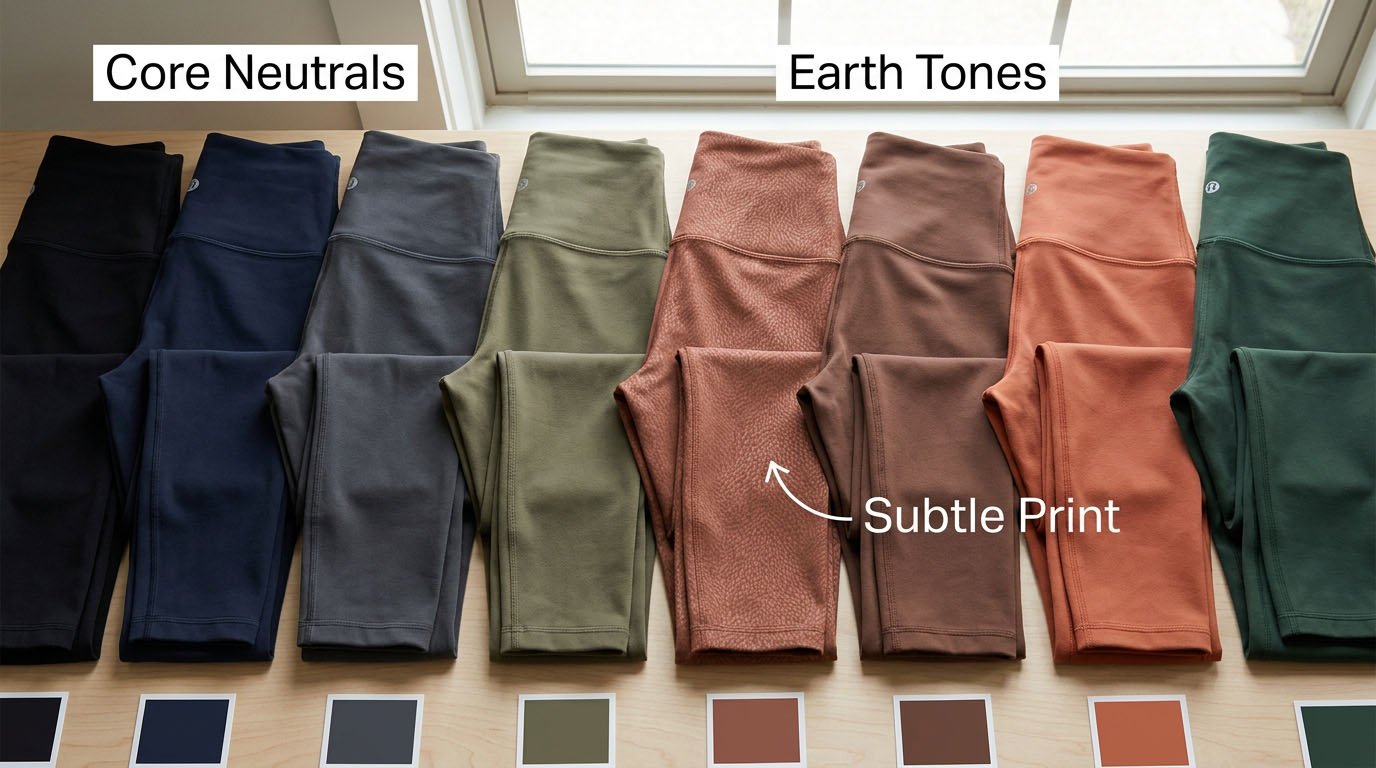
Core neutrals remain essential
The most commercially reliable yoga legging colors remain:
- black
- navy
- charcoal
- deep neutral tones
These colors are easier to match, easier to reorder, and usually lower risk for first launches.
Earth tones are a strong commercial trend
Earth-based shades are one of the most commercially useful updates to neutral assortments. These include:
- olive
- clay
- cocoa
- warm brown
- muted terracotta
- deep forest tones
Why they work:
- they feel fresh without becoming too seasonal
- they support wellness and studio aesthetics
- they often perform better than brighter trend colors in repeat wear
Micro-patterns and subtle prints
Small-scale prints and texture-led visuals continue to appear, especially in premium categories. However, prints generally work better after a brand has already established strong fit and fabric acceptance with solid-color basics.
The smart color strategy
For many brands, the strongest launch mix is:
- majority volume in core neutrals
- selected earth tones for freshness
- limited trend colors or prints for testing
Regional Differences in Yoga Legging Trends 2026
Not every yoga legging trend works equally well in every market.
United States
Often stronger for:
- crossover waistbands
- flare leggings
- visible shaping details
- studio-lifestyle hybrids
Europe
Often stronger for:
- cleaner silhouettes
- performance-led fabrics
- classic waistbands
- more restrained styling
Australia
Often receptive to:
- trend-led studio styles
- split hems
- premium soft-touch fabrics
- fashion-conscious performance basics
Southeast Asia
Often more selective around:
- highly directional silhouettes
- feature-heavy styling
- high-cost premium fabric upgrades
The best lesson for brands is simple: regional fit matters more than social media visibility.
What Buyers Should Check Before Ordering Yoga Leggings in 2026
Before committing to a new yoga legging style, buyers should evaluate:
- target market and region
- expected retail price
- MOQ tolerance
- fabric availability
- color minimums
- construction complexity
- lead time requirements
- compliance needs
- fit risk
- reorder strategy
A trend is only commercially useful if it fits the product plan, margin target, and sourcing reality.
Final Thoughts
The most important yoga legging trends in 2026 are not just about what looks new. They are about which combinations of silhouette, fabric, construction, and features make commercial sense for the target market.
For most brands, the strongest strategy is to:
- start with one or two clear use-case-driven styles
- choose fabrics that support the intended yoga category
- balance trend appeal with production realism
- focus on fit, comfort, and repeat-wear value
- test trend elements in a controlled way instead of overbuilding the first launch
A yoga legging does not succeed because it looks good on social media. It succeeds when the right customer wants it, the price makes sense, and the product can be reordered without becoming a sourcing problem.