.png)
Men’s activewear trends in 2027 will be shaped not only by performance fabrics, athleisure styling, and sustainability claims, but also by lead times, fabric minimums, and channel-specific sourcing decisions. For brands, importers, and e-commerce sellers, the biggest risk is not choosing the wrong trend. It is choosing a trend that cannot be sampled, produced, tested, and delivered on time.
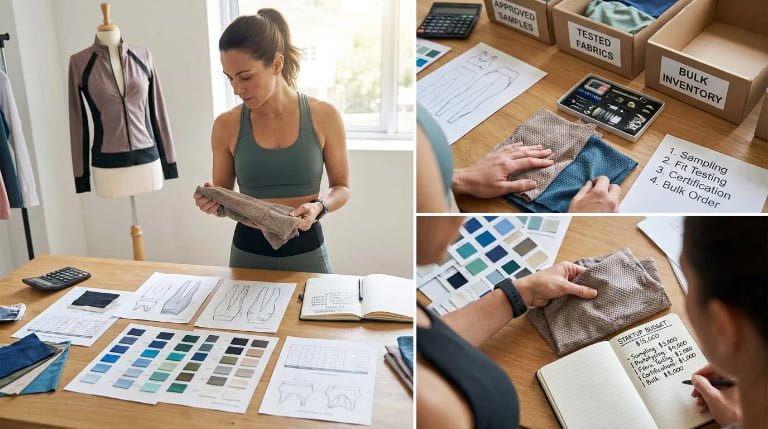
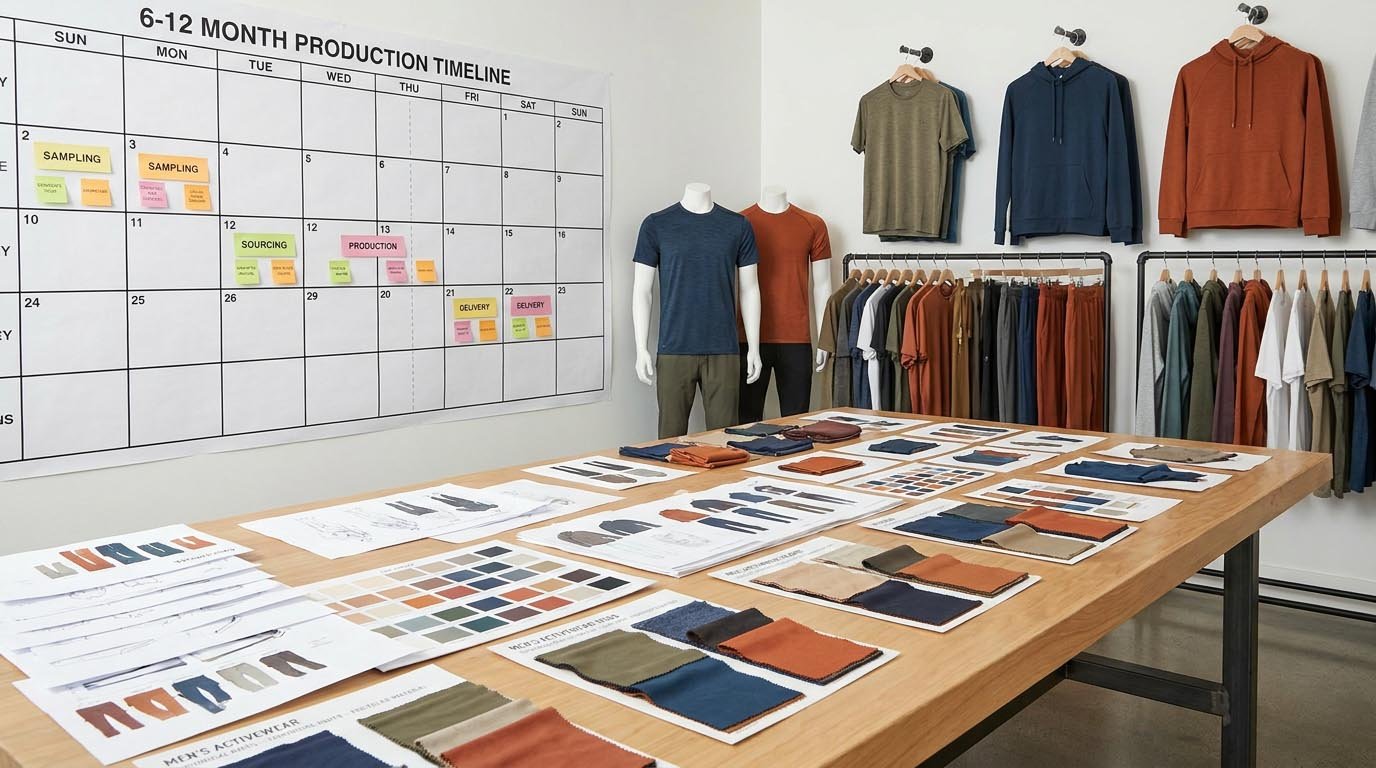
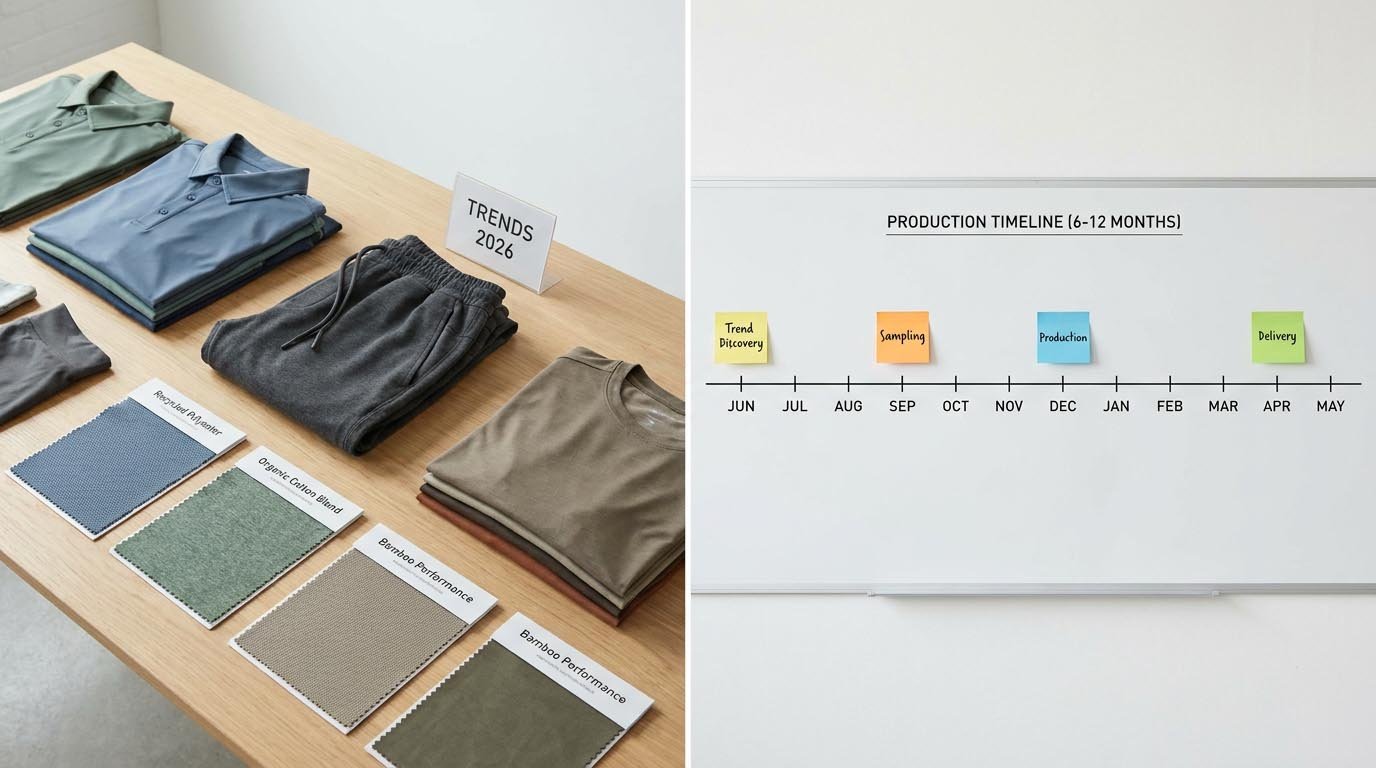
Many buyers read men’s activewear trend reports as if they were ready-made buying lists. In reality, the timeline from trend discovery to saleable inventory is often 6 to 12 months, especially when custom performance fabrics, certification documents, or new trims are involved.
This guide explains the men’s activewear market in 2027 from a sourcing and manufacturing perspective, including market outlook, consumer shifts, fabric trends, MOQ, production lead times, channel strategy, sustainability costs, and compliance risks.
Quick Answers: Men’s Activewear Trends 2027
What are the key men’s activewear trends in 2027?
The main trends include:
- performance fabrics with stretch and moisture management
- athleisure silhouettes for gym-to-casual wear
- sustainability-focused materials and claims
- more channel-specific product planning for DTC, marketplaces, and wholesale
How long does men’s activewear production take?
Typical lead times are:
- 60-90 days for stock fabrics and standard trims
- 120-150 days for custom performance fabrics or new color development
- 150-180 days for advanced textiles, full ODM projects, or certification-heavy programs
What is the MOQ for men’s activewear manufacturing?
MOQ depends on the fabric and customization level:
- 300-500 pieces for stock fabric programs
- 800-1,200 pieces for custom fabric programs
- 1,000+ pieces for advanced technical fabrics or more complex ODM development
What is the fastest way to launch a 2027 men’s activewear product?
The fastest route is usually an athleisure product using stock fabric, standard colorways, and existing patterns. This reduces development time and lowers MOQ pressure.
Are sustainable activewear materials more expensive?
Yes. Certified recycled polyester and organic cotton usually cost more than standard materials and often require documentation such as GRS, RCS, GOTS, or Oeko-Tex depending on the claim.
Men’s Activewear 2027 at a Glance
| Topic | Typical Range or Direction |
|---|---|
| Standard lead time | 60-90 days |
| Custom performance fabric lead time | 120-150 days |
| Advanced textile or ODM lead time | 150-180 days |
| Stock fabric MOQ | 300-500 pcs |
| Custom fabric MOQ | 800-1,200 pcs |
| Performance fabric MOQ | 500-1,000 meters |
| Recycled polyester cost premium | 15-25% above standard polyester |
| Organic cotton cost premium | 30-40% above conventional cotton |
| Fastest route to market | Athleisure silhouettes with stock fabrics |
| Highest-risk trend type | Smart textiles with high MOQ and testing needs |
Who This Guide Is For
This article is most useful for:
- men’s activewear brands
- private label buyers
- apparel importers
- sourcing managers
- e-commerce sellers
- startup founders launching gymwear or athleisure lines
- wholesale suppliers evaluating 2027 production plans
If your main concern is not just what will trend, but what can be delivered profitably and on time, this guide is written for you.
Men’s Activewear Market Outlook 2027
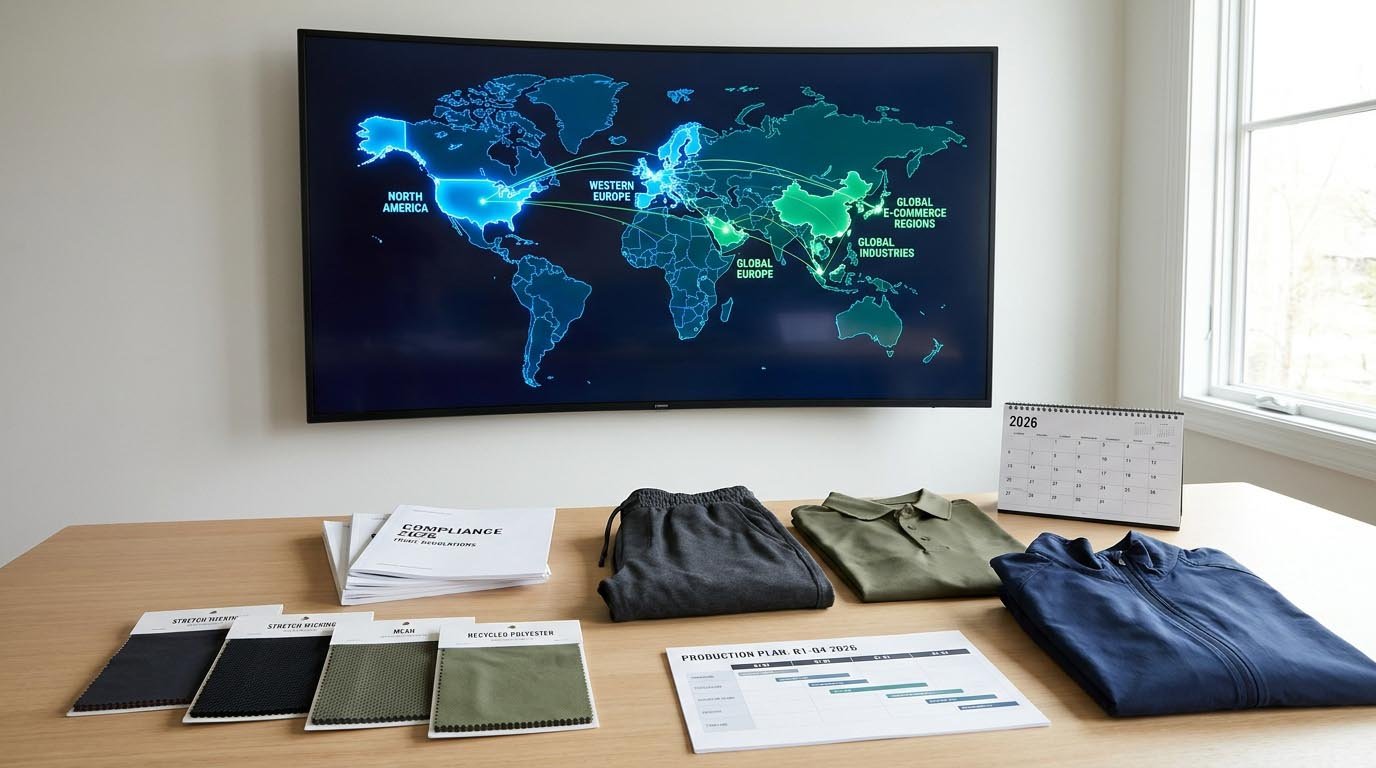
The men’s activewear market in 2027 is expected to keep growing, especially in categories that overlap fitness, casualwear, and daily comfort. However, from a manufacturing perspective, broad market growth matters less than when buyers place orders, which regions they sell into, and how much product they can commit to.
What the market outlook means for sourcing
Different regions create different production calendars:
- North America often plans earlier for major retail windows and seasonal inventory cycles
- Western Europe usually requires more documentation and compliance checks before shipment
- Global e-commerce sellers often move faster but depend on stock materials and smaller test orders
Regional sourcing patterns
In practical terms, many manufacturers see three common order models:
North America premium brands
- longer planning windows
- higher acceptance of custom fabrics
- stronger interest in technical performance features
- larger MOQ tolerance
European sustainability-focused labels
- higher demand for material certification
- stronger compliance expectations
- more caution around claims and traceability
- willingness to pay more for certified inputs
E-commerce and marketplace sellers
- shorter product cycles
- faster reorder pressure
- lower tolerance for fabric development delays
- stronger preference for stock fabric and standard color programs
Why this matters
A brand that wants to “capture men’s activewear growth in 2027” still needs to answer:
- which quarter the goods must arrive
- what MOQ is realistic
- whether the retail price can support the material choice
- whether compliance documents are ready before goods ship
Without these answers, market opportunity does not turn into usable inventory.
Consumer Trends in Men’s Activewear for 2027
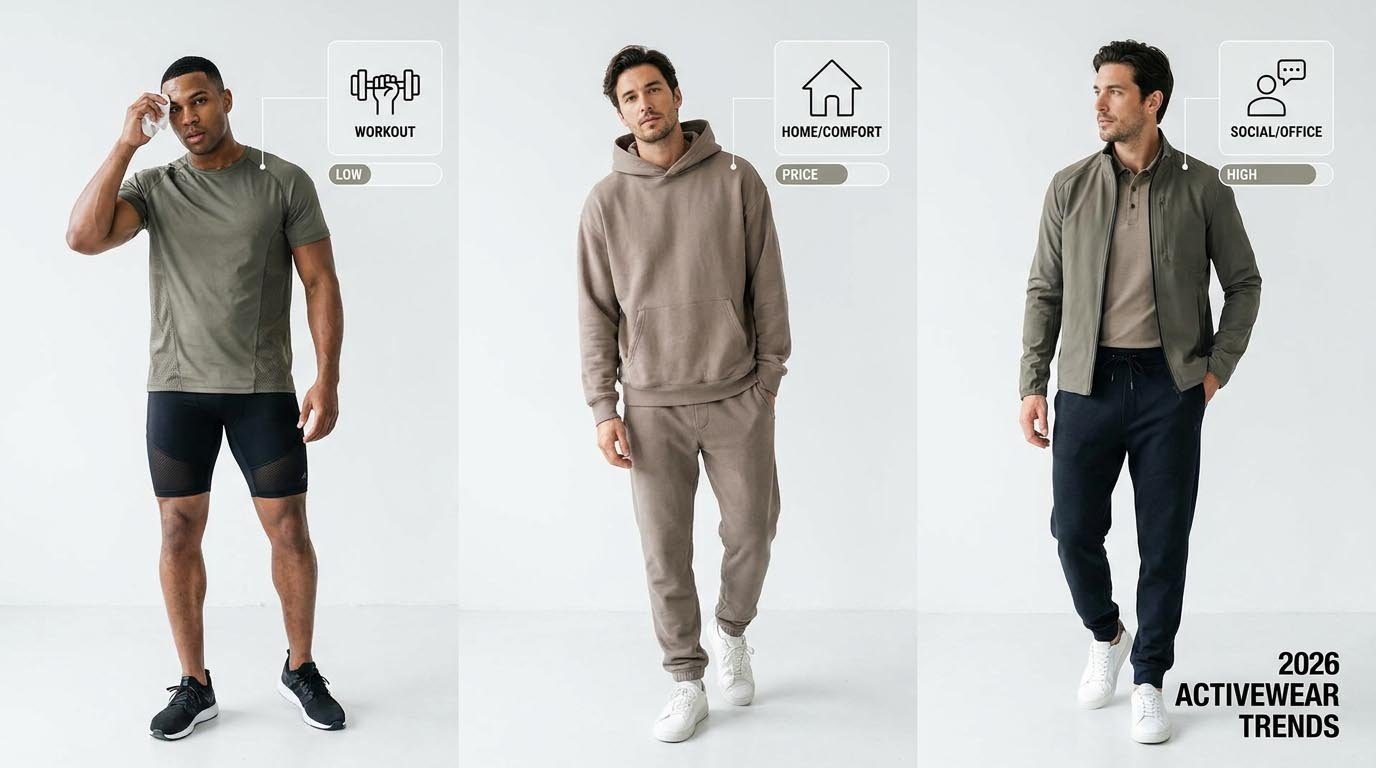
Consumer demand is still moving toward clothing that works across multiple use cases, but willingness to pay differs sharply by segment.
Men are buying activewear for training, remote work, casual wear, travel, and daily comfort, but the acceptable price point changes depending on which benefit matters most.
Main consumer segments
Gym-focused buyers
These customers usually want:
- visible performance cues
- stretch and moisture management
- breathable panels
- sport-oriented styling
They are often willing to pay more if the garment looks technical and purpose-built.
Comfort-first buyers
These customers often prioritize:
- soft hand feel
- flexibility
- relaxed fit
- neutral styling for all-day wear
They may value comfort more than technical performance language.
Athleisure buyers
These consumers are often looking for:
- style versatility
- cleaner silhouettes
- better trims and finishes
- product that can move from workout to casual settings
This group is often more open to premium pricing if the fit and finish look elevated.
Why the segment matters for product development
Each segment points to a different cost structure.
For example:
- gym-focused products often use polyester-spandex performance blends
- comfort-first products often use French terry, modal blends, or softer knits
- athleisure products often need upgraded trims, more structured silhouettes, and better finishing details
Trying to serve all three with one product often causes margin and MOQ problems.
Men’s Activewear Price Tiers by Region
Regional price ceilings can affect whether advanced fabrics or sustainability claims make financial sense.
| Region | Budget Tier | Mid Tier | Premium Tier | Typical Focus |
|---|---|---|---|---|
| North America | $20-30 | $40-60 | $80-120 | Gym + Athleisure |
| Western Europe | $25-35 | $45-65 | $70-100 | Athleisure + Everyday Wear |
| UK | $22-32 | $42-58 | $75-110 | Gym + Casual |
| Australia | $28-38 | $50-70 | $90-130 | Outdoor + Gym |
This kind of pricing affects:
- allowable fabric cost
- trim selection
- sustainability premiums
- packaging decisions
- expected gross margin
Product and Fabric Trends in Men’s Activewear 2027
The most important men’s activewear trends for 2027 are not just visual trends. They are also material and construction trends that affect MOQ, cost, and lead time.
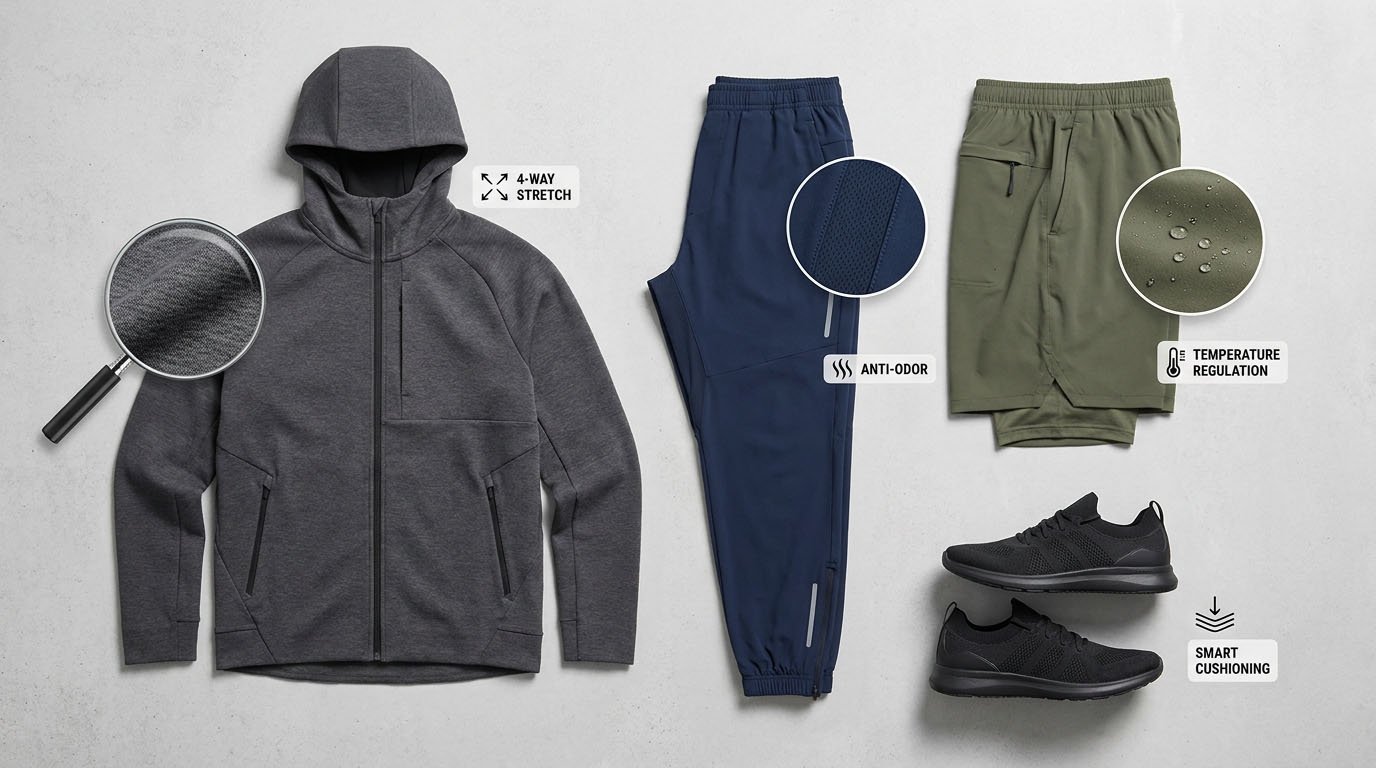
1. Performance fabrics
Performance fabrics remain a baseline expectation in many activewear categories.
Common features include:
- four-way stretch
- moisture-wicking
- quick-dry performance
- light compression
- breathable knit structures
These fabrics usually cost more than basic polyester blends and often require larger minimums if the composition or finish is customized.
2. Athleisure silhouettes
Athleisure continues to matter because it reaches both performance and casual markets.
Examples include:
- tapered joggers
- structured hoodies
- 7-inch hybrid shorts
- technical tees with cleaner fits
- lightweight overshirts or training jackets
This category often has the fastest route to market because the trend is driven more by shape, styling, and trims than by high-risk fabric development.
3. Smart textiles and technical finishes
This is the category with the most supplier friction.
Examples include:
- anti-odor treatments
- temperature-regulating finishes
- advanced cooling or warming technologies
- embedded technical fibers
These products can be attractive on paper, but they usually come with:
- higher MOQ
- higher fabric cost
- longer testing cycles
- greater documentation and claim risk
For many small and mid-size buyers, smart textiles are less practical than upgraded stock performance fabrics.
Lead Times for Men’s Activewear Manufacturing in 2027
Lead time is one of the most important topics in men’s activewear sourcing. Many missed launch windows happen because buyers underestimate the time needed between concept and delivery.
Typical production lead times
Stock fabrics and standard trims
- 60-90 days
- best for fast launches and trend testing
- suitable for e-commerce and small-batch programs
Custom performance fabrics
- 120-150 days
- includes fabric development, color approval, and testing
- common for established brands with larger order plans
Advanced technical programs or ODM projects
- 150-180 days
- often includes pattern development, multiple rounds of sampling, and more documentation
What slows production down
Common delays include:
- fabric sourcing changes after sample approval
- new color development
- performance test failures
- trim substitutions
- certification paperwork
- packing or retailer labeling revisions
When buyers should place orders
As a planning rule:
- place stock fabric orders earlier than you think you need
- place custom fabric programs one full season earlier if the launch window matters
- avoid trying to combine trend testing with heavy customization on a short timeline
MOQ for Men’s Activewear: What Buyers Should Expect
MOQ is one of the biggest differences between a trend idea and a commercial product.
Typical MOQ ranges
| Program Type | Typical MOQ |
|---|---|
| Stock fabric program | 300-500 pcs |
| Custom color on standard fabric | 500-800 pcs |
| Custom performance fabric | 800-1,200 pcs |
| Advanced functional fabric | 1,000+ pcs |
Why MOQ increases with performance fabrics
Technical fabrics usually require:
- dedicated mill production
- testing of finish performance
- dye lot control
- enough volume to consume fabric rolls efficiently
That is why a buyer asking for four-way stretch, moisture management, anti-odor, and custom colors often ends up with a much higher minimum than expected.
MOQ by fabric category
Typical ranges may look like this:
- basic polyester blends: lower MOQ
- performance polyester-spandex blends: mid MOQ
- premium structured knits: higher MOQ
- smart textiles and specialty finishes: highest MOQ
MOQ is not just a factory rule. It is usually created by the fabric mill first, then passed through the rest of the supply chain.
Fabric Costs in Men’s Activewear Production
Fabric choice defines both the product story and the margin structure.
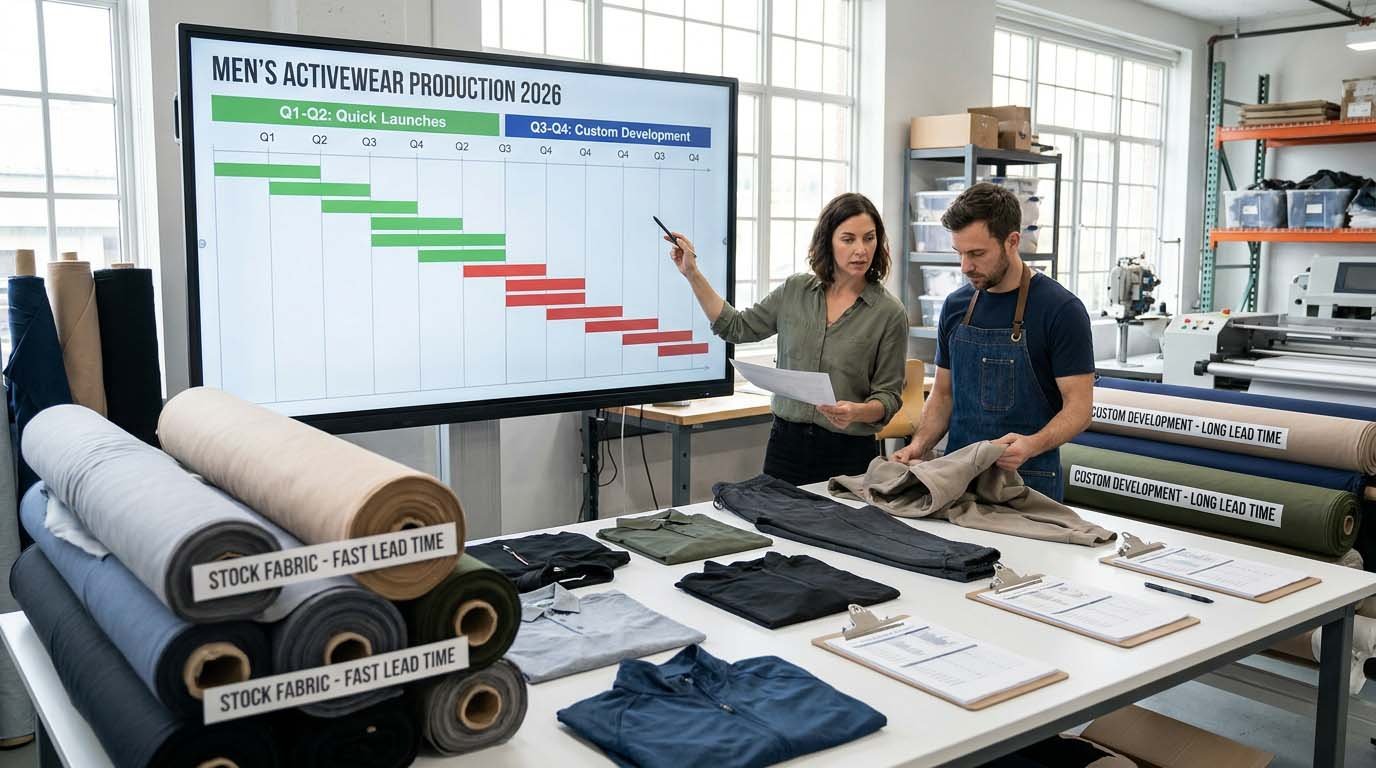
Typical fabric cost direction
In general:
- standard polyester blends are the lowest-cost technical option
- polyester-spandex performance fabrics cost more
- modal, premium knits, and structured athleisure fabrics cost more again
- advanced technical and smart textile fabrics are the most expensive
Cost drivers that affect the final garment
Fabric cost is influenced by:
- fiber composition
- spandex percentage
- knit structure
- finishing treatment
- certification status
- dyeing method
- mill MOQ
Hidden cost factors buyers forget
Many buyers focus only on fabric price per meter, but total garment cost also changes because of:
- higher sewing difficulty on stretch fabrics
- flatlock or bonded seams
- zippers and reflective trims
- custom waistband elastic
- special packaging
- quality control requirements
- testing or certification fees
A fabric that is only slightly more expensive per meter can still create a much bigger increase in final unit cost.
Fastest Men’s Activewear Trend to Bring to Market
If speed matters most, not all trends are equal.
Best fast-to-market option
The fastest route is usually:
- athleisure-inspired silhouettes
- stock performance fabrics
- standard colors
- existing patterns with minor changes
- simple trims
This is often the best path for:
- market testing
- trend response
- startup collections
- seasonal capsule launches
Slower and higher-risk options
The following tend to slow launches significantly:
- custom technical fabrics
- unusual dye effects
- advanced anti-odor or thermal claims
- proprietary trims
- certification-dependent sustainability claims
If a buyer wants fast delivery, low MOQ, and heavy innovation at the same time, one of those goals usually has to be reduced.
DTC vs Marketplace vs Wholesale: Which Channel Should Drive Your Production Plan?
One of the biggest sourcing mistakes is trying to build one production strategy for every channel.
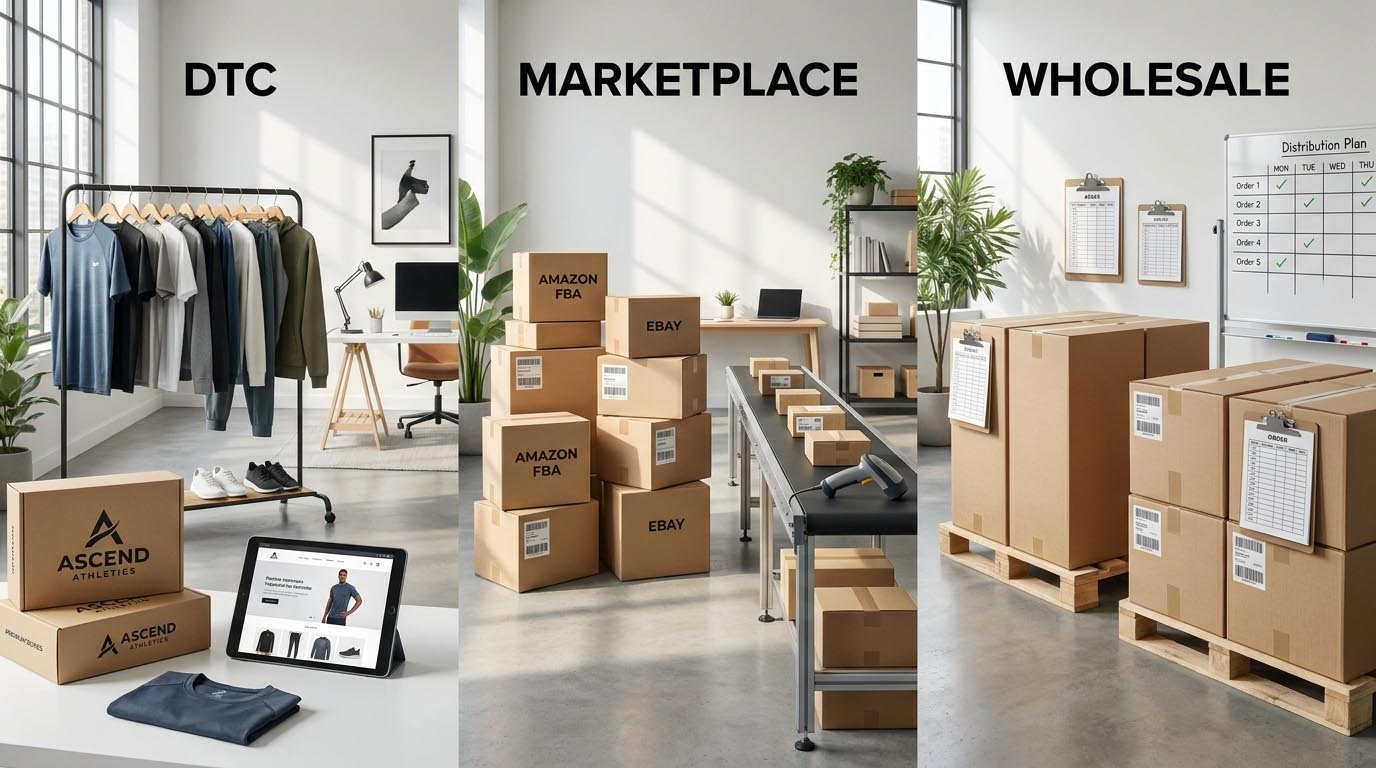
DTC brands
Typical priorities:
- lower first-order risk
- flexible reorder options
- better packaging control
- stronger brand presentation
DTC often works best with:
- smaller opening quantities
- stock materials
- shorter reorder cycles
- tighter SKU control
Marketplace sellers
Typical priorities:
- lowest landed cost
- fast replenishment
- strong size-run efficiency
- price competitiveness
Marketplace programs often reduce custom details in order to protect margin.
Wholesale clients
Typical priorities:
- consistency across large runs
- retailer compliance
- barcode and carton accuracy
- dependable delivery windows
Wholesale can bring larger volume, but usually requires:
- longer planning windows
- stricter paperwork
- more working capital
Practical sourcing advice
Choose the channel that drives most of your revenue and build production around that one first. Trying to optimize equally for DTC, marketplaces, and wholesale often creates:
- smaller fragmented runs
- higher per-unit cost
- inventory imbalance
- slower decision-making
Sustainability in Men’s Activewear: Materials, Costs and Compliance
Sustainability is now part of the activewear conversation, but the sourcing reality is more complicated than simple marketing language.
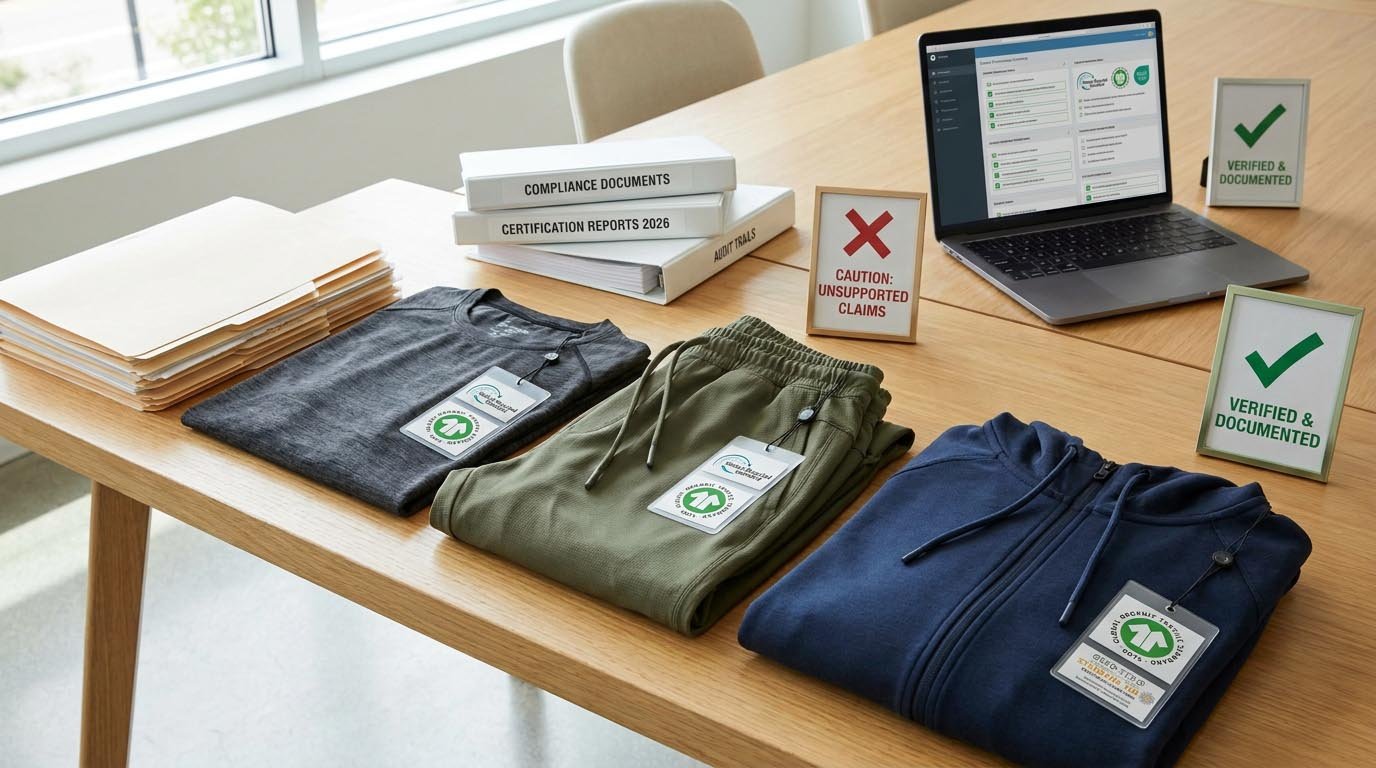
Common sustainable material options
Brands often evaluate:
- recycled polyester
- organic cotton
- lower-impact blends
- certified dyeing or finishing programs
Why sustainable materials cost more
Typical reasons include:
- certified input cost premiums
- lower supplier availability
- higher MOQ in some mills
- documentation requirements
- annual certification costs if claims are used in brand marketing
Documentation matters
If a brand wants to make sustainability claims, it may need supporting documents such as:
- GRS
- RCS
- GOTS
- Oeko-Tex
- transaction certificates from the upstream supplier
Compliance risks of vague claims
Broad claims like “eco-friendly” or “sustainable” may look harmless, but they create risk if there is no proof.
Possible consequences include:
- retailer rejection
- customs delays
- claim disputes
- legal exposure in stricter markets
- loss of buyer trust
A practical rule for brands
If your team cannot provide documentation quickly, it is safer not to print the claim. Focus on supported statements only.
Men’s Activewear Sourcing Strategy for 2027
For many buyers, the right strategy depends less on trends themselves and more on how much risk the business can absorb.
Best strategy for startups
- use stock fabrics
- keep SKU count low
- avoid high-MOQ technical claims
- test fit and sell-through before expanding
Best strategy for established brands
- lock custom fabric development earlier
- separate core products from trend products
- budget for testing and compliance
- align launch calendar with retail windows
Best strategy for e-commerce sellers
- prioritize speed over complexity
- launch small and reorder proven styles
- avoid unnecessary customization in first runs
- use data to refine size curves and color choices
Best strategy for wholesale programs
- confirm retailer requirements before production
- build in labeling and packaging review time
- keep compliance files ready
- protect delivery windows over experimental design changes
Final Thoughts
The most important lesson for men’s activewear trends 2027 is simple: a trend only matters if you can deliver it profitably and on time.
Performance fabrics, athleisure styling, sustainability claims, and channel-specific merchandising will all shape the market. But for brands and buyers, the real decision is whether the product can survive the reality of MOQ, lead time, testing, compliance, and margin pressure.
The brands that perform best in 2027 will not just spot trends early. They will choose the trends that fit their sourcing model, production calendar, and customer price point.