.png)
High MOQs and long lead times are crushing your new brand's agility. You risk cash flow on unproven designs. I will explain these terms to give you back control.
MOQ, or Minimum Order Quantity, is the smallest order a factory will accept. Lead time is the total time from order confirmation to final delivery. Understanding both is essential for planning your production schedule, managing inventory, and controlling your budget.
When I first started, these two terms were the biggest source of stress. A client would have a brilliant idea, but the factory's minimums were too high for their startup budget. Or, a promised delivery date would slip, causing them to miss a key selling season. As I built Wearzio, my mission was to bring clarity to this process. I want to demystify these industry terms so that you, the brand owner, can plan with confidence and avoid costly surprises.
What Exactly is an MOQ and Why Does It Exist?
You have a great design but are told you must order 500 units. This feels like a huge risk. Why can't you just order 50? This barrier can stop a new brand in its tracks.
MOQ stands for Minimum Order Quantity. It exists because factories have significant setup costs for each order. These costs include sourcing fabric, mixing custom dye lots, and configuring the cutting and sewing lines. An MOQ ensures the production run is efficient and financially viable.
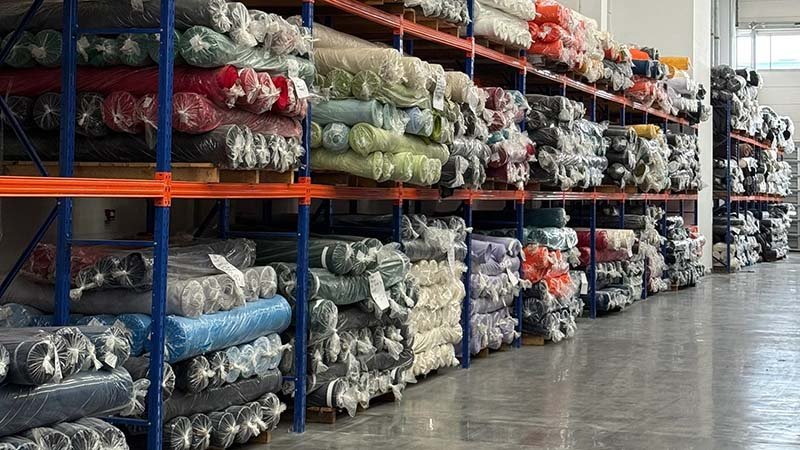
Think of it like baking a cake. You can't just bake a single cupcake in a massive industrial oven; it's a waste of energy and resources. Similarly, a fabric mill can't dye just 20 meters of fabric in a vat designed for 1000 meters. The result would be inconsistent, and the cost per meter would be astronomical. MOQs are not there to punish small brands. They are a reality of efficient, large-scale manufacturing. As a partner to brands, my job is to find creative ways to work within these constraints.
The Different Layers of MOQs
The MOQ you see from a manufacturer is often a combination of several different minimums up the supply chain. It is not just one number. The biggest driver is almost always the fabric.
Breaking Down the Numbers
- Fabric Mill MOQ: The mill that weaves or knits the fabric has the highest MOQ, often 1,000 to 3,000 meters per color. This is the single biggest challenge for new brands wanting custom materials.
- Dyeing MOQ: The dyeing house also has a minimum. Even if you have the raw fabric, they need a certain amount to ensure the color is consistent.
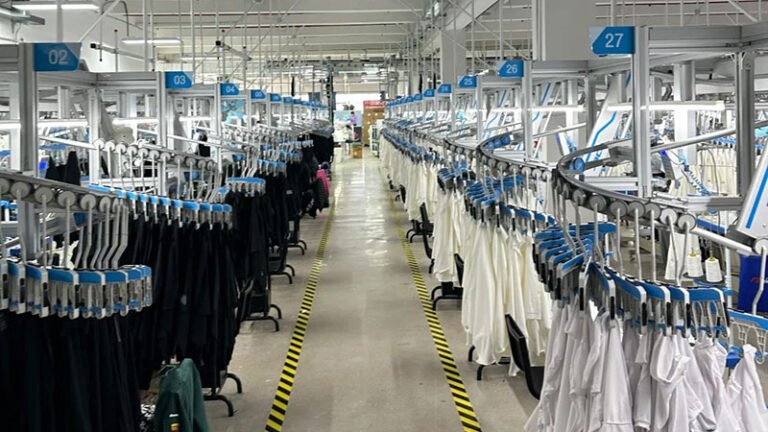
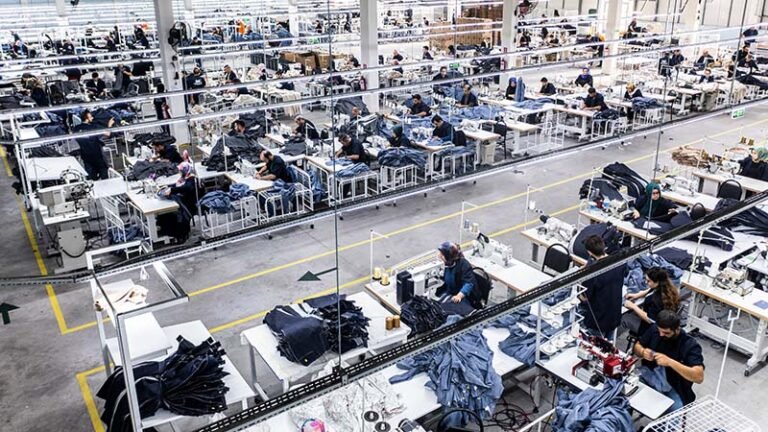
- Cutting & Sewing MOQ: Our factory has minimums for efficiency. Setting up the automated cutters and organizing a sewing line for just a handful of pieces is very inefficient.
| Type of MOQ | Typical Quantity | Reason for the Minimum |
|---|---|---|
| Fabric Mill MOQ | 1,000+ meters per color | Weaving or knitting machines are massive and are set up for large runs. |
| Fabric Dyeing MOQ | 300-500 kg of fabric | Dye vats require a minimum volume for consistent color chemistry. |
| Manufacturer MOQ | 50-200 pieces per style/color | Covers the cost of pattern making, grading, and efficient sewing line setup. |
How Are Lead Times Calculated for Custom Apparel?
You approved a sample and are ready to go. But you are told it will be 12 weeks until delivery. This long wait can feel like a black box, causing anxiety and planning problems.
Lead time is the total duration from order payment to final shipment. It is calculated by adding up the time for every step: fabric sourcing (2-4 weeks), sample development (1-3 weeks), bulk production (4-6 weeks), and quality control and packing (1 week).
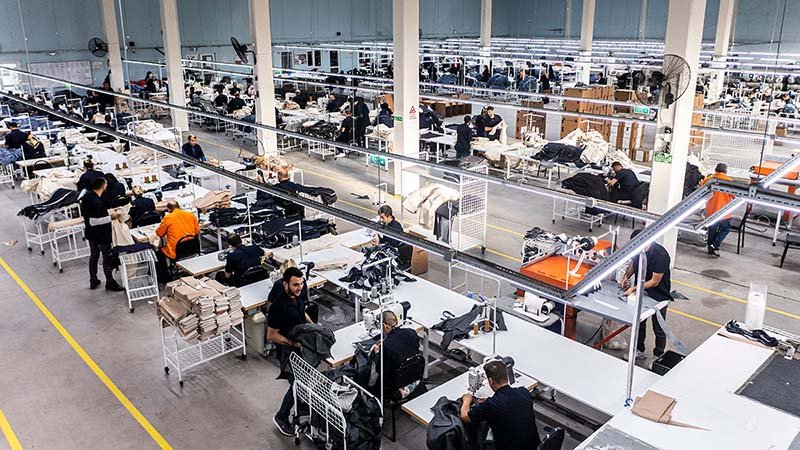
A common mistake is thinking lead time is just the time your garments spend on the sewing line. In reality, that is often less than half of the total time. Sourcing the perfect fabric and getting the color dyed correctly can take weeks before a single piece is cut. I always provide my partners with a clear, step-by-step timeline. This transparency is crucial. It allows you to plan your marketing campaigns and manage your customer's expectations. There are many moving parts, and a delay in one step will affect the entire schedule.
The Phases of Production
We can break the total lead time into three distinct phases. Understanding what happens in each phase will help you see why it takes time to create high-quality custom apparel.
- Pre-Production: This is everything that happens before bulk manufacturing begins. It involves sourcing and ordering all raw materials, creating and approving lab dips (color samples), and finalizing the pre-production sample (PPS) that serves as the gold standard for your order.
- Bulk Production: Once the PPS is approved, we move to the main event. This includes cutting all the fabric, the actual sewing of the garments, and any finishing steps like adding logos or special tags.
- Post-Production: After the last stitch, every single garment goes through our rigorous quality control (QC) process. Then, items are ironed, folded, packed, and boxed for shipping.
| Production Phase | Key Activities | Typical Duration |
|---|---|---|
| Phase 1: Pre-Production | Fabric sourcing, lab dips, pattern adjustments, Pre-Production Sample (PPS) approval. | 3 - 6 Weeks |
| Phase 2: Bulk Production | Bulk fabric cutting, sewing line assembly, printing/embroidery. | 4 - 6 Weeks |
| Phase 3: Post-Production | Quality control checks, ironing, folding, packing, and shipping logistics. | 1 - 2 Weeks |
| Total Estimated Lead Time | From Order to Shipment | 8 - 14 Weeks |
How Can I Reduce My MOQs and Lead Times?
You want to test new styles quickly without ordering a thousand pieces. High MOQs and long lead times are your biggest enemies. It feels like you have to compromise your brand's agility to get started.
Reduce MOQs by using a manufacturer's in-stock fabrics and colors. Reduce lead times by providing a very clear tech pack, approving samples quickly, and planning your orders to avoid peak seasons. These proactive steps can cut your wait time by weeks.
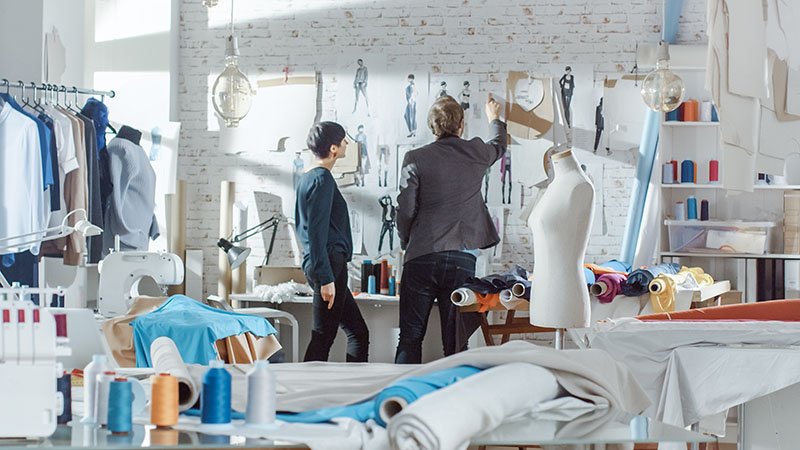
This is where having a true manufacturing partner, not just a factory, makes all the difference. I have spent years building a library of high-quality, in-stock performance fabrics for this exact reason. When a brand like yours comes to me, we can often bypass the fabric mill's huge MOQ and long sourcing time entirely. This allows you to launch with a lower quantity and get your product to market much faster. Your speed and decisiveness also play a huge role. The faster you can approve a sample, the faster we can move your project to the front of the line.
Smart Strategies for Speed and Flexibility
You have more power than you think to influence these numbers. It is about making smart, strategic choices at the beginning of the process.
- For Reducing MOQs: The number one strategy is to work with the materials your manufacturer keeps in stock. At Wearzio, we stock a wide range of popular activewear fabrics in dozens of colors. This allows us to offer MOQs as low as 50 pieces per style, which is unheard of when ordering custom fabric.
- For Reducing Lead Times: A complete and detailed technical package (tech pack) is the best way to reduce time. It is the blueprint for your garment. A clear blueprint prevents misunderstandings and reduces the need for multiple sample rounds. Also, be decisive. Approving a lab dip or a sample within 24 hours can save you a week or more on your final timeline.
| Strategy | Impact on MOQ | Impact on Lead Time |
|---|---|---|
| Use Manufacturer's Stock Fabric | Drastically reduces MOQ (e.g., from 500 to 50 pieces). | Reduces by 2-4 weeks by skipping fabric sourcing. |
| Provide a Detailed Tech Pack | No direct impact on MOQ. | Reduces by 1-2 weeks by minimizing sample revisions. |
| Approve Samples Quickly | No direct impact on MOQ. | Every day of delay can add a day or more to the final timeline. |
| Plan Around Factory Holidays | No direct impact on MOQ. | Avoids 2-3 week closures (e.g., Chinese New Year). |
Conclusion
Understanding MOQs and lead times turns them from scary obstacles into manageable parts of your business plan. It empowers you to plan effectively, manage your cash flow, and grow your brand wisely.