.png)
Struggling with fabrics that don't perform? Your activewear should support, not hinder. I will show you how to pick materials that truly elevate your brand and its performance.
Choosing the best activewear fabric means focusing on key metrics. Prioritize excellent moisture management, high durability, and four-way stretch with good recovery. Look for certified technologies and sustainable options to ensure both quality and brand integrity. This approach guarantees top performance for your customers.
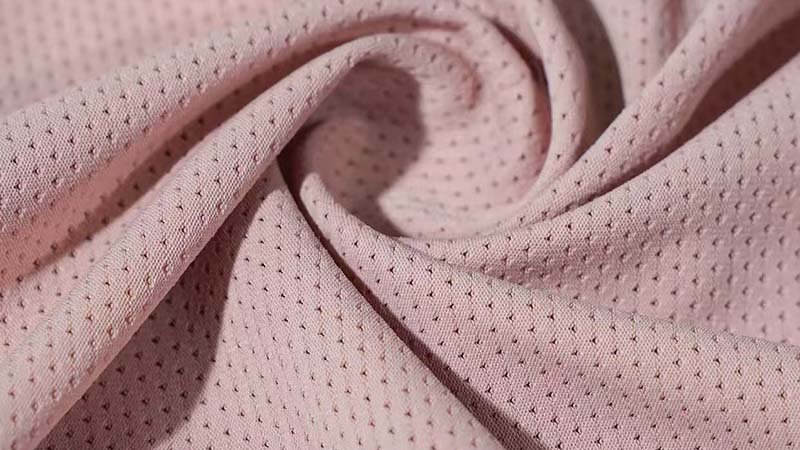
Selecting the right fabric is the first step. But it's more than just reading a spec sheet. In my years of experience, I've learned that the real difference lies in understanding the details. I remember a time when a promising fabric failed our real-world tests, and it taught me a valuable lesson about diligence. Let's break down exactly what you need to look for.
What are the core metrics for a truly high-performance fabric?
Are your customers complaining about sweaty, saggy gear? This damages your brand's reputation. Let's focus on the key performance indicators that guarantee comfort and longevity for your activewear.
The core metrics are moisture management, durability, and stretch with recovery. Fabrics must wick sweat effectively, withstand abrasion and washing, and offer at least 10–22% spandex for true four-way stretch. These non-negotiable qualities define premium activewear and ensure customer satisfaction.

In my early days, I learned that a fabric's spec sheet is only half the story. A brand owner I worked with was excited about a new material that looked great on paper. But after a few wears, customers complained that it stretched out and held onto sweat. This experience taught me to always focus on three fundamental pillars. These are the non-negotiables that separate good activewear from great activewear.
Moisture Management and Breathability
Top-tier fabrics must pull sweat away from the skin. Look for materials with capillary channel structures, like Coolmax® or Supplex®, which excel at this. Breathability is just as important, allowing heat and vapor to escape. I also recommend looking for eco-friendly hydrophobic finishes. They are far superior to standard polyester treatments and make a real difference in how the garment feels during a workout.
Durability and Stability
Your activewear has to endure a lot. It faces abrasion from equipment, constant stretching, and repeated washing. I always recommend blends with high-tenacity fibers like Nylon 66 or recycled polyamide. These materials hold up incredibly well. A garment's lifespan is a direct reflection of your brand's quality, so this is not a place to cut corners.
Stretch and Recovery
For a true "zero-restriction" feel, you need four-way stretch. This means the fabric should have a spandex content between 10% and 22%. But don't just take a supplier's word for it. I insist on lab tests for stretch and recovery rates. This ensures the fabric snaps back to its original shape, wear after wear.
| Metric | What to Look For | Why It Matters |
|---|---|---|
| Moisture Wicking | Capillary channel structure (e.g., Coolmax®) | Keeps the wearer dry and comfortable. |
| Durability | High-tenacity nylon blends (e.g., Nylon 66) | Resists pilling, tearing, and abrasion. |
| Stretch & Recovery | 10-22% Spandex, lab-tested recovery rate | Provides freedom of movement without losing shape. |
| Breathability | High air permeability rating | Prevents overheating during intense activity. |
How can you leverage fabric tech and sustainability?
Does your brand struggle to stand out in a crowded market? Using generic fabrics makes you invisible. Incorporating advanced technology and sustainability will give your brand a unique story and appeal.
Embrace innovative fibers like bio-based polyamides or graphene-infused yarns to offer unique selling points. Ensure any functional finishes like antibacterial treatments (Polygiene®) are certified by bodies like OEKO-TEX or Bluesign®. Prioritize certified recycled materials like REPREVE® to prove your commitment to sustainability.
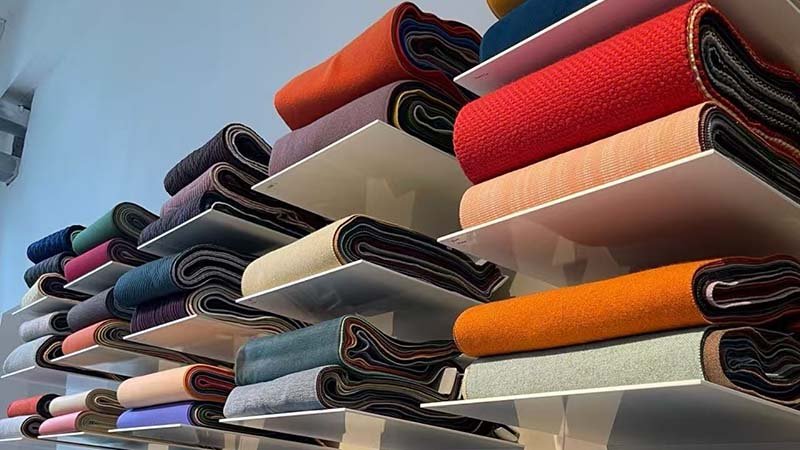
Technology and sustainability are not just buzzwords; they are powerful tools for building a modern brand. A few years ago, a startup owner came to me wanting to create a "truly innovative" yoga line. We decided to explore fabrics with unique properties. By choosing a material with ceramic-coated polyester for its infrared benefits, she created a product that had a compelling story and a real performance edge. This is how you differentiate yourself.
Innovative Fibers and Finishes
The future of activewear is in smart fabrics. Look beyond the basics to technologies that add real value.
- Innovative Fibers: Consider bio-based polyamides, which come from renewable resources. Graphene yarns can help regulate body temperature, while ceramic-coated polyesters can offer wellness benefits.
- Functional Finishes: These treatments add specific performance features. Antibacterial and anti-odor finishes (like Polygiene® or other silver-ion technologies) keep garments fresh. Other popular options include UV protection, stain resistance, and anti-static properties. Always demand proper certification, like OEKO-TEX or Bluesign®, to avoid false claims.
The Sustainable Path
Today's customers care about where their products come from. Building sustainability into your brand is essential.
- Recycled Fibers: Use well-known, certified recycled synthetics like REPREVE® (from plastic bottles) or ECONYL® (from fishing nets). This reduces waste and conserves resources.
- Eco-Friendly Processes: Look for fabrics made with dope-dyed yarn. This process adds color at the fiber stage, which saves a massive amount of water and chemicals compared to traditional dyeing. Also, ask suppliers for a Life Cycle Assessment (LCA) to understand a fabric's full environmental impact. True sustainability balances performance with responsibility.
How do you guarantee fabric quality and consistency in bulk production?
Found the perfect fabric sample, but worried the bulk order won't match? This is a common fear. Inconsistent quality can ruin a production run and your brand's reputation.
The key is a rigorous quality control system. Start by choosing traceable suppliers from established regions like China, Taiwan, or Italy. Always test pre-production samples for key metrics. For the bulk order, demand third-party testing and use a "golden sample" for comparison.

Trusting a sample swatch without a plan for bulk production is a rookie mistake I learned to avoid the hard way. Early in my career, a beautiful fabric sample arrived, and we rushed it into production. The bulk shipment was a disaster—the color was off, and the texture was completely different. We lost time and money. From that day on, I developed a strict system for sourcing and quality control. This system protects my clients and ensures every garment meets the standard we set from the very beginning.
Supply Chain and Sampling
Your quality control starts with your supplier. Work with manufacturers who can provide full traceability for their materials. Before you commit to a large order, get a sizable sample and test it yourself. Don't just rely on the small swatch on a sample card. Check the weight, feel, stretch, colorfastness, and drying speed. These initial tests will save you from major headaches later on.
Managing Batch Consistency
Fabric production can vary from one batch to the next. To protect your brand, you must have controls in place.
- Golden Sample: Always keep an approved master sample, which we call a "golden sample." Every new batch of fabric must be compared against this standard.
- Third-Party Testing: For every bulk order, require a certificate of conformity from a third-party lab. This provides an unbiased report on the fabric's specifications.
- Contractual Standards: Define your quality control standards in your contract. This should include acceptable tolerances for shrinkage, pilling, and print adhesion.
Real-World Scenario Testing
Lab tests are important, but they don't tell the whole story. The final step is to test the fabric in its intended form: a finished garment. Before starting mass production, make a few sample garments and put them through real-world simulations. This means intense workouts with lots of sweat, repeated abrasion tests, and multiple wash cycles. Testing a small piece of fabric is not enough. You need to see how the complete garment performs under stress.
Conclusion
Choosing the right high-performance fabric comes down to three things: understanding core metrics, leveraging new technology and sustainability, and enforcing strict quality control. This focused approach ensures exceptional activewear.