.png)
You have a fantastic idea for a new line of leggings, but the path from a sketch to a sale-ready product seems like a maze. A wrong turn can lead to wasted money and months of delays.
The customization process is a three-stage journey. It begins with creating a technical blueprint (the Tech Pack), moves to a prototyping phase (Sampling), and finishes with scaled manufacturing (Bulk Production). Each stage requires your approval before moving to the next.
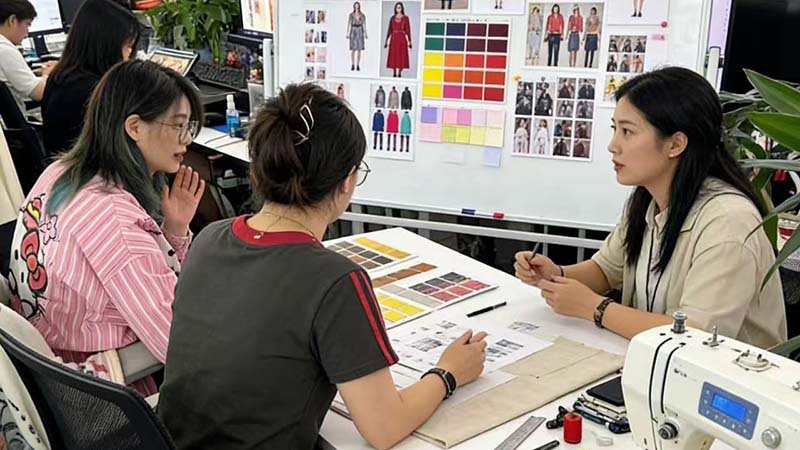
I often meet passionate brand owners, just like Alex, who have incredible vision but feel stuck on how to begin. They have mood boards and sketches but no idea how to communicate their ideas to a factory. I remember one of my first major clients came to me with a beautiful drawing of a sports bra. He thought that was enough. I had to gently explain that a drawing is a dream, but a Tech Pack is an instruction manual. That conversation started a partnership that helped him build a successful brand. The process is detailed, but it is not a mystery. It is a partnership.
How Does Your Idea Become a Technical Blueprint?
You have a clear vision for your product, but a factory cannot sew from a sketch or a photograph. This communication gap is where costly mistakes and misunderstandings are born.
Your idea becomes a technical blueprint in a document called a "Tech Pack." This is the single most important document in apparel manufacturing. It contains every detail: technical drawings, measurements, fabrics, trims, and sewing instructions needed to create your product accurately.
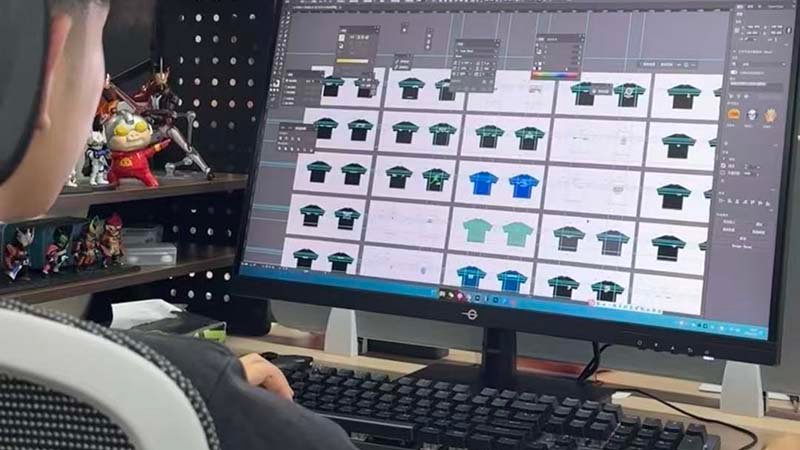
Think of a Tech Pack as the architectural blueprint for your garment. You would never ask a builder to construct a house based on a rough sketch, and the same is true for clothing. A complete Tech Pack removes all guesswork for the factory. When my team at Wearzio receives a detailed Tech Pack, we know exactly what the brand owner wants. We see the vision clearly. If a client only has an idea, we can help them build this blueprint. A good manufacturing partner doesn't just take orders; they help you write the instruction manual for your own success. It is the foundation upon which everything else is built.
The Anatomy of a Great Tech Pack
A comprehensive Tech Pack is your insurance against errors. It must be clear, detailed, and unambiguous.
- Technical Flats: These are black-and-white drawings of your garment as if it were laid flat. They must show the front, back, and sometimes side views, with callouts pointing to specific details like seam types or zipper placements.
- Graded Specification Sheet: This is a table of measurements for every point of measure on your garment (e.g., chest, waist, length) for every size in your range (e.g., XS to XL).
- Bill of Materials (BOM): This is a complete list of every single physical component required. It includes the main fabric, lining, thread, zippers, buttons, labels, and even packing materials. Each item should have a specific color, supplier, and item number.
- Construction and Stitching Details: This section provides written instructions for the sewing team. For example: "Use 4-thread flatlock stitching on all side seams for comfort and durability."
| Tech Pack Component | Purpose | Example Detail |
|---|---|---|
| Technical Flats | Provides a clear visual reference of the design. | Callout: "1/4 inch double needle topstitch on hem." |
| Graded Spec Sheet | Defines the fit and sizing for the entire size range. | Chest (Size M): 52cm; Chest (Size L): 54cm. |
| Bill of Materials | Lists every component needed for production. | Main Fabric: 80% Nylon 20% Spandex, 220 GSM, Color: Pantone 19-4052. |
| Construction Details | Gives specific sewing instructions to the factory. | "Attach woven size label 1 inch below main brand label." |
What Happens During the Sampling Stage?
You have sent your Tech Pack and are excited to see your product come to life. But you are nervous about committing to a bulk order without holding the product in your hands first.
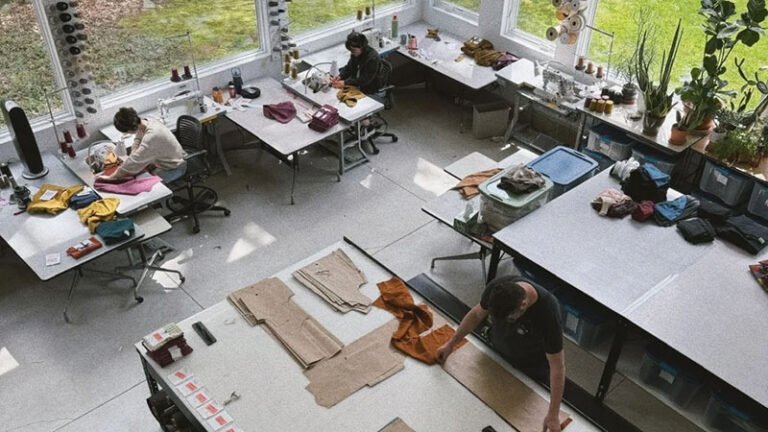
Sampling is a crucial prototyping phase. We create physical samples based on your Tech Pack, allowing you to test and refine the design, fabric, and fit. You give feedback on each sample, and we make revisions until it is perfect for you.
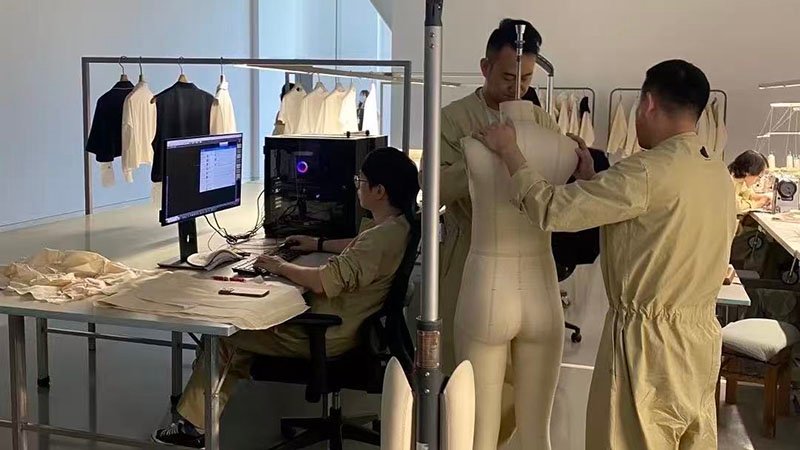
The sampling stage is a conversation. Your Tech Pack is the opening statement, and the first sample is our reply. It is a physical interpretation of your blueprint. I always tell my clients to be as critical as possible during this stage. This is the time to make changes. Moving a seam on a single sample is easy and inexpensive. Moving a seam on 1,000 finished garments is impossible. I once worked with a brand on a new running short. The first sample looked great, but during the fit test, the model found the pocket was too small for a phone. We adjusted the pattern and made a new sample. That simple change made the product a bestseller. Sampling is not a delay; it is how you ensure your product is perfect.
The Journey of a Sample
There are several types of samples, each with a specific purpose. This iterative process guarantees the final product matches your vision.
- Proto Sample: This is the very first sample made from the Tech Pack. Its main purpose is to check if we have interpreted your design concept correctly. The fabric might not be the final version, but the construction and shape should match the drawings.
- Fit Sample: Once the basic design is approved, we create a Fit Sample using your chosen fabric. You try this on a live fit model to test how it performs during movement. Is it comfortable? Does it restrict movement? Does the waistband stay up?
- Salesman Sample (SMS): After you approve the fit, we create a few perfect samples. These are for your marketing photoshoots, for showing to potential retail buyers, or for your launch campaign. They represent the final product.
- Pre-Production Sample (PPS): This is the most important sample. It is made on the actual bulk production line with all final fabrics and trims. It is your "golden sample." When you approve the PPS, you are giving the green light for mass production.
| Sample Type | Main Purpose | What to Check |
|---|---|---|
| Proto Sample | Check design interpretation and construction. | Do the seams and panels match my drawings? |
| Fit Sample | Perfect the fit and test on a live model. | How does it feel during a squat or stretch? |
| Salesman Sample | Use for marketing and sales purposes. | Is the appearance perfect for photography? |
| Pre-Production Sample | Final approval before bulk production. | Is this the exact product I want 1,000 of? |
How Does Your Sample Turn Into a Full Production Run?
You have approved the perfect Pre-Production Sample. The finish line is in sight, but now you worry about whether every single piece in the bulk order will be just as good.
Once you approve the Pre-Production Sample (PPS), we move to bulk production. This is a scaled-up, systemized process of sourcing, cutting, sewing, and quality control that ensures every garment produced is an exact replica of the PPS you approved.
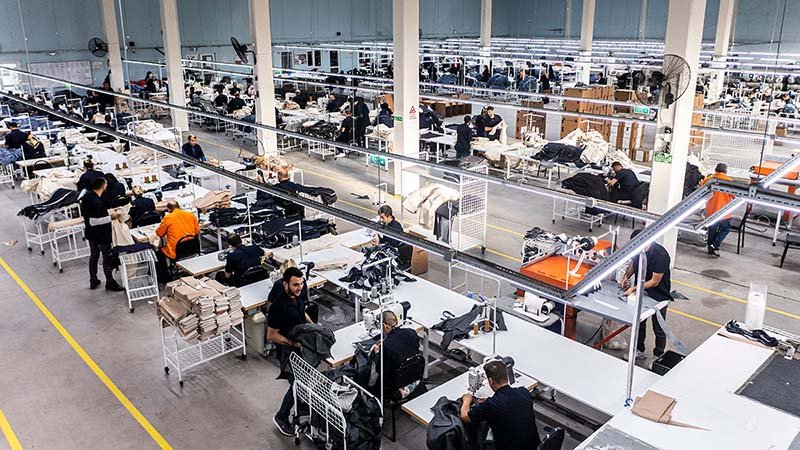
Many brand owners think bulk production is where the magic happens, but the real magic was in the planning and sampling. The bulk production stage is about disciplined execution. It is about taking the approved recipe—your PPS—and making it a thousand times without any variation. At Wearzio, when a PPS is approved, it is sealed and hung in the middle of the production floor. It becomes the standard that every single person on the line works towards. Our Quality Control team uses it as their guide during in-line inspections. This is how we guarantee that the 1,000th piece is identical to the first. It is a process built on systems, not hope.
From One to Many: The Production Process
Scaling from one sample to thousands requires meticulous organization and control at every step.
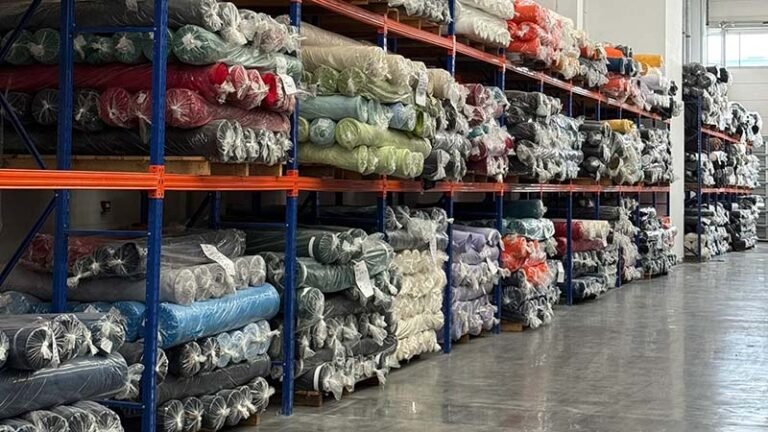
- Material Sourcing and Inspection: We place bulk orders for the exact fabric, thread, and trims specified in your Tech Pack. When these materials arrive, our QC team inspects them for defects and color consistency before they are accepted into the factory.
- Bulk Cutting: The approved patterns are used to cut the fabric. The fabric is laid out in stacks of many layers (sometimes over 100). A powerful industrial cutting machine cuts all the layers at once. This step requires immense skill to prevent the layers from shifting.
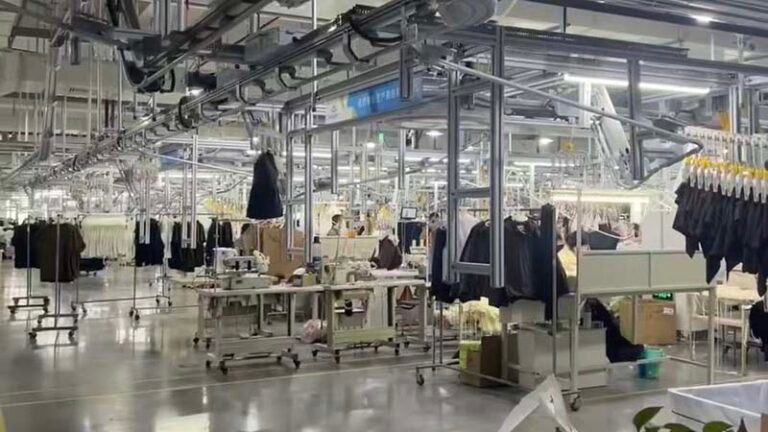
- Sewing Line Setup: We set up an assembly line where each sewing operator is responsible for one specific task. For example, one person might only sew the side seams, while another only attaches waistbands. This specialization creates incredible efficiency and consistency.
- Quality Control & Finishing: QC inspectors check garments at multiple points along the sewing line. After sewing, each garment goes to the finishing department for final inspection, ironing, folding, and packing according to your exact requirements.
| Production Step | Key Activity | Importance |
|---|---|---|
| Sourcing & Inspection | Ordering and checking all raw materials. | Guarantees quality inputs for a quality output. |
| Bulk Cutting | Cutting many layers of fabric at once. | Ensures all pieces are identical for consistent sizing. |
| Sewing Line | Operators perform specialized, repetitive tasks. | Creates high efficiency and consistent stitch quality. |
| Finishing & QC | Final inspection, ironing, and packing. | The final check to ensure every piece meets the PPS standard. |
Frequently Asked Questions
1. What if I don't know how to create a Tech Pack?
This is a very common situation for new brand owners. A good manufacturing partner should offer a service to help you. At Wearzio, we can create a full Tech Pack for you based on your sketches, photos, or even a physical reference garment you like. We see it as part of our job to translate your vision into a language the factory can understand. Just ask potential manufacturers if they offer Tech Pack development services.
2. How much does the sampling process cost?
Sampling is a paid process because it requires the time of our most skilled pattern makers and sample sewers. Typically, a sample will cost 1.5x to 3x the final bulk production price per piece. For example, if a legging costs $10 in bulk, the sample might cost $20-$30. This price covers the pattern work, fabric sourcing, and multiple revisions. Some manufacturers will credit a portion of your sampling fees back to you if you proceed with a bulk order.
3. Can I make changes after I approve the Pre-Production Sample (PPS)?
No. Approving the PPS is like signing a final contract that says, "Make my bulk order exactly like this." Once you approve it, we immediately order all the bulk fabric and begin cutting. Any change after this point would cause huge delays and costs, as we might have to discard materials that have already been cut. This is why the sampling phase is so important—it is your time to make all changes before you give that final approval.
4. What is the best way to test the fit of my samples?
The best way is to use a live fit model who matches the body measurements of your target customer for your sample size (usually a Medium). Do not just have them stand still. Ask them to perform movements that your customer would do: squats, lunges, running in place, and stretching. This is called a "dynamic fit test." It reveals issues you cannot see on a mannequin, like if a waistband rolls down or if seams are uncomfortable during exercise.
5. How many rounds of samples are usually needed?
It is normal to go through 2 to 3 rounds of samples to get everything perfect.
- Round 1 (Proto Sample): You will likely have several comments on the initial design and construction.
- Round 2 (Fit Sample): We incorporate your feedback. This sample is usually much closer, but you might have small tweaks for the fit.
- Round 3 (PPS): This sample should be perfect, incorporating all previous feedback.
Budgeting time and money for at least two rounds of revisions is a realistic approach.
Conclusion
The customization journey transforms your idea into a finished product through three key stages: creating the Tech Pack, refining through sampling, and executing with disciplined bulk production.